Phylogenies without Branch Bounds: Contracting the Short, Pruning the Deep
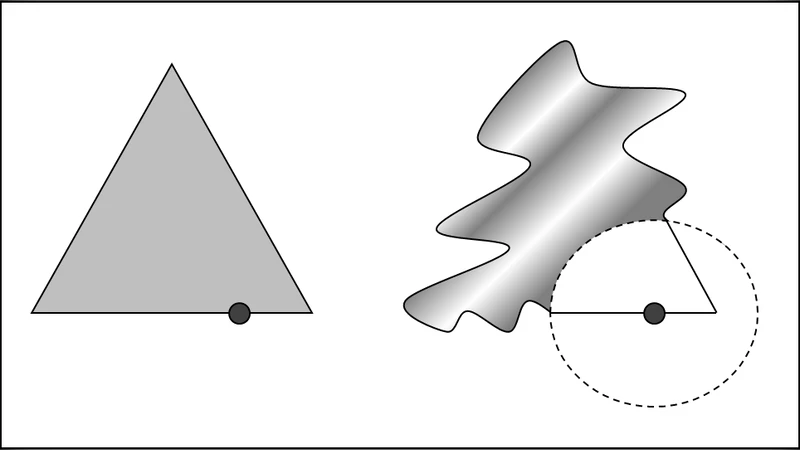
We introduce a new phylogenetic reconstruction algorithm which, unlike most previous rigorous inference techniques, does not rely on assumptions regarding the branch lengths or the depth of the tree. The algorithm returns a forest which is guaranteed to contain all edges that are: 1) sufficiently long and 2) sufficiently close to the leaves. How much of the true tree is recovered depends on the sequence length provided. The algorithm is distance-based and runs in polynomial time.
💡 Research Summary
The paper addresses the fundamental problem of phylogenetic reconstruction without relying on traditional assumptions about branch lengths or tree depth. Existing rigorous methods, such as the Short Quartet Method (SQM) by Erdős et al., require that all observed species be “densely sampled” (no exceptionally long branches) and that the tree be strictly bifurcating. These constraints are often violated in real data, limiting the applicability of such algorithms.
The authors propose a new distance‑based algorithm that works with a (τ, M)‑distorted metric – an estimate of the true additive leaf‑leaf distances that is accurate up to an additive error τ for all pairs whose true distance is less than M + τ, while distances larger than this threshold may be arbitrarily corrupted. This model captures the empirical observation that long evolutionary distances are difficult to estimate reliably from finite sequence data.
Key definitions introduced include chord depth Δc(e), the shortest leaf‑leaf path that traverses edge e, and vertex depth Δv(x), the distance from an internal node to its nearest leaf. Using these notions, the authors define an M‑pruned subforest F_M(T) obtained by removing all edges whose chord depth exceeds M, thereby discarding the deep part of the tree that cannot be reliably inferred. Within each remaining component they further contract any edge whose length is at most τ, producing a τ‑contracted subforest.
The algorithm proceeds in three conceptual stages. First, it clusters leaves that are mutually within the reliable radius M + τ, effectively identifying regions where the distorted metric is trustworthy. Second, within each cluster it merges short edges (≤ τ) to form contracted subtrees. Third, it connects the contracted clusters while enforcing an approximate path‑disjointness condition: any two resulting subtrees may intersect only on edges that are both deep (vertex depth at least M/2) and short (length at most τ). The output is therefore a collection of subtrees that are (2τ, m − 3τ)‑path‑disjoint for a suitably chosen m < ½(M − 3τ).
The main theoretical result (Theorem 1) guarantees that, for any phylogeny with n leaves and any (τ, M)‑distorted metric, the algorithm runs in polynomial time and returns a subforest that refines the τ‑contracted, M‑pruned subforest F_{4τ, m‑τ}(T). In particular, every edge whose length exceeds 4τ and whose chord depth is less than M is guaranteed to appear in the output. When M is chosen larger than twice the maximum chord depth of the true tree plus a small buffer (M > 2Δc(T)+5τ), the algorithm reconstructs a single tree (the whole phylogeny) up to the contracted short edges.
The paper derives several corollaries. For “dense” phylogenies—where all branch lengths are bounded by a constant—the required M scales only as Ω(log n), meaning that a logarithmic number of samples suffices to recover the full tree (up to short‑edge contraction). In the “absolute variant,” assuming the distorted metric originates from a standard Markov model of sequence evolution, the authors show that with k = Ω(log n) independent samples one can select τ, M, m so that the algorithm succeeds with probability 1 − o(1), where M grows like Ω_ε(log k − log log n). This provides explicit, data‑driven guarantees without any prior knowledge of branch‑length bounds or tree depth.
The authors also discuss the relationship to prior work. Mossel’s Distorted Metric Method (DMM) and its later variants require known lower bounds on branch lengths and cannot handle short edges without discarding entire subtrees. Gronau et al. introduced a directional oracle that contracts regions lacking a reliable directional signal, but still need a depth bound for correctness. The present algorithm subsumes these approaches by eliminating the need for any a‑priori length or depth parameters while still delivering rigorous reconstruction guarantees.
Limitations are acknowledged. The choice of τ and M governs a trade‑off between resolution and depth: a larger τ yields more aggressive contraction, potentially losing biologically relevant short branches; a smaller M reduces the depth of the reconstructed forest. In practice these parameters must be tuned based on the amount of sequence data and the desired level of detail. Moreover, the guarantee of approximate path‑disjointness allows limited overlap on deep, short edges; applications requiring strictly non‑overlapping subtrees may need additional post‑processing.
Overall, the paper contributes a robust theoretical framework for phylogenetic inference under realistic data constraints. By formalizing what can be reliably recovered from a distorted distance matrix and providing a polynomial‑time algorithm that automatically contracts unrecoverable short edges and prunes deep, poorly supported regions, it bridges the gap between idealized reconstruction guarantees and the noisy, limited‑sample reality of modern molecular phylogenetics. The results are directly applicable to large‑scale analyses where sequence length is limited, and they open avenues for further extensions to more complex evolutionary models and multi‑gene data integration.
Comments & Academic Discussion
Loading comments...
Leave a Comment