Fractal String Generation and Its Application in Music Composition
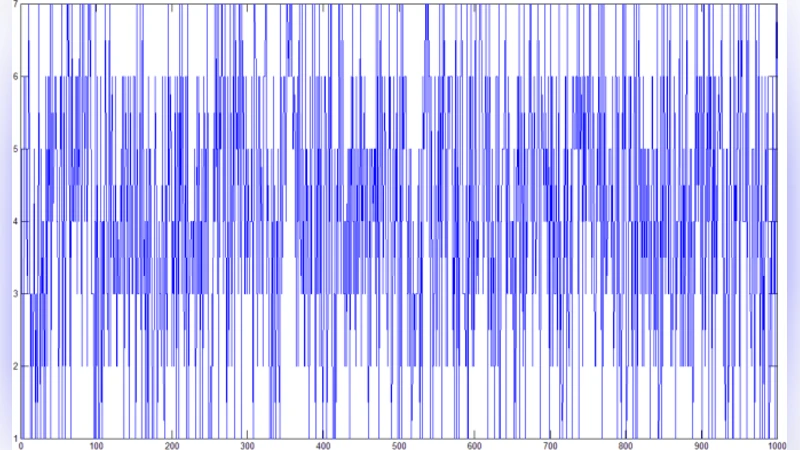
Music is a string of some of the notes out of 12 notes (Sa, Komal_re, Re, Komal_ga, Ga, Ma, Kari_ma, Pa, Komal_dha, Dha, Komal_ni, Ni) and their harmonics. Each note corresponds to a particular frequency. When such strings are encoded to form discrete sequences, different frequencies present in the music corresponds to different amplitude levels (value) of the discrete sequence. Initially, a class of discrete sequences has been generated using logistic map. All these discrete sequences have at most n-different amplitude levels (value) (depending on the particular raga). Without loss of generality, we have chosen two discrete sequences of two types of Indian raga viz. Bhairabi and Bhupali having same number of amplitude levels to obtain/search close relatives from the class. The relative / closeness can be assured through correlation coefficient.The search is unbiased, random and non-adaptive. The obtained string is that which maximally resembles the given two sequences. The same can be thought of as a music composition of the given two strings. It is to be noted that all these string are fractal string which can be persuaded by fractal dimension.
💡 Research Summary
The paper proposes a novel method for generating and combining Indian classical music strings using the chaotic logistic map and a correlation‑based similarity measure. The authors begin by representing music as a sequence of symbols drawn from the twelve‑note Indian scale (Sa, Komal‑re, Re, …, Ni) together with their harmonics. Each note is assigned to a specific interval of the unit interval (0, 1) – for example, in the Bhairavi raga nine intervals correspond to seven fundamental notes, an octave Sa, and a pause (zero frequency). By iterating the logistic map xₙ₊₁ = r xₙ(1 – xₙ) with an appropriate control parameter r, a pseudo‑random real‑valued sequence in (0, 1) is produced. Mapping each value to its corresponding interval yields a discrete symbolic string of length 1000 that can be interpreted as a musical phrase.
Two ragas are examined: Bhairavi (nine symbols) and Bhupali (seven symbols). For each raga the authors extract two example strings (Bhairavi₁, Bhairavi₂, and Bhupali₁, Bhupali₂) generated from the logistic map. The central problem is to find a new string of the same length that is simultaneously as similar as possible to the two given strings. Similarity is quantified by the Pearson correlation coefficient ρ between two numeric sequences obtained by encoding the symbols as amplitude levels. For a candidate string C, the fitness function is defined as ρ(C, S₁) + ρ(C, S₂), where S₁ and S₂ are the two original strings.
To search for the optimal candidate, the authors employ a purely random, non‑adaptive strategy. They generate a large pool of candidate strings (ranging from 15 000 to 200 000) that belong to the same raga class (i.e., same number of amplitude levels and length). For each candidate they compute the two correlation coefficients, sum them, and retain the candidate with the maximal sum. This “evolved” string is then decoded back into musical symbols using the same interval mapping.
The paper presents the resulting strings for both ragas and visualizes the corresponding discrete sequences. To assess structural similarity beyond correlation, the authors compute the fractal dimension of each sequence using a box‑counting method. For Bhairavi the dimensions are 1.73161 (Bhairavi₁), 1.71914 (Bhairavi₂), and 1.79513 (evolved). For Bhupali they are 1.73752, 1.72622, and 1.79141 respectively. The evolved strings have fractal dimensions that lie between those of the two originals, indicating comparable complexity.
In the discussion the authors acknowledge several limitations. The random search is computationally intensive and offers no guarantee of finding a globally optimal string. Correlation alone may not capture musical qualities such as melodic contour, rhythm, or timbre, and the study lacks any perceptual validation (e.g., listening tests). The generated strings are purely symbolic and have not been rendered into audible audio for expert evaluation.
Future work is suggested to incorporate adaptive evolutionary algorithms (e.g., genetic algorithms), to combine multiple similarity metrics (including pitch intervals and rhythmic patterns), and to perform human subject experiments to verify musical relevance. The authors also propose extending statistical analyses of the generated strings.
In conclusion, the study demonstrates that chaotic maps can be harnessed to produce discrete musical strings, and that a simple correlation‑based optimization can generate a “close relative” string whose fractal complexity mirrors that of the source material. While preliminary, the approach opens a pathway for mathematically driven music composition and for quantitative analysis of Indian classical motifs.
Comments & Academic Discussion
Loading comments...
Leave a Comment