The Fabra-ROA Telescope at Montsec (TFRM): A Fully Robotic Wide-field Telescope for Space Surveillance and Tracking
Since the beginning of the Space Age optical sensors have been one of the main instruments for positioning and tracking known space objects. Nowadays, the unrelenting growth of man-made objects together with the overcrowding of the useful satellite orbits, and the real space debris and NEO hazards, has made necessary to carry out surveys of the space looking for uncatalogued objects. Optical telescopes play a key role in the Space Surveillance and Tracking (SST) as a primary Space Situational Awareness element and, it is known, that the best instrument for this task is a fully robotic wide-field telescope with a minimum aperture of 40cm. The Baker-Nunn Cameras (BNCs) were produced by the Smithsonian Institution during the late 50s as an optical tracking system for artificial satellites. These wide-field telescopes of 50cm of aperture were manufactured by Perkin- Elmer (optics) and Boller & Chivens (mechanics) with the highest quality specifications. The TFRM is a fully robotic refurbished BNC that exploits the excellent mechanical and optical original design to obtain an equatorial telescope with a useful 4.4{\deg}x4.4{\deg} CCD field of view. TFRM is therefore a European asset very well suited for SST (satellites and space debris) and NEO observations. Moreover, its control system allows tracking of all kinds of orbits, including LEOs.
💡 Research Summary
The Fabra‑ROA Telescope at Montsec (TFRM) is a fully robotic, wide‑field optical instrument created by refurbishing a historic Baker‑Nunn Camera (BNC). Originally built in the late 1950s by the Smithsonian Institution for satellite tracking, the BNC featured a 0.5 m aperture, f/1 optics, and a 30° × 5° photographic field with a spot size under 20 µm. After the 1980s, when radar and laser systems supplanted optical tracking, the BNC at the Spanish Navy Observatory (ROA) in San Fernando was left idle but well preserved.
The refurbishment, a joint effort of the Reial Acadèmia de Ciències i Arts de Barcelona (RACAB) and ROA, transformed the instrument into a modern, equatorial telescope suitable for Space Surveillance and Tracking (SST) and Near‑Earth Object (NEO) observations. Key mechanical upgrades include converting the original alt‑azimuth mount to an equatorial configuration, installing digital servo drives on the hour‑angle (HA) and declination (DEC) axes, and adding absolute encoders for sub‑10 µm positioning accuracy.
Optically, the three‑element corrector cell and 0.8 m primary mirror were retained, while a CaF₂ 64 mm field flattener and a 180 mm fused‑silica meniscus lens were added to achieve a flat, aberration‑free field of 6.25° diameter. The focal ratio is f/0.96, delivering a 4.4° × 4.4° usable field on a Finger Lakes Instrumentation 4096 × 4096 CCD with 9 µm pixels (pixel scale ≈ 3.9″). The camera incorporates a 90 mm shutter, a Schott GC4‑75 colour filter as the window, and a glycol‑based cooling system, allowing exposures as short as 1 s and reaching a limiting magnitude of V ≈ 20 mag in 30 s.
Control software is built on the INDI (Instrument‑Neutral Distributed Interface) protocol, providing web‑based remote operation, XML‑defined observing blocks, and scripting support (Python, Perl, Bash). Users can input target coordinates, catalogue names, or Two‑Line Element (TLE) sets, enabling automatic tracking of objects in any orbit (LEO, MEO, GEO). The shutter can be triggered mid‑exposure to imprint precise time stamps on satellite trails, and a GPS‑disciplined LANTIME M200 time server guarantees timing accuracy well below one millisecond.
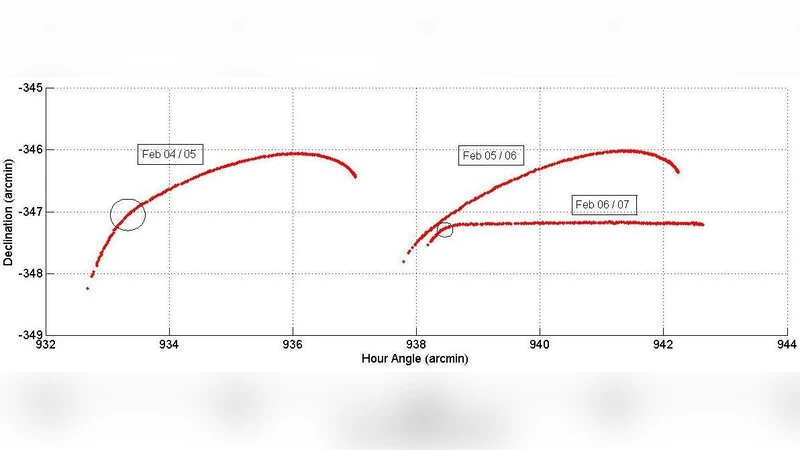
After completion of the hardware upgrades, the telescope was relocated in summer 2010 to the Montsec Astronomical Observatory (OAdM) at 1622 m altitude (lat = 42.0516°, lon = 0.7293°). First light images (e.g., M31) confirmed the optical quality and alignment. In February 2011 the TFRM participated in ESA’s GEO observation campaign, acquiring 175 angular measurements of the MSG2 satellite over four nights. Orbit determination using AGI’s ODTK yielded 2‑σ uncertainties of ~12 m in semi‑major axis, 1.8 × 10⁻⁶ in eccentricity, and 1.5 × 10⁻⁴° in inclination, demonstrating sub‑arcsecond astrometric precision for GEO objects.
Additional tests included robotic photometric monitoring of the gamma‑ray source HESS J0632+057 and routine observations of exoplanet hosts, blazars, and asteroids, which have been used to refine the data‑reduction pipeline. The system’s ability to acquire dense time series (e.g., one exposure every two minutes throughout an entire night) makes it especially valuable for detecting maneuvers of GEO satellites and for rapid sky surveys targeting unknown debris or NEOs.
In conclusion, the TFRM combines the heritage of a high‑quality, wide‑field BNC optical design with contemporary servo‑driven mounts, high‑performance CCD imaging, and fully automated INDI control. Its modest aperture, large, distortion‑free field, and flexible tracking capabilities position it as a cost‑effective asset for ESA’s future SSA/SST programmes, contributing to both space‑debris monitoring and NEO discovery efforts. The project also demonstrates a viable pathway for revitalizing legacy optical instruments for modern space‑situational‑awareness applications.
Comments & Academic Discussion
Loading comments...
Leave a Comment