LOFAR: Detecting Cosmic Rays with a Radio Telescope
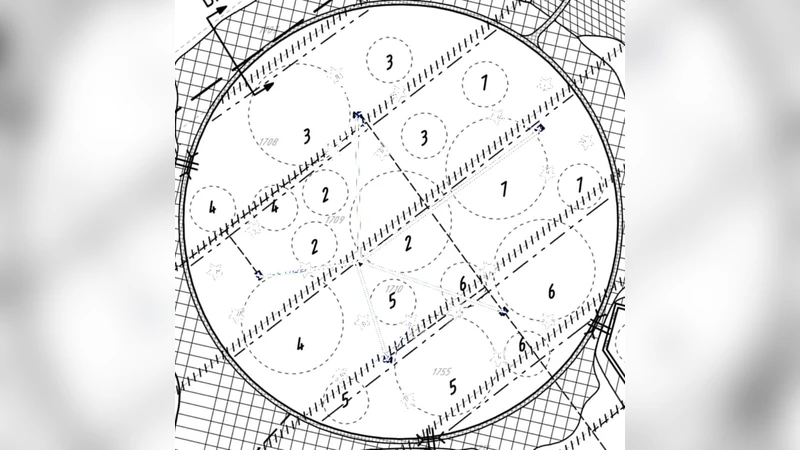
LOFAR (the Low Frequency Array), a distributed digital radio telescope with stations in the Netherlands, Germany, France, Sweden, and the United Kingdom, is designed to enable full-sky monitoring of transient radio sources. These capabilities are ideal for the detection of broadband radio pulses generated in cosmic ray air showers. The core of LOFAR consists of 24 stations within 4 square kilometers, and each station contains 96 low-band antennas and 48 high-band antennas. This dense instrumentation will allow detailed studies of the lateral distribution of the radio signal in a frequency range of 10-250 MHz. Such studies are key to understanding the various radio emission mechanisms within the air shower, as well as for determining the potential of the radio technique for primary particle identification. We present the status of the LOFAR cosmic ray program, including the station design and hardware, the triggering and filtering schemes, and our initial observations of cosmic-ray-induced radio pulses.
💡 Research Summary
The paper presents the implementation and early results of using the Low Frequency Array (LOFAR) as a radio detector for extensive air showers generated by high‑energy cosmic rays. LOFAR is a distributed digital radio telescope with stations in the Netherlands, Germany, France, Sweden, and the United Kingdom. Its dense core comprises 24 stations within a 4 km² area, each equipped with 96 low‑band antennas (LBA, 10–80 MHz) and 48 high‑band antennas (HBA, 110–250 MHz). The LBAs provide all‑sky coverage and are most sensitive in the 30–80 MHz band, where the bulk of the air‑shower radio emission is observed.
The system digitises the voltage from each antenna at 200 MHz with 12‑bit resolution, splits the data into 512 sub‑bands, and can form up to eight simultaneous beams. In parallel, the raw time‑domain data are stored in Transient Buffer Boards (TBBs) that hold up to 1.3 seconds of data per antenna, allowing offline analysis without interfering with regular astronomical observations.
Two detection modes are described. The “VHECR” (very‑high‑energy cosmic ray) mode relies on a self‑trigger. The first‑level trigger runs on FPGA hardware and flags a pulse when the absolute voltage exceeds a running average by a factor k (typically 6–8). The second‑level trigger requires 16–32 of the 96 channels to exceed the threshold within a 1 µs window, then performs a rapid direction estimate to reject pulses originating near the horizon, which are usually anthropogenic radio‑frequency interference (RFI). Timing precision of 10–15 ns yields a directional accuracy of a few degrees, sufficient to separate sky‑originating events from local RFI.
The second detection path uses an external particle array, LORA (LOFAR Radboud Air Shower Array), consisting of 20 plastic scintillators arranged in five stations on the super‑terp. When LORA records an air shower, it sends a trigger to LOFAR, causing the TBBs to dump the corresponding radio data. This external trigger provides an unambiguous confirmation that a radio pulse is associated with an air shower and lowers the effective energy threshold by a factor of √48–√96, depending on the polarization channel strengths.
Noise modeling shows that the dominant background is Galactic synchrotron emission, with a sky temperature T_sky ≈ 60 K · (λ/m)². After applying a 30–80 MHz band‑pass filter and accounting for residual RFI (≈ 25 % increase in system noise), the trigger condition is set to require the radio signal voltage to exceed five times the RMS noise voltage. Simulations based on LOPES measurements indicate that the self‑trigger mode reaches a minimum energy threshold of ≈ 5 × 10¹⁶ eV; however, because the geomagnetic emission strength depends on the angle between the shower axis and Earth’s magnetic field, a more typical threshold is closer to 1 × 10¹⁷ eV.
Using the full complement of 40 core and remote stations, the expected event rate for self‑triggered detections is on the order of one per hour, while coincidences with LORA are estimated at roughly one per day. For LORA‑triggered events, the radio threshold drops to ≈ 10¹⁶ eV, yielding an expected rate of about two per hour.
The first confirmed air‑shower radio pulses were recorded in June 2011 using LORA triggers. Five LOFAR stations detected coherent pulses; after correcting for geometric arrival‑time delays, the waveforms aligned, demonstrating the expected coherence across the array. The lateral distribution of pulse power versus distance from the shower axis was measured for both linear polarizations (NW‑SE and NE‑SW), providing the most densely instrumented radio‑air‑shower dataset to date. The authors note that calibration of the radio signal into physical electric‑field units is ongoing, and that analysis of wave‑front curvature and sub‑dominant emission mechanisms (charge excess, Cherenkov‑like contributions) is planned.
Future work focuses on improving the self‑trigger sensitivity, further suppressing RFI (including aircraft reflections), and expanding the effective observation area. By achieving near‑continuous sky coverage and a low energy threshold, LOFAR aims to demonstrate that radio measurements alone can determine key cosmic‑ray parameters such as primary particle type and depth of shower maximum (X_max), offering a powerful complement to traditional optical and particle‑detector techniques.
Comments & Academic Discussion
Loading comments...
Leave a Comment