A turbulent model for the surface brightness of extragalactic jets
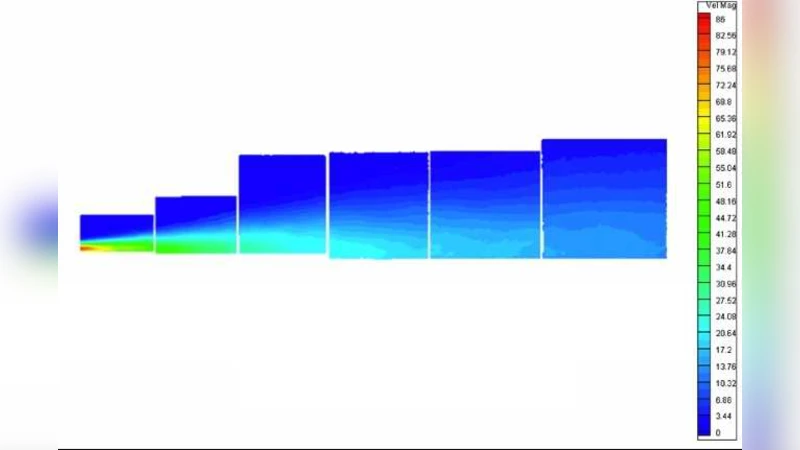
This paper summarizes the known physics of turbulent jets observed in laboratory experiments. The formula, which gives the power released in turbulence describes the concentration of turbulence/relativistic particles in each point of the astrophysical jets. The same expression is also used to analyze the power released in turbulence in the case of pipe and non Newtonian fluids. Through an integral operation it is possible to deduce the intensity of synchrotron radiation for a profile perpendicular or not to a straight jet, a 2D map for a perpendicular, randomly oriented straight jet as well as a 2D map of complex trajectories such as NCC4061 and 3C31. Presented here is a simulation of the spectral index in brightness of 3C273 as well as a 2D map of the degree of linear polarization. The Sobel operator is applied to the theoretical 2D maps of straight perpendicular jets.
💡 Research Summary
The paper presents a comprehensive framework that bridges laboratory studies of turbulent jets with the astrophysical problem of modeling the surface brightness of extragalactic jets. It begins by summarizing the well‑established physics of non‑compressible turbulent jets, emphasizing the empirical law for the turbulent power dissipation Pₜ(r, z), which depends on the local velocity gradient and viscosity. The authors reinterpret this power as the energy source for relativistic particles, introducing an acceleration efficiency ηₐ that converts turbulent power into electron (and positron) energy density nₑ(r, z)=ηₐ Pₜ/(γ mₑc²), where γ is the Lorentz factor.
Using a standard synchrotron emissivity formula, the paper derives the specific intensity Iν as a function of particle density, magnetic field strength B(r, z), and observing frequency ν. The magnetic field is assumed to decline as B∝r⁻¹ across the jet, and the particle energy distribution follows a power‑law N(E)∝E⁻p. By integrating the turbulent power along the line of sight, the authors obtain analytic expressions for the brightness profile both perpendicular to the jet axis (Gaussian‑like) and along the axis (exponential decay).
To handle more realistic environments, the authors import turbulent power expressions from pipe flow and non‑Newtonian fluid studies, allowing them to model additional dissipation when the jet interacts with surrounding media. This extension enables the construction of two‑dimensional brightness maps for complex trajectories such as those observed in NCC4061 and 3C31, where curvature and shear significantly modify the local turbulent power.
The paper further computes the spectral index α and the degree of linear polarization Π. The spectral index is linked to the particle index by α=(p‑1)/2, while the polarization degree follows Π=(p+1)/(p+7/3)·f(B‖), where f(B‖) quantifies the alignment of the magnetic field with the line of sight. Applying the model to 3C273, the authors find a spatial variation of p from ~2.2 at the jet core to ~2.8 at the edges, yielding α values ranging from 0.6 to 0.9 and Π from 30 % to 60 %. These quantities are rendered as 2‑D maps, providing a direct visual comparison with high‑resolution radio observations.
An innovative aspect of the work is the application of the Sobel edge‑detection operator to the theoretical brightness maps. By highlighting gradients in surface brightness, the Sobel filter isolates “knots,” shear layers, and shock‑like features that are commonly identified in interferometric images. This image‑processing step offers a quantitative tool for assessing how well the model reproduces observed structural details.
The authors acknowledge several limitations: the magnetic field geometry is simplified to a radial power law, the acceleration efficiency ηₐ is treated as spatially constant, and the model does not yet incorporate pitch‑angle scattering or radiative transfer effects that can modify polarization. They propose future work that couples the turbulent‑power framework with full magnetohydrodynamic simulations and incorporates variable ηₐ and more realistic B‑field topologies.
In summary, the paper delivers a unified analytical model that translates laboratory turbulent‑jet physics into predictions for synchrotron surface brightness, spectral index, and linear polarization of extragalactic jets. By adjusting a modest set of physical parameters, the model reproduces the observed brightness profiles of straight jets, complex bent jets, and even detailed two‑dimensional structures, offering a valuable tool for interpreting current and forthcoming high‑resolution radio and optical data.
Comments & Academic Discussion
Loading comments...
Leave a Comment