Unveiling the Relationship Between Structure and Dynamics in Complex Networks
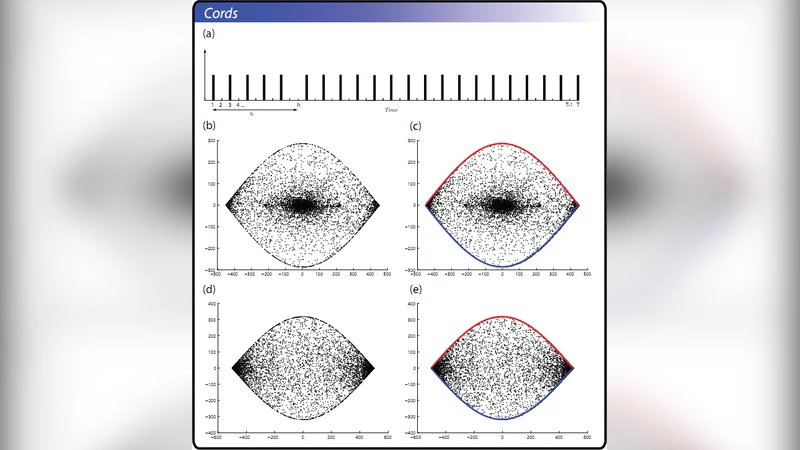
Over the last years, a great deal of attention has been focused on complex networked systems, characterized by intricate structure and dynamics. The latter has been often represented in terms of overall statistics (e.g. average and standard deviations) of the time signals. While such approaches have led to many insights, they have failed to take into account that signals at different parts of the system can undergo distinct evolutions, which cannot be properly represented in terms of average values. A novel framework for identifying the principal aspects of the dynamics and how it is influenced by the network structure is proposed in this work. The potential of this approach is illustrated with respect to three important models (Integrate-and-Fire, SIS and Kuramoto), allowing the identification of highly structured dynamics, in the sense that different groups of nodes not only presented specific dynamics but also felt the structure of the network in different ways.
💡 Research Summary
The paper introduces a novel methodological framework for probing the relationship between network structure and node‑level dynamics in complex systems. Traditional approaches often rely on global statistics such as averages and standard deviations, which obscure heterogeneous temporal evolutions across different nodes. To overcome this limitation, the authors propose a three‑step pipeline.
First, the time series x_i(t) recorded at each node i over T discrete time steps are subjected to Principal Component Analysis (PCA). PCA extracts up to M (≤ T) orthogonal principal components, PCA(m)_i, that capture the directions of maximal variance in the signals. This dimensionality reduction yields a compact, uncorrelated representation of each node’s dynamics while preserving the most informative fluctuations.
Second, for each principal component m the authors estimate the probability density function (PDF) of the component across the whole network, P(PCA(m)), and the PDF for each individual node, P_i(PCA(m)_i). The Euclidean distance between these two PDFs, denoted α_i(m), quantifies how much the dynamics of node i deviates from the network‑wide reference for that component. Small α indicates that the component is essentially independent of structural features, whereas large α signals a strong structural influence.
Third, a set of S structural descriptors s(1)…s(S) (e.g., degree, eigenvector centrality, accessibility, clustering coefficient) is computed for every node. The conditional entropy H(α|s) – also called equivocation – is then evaluated to measure how well each structural descriptor explains the variation in α. Low conditional entropy means that the corresponding structural metric accounts for a large fraction of the observed dynamical heterogeneity.
The framework is applied to three canonical dynamical models on Erdős‑Rényi (ER) random graphs with N = 10 000 nodes and average degree ⟨k⟩ = 10.
-
Integrate‑and‑Fire (I&F) model: Each node behaves as a McCulloch‑Pitts neuron emitting binary spikes. PCA of the spike trains reveals a three‑dimensional structure comprising a sparse “head”, a dense “waist”, and a complex “tail”. Nodes are stratified along the third principal component (PCA(3)) according to their degree, and the strongest correlation is found between PCA(3) and eigenvector centrality. Nodes with low centrality exhibit low firing frequencies (longer inter‑spike intervals). Moreover, regions of high node density in the PCA space correspond to low signal entropy, indicating that the dynamics preferentially occupies more ordered temporal patterns.
-
Susceptible‑Infected‑Susceptible (SIS) epidemic model: Binary infection states are recorded per node. The PCA projection collapses mainly onto two dimensions, forming an eye‑shaped cloud. Here, node degree emerges as the dominant structural predictor: α values are minimal for nodes whose degree is close to the network average (k ≈ 10) and increase for both high‑degree hubs and low‑degree leaves. This suggests that the epidemic dynamics is most sensitive to structural heterogeneity at the tails of the degree distribution.
-
Kuramoto phase‑oscillator model: For strong coupling the system quickly synchronizes, yielding uniformly low α values across all nodes, i.e., the dynamics is essentially independent of topology. When the coupling is weakened, the conditional entropy analysis identifies accessibility as the most informative structural metric, reflecting the fact that phase synchronization becomes more dependent on the ease of information flow through the network.
Across all models, the α distributions are broad, confirming that the influence of topology varies markedly from node to node even in a statistically homogeneous ER graph. The conditional entropy results demonstrate that different dynamical processes are governed by distinct structural features: eigenvector centrality for I&F, degree for SIS, and accessibility for weakly coupled Kuramoto.
The authors argue that their approach—node‑level PCA combined with α‑distance and information‑theoretic linking to structural descriptors—offers a more nuanced view of structure–function interplay than conventional linear correlation or global‑statistic methods. It reveals “structured dynamics” (i.e., clusters or cords in PCA space) that arise purely from the interaction between dynamics and topology, even when the underlying network is random. This insight has practical implications for controlling complex systems: by targeting specific structural attributes one could steer the collective dynamics toward desired regimes (e.g., suppressing epidemic spread, modulating neuronal firing patterns, or enhancing synchronization).
In summary, the paper provides a robust, generalizable toolkit for dissecting how microscopic network architecture shapes the temporal behavior of individual nodes, and it validates the method on three well‑studied dynamical models, highlighting both commonalities and model‑specific structural dependencies.
Comments & Academic Discussion
Loading comments...
Leave a Comment