Particle acceleration and the origin of gamma-ray emission from Fermi Bubbles
Fermi LAT has discovered two extended gamma-ray bubbles above and below the galactic plane. We propose that their origin is due to the energy release in the Galactic center (GC) as a result of quasi-periodic star accretion onto the central black hole. Shocks generated by these processes propagate into the Galactic halo and accelerate particles there. We show that electrons accelerated up to ~10 TeV may be responsible for the observed gamma-ray emission of the bubbles as a result of inverse Compton (IC) scattering on the relic photons. We also suggest that the Bubble could generate the flux of CR protons at energies > 10^15 eV because the shocks in the Bubble have much larger length scales and longer lifetimes in comparison with those in SNRs. This may explain the the CR spectrum above the knee.
💡 Research Summary
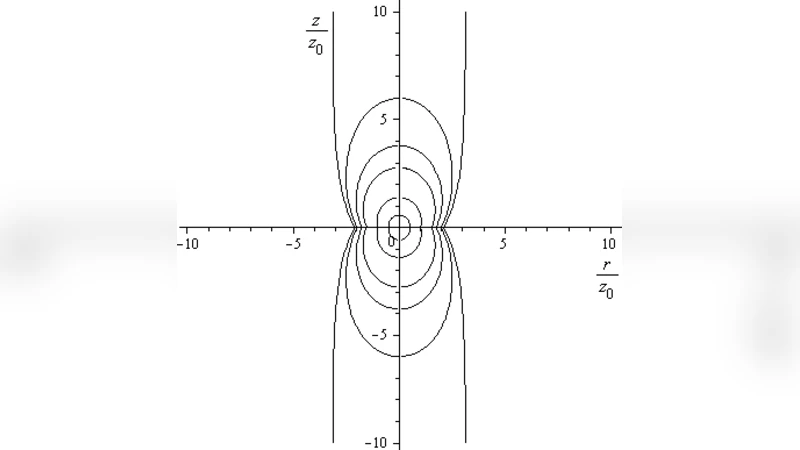
The paper proposes a unified scenario for the origin of the two giant gamma‑ray lobes discovered by the Fermi Large Area Telescope, commonly called the “Fermi Bubbles”. The authors argue that quasi‑periodic capture of stars by the super‑massive black hole (SMBH) at the Galactic centre releases ∼10⁵² erg of sub‑relativistic particle energy every 10⁴–10⁵ years. This energy injection drives a series of strong shocks that propagate vertically into the Galactic halo. Using a self‑similar solution for an exponential atmosphere (ρ(z)=ρ₀ e^{−z/z₀}), they derive analytic expressions for the shock radius as a function of height and time, showing that a “multi‑shock” structure naturally forms: hundreds of shocks of different ages fill the bubble volume (Fig. 1).
Particle acceleration is treated separately for protons and electrons because the relevant loss processes differ dramatically. For protons, the key parameter is ψ = L/l_D, where L is the average distance between successive shocks (set by the star‑capture interval) and l_D = D/u is the diffusion length of a particle in a single shock (D is the diffusion coefficient, u≈10⁸ cm s⁻¹ the shock speed). When ψ ≪ 1, the diffusion length exceeds the inter‑shock spacing, so particles experience stochastic (Fermi‑II) acceleration by many shocks. Matching ψ≈1 yields a characteristic energy E₁≈10¹⁵ eV, coincident with the observed “knee” in the cosmic‑ray spectrum. Solving the combined spatial‑momentum diffusion equation (Eq. 9) gives a steady‑state momentum distribution f(p)∝p^{−γ} with γ≈5, i.e. a differential spectrum N(E)∝E^{−3}. This is precisely the slope required to fill the cosmic‑ray flux above the knee, which standard supernova remnants (SNRs) cannot reach because of their limited size and lifetime.
Electrons, by contrast, suffer severe radiative losses via synchrotron emission and inverse‑Compton (IC) scattering. Their energy loss rate is dE/dt = −βE², where β depends on the magnetic energy density w_H and photon energy density w_ph. Balancing acceleration (E_max≈u²/(cβD_sh)) against losses gives a maximum electron energy of order 5×10¹³ eV (≈50 TeV) for Bohm diffusion and a magnetic field B≈5 µG. In this regime ψ≫ 1, so electrons are mainly accelerated by single shocks (diffusive shock acceleration, DSA). At lower energies, however, the electron mean free path λ exceeds the diffusion length, allowing a multi‑shock (Fermi‑II) component that produces a hard spectrum ∝E^{−1} up to a transition energy E*≈2.8×10¹¹ eV, where λ(E*)≈l_sh (the shock thickness). The resulting electron spectrum therefore flattens below E* and cuts off sharply above E_max.
The authors then compute the gamma‑ray emission expected from IC scattering of these electrons on the cosmic microwave background and interstellar radiation fields. The model predicts a flattening of the gamma‑ray flux below ~1 GeV (due to the electron spectrum flattening at E<E*) and a steep decline above ~100 GeV (set by the electron cut‑off). The predicted spectral shape matches the Fermi‑LAT data (Fig. 3). Moreover, because the shocks are distributed throughout the bubble volume according to the analytic solution (Eq. 2), the spatial distribution of the IC emission reproduces the observed sharp edges of the bubbles (Fig. 4). A single‑shock model fails to generate such a sharp boundary, whereas the multi‑shock scenario succeeds.
The paper’s strengths lie in (1) linking the star‑capture rate and shock energetics to observable bubble dimensions, (2) providing a self‑consistent explanation for both the gamma‑ray spectrum and the high‑energy cosmic‑ray component above the knee, and (3) offering quantitative predictions for the spatial morphology that can be tested with future observations. However, several uncertainties remain. The star‑capture frequency (ν≈10⁻⁴–10⁻⁵ yr⁻¹) and shock speed are not directly measured; they are inferred from theoretical considerations. The stability of a multi‑shock configuration over ∼10⁸ yr in the turbulent halo environment requires detailed magneto‑hydrodynamic simulations, which are not presented. Assumptions of a uniform magnetic field (B≈5 µG) and photon energy density (w_ph≈0.25 eV cm⁻³) throughout the bubble also need observational verification.
In conclusion, the authors present a compelling model in which quasi‑periodic stellar captures by the Galactic centre SMBH generate a cascade of large‑scale shocks that simultaneously (i) re‑accelerate SNR‑origin protons to >10¹⁵ eV, thereby contributing to the cosmic‑ray knee and beyond, and (ii) accelerate electrons up to ∼10 TeV, whose IC scattering produces the observed Fermi‑Bubble gamma‑ray emission with the correct spectral shape and sharp spatial edges. Future high‑resolution X‑ray, radio, and gamma‑ray observations, together with 3‑D MHD simulations, will be essential to refine the model parameters, test the multi‑shock hypothesis, and solidify the connection between Galactic centre activity and the high‑energy particle environment of the Milky Way.
Comments & Academic Discussion
Loading comments...
Leave a Comment