Efficient management of IT Infrastructure implementation and support at enterprise level
This paper deals with how to manage effectively in the design, implementation and support of an IT infrastructure at an enterprise level. This particular management is lacking in today’s IT infrastructure scenario. Just implementation is not sufficient for an NON-IT industry, they need a proper support in the infrastructure like documentation, support work flow, ticketing systems (used for IT related issue either hardware or software) etc… Many organizations spend a lot of money for this support and they expect a lot from the provider. Many providers sign in the SLA that they will provide them with an excellent support, but 80-90% it doesn’t happen. Many times they don’t meet the expectations of their client. So how to make these expectations being met 100% for the client? That is what is going to be discussed in this paper with respect to ITIL framework and other technical terminologies.
💡 Research Summary
The paper addresses the persistent problem that many enterprises, especially non‑IT businesses, struggle to manage the full lifecycle of their IT infrastructure—from design and implementation to ongoing support. It argues that merely installing hardware and software is insufficient; comprehensive documentation, asset tracking, support workflows, and ticketing systems are essential to meet client expectations and fulfill Service Level Agreements (SLAs).
The author begins by highlighting the critical role of IT assets in modern organizations and illustrates the risks of poor asset management through a hypothetical example involving the purchase of 1,000 Windows XP licenses. The lack of proper documentation can lead to license misuse, audit failures, and financial loss.
The paper then outlines a structured approach to infrastructure implementation, anchored in the ITIL framework. It divides the process into five ITIL stages: Service Strategy, Service Design, Service Transition, Service Operation, and Continual Service Improvement.
In the Strategy phase, the organization defines its service objectives, evaluates vendor proposals, and secures budget approval from finance and senior management. The Design phase details the creation of floor plans, network diagrams, power‑load calculations for server rooms, and specifications for cabling, switches, storage, and servers. All design artifacts are subject to management review and sign‑off before any physical work begins.
The Transition phase focuses on Change Management. The paper proposes a Change Advisory Board (CAB) that assesses each change request against criteria such as risk, downtime, and return on investment. Approved changes are documented, communicated to vendors, and scheduled with at least a 72‑hour notice to affected staff. Post‑implementation testing, a rapid (2‑3 hour) approval cycle, and user notification complete the transition.
Operational support is built on a web‑based ticketing system that automates notifications, approvals, and status tracking. Vendor performance is reviewed semi‑annually, with satisfaction measured on a five‑point scale. If a vendor fails to meet 100 % SLA compliance, renewal decisions are made accordingly. The system also generates centralized reports for finance and management, streamlining audit trails.
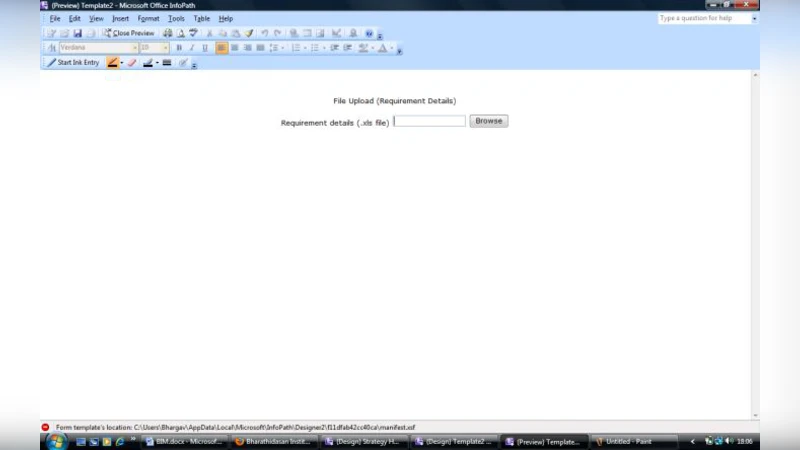
Throughout the manuscript, the author includes numerous flow‑charts and screen mock‑ups (Figures 5‑13) that illustrate the user interface for requirement capture, procurement, approval workflows, design validation, and support ticket handling. These visual aids reinforce the proposed end‑to‑end process.
In conclusion, the paper contends that the primary cause of SLA breaches is the absence of a disciplined, documented, and automated management framework. By adopting the ITIL‑based methodology described, integrating web‑based automation, and enforcing rigorous change and support procedures, organizations can dramatically improve SLA fulfillment—from the typical 75‑90 % range to near‑perfect compliance. The author suggests that future work should involve pilot implementations, quantitative KPI tracking, and possibly AI‑driven predictive analytics to further enhance proactive infrastructure management.
Comments & Academic Discussion
Loading comments...
Leave a Comment