Net-Centric World: Lifestyle of the 21st Century
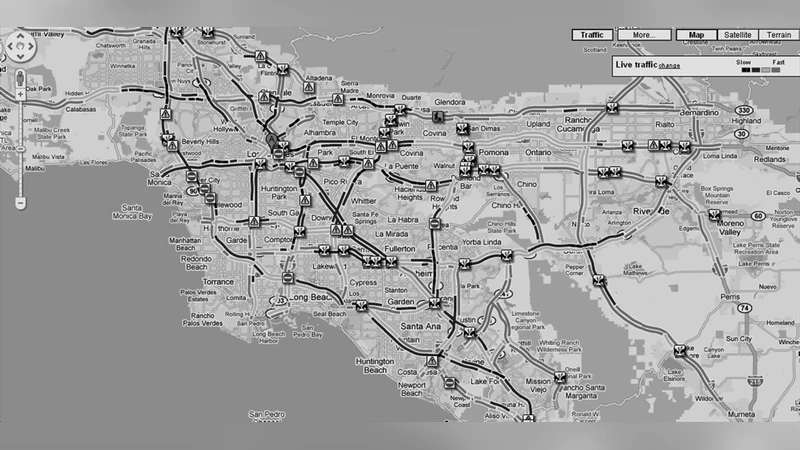
In this paper, we research the potential of information communication technologies (ICTs) for changing our society from a commute-centric to a network-centric environment. We propose to formalize the key attributes of ICT-based telecommuting experiences from both economic and human interactivity perspective. We introduce the notion of network-eligible transactions and disclose the link between degree of network centricity and worker settlement radius, postulating that media-rich network services have a strong potential to increase the physical distance between work and home locations. We also highlight notable technology challenges and opportunities of migration from location-based to mobile living, signifying the needs for new services and standards development.
💡 Research Summary
The paper “Net‑Centric World: Lifestyle of the 21st Century” investigates how information and communication technologies (ICT) can shift modern societies from a commute‑centric paradigm to a network‑centric one. The authors begin by documenting the historical growth of urbanization and the resulting daily commuting burden, citing statistics that roughly half of the world’s population now lives in metropolitan areas and that average workers in the United States, United Kingdom, and Canada commute 16 miles, 5–10 miles, and 7.6 km respectively. They point out a striking gap between the proportion of employees who are eligible for tele‑working (55 % of U.S. federal workers) and those who actually use it (≈9 %). Similar gaps appear in the private sector, suggesting that the potential of ICT for remote work remains largely untapped.
The authors introduce the concept of “network‑eligible transactions,” which are interactions that can be carried out over high‑quality, media‑rich channels such as video conferencing, tele‑presence, augmented reality (AR) and virtual reality (VR). They argue that human collaboration relies on multi‑sensory cues—visual, auditory, tactile, even olfactory—that are difficult to reproduce remotely. Consequently, purely electronic exchanges often suffer from latency, compression artifacts, and loss of non‑verbal information, limiting their effectiveness for certain tasks. Nevertheless, the paper shows that multi‑modal digital communication can dramatically reduce information loss compared with text‑only channels, citing research on multimodal cognition.
A central contribution is the definition of a quantitative metric, the Net‑Centric Factor (NCF):
NCF = online tasks / (online + offline tasks)
NCF ranges from 0 (entirely offline) to 1 (entirely online). The authors illustrate how different occupations map onto this scale: a technical writer may have NCF≈0.9, while a hair stylist has NCF≈0.0. NCF therefore serves as a decision‑making tool for organizations to assess which roles can be fully remote, which require hybrid arrangements, and how often employees need to commute.
The economic model builds on NCF by separating costs into three components: (1) Sv – the value generated by remote work (e.g., better housing choices, reduced commuting time, improved work‑life balance); (2) Σ(Ci) – the sum of telecommunication expenses across all media types required to support the online portion of work; and (3) Cc – the conventional commuting cost (transport, time, security, etc.). The total cost equation is:
Total Cost = Sv + Σ(Ci) + Cc
Using data from U.S., U.K., and Canadian surveys, the authors populate tables that compare per‑mile commuting costs (≈$0.50 / mile) with per‑minute media costs (e.g., $0.44 per letter, $0.5 per minute of voice, $0.5 per minute of video). They demonstrate a “sweet‑spot” phenomenon: at low NCF (≈0) the cheapest residential location is close to the workplace; as NCF rises, the optimal residence moves farther away because the marginal benefit of a better living environment outweighs the added commuting expense. For instance, with NCF = 0.4 (two remote days per week) workers can live significantly closer to the office while still enjoying some flexibility; with NCF = 0.8 (one remote day per week) they can afford to locate in suburban or ex‑urban areas, reducing overall cost despite higher media expenses.
The paper also discusses technical challenges that must be overcome for a truly network‑centric society. Bandwidth and latency constraints of current broadband and mobile networks limit high‑fidelity VR/AR experiences. The authors call for the deployment of 5G/6G, edge computing, and standardized QoS frameworks (ITU‑T, IEEE) to guarantee the required performance. Security and privacy concerns are highlighted, especially when sensitive data traverses public networks. Finally, the authors note that reproducing tactile, gustatory, and olfactory sensations remains an open research area, requiring advances in haptic devices, ultrasonic feedback, and multimodal display technologies.
In conclusion, the study provides a comprehensive framework that links ICT capabilities, human interaction theory, and economic analysis. By quantifying the proportion of work that can be performed online (NCF) and modeling its impact on commuting distance, housing costs, and telecommunication expenses, the authors offer actionable insights for policymakers, corporate strategists, and technology developers seeking to accelerate the transition to a net‑centric lifestyle in the 21st century.
Comments & Academic Discussion
Loading comments...
Leave a Comment