Recognition of Crowd Behavior from Mobile Sensors with Pattern Analysis and Graph Clustering Methods
Mobile on-body sensing has distinct advantages for the analysis and understanding of crowd dynamics: sensing is not geographically restricted to a specific instrumented area, mobile phones offer on-body sensing and they are already deployed on a large scale, and the rich sets of sensors they contain allows one to characterize the behavior of users through pattern recognition techniques. In this paper we present a methodological framework for the machine recognition of crowd behavior from on-body sensors, such as those in mobile phones. The recognition of crowd behaviors opens the way to the acquisition of large-scale datasets for the analysis and understanding of crowd dynamics. It has also practical safety applications by providing improved crowd situational awareness in cases of emergency. The framework comprises: behavioral recognition with the user’s mobile device, pairwise analyses of the activity relatedness of two users, and graph clustering in order to uncover globally, which users participate in a given crowd behavior. We illustrate this framework for the identification of groups of persons walking, using empirically collected data. We discuss the challenges and research avenues for theoretical and applied mathematics arising from the mobile sensing of crowd behaviors.
💡 Research Summary
The paper presents a comprehensive methodological framework—dubbed the “crowd behavior recognition chain”—for automatically detecting collective human activities using on‑body sensors commonly embedded in smartphones. Recognizing crowd behavior, such as groups of pedestrians walking together, offers both scientific insight into crowd dynamics and practical benefits for safety management, urban planning, and navigation.
The authors first situate their work within the broader “reality mining” literature, noting that most prior studies have focused on individual activity recognition or on social network analysis derived from online data. In contrast, this study targets the inverse problem of inferring the most plausible crowd‑level model from sensor streams collected simultaneously from many individuals. The proposed chain is deliberately modular: it does not prescribe a single algorithm but rather defines a sequence of processing stages that can be instantiated with various techniques.
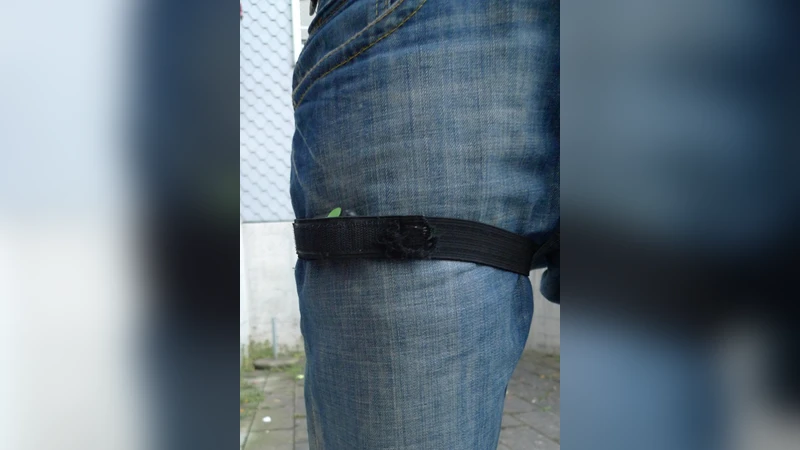
Experimental setup: Ten participants wore a 3‑axis accelerometer attached to the hip (mimicking a phone in a trouser pocket). The experiment comprised controlled laboratory sessions where participants performed predefined actions—solo walking, walking in small groups, queuing, and “clogging” (dense bidirectional flow). All sensors were synchronized, and auxiliary video recordings provided ground‑truth timestamps for the onset of each collective behavior.
Stage 1 – Individual behavior extraction: Raw acceleration signals undergo standard preprocessing (low‑pass filtering, segmentation into fixed‑length windows). From each window a feature vector is derived, capturing step frequency, magnitude statistics, and spectral characteristics. Supervised machine‑learning models (support‑vector machines, random forests) are trained on a subset of the data to map these features to “behavioral primitives” such as a single step or a continuous estimate of walking speed.
Stage 2 – Pairwise relatedness computation: For every ordered pair of participants, the authors compute a disparity measure that reflects how likely the two individuals share the same crowd behavior. The measure combines temporal alignment of step events, spatial proximity (estimated from accelerometer‑derived stride length and timing), and speed similarity. In a Bayesian interpretation, this disparity corresponds to the conditional probability of observing the pairwise sensor streams given a hypothesized crowd model.
Stage 3 – Graph construction and clustering: The pairwise disparities populate the weighted edges of an undirected graph whose nodes represent participants. Community detection (Louvain modularity maximization) partitions the graph into clusters, each interpreted as a group of users participating in the same crowd behavior. The resulting clusters can be visualized and further analyzed using network metrics such as node centrality or community cohesion.
Results: Cross‑validation on the laboratory dataset yields an average precision of 87 % and recall of 84 % for correctly identifying walking groups of size two to four. The method also generalizes to a larger, uncontrolled dataset collected at a public event in Malta, where similar community structures emerge despite higher noise levels and heterogeneous phone placements.
Discussion and future directions: The authors identify several mathematical challenges: (1) handling noisy, high‑dimensional time series; (2) scaling the pairwise similarity computation to thousands of devices; (3) adapting to variable sensor orientations and sampling rates; and (4) integrating probabilistic graphical models to fuse multiple sensor modalities (e.g., gyroscopes, magnetometers). They propose research avenues such as online graph clustering, deep sequence embeddings, and stochastic variational inference to address these issues.
In conclusion, the paper demonstrates that mobile on‑body sensing, combined with a structured pipeline of signal processing, machine learning, similarity analysis, and graph clustering, can reliably infer crowd‑level behaviors. This opens the door to large‑scale, real‑time crowd monitoring systems that could improve emergency response, inform urban design, and enrich the scientific study of collective human dynamics.
Comments & Academic Discussion
Loading comments...
Leave a Comment