SRS BUILDER 1.0: An Upper Type CASE Tool For Requirement Specification
Software (SW) development is a labor intensive activity. Modern software projects generally have to deal with producing and managing large and complex software products. Developing such software has become an extremely challenging job not only because of inherent complexity, but also mainly for economic constraints unlike time, quality, maintainability concerns. Hence, developing modern software within the budget still remains as one of the main software crisis. The most significant way to reduce the software development cost is to use the Computer-Aided Software Engineering (CASE) tools over the entire Software Development Life Cycle (SDLC) process as substitute to expensive human labor cost. We think that automation of software development methods is a valuable support for the software engineers in coping with this complexity and for improving quality too. This paper demonstrates the newly developed CASE tools name “SRS Builder 1.0” for software requirement specification developed at our university laboratory, University of North Bengal, India. This paper discusses our new developed product with its functionalities and usages. We believe the tool has the potential to play an important role in the software development process.
💡 Research Summary
The paper presents “SRS Builder 1.0”, an upper‑CASE tool designed to automate the creation of Software Requirement Specification (SRS) documents in accordance with IEEE standards. The authors begin by highlighting the persistent software crisis: despite falling hardware costs, software development remains labor‑intensive and expensive, especially for small firms and academic institutions that cannot afford commercial CASE tools. They review the definitions of software engineering, Computer‑Aided Software Engineering (CASE), and the three traditional categories of CASE tools—upper, lower, and integrated—emphasizing that upper‑CASE tools focus on analysis and design activities.
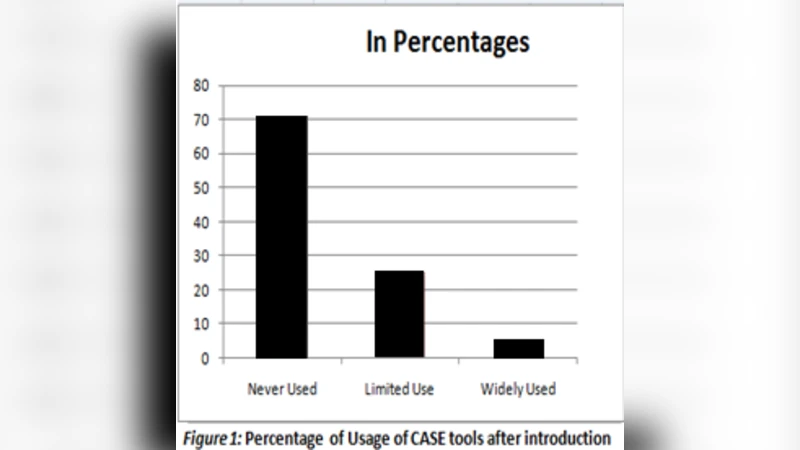
The authors enumerate the benefits of CASE adoption (productivity gains, quality improvement, cost reduction, effort savings of 30‑40 %, reduced development time, better documentation, maintainability, and a uniform communication platform). They also cite studies showing that only about 5 % of organizations actually use CASE tools, attributing low adoption to high price, complexity, poor quality, and the availability of cheap labor in developing countries.
Motivated by these limitations and by observations made while teaching software engineering at the University of North Bengal, the authors decided to develop a low‑cost, user‑friendly tool that would help students and small projects generate well‑structured SRS documents. The tool is built using Visual Basic 6.0 for the front end and MySQL for the back end, targeting Windows XP/Vista platforms with a minimal memory footprint of roughly 15 KB. The development process followed the BRIDGE software development model, a methodology previously proposed by the same authors.
Key functional features include: (1) strict adherence to IEEE SRS formatting while allowing customizable templates; (2) a graphical user interface that guides users through project creation, user management, SRS data entry, generation, printing, and backup; (3) built‑in documentation and easy installation procedures; and (4) compatibility with modest hardware specifications. A Function Hierarchy Diagram (FHD) illustrates the modular structure of the system, showing modules for user administration, SRS management, and system configuration.
A sample output is provided for an ATM system, demonstrating that the tool can automatically populate standard SRS sections (introduction, scope, functional and non‑functional requirements, interfaces, constraints, etc.) with appropriate headings and placeholders. The authors acknowledge that the sample is illustrative rather than a complete, validated specification.
In the conclusion, the authors argue that SRS Builder 1.0 can play a significant role in both industry and education by lowering the barrier to entry for systematic requirements engineering. They invite interested institutions to obtain the tool at a nominal transportation cost. Future work includes extending the tool to generate UML diagrams (use case, class, sequence, etc.) and further validation through broader testing.
While the paper offers a concrete prototype that addresses a specific niche—automated SRS generation—it lacks rigorous empirical evaluation (e.g., productivity metrics, error rates, user satisfaction surveys) and does not discuss integration with modern development environments (e.g., .NET, web‑based platforms) or alternative databases. The reliance on legacy technologies (VB6, MySQL) may limit scalability and long‑term maintainability. Nonetheless, the work contributes a practical, low‑cost solution that could be valuable for teaching requirements engineering and for small‑scale projects where commercial CASE tools are prohibitive.
Comments & Academic Discussion
Loading comments...
Leave a Comment