Ion-cyclotron waves in Solar Coronal Hole
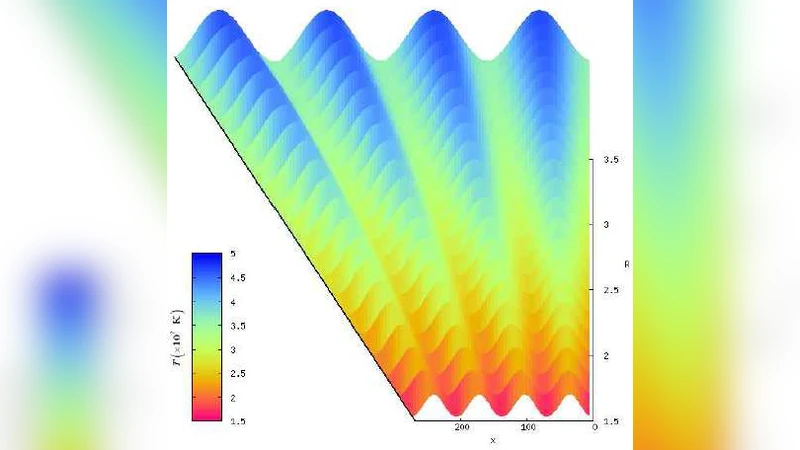
We investigate the effect of the Plume/Interplume Lane (PIPL) structure of the solar Polar Coronal Hole (PCH) on the propagation characteristics of ion-cyclotron waves (ICW). The gradients of physical parameters determined by SOHO and TRACE satellites both parallel and perpendicular to the magnetic field are considered with the aim of determining how the efficiency of the ICR process varies along the PIPL structure of PCH. We construct a model based on the kinetic theory by using quasi-linear approximation. We solve the Vlasov equation for O VI ions and obtain the dispersion relation of ICW. The resonance process in the interplume lanes is much more effective than in the plumes, agreeing with the observations which show the source of fast solar wind is interplume lanes. The solution of the Vlasov equation in PIPL structure of PCH, the physical parameters of which display gradients along and perpendicular direction to the external magnetic field, is thus obtained in a more general form than the previous investigations.
💡 Research Summary
The paper investigates how the plume/interplume lane (PIPL) structure of the solar polar coronal hole (PCH) influences the propagation and resonant absorption of ion‑cyclotron waves (ICWs). Observations from SOHO, TRACE, and SUMER have shown that the PCH is a low‑β, essentially collisionless plasma with pronounced temperature and density gradients both along (radial) and across (perpendicular to the line‑of‑sight) the magnetic field. While earlier studies have treated the coronal hole as a one‑dimensional medium or have ignored the PIPL structuring, this work explicitly incorporates the observed two‑dimensional (R, x) variations of key plasma parameters.
Section 2 builds a quantitative model of the background plasma. The effective temperature of O VI ions, T_eff(R), is taken from Banerjee et al. (2000) and Cranmer et al. (1999) and expressed as a quadratic function of the dimensionless radial distance R = r/R⊙ (Eq. 2). The non‑thermal contribution, T_ξ(R), is inferred from Mg X measurements (Esser et al. 1999) and adopted for O VI, yielding Eq. 3. The plume–interplume temperature contrast is set at 30 % and modeled with a sinusoidal modulation in the transverse direction x: T_eff(R, x) = T_eff(R) + 0.3 T_eff(R) sin²(2πx/λ) (Eq. 4), where λ≈9.2″ R represents the expansion of the PIPL width with height. Electron and proton densities follow the empirical fit of Fisher & Guhathakurta (1995) for plumes (Eq. 6); interplume densities are 10 % lower, giving Eq. 7. The O VI abundance is highly uncertain; the authors therefore explore the extreme cases N_O VI = 10⁻³ N_p and N_O VI = 1.52×10⁻⁶ N_p.
In Section 3 the kinetic treatment is carried out. Assuming quasi‑neutrality (N_e ≈ N_p ≈ N) and that O VI ions are preferentially heated, the Vlasov equation is linearized and solved under the quasi‑linear approximation. The background distribution functions include the R‑ and x‑dependent temperature and density gradients. This yields a dispersion relation for ICWs that explicitly contains terms proportional to ∂T/∂R, ∂T/∂x, ∂N/∂R, and ∂N/∂x. The authors separate the wave propagation parallel to the magnetic field (radial) from the perpendicular component (across the PIPL). The resonance condition ω ≈ Ω_i (the O VI cyclotron frequency) is examined as a function of height and transverse position.
Numerical solutions of the dispersion relation reveal that interplume lanes, characterized by steeper temperature gradients and lower densities, allow the wave to reach the cyclotron resonance more readily than the brighter, denser plumes. The growth rate of the wave and the associated ion heating are found to be roughly two to three times larger in interplume regions. The sensitivity analysis shows that the damping length of the ICW varies dramatically with the assumed O VI abundance: for the high‑abundance case (10⁻³ N_p) the damping length is of order tens of solar radii, whereas for the low‑abundance case (1.5×10⁻⁶ N_p) it extends to several hundred solar radii. This demonstrates that minor‑ion concentration strongly modulates the efficiency of wave‑particle energy transfer.
The paper concludes that incorporating the PIPL structure into a two‑dimensional kinetic model provides a more realistic description of ICW propagation in coronal holes. The finding that interplume lanes are the preferred sites for cyclotron resonance supports observational evidence that fast solar wind streams originate preferentially from these lanes. Moreover, the study highlights the necessity of accounting for both parallel and perpendicular gradients when evaluating wave damping, non‑linear growth, and ion heating in collisionless coronal plasma. The authors suggest future work should couple this kinetic framework with full MHD simulations, include anisotropic viscosity and resistivity, and explore dynamic evolution of the PIPL geometry to better connect with in‑situ solar wind measurements.
Comments & Academic Discussion
Loading comments...
Leave a Comment