Random Information Spread in Networks
Let G=(V,E) be an undirected loopless graph with possible parallel edges and s and t be two vertices of G. Assume that vertex s is labelled at the initial time step and that every labelled vertex copi
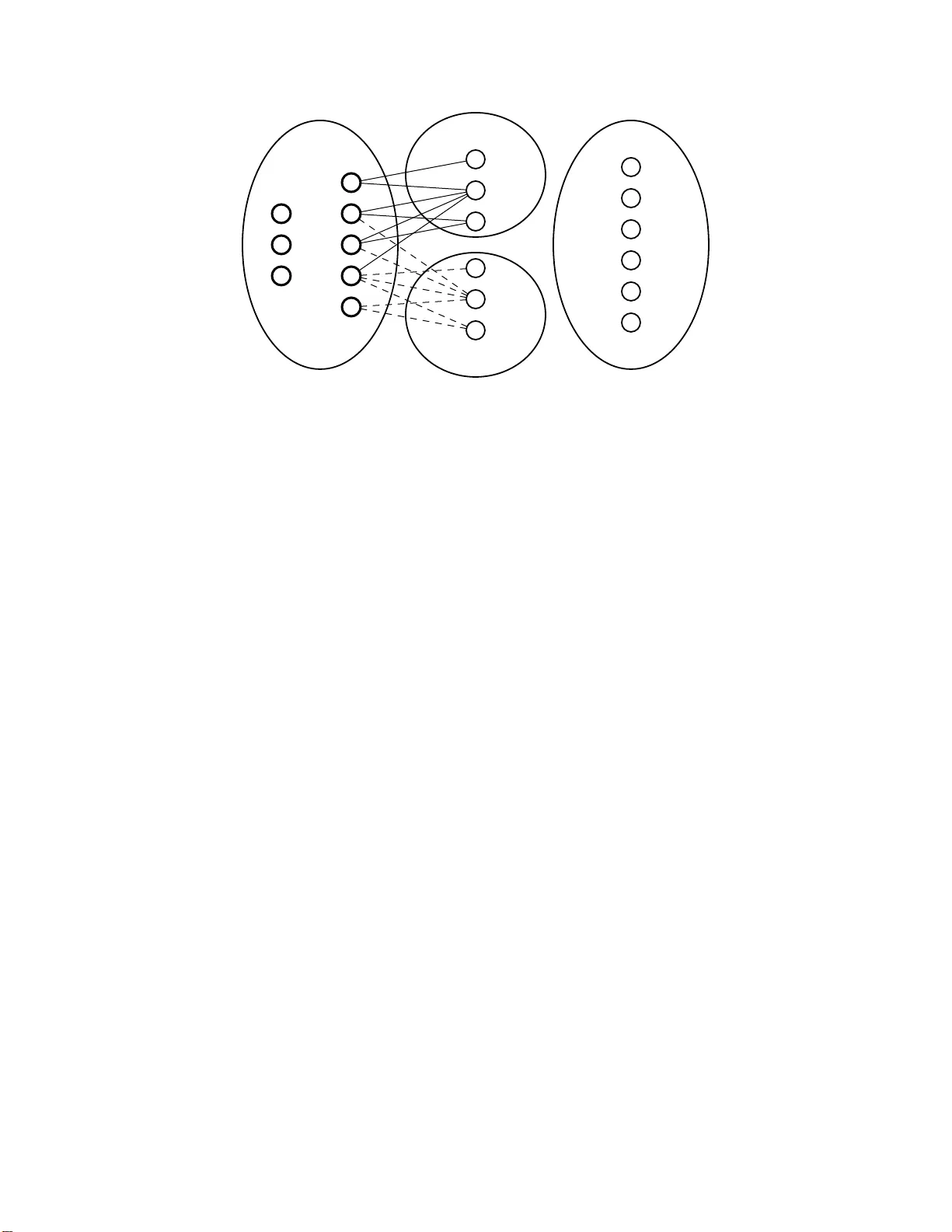
Let G=(V,E) be an undirected loopless graph with possible parallel edges and s and t be two vertices of G. Assume that vertex s is labelled at the initial time step and that every labelled vertex copies its labelling to neighbouring vertices along edges with one labelled endpoint independently with probability p in one time step. In this paper, we establish the equivalence between the expected s-t first arrival time of the above spread process and the notion of the stochastic shortest s-t path. Moreover, we give a short discussion of analytical results on special graphs including the complete graph and s-t series-parallel graphs. Finally, we propose some lower bounds for the expected s-t first arrival time.
💡 Research Summary
The paper introduces a probabilistic model for information spread on an undirected, loop‑less graph that may contain parallel edges. Two distinguished vertices, s (source) and t (target), are selected. Initially only s is “labelled”. At each discrete time step every labelled vertex attempts to copy its label to each neighbour across each incident edge independently with probability p. The random variable of interest is the first time T_{st} at which t becomes labelled; the authors focus on its expected value E
📜 Original Paper Content
🚀 Synchronizing high-quality layout from 1TB storage...