An Empirical Investigation on Important Subgraphs in Cooperation-Competition networks
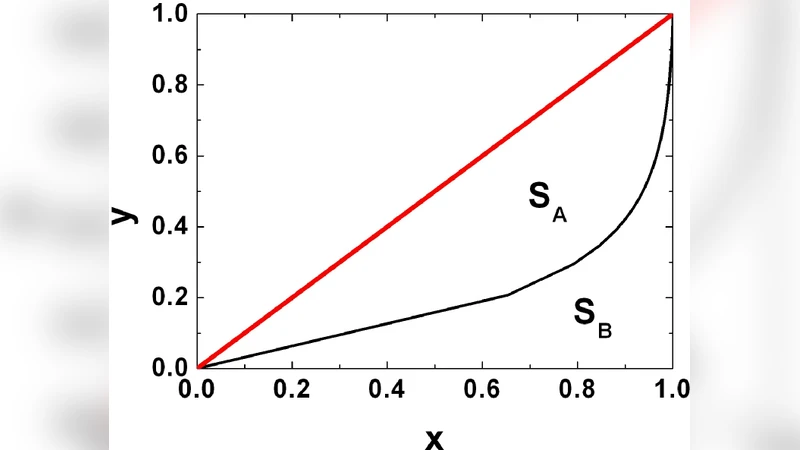
Subgraphs are very important for understanding structure and function of complex networks. Dyad and triad are the elementary subgraphs. We focus on the distribution of their act degree defined as the number of activities, events or organizations they join, which indicates the importance of the subgraphs. The empirical studies show that, in a lot of real world systems, the dyad or triad act degree distributions follow “shifted power law” (SPL), where {\alpha} and {\gamma} are constants. We defined a “heterogeneity index”, H, to describe how it is uneven and analytically deduced the correlation between H and {\alpha} and {\gamma}. This manuscript, which shows the details of the empirical studies, serves as an online supplement of a paper submitted to a journal.
💡 Research Summary
The paper investigates the role of the most elementary subgraphs—dyads (pairs of vertices) and triads (triplets of vertices)—in cooperation‑competition bipartite networks. Each dyad or triad is assigned an “act degree”, defined as the number of activities, events, or organizations that the constituent vertices jointly participate in. This measure captures a higher‑order participation pattern that is not reflected by ordinary node degree.
Empirical analysis across a wide variety of real‑world systems shows that the distribution of act degrees follows a Shifted Power Law (SPL):
\
Comments & Academic Discussion
Loading comments...
Leave a Comment