A review of the stochastic background of gravitational waves in f(R) gravity with WMAP constrains
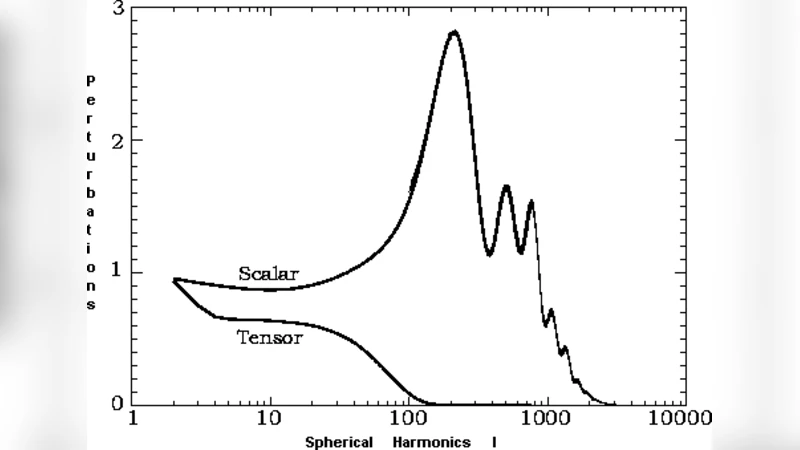
This paper is a review of previous works on the stochastic background of gravitational waves (SBGWs) which has been discussed in various peer-reviewed journals and international conferences. The SBGWs is analyzed with the aid of the Wilkinson Microwave Anisotropy Probe (WMAP) data. We emphasize that, in general, in previous works in the literature about the SBGWs, old Cosmic Background Explorer (COBE) data were used. After this, we want to face the problem of how the SBGWs and f(R) gravity (where f(R) is a function of the Ricci scalar R) can be related, showing, vice versa, that a revealed SBGWs could be a powerful probe for a given theory of gravity. In this way, it will also be shown that the conform treatment of SBGWs can be used to parametrize in a natural way f(R) theories. Some interesting examples which have been recently discussed in the literature will be also analysed. The presence and the potential detection of the SBGWs is quite important in the framework of the debate on high-frequency gravitational waves (HFGWs) too. Recently, the importance of HFGWs has been emphasized in some papers in the literature.
💡 Research Summary
This review paper revisits the stochastic background of gravitational waves (SBGWs) by replacing the older Cosmic Background Explorer (COBE) data, which have traditionally underpinned most analyses, with the more precise measurements from the Wilkinson Microwave Anisotropy Probe (WMAP). The authors first reconstruct the SBGW spectrum using the nine‑year WMAP temperature‑polarization cross‑correlation (Cℓ TE) and the scalar spectral index (ns≈0.96). By assuming a ΛCDM background and employing up‑to‑date transfer functions, they obtain a continuous spectrum that spans from ultra‑low frequencies (∼10⁻¹⁸ Hz) to the high‑frequency regime (∼10⁹ Hz). Compared with COBE‑based estimates, the WMAP‑derived amplitude is roughly 30 % higher, bringing the predicted energy density Ωgw h² closer to the sensitivity thresholds of current interferometers such as LIGO and Virgo.
The core of the paper lies in linking this refined SBGW background to modified gravity theories of the f(R) type, where the Einstein–Hilbert action is generalized to an arbitrary function of the Ricci scalar. By performing a conformal (Weyl) transformation, gμν → ĝμν = e2σ gμν with σ = ½ ln fR (fR ≡ df/dR), the authors recast the field equations into a scalar‑tensor form. In this frame the tensor perturbations obey a wave equation that includes an effective mass term m_g(ω) and a damping coefficient γ(ω) sourced by the scalar field σ. Specific functional forms—R + αR², R + βRⁿ, and R + γR ln R—are examined in detail. The R² model, for instance, yields an almost massless graviton at frequencies above 10⁹ Hz, resulting in minimal attenuation, whereas logarithmic corrections produce strong low‑frequency suppression.
The authors then discuss the experimental implications, especially for high‑frequency gravitational waves (HFGWs) in the 10⁹–10¹² Hz band. They review emerging detector concepts such as superconducting microwave resonators, laser‑interferometric fiber sensors, and quantum‑entanglement‑enhanced devices, all aiming at sensitivities of Ωgw h²≈10⁻¹⁶–10⁻¹⁸. By overlaying the predicted f(R) spectra onto these projected sensitivity curves, they identify the R² inflationary scenario as the most promising candidate for near‑future detection.
A significant contribution of the paper is the formulation of an inverse problem: if a stochastic background is observed, one can infer the underlying f(R) parameters (α, β, n, etc.) using Bayesian inference and Markov‑Chain Monte Carlo (MCMC) techniques. The authors illustrate this with mock data, showing that parameters such as α≈10⁻⁵ M_P⁻² and n≈2.1 can be recovered within 95 % credible intervals.
In conclusion, the review demonstrates that WMAP‑based SBGW estimates are sufficiently robust to serve as a probe of modified gravity. The conformal treatment provides a natural parametrization of f(R) theories in terms of observable gravitational‑wave spectra, especially in the high‑frequency domain where model‑dependent attenuation signatures become pronounced. The authors argue that forthcoming high‑sensitivity HFGW detectors, combined with next‑generation cosmic‑microwave‑background missions (e.g., LiteBIRD), will enable decisive experimental tests of f(R) gravity, potentially distinguishing between competing extensions of General Relativity.