Computing extinction maps of star nulling interferometers
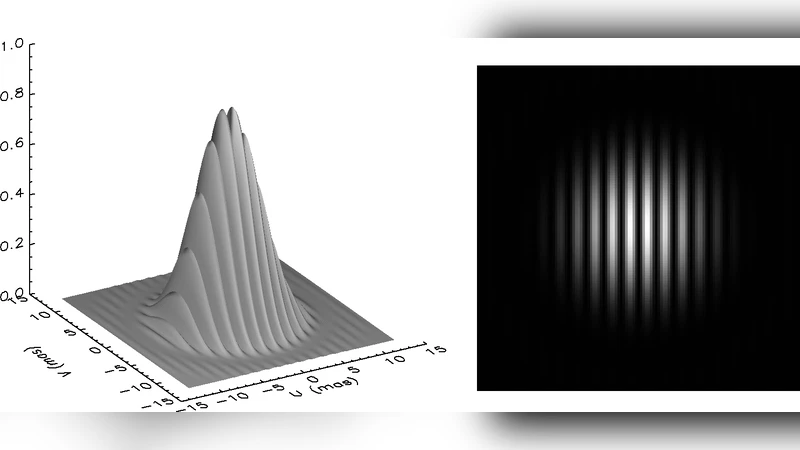
Herein is discussed the performance of spaceborne nulling interferometers searching for extra-solar planets, in terms of their extinction maps projected on-sky. In particular, it is shown that the designs of Spatial Filtering (SF) and Achromatic Phase Shifter (APS) subsystems, both required to achieve planet detection and characterization, can sensibly affect the nulling maps produced by a simple Bracewell interferometer. Analytical relationships involving cross correlation products are provided and numerical simulations are performed, demonstrating marked differences in the aspect of extinction maps and the values of attained fringes contrasts. It is concluded that depending on their basic principles and designs, FS and APS will result in variable capacities for serendipitous discoveries of planets orbiting around their parent star. The mathematical relationships presented in this paper are assumed to be general, i.e. they should apply to other types of multi-apertures nulling interferometers.
💡 Research Summary
The paper presents a thorough theoretical and numerical investigation of how the design of spatial filtering (SF) and achromatic phase shifter (APS) subsystems influences the extinction (nulling) maps of a simple Bracewell interferometer, a key instrument concept for space‑borne detection of exoplanets. Starting from the idealized on‑sky extinction map E(u,v)=sin²(πBu/λ) that assumes point detectors and neglects diffraction, the author reformulates the problem in the detector plane (O′X′Y′) where the complex amplitude A(u,v,x′,y′) is the product of the interferometric fringe term and the telescope pupil function B̂_D(x,y). The Fourier transform of the circular pupil yields the familiar Airy point‑spread function (PSF).
Two SF implementations are examined. The first uses a physical pinhole of diameter P located just behind the interferometer focus. By integrating the squared modulus of A over the pinhole area, the resulting extinction map is shown to be the cross‑correlation of the ideal fringe pattern with the PSF convolved with the pinhole function (Eq. 5). This cross‑correlation acts as an envelope that limits the useful field‑of‑view (FoV) and reduces fringe contrast away from the optical axis.
The second SF implementation employs single‑mode fibers (SMF). The fiber’s fundamental mode is approximated by a Gaussian of 1/e² radius R_F, and the coupling efficiency introduces a Gaussian weighting factor in the integral. The author demonstrates that the SMF‑filtered extinction map can also be expressed as a cross‑correlation, now between the PSF and the Gaussian mode (Eqs. 10‑11). Compared with a pinhole, an SMF provides a tighter FoV but improves the balance of power between the two interferometer arms, leading to higher fringe contrast.
Next, the paper distinguishes two families of APS. “Non‑flip” APS add a constant π phase shift to one arm without altering the beam geometry; the resulting extinction map retains the simple cross‑correlation form. “Pupil‑flip” (or FoV‑reversal) APS invert the pupil and the field of view, producing two symmetric images centred at (±F u, ±F v) in the detector plane. The extinction map then becomes the sum of two cross‑correlations (Eq. 7), which reduces overlap between the two images and consequently lowers the achievable fringe contrast for off‑axis sources.
The most complex case—SMF combined with a pupil‑flip APS—is treated by replacing the circular pupil function with a generic transmission T(x,y) and deriving expressions (Eqs. 12a‑12b) that require numerical integration. No closed‑form simplification is possible, underscoring the need for computational evaluation.
Numerical simulations (λ = 10 µm, baseline B = 20 m, telescope diameter D = 2 m) are performed for four configurations: (i) pinhole + non‑flip APS, (ii) pinhole + pupil‑flip APS, (iii) SMF + non‑flip APS, and (iv) SMF + pupil‑flip APS. The results confirm the analytical predictions: (i) reproduces the classic circular null with a contrast of ~10⁻⁴; (ii) shows two duplicated fringe patterns with reduced contrast (~5 × 10⁻⁵) and an effective FoV halved; (iii) yields a narrower FoV (~0.5 arcsec) but improved contrast (~10⁻⁵); (iv) exhibits the most degraded performance, with contrast falling below 10⁻⁶ and a highly fragmented extinction map. These differences directly affect the probability of serendipitous planet detections: designs that preserve a single, high‑contrast central null (pinholes or SMFs with non‑flip APS) are far more favorable than those that split the field (pupil‑flip APS).
The author concludes that the choice of SF and APS is not a peripheral engineering detail but a decisive factor that shapes the extinction map, the usable FoV, and the achievable fringe contrast. The cross‑correlation framework introduced is general and can be extended to multi‑aperture nulling interferometers, providing a powerful tool for early‑stage design trade‑offs. Consequently, mission concepts such as ESA’s Darwin or NASA’s TPF‑I must incorporate these quantitative assessments to optimize their planet‑finding capabilities.
Comments & Academic Discussion
Loading comments...
Leave a Comment