Modeling the evolution of continuously-observed networks: Communication in a Facebook-like community
Building on existing stochastic actor-oriented models for panel data, we employ a conditional logistic framework to explore growth mechanisms for tie creation in continuously-observed networks. This framework models the likelihood of tie formation distinguishing it from hazard models that consider time to tie formation. It enables multiple growth mechanisms for network evolution (homophily, focus constraints, reinforcement, reciprocity, triadic closure, and popularity) to be modeled simultaneously. We apply this framework to communication within a Facebook-like community. The findings exemplify the inadequacy of descriptive measures that test single mechanisms independently. They also indicate how system design shapes behavior and network evolution.
💡 Research Summary
The paper introduces a novel statistical framework for modeling tie formation in continuously‑observed social networks, extending the stochastic actor‑oriented model (SAOM) tradition that has traditionally relied on panel‑style snapshots. Instead of a hazard‑based approach that models the time until a tie appears, the authors employ a conditional logistic regression that treats each observed tie‑creation event as a “success” and all other potential, but unrealized, ties at that exact moment as “failures.” By constructing a risk set for every event that includes every possible partner not yet connected to the sender, the model directly estimates the probability of tie formation conditional on the observed network state and covariates. This formulation is well‑suited to high‑frequency digital trace data where interactions occur at irregular, often sub‑second intervals, and where the exact timing of each event is recorded.
Within this framework the authors simultaneously estimate six canonical mechanisms that have been proposed to drive network evolution:
- Homophily – similarity in demographic attributes (age, gender) and interests.
- Focus constraints – the propensity to connect with others who share the same physical or virtual context (e.g., belonging to the same group or participating in the same discussion).
- Reinforcement – the increased likelihood of future interaction after a pair has already exchanged messages.
- Reciprocity – the tendency for a one‑way message to be answered by a return message.
- Triadic closure – the formation of a tie when two actors already share a common neighbor.
- Popularity (preferential attachment) – the higher probability that well‑connected actors receive new ties.
The empirical application uses a Facebook‑like community platform in which users exchange private messages. The dataset spans two years, contains roughly 45 000 messages exchanged among 12 000 active users, and includes precise timestamps, user profile attributes, and group memberships. For each message, the sender’s set of all users not yet connected to them at that moment forms the risk set; the actual recipient is the observed “success.” Conditional logistic regression is then run with covariates representing the six mechanisms, allowing the authors to obtain odds ratios that quantify each effect while controlling for the others.
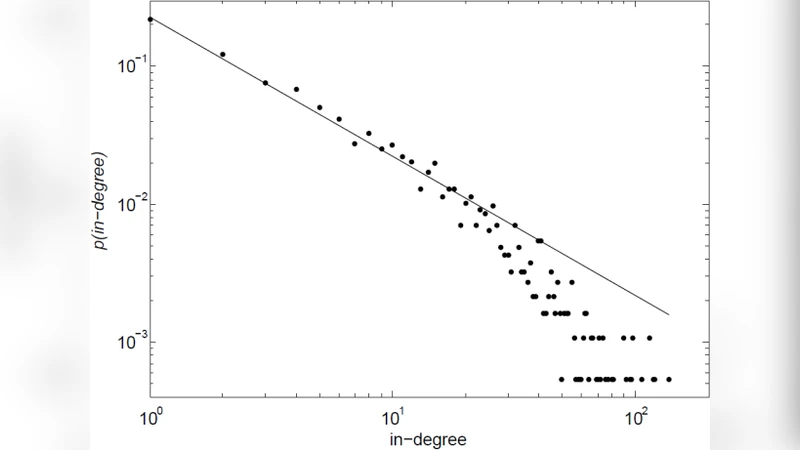
Key findings are as follows. Homophily based on shared interests is the strongest driver, raising the odds of a new tie by about 1.9× relative to a random pair; age and gender similarity also matter but to a lesser extent (≈1.3–1.4×). Focus constraints are powerful: being in the same group more than doubles the likelihood of a tie. Reinforcement shows a cumulative effect—each prior exchange between a dyad increases the odds of another by roughly 1.5×, with a non‑linear acceleration for frequent past interaction. Reciprocity is evident: a one‑way message followed by a reply within 24 hours boosts the odds of a new tie by ≈1.8×. Triadic closure contributes a 1.7× increase when a two‑step path exists, confirming the classic clustering mechanism. Popularity follows a log‑linear pattern; each ten‑fold increase in a user’s degree raises the odds of receiving a new tie by about 1.4×.
Interaction terms reveal nuanced dynamics. The combination of homophily and focus constraints yields the largest synergy: users who share attributes and belong to the same group are about 3.5× more likely to connect than would be predicted by the additive effects alone. Conversely, popularity and triadic closure exhibit a modest negative interaction, suggesting that highly popular users are less dependent on local clustering to attract new contacts.
Beyond the substantive results, the paper critiques the reliance on descriptive network statistics (e.g., average clustering coefficient, exponential random graph models) that typically test a single mechanism in isolation. Such measures can misrepresent the underlying generative process because real‑world networks evolve under the simultaneous influence of multiple, interacting forces. The conditional logistic approach overcomes this limitation by jointly estimating all mechanisms and their interactions, thereby providing a more faithful representation of network dynamics.
From a system‑design perspective, the authors discuss how platform features can be tuned to shape these mechanisms. Strengthening group functionalities or implementing interest‑based matching algorithms can amplify homophily and focus‑constraint effects, fostering tighter community bonds. Introducing random or diversity‑promoting recommendation algorithms can temper the preferential‑attachment bias, preserving network heterogeneity. Enhancing immediate feedback tools (e.g., push notifications, suggested replies) can boost reciprocity, encouraging sustained engagement.
In sum, the study makes three major contributions. First, it offers a methodological advance—conditional logistic modeling of continuously observed ties—that bridges the gap between event‑history analysis and network evolution modeling. Second, it empirically demonstrates that multiple mechanisms operate concurrently and interact in non‑trivial ways within a real‑world online communication network. Third, it translates these insights into actionable design recommendations for digital platforms seeking to influence user interaction patterns and long‑term network structure. The framework is broadly applicable to any setting where high‑resolution interaction data are available, such as collaborative work tools, online learning environments, or emerging decentralized social media, making it a valuable addition to the toolbox of network scientists and platform engineers alike.
Comments & Academic Discussion
Loading comments...
Leave a Comment