A Study of the Correlation Between Electrical Resistivity and Matric Suction for Unsaturated Ash-Fall Pyroclastic Soils in the Campania Region (Southern Italy)
In the territory of the Campania region (southern Italy), critical rainfall events periodically trigger dangerous fast slope movements involving ashy and pyroclastic soils originated by the explosive phases of the Mt. Somma-Vesuvius volcano and deposited along the surrounding mountain ranges. In this paper, an integration of engineering-geological and geophysical measurements is presented to characterize unsaturated pyroclastic samples collected in a test area on the Sarno Mountains (Salerno and Avellino provinces, Campania region). The laboratory analyses were aimed at defining both soil water retention and electrical resistivity curves versus water content. From the matching of the experimental data, a direct relationship between electrical resistivity and matric suction is retrieved for the investigated soil horizons typical of a ash-fall pyroclastic succession. The obtained relation turns out to be helpful in characterizing soils up to close saturation, which is a critical condition for the trigger of slope failure. In such a regime, the water content and the matric suction have small variations, while electrical resistivity variations can be appreciated in a larger range of values. For this reason, besides suction measurements on very small soil volumes through classical tensiometers, our analyses suggest the direct monitoring of in-situ electrical resistivity values as an effective tool to recognise the hydrological state of larger and more representative soil volumes and to improve early warning of dangerous slope movements.
💡 Research Summary
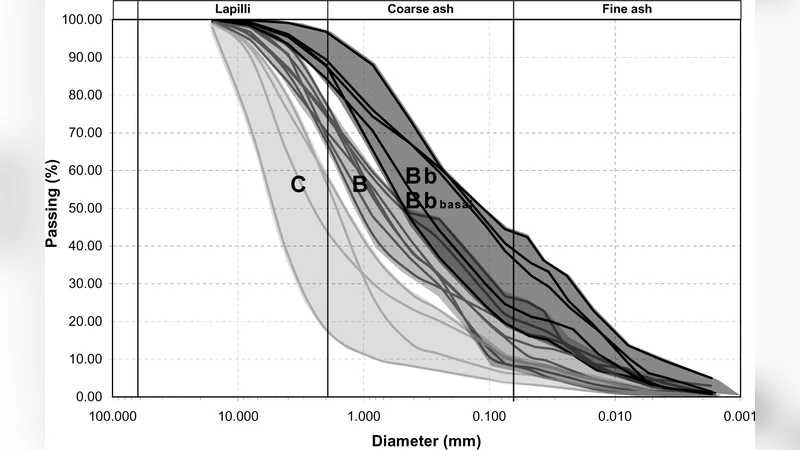
This paper investigates the relationship between electrical resistivity and matric suction in unsaturated ash‑fall pyroclastic soils of the Campania region (southern Italy), with the aim of improving early warning of rainfall‑induced slope failures. Samples were collected from three typical horizons (designated B, Bb and Bb basal) on the Sarno Mountains, an area that experienced a catastrophic landslide in May 1998. Laboratory tests followed ASTM and BS standards to determine basic geotechnical properties (grain‑size distribution, dry unit weight, void ratio, porosity) and to classify the soils according to the USCS system. The B horizon corresponds to a pedogenised pyroclastic soil, while the Bb and Bb basal horizons represent buried paleosols of varying degree of weathering.
Soil water retention curves (SWRCs) were obtained using a 1600 psi pressure plate extractor. Seven pressure steps (0.1–90 kPa) were applied, and at each step the equilibrium water outflow was monitored, allowing the calculation of volumetric water content (θ) and matric suction (h). The experimental data were fitted with the van Genuchten model, yielding horizon‑specific parameters (α, n, m, θ_s, θ_r). For example, the B horizon showed α = 0.046 m⁻¹, n = 1.347, θ_s = 0.57 and θ_r = 0.09, indicating a relatively steep suction‑water content relationship.
Electrical resistivity measurements were performed on the same specimens using a four‑electrode DC method. As water content decreased, resistivity increased non‑linearly. Notably, in the near‑saturation range (θ > 0.4) matric suction varied only marginally (≈0.1 kPa), yet resistivity changed by two to three orders of magnitude (from ~10 Ω·m to >10³ Ω·m). By correlating resistivity (R) with matric suction, the authors derived empirical exponential relationships of the form R = a exp(b h) for each horizon, with coefficients a and b obtained by regression (e.g., B horizon: a ≈ 5 Ω·m, b ≈ 0.12 kPa⁻¹).
The key implication is that electrical resistivity can serve as a proxy for matric suction, especially in the critical regime close to saturation where traditional tensiometers provide limited resolution and only sample very small volumes. In‑situ resistivity monitoring, using electrode arrays or geophysical imaging, can therefore capture the hydrological state of a much larger soil mass. Because slope stability in these volcanic deposits is strongly controlled by matric suction (which contributes to shear strength), a rapid increase in resistivity signals a drop in suction and a potential loss of stability.
The authors discuss how this relationship can be incorporated into a stability index or safety factor that depends on real‑time resistivity values. By defining a resistivity threshold (e.g., 500 Ω·m) below which suction remains sufficient, and flagging values above this threshold as indicative of impending failure, a more sensitive early‑warning system can be built. This approach complements existing rainfall‑threshold models, which are based solely on precipitation intensity and duration, by providing a direct measurement of the soil’s mechanical state.
In summary, the study demonstrates that (1) unsaturated pyroclastic soils exhibit distinct SWRCs that can be accurately described by the van Genuchten model; (2) electrical resistivity varies systematically with matric suction and is especially responsive near saturation; (3) a simple exponential relationship links the two parameters, enabling the use of resistivity as a field‑monitorable surrogate for suction; and (4) integrating resistivity monitoring into landslide early‑warning frameworks could improve the detection of critical hydrological conditions that precede fast slope movements in the Campania volcanic terrain.
Comments & Academic Discussion
Loading comments...
Leave a Comment