Happiness is assortative in online social networks
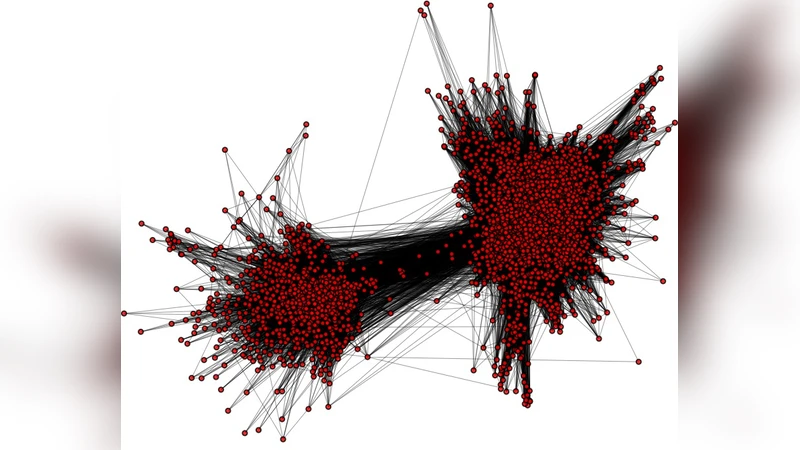
Social networks tend to disproportionally favor connections between individuals with either similar or dissimilar characteristics. This propensity, referred to as assortative mixing or homophily, is expressed as the correlation between attribute values of nearest neighbour vertices in a graph. Recent results indicate that beyond demographic features such as age, sex and race, even psychological states such as “loneliness” can be assortative in a social network. In spite of the increasing societal importance of online social networks it is unknown whether assortative mixing of psychological states takes place in situations where social ties are mediated solely by online networking services in the absence of physical contact. Here, we show that general happiness or Subjective Well-Being (SWB) of Twitter users, as measured from a 6 month record of their individual tweets, is indeed assortative across the Twitter social network. To our knowledge this is the first result that shows assortative mixing in online networks at the level of SWB. Our results imply that online social networks may be equally subject to the social mechanisms that cause assortative mixing in real social networks and that such assortative mixing takes place at the level of SWB. Given the increasing prevalence of online social networks, their propensity to connect users with similar levels of SWB may be an important instrument in better understanding how both positive and negative sentiments spread through online social ties. Future research may focus on how event-specific mood states can propagate and influence user behavior in “real life”.
💡 Research Summary
This paper investigates whether subjective well‑being (SWB), a measure of personal happiness, exhibits assortative mixing in an online social network where all ties are mediated by a digital platform without any face‑to‑face contact. Using a large Twitter data set, the authors collected 129 million tweets posted between November 2008 and May 2009. From this corpus they identified 102 009 active users (average more than one tweet per day) and reconstructed their reciprocal “friend” network by retaining only mutual follower relationships. The resulting undirected graph contains 2 361 547 edges, a low density (0.000454), an average degree of 46.3, a clustering coefficient of 0.262 and a diameter of 14, indicating a small‑world structure.
To assign an SWB score to each user, the authors applied a validated sentiment‑analysis tool to every tweet, converting each message into a positive‑negative polarity score. The six‑month average of these scores was taken as the individual’s SWB index. This approach follows earlier work that treats aggregate sentiment as a proxy for subjective well‑being, but here it is applied at the level of single users rather than whole populations.
The core analysis measured assortativity by computing the Pearson correlation coefficient r between the SWB values of adjacent nodes in the friend network. The overall network displayed a positive and statistically significant r≈0.23 (p < 0.001), demonstrating that users tend to be linked to others with similar happiness levels. To explore the role of tie strength, each edge was weighted by the Jaccard similarity of the two users’ friend sets (|Ci∩Cj| / |Ci∪Cj|). When edges were stratified by weight, the assortativity increased with stronger ties: the top 10 % of weighted edges showed r≈0.35, whereas the bottom 10 % showed r≈0.12. This pattern suggests that not only the existence of a connection but also the overlap of social circles amplifies the homophilic clustering of SWB.
The authors discuss two plausible mechanisms. The first is homophilic attachment: individuals preferentially follow or befriend others who already share similar affective states. The second is emotional contagion, whereby the affect of one user spreads to their contacts through repeated exposure to similar content. Because the study is based on a static snapshot of average SWB, it cannot disentangle causality; longitudinal analyses would be required to separate these effects.
Limitations are acknowledged. Sentiment analysis on short, informal tweets can misinterpret sarcasm, slang, emojis, or cultural nuances, potentially biasing SWB estimates. The Twitter user base is not demographically representative of the general population, limiting external validity. Moreover, restricting the network to mutual follows may omit meaningful asymmetric interactions (e.g., mentions, retweets) that also convey social influence. The edge‑weight definition, based solely on shared friends, does not capture interaction frequency or content exchange, which could further modulate assortativity.
Despite these caveats, the study provides the first empirical evidence that happiness is assortatively mixed in a purely online network at the individual level. The findings imply that digital platforms can reproduce the same homophilic patterns observed in offline social structures, and that these patterns may shape how positive and negative emotions propagate online. The authors propose future work to (1) improve sentiment detection with multilingual and context‑aware models, (2) conduct dynamic network analyses to track temporal changes in SWB and infer causality, and (3) compare assortativity across different social media ecosystems to assess the generality of the phenomenon. This research opens new avenues for leveraging online networks in mental‑health monitoring and interventions, as well as for deeper theoretical understanding of affective dynamics in the digital age.
Comments & Academic Discussion
Loading comments...
Leave a Comment