Stationary, Axisymmetric Neutron Stars with Meridional Circulation in General Relativity
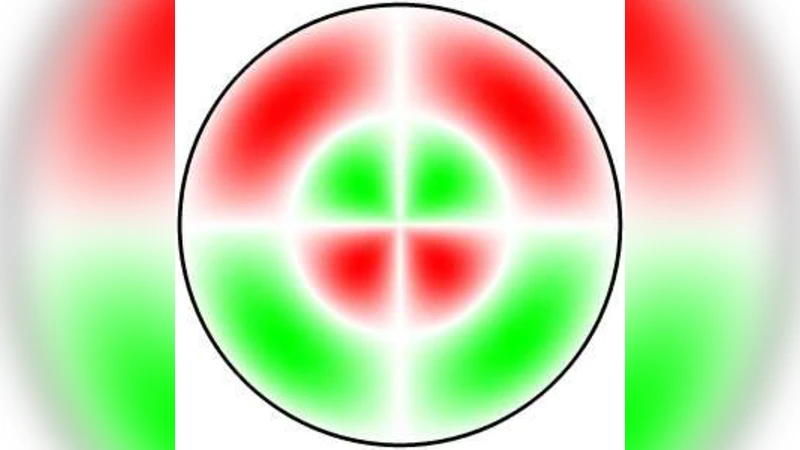
We present the first stationary, axisymmetric neutron star models with meridional circulation in general relativity. For that purpose, we developed GRNS, a new code based on a fixed point iteration. We find a two-dimensional set of meridional circulation modes, which differ by the number of vortices in the stream lines of the neutron star fluid. For expected maximal meridional circulation velocities of about 1000 km/s, the vortices cause surface deformations of about a percent. The deformations depend on the shape of the vortices close to the surface and increase with the meridional circulation velocity. We also computed models of rotating neutron stars with meridional circulation, where neither the surface rotates nor does the rotation velocity exceed the circulation velocity.
💡 Research Summary
The authors present the first fully relativistic models of stationary, axisymmetric neutron stars that incorporate meridional circulation. To achieve this, they developed a new numerical code called GRNS (General Relativistic Neutron Star) which solves the coupled Einstein‑hydrodynamics equations using a fixed‑point iteration scheme. The spacetime metric is expressed in terms of two gravitational potentials and a rotational potential, while the fluid obeys the relativistic Euler and continuity equations. Meridional flow is introduced through a stream function Ψ that satisfies a nonlinear Poisson‑type equation with regularity conditions at the stellar centre and a vanishing pressure condition at the surface.
By iterating between updates of Ψ and the metric potentials, the code converges to self‑consistent equilibria. The authors discover a two‑dimensional family of circulation modes distinguished by the integer number n of vortical cells in the stream‑line pattern. The n = 1 mode exhibits a single vortex, whereas higher‑n modes contain multiple vortices that can extend close to the stellar surface. For realistic maximal circulation speeds of order 1000 km s⁻¹ (≈10⁸ cm s⁻¹), the vortices produce surface deformations of roughly 0.5–1 % of the stellar radius. The amplitude of the deformation grows with both the circulation speed and the proximity of the vortex cores to the surface.
The study also explores configurations where uniform rotation coexists with meridional circulation. In these cases the stellar surface does not rotate, and the overall rotation rate never exceeds the circulation velocity; the internal flow is dominated by the meridional component. This finding suggests that strong internal circulation can suppress surface rotation in relativistic stars.
Physically, the results imply that meridional circulation can generate non‑axisymmetric shape perturbations that may affect gravitational‑wave emission, pulsar timing noise, and electromagnetic observables. Multi‑vortex structures that persist over long timescales could imprint periodic modulations on the star’s gravitational‑wave spectrum or cause subtle variations in pulse profiles. The authors propose extending the framework to include more realistic equations of state (e.g., superfluid/superconducting cores), magnetic fields, and differential rotation, which would enable direct comparison with observational data.
In summary, this work introduces a robust relativistic computational tool, identifies a rich set of circulation‑driven equilibrium modes, quantifies their impact on stellar shape, and opens a new avenue for investigating how internal fluid motions influence the observable properties of neutron stars.
Comments & Academic Discussion
Loading comments...
Leave a Comment