Evolutionary Dynamics of Scientific Collaboration Networks: Multi-Levels and Cross-time Analysis
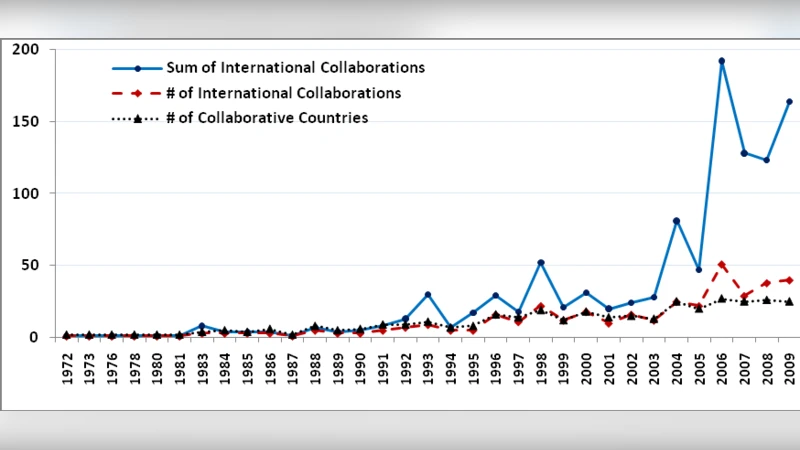
Several studies exist which use scientific literature for comparing scientific activities (e.g., productivity, and collaboration). In this study, using co-authorship data over the last 40 years, we present the evolutionary dynamics of multi level (i.e., individual, institutional and national) collaboration networks for exploring the emergence of collaborations in the research field of “steel structures”. The collaboration network of scientists in the field has been analyzed using author affiliations extracted from Scopus between 1970 and 2009. We have studied collaboration distribution networks at the micro-, meso- and macro-levels for the 40 years. We compared and analyzed a number of properties of these networks (i.e., density, centrality measures, the giant component and clustering coefficient) for presenting a longitudinal analysis and statistical validation of the evolutionary dynamics of “steel structures” collaboration networks. At all levels, the scientific collaborations network structures were central considering the closeness centralization while betweenness and degree centralization were much lower. In general networks density, connectedness, centralization and clustering coefficient were highest in marco-level and decreasing as the network size grow to the lowest in micro-level. We also find that the average distance between countries about two and institutes five and for authors eight meaning that only about eight steps are necessary to get from one randomly chosen author to another.
💡 Research Summary
The paper investigates the evolution of scientific collaboration networks in the specialized field of “steel structures” over a forty‑year period (1970‑2009) by constructing and analysing co‑authorship networks at three hierarchical levels: individual authors (micro), institutions (meso), and countries (macro). Using Scopus, the authors retrieved 2,226 papers that contain the keyword “steel structure” in titles, abstracts or keywords from a curated list of fifteen core journals. After extensive data cleaning—including manual correction of missing or inconsistent affiliation fields—the final dataset comprises 5,201 authors (excluding 117 without affiliation data), 1,324 institutions, and 76 countries, with 447 authors holding multiple affiliations.
The study computes standard network metrics for each level and each year: density (the proportion of actual ties to possible ties), centralisation (closeness, betweenness, and degree), size of the giant component, and clustering coefficient. The macro‑level (country) network consistently exhibits the highest density, centralisation, and clustering, indicating a tightly knit international collaboration structure. In contrast, the micro‑level (author) network shows the lowest values, reflecting sparse direct connections among individual researchers. Notably, closeness centralisation dominates across all levels, while betweenness and degree centralisation remain modest, suggesting that no single node (country, institution, or author) monopolises the network’s flow.
Average shortest‑path lengths differ markedly by level: approximately two steps between countries, five steps between institutions, and eight steps between authors. This “small‑world” effect is strongest at the macro scale and weakens toward the micro scale, implying that while nations are relatively close collaborators, individual researchers are often separated by several intermediaries.
Temporal analysis of publication output reveals an initial single paper in 1970, modest growth through the early 1980s, a sharp surge in 1998 due to a special conference’s abstracts, and a generally upward trend thereafter despite fluctuations. Authorship patterns show that 41 % of papers have two authors, 25 % have three, and 23 % are single‑author works, indicating a collaborative culture but also a substantial proportion of solo research. Most papers (≈70 %) involve authors from a single institution and a single country, yet the share of inter‑institutional and international collaborations rises over time.
The authors acknowledge limitations: the journal selection may bias coverage, older records suffer from incomplete affiliation data, and the dataset does not capture all global output in the field. Nevertheless, the longitudinal, multi‑level approach provides valuable insights. The findings suggest that policy makers and research managers should reinforce international (macro) networks while also fostering mechanisms—such as joint funding schemes, researcher exchange programs, and networking events—to bridge gaps at the meso and micro levels. Enhancing the role of “broker” authors or institutions with moderate betweenness could improve overall network cohesion, accelerate knowledge diffusion, and boost innovative capacity within the steel‑structures research community.
Comments & Academic Discussion
Loading comments...
Leave a Comment