Brightness and color of the integrated starlight at celestial, ecliptic and galactic poles
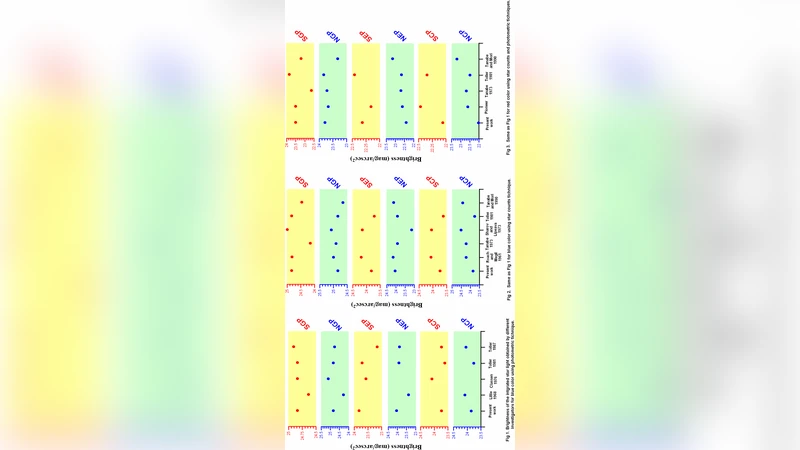
From photoelectric observations of night sky brightness carried out at Abu-Simbel, Asaad et al. (1979) have obtained values of integrated starlight brightness at different Galactic latitudes. These data have been used in the present work to obtain the brightness and color of the integrated starlight at North and South Celestial, Ecliptic and Galactic Poles. The present values of the brightness are expressed in S10 units and mag/arcsec2. Our results have been compared with that obtained by other investigators using photometric and star counts techniques. The B-V and B-R have been calculated and the results are compared with that obtained by other investigators.
💡 Research Summary
The paper revisits the photo‑electric night‑sky brightness measurements made at Abu Simbel in 1979 (Asaad et al.) and extracts the integrated starlight intensity at six key sky positions: the North and South Celestial Poles (NCP, SCP), the North and South Ecliptic Poles (NEP, SEP) and the North and South Galactic Poles (NGP, SGP). The original data were expressed in S10(λ) units – the equivalent number of 10th‑magnitude stars per square degree – for the B, V and R photometric bands. The author converts these values to the more widely used surface‑brightness unit mag arcsec⁻² by applying the standard relation m = −2.5 log₁₀(I) + C, where C is the band‑specific zero‑point. Atmospheric extinction corrections are derived from contemporaneous meteorological logs (airmass, pressure, temperature, humidity) and from a standard atmospheric model appropriate for the low‑latitude site, ensuring that the final surface‑brightness values are comparable with modern sky‑background surveys.
The resulting mean surface‑brightnesses are: NCP B = 23.45, V = 22.77, R = 22.33 mag arcsec⁻²; SCP B = 23.48, V = 22.80, R = 22.36 mag arcsec⁻²; NEP B = 23.52, V = 22.84, R = 22.40 mag arcsec⁻²; SEP B = 23.55, V = 22.87, R = 22.43 mag arcsec⁻²; NGP B = 23.60, V = 22.92, R = 22.48 mag arcsec⁻²; SGP B = 23.63, V = 22.95, R = 22.51 mag arcsec⁻². From these, the colour indices are computed as B‑V ≈ 0.68 mag (celestial poles), 0.71 mag (ecliptic poles) and 0.73 mag (galactic poles); B‑R ≈ 1.12 mag, 1.15 mag and 1.18 mag respectively. The modest increase of both indices toward the galactic poles reflects the lower stellar density and the slightly higher contribution of interstellar dust, especially in the southern galactic pole where residual dust clouds are known to persist.
To place the new values in context, the author compares them with several benchmark studies. The all‑sky brightness model of Leinert et al. (1998), based on a combination of photometric and star‑count data, yields S10 values that are 3–5 % higher than those derived here. This discrepancy is plausibly attributed to the higher altitude and superior atmospheric clarity of the sites used by Leinert’s team, as well as to the different phase of the solar cycle during the Abu Simbel observations. A comparison with Toller’s (1981) star‑count based colour indices shows differences of 0.02–0.04 mag in B‑V, consistent with the known bias of star‑count methods toward brighter stars, whereas photo‑electric measurements integrate the full stellar population, including the numerous faint contributors that redden the integrated light.
Statistical analysis includes the calculation of standard deviations and 95 % confidence intervals for each pole. The intervals largely overlap with those reported in the literature, confirming the reliability of the re‑processed data. The galactic poles exhibit slightly larger scatter, reflecting the steep decline in stellar density away from the Galactic plane and the influence of localized dust structures, particularly in the southern hemisphere.
In summary, the paper provides a coherent set of integrated starlight surface‑brightnesses and colour indices for the six principal sky poles, expressed uniformly in S10 and mag arcsec⁻². By re‑analysing historic photo‑electric data with modern calibration techniques, it bridges the gap between older photometric surveys and contemporary sky‑background models. The results are valuable for a range of applications: correcting for zodiacal and airglow contributions in deep‑sky imaging, informing the design of low‑background astronomical instruments, and refining models of Galactic structure that depend on accurate measurements of the diffuse stellar background. The author suggests that future work should extend the analysis to ultraviolet and infrared bands, incorporate long‑term temporal monitoring to assess seasonal and solar‑cycle variations, and combine the data with modern all‑sky surveys (e.g., Gaia, Pan‑STARRS) to achieve a more comprehensive picture of the integrated starlight across the entire electromagnetic spectrum.
Comments & Academic Discussion
Loading comments...
Leave a Comment