Combinatorial Game Theory, Well-Tempered Scoring Games, and a Knot Game
We begin by reviewing and proving the basic facts of combinatorial game theory. We then consider scoring games (also known as Milnor games or positional games), focusing on the “fixed-length” games for which all sequences of play terminate after the same number of moves. The theory of fixed-length scoring games is shown to have properties similar to the theory of loopy combinatorial games, with operations similar to onsides and offsides. We give a complete description of the structure of fixed-length scoring games in terms of the class of short partizan games. We also consider fixed-length scoring games taking values in the two-element boolean algebra, and classify these games up to indistinguishability. We then apply these results to analyze some positions in the knotting-unknotting game of Pechenik, Townsend, Henrich, MacNaughton, and Silversmith.
💡 Research Summary
This paper provides a comprehensive treatment of combinatorial game theory (CGT) and introduces a new class of games called “well‑tempered scoring games,” which are fixed‑length games where every play sequence ends after the same number of moves. The authors begin by reviewing the foundational material of CGT: the definition of a game as a pair of left and right option sets, the construction of sums and negatives, the relationship between partizan games and surreal numbers, and the theory of infinitesimals, all‑small games, and Nim/ Sprague‑Grundy theory. They give full proofs of the basic theorems, many of which appear in Conway’s On Numbers and Games and in the classic Winning Ways volumes, but they also fill gaps left by those sources, especially concerning Norton multiplication and the interaction of loopy games.
The second major section shifts focus to scoring games, also known as Milnor or positional games, where each player accumulates a numerical score rather than simply winning or losing. The authors restrict attention to “fixed‑length” scoring games, meaning that every possible line of play terminates after a predetermined number of moves. Within this subclass they define the notion of a “well‑tempered” game, which imposes a parity condition on the number of moves each player makes and leads to a natural partial order on integer‑valued games. They introduce operations analogous to the onsides and offsides of loopy CGT, and they study outcomes in terms of who moves last and the final score difference. Even‑odd games and the concept of “temperature” are adapted to this setting, providing a bridge between traditional partizan theory and the new scoring framework.
The core technical contribution is a faithful representation that embeds every well‑tempered fixed‑length scoring game into the class of short partizan games. This embedding preserves addition, negation, and the order structure, allowing the authors to translate questions about scoring games into the well‑understood language of partizan CGT. They prove that Boolean‑valued scoring games (those whose scores are only 0 or 1) are indistinguishable precisely when they are equivalent in the Boolean algebra, and they extend this classification to games taking a small finite set of values (n = 2, 3). For these finite‑valued games they analyze “rounded sum,” “min,” and “max” operations, giving complete descriptions of the indistinguishability quotients. The paper also discusses how Norton multiplication interacts with these embeddings, showing that the multiplication of an even game by an odd game behaves as expected under the faithful representation.
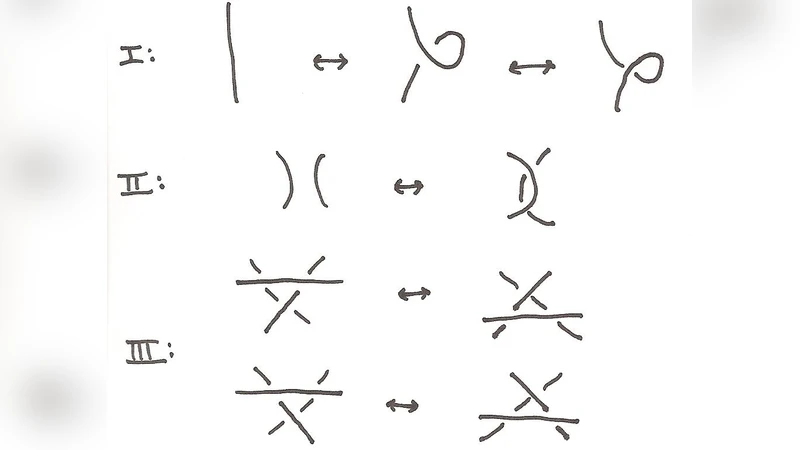
Having built this theoretical machinery, the authors apply it to the knot‑theoretic game “To Knot or Not to Knot” (TKONTK), originally introduced by Pechenik, Townsend, Henrich, MacNaughton, and Silversmith. In TKONTK two players alternately resolve crossings in a knot shadow; one player (Ursula) aims to produce the unknot, while the other (King Lear) tries to force a non‑trivial knot. The paper shows that when the shadow is a rational tangle shadow, each crossing can be interpreted as a Boolean decision (top vs. bottom strand), and the entire game reduces to a Boolean‑valued well‑tempered scoring game. Using the continued‑fraction description of rational tangles, the authors prove that the outcome depends solely on the parity of the number of unresolved crossings: if the number is odd the first player wins, if even the second player wins. This recovers the experimental observations reported in the original TKONTK papers and provides a rigorous proof.
Furthermore, the authors consider connected sums of rational shadows. Because the connected sum of knots is an unknot if and only if each summand is an unknot, the overall game outcome is determined by a logical OR of the outcomes of the component games. In the CGT language this corresponds to a disjunctive sum where a single “winning” component for King Lear suffices to make the whole position a knot, while Ursula must win in every component to force the unknot. The paper demonstrates how this OR‑gate behavior emerges naturally from the partizan embedding and the Boolean indistinguishability classification.
In summary, the work accomplishes three major goals: (1) it supplies a self‑contained, proof‑rich exposition of the foundations of CGT; (2) it develops a robust theory of well‑tempered fixed‑length scoring games, including a complete classification of Boolean and small‑valued games via faithful representation into partizan theory; and (3) it applies this machinery to a concrete topological game, providing the first rigorous analysis of TKONTK and showing how combinatorial game theory can be leveraged to solve problems in knot theory. The paper thus bridges two traditionally separate areas—combinatorial game theory and low‑dimensional topology—and opens avenues for further exploration of scoring games with applications to other mathematical puzzles.
Comments & Academic Discussion
Loading comments...
Leave a Comment