Bi-stability in turbulent, rotating spherical Couette flow
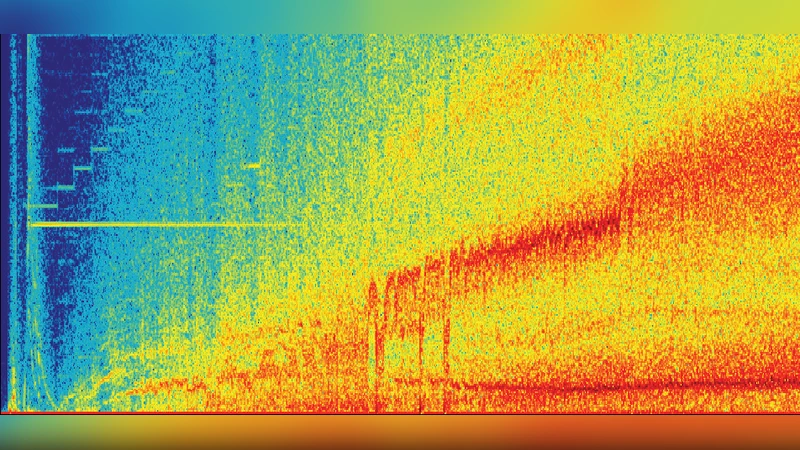
Flow between concentric spheres of radius ratio $\eta = r_\mathrm{i}/r_\mathrm{o} = 0.35$ is studied in a 3 m outer diameter experiment. We have measured the torques required to maintain constant boundary speeds as well as localized wall shear stress, velocity, and pressure. At low Ekman number $E = 2.1\times10^{-7}$ and modest Rossby number $0.07 < Ro < 3.4$, the resulting flow is highly turbulent, with a Reynolds number ($Re=Ro/E$) exceeding fifteen million. Several turbulent flow regimes are evident as $Ro$ is varied for fixed $E$. We focus our attention on one flow transition in particular, between $Ro = 1.8$ and $Ro = 2.6$, where the flow shows bistable behavior. For $Ro$ within this range, the flow undergoes intermittent transitions between the states observed alone at adjacent $Ro$ outside the switching range. The two states are clearly distinguished in all measured flow quantities, including a striking reduction in torque demanded from the inner sphere by the state lying at higher $Ro$. The reduced angular momentum transport appears to be associated with the development of a fast zonal circulation near the experiment core. The lower torque state exhibits waves, one of which is similar to an inertial mode known for a full sphere, and another which appears to be a strongly advected Rossby-type wave. These results represent a new laboratory example of the overlapping existence of distinct flow states in high Reynolds number flow. Turbulent multiple stability and the resilience of transport barriers associated with zonal flows are important topics in geophysical and astrophysical contexts.
💡 Research Summary
The authors investigate turbulent spherical Couette flow in a large‑scale apparatus (outer diameter = 3 m) with a radius ratio η = r_i/r_o = 0.35. The outer sphere rotates at a constant angular velocity Ω₀ while the inner sphere rotates differentially with angular speed Ω_i, giving a Rossby number Ro = ΔΩ/Ω₀ (ΔΩ = Ω_i − Ω₀). The Ekman number is fixed at an extremely low value, E = ν/(Ω₀ℓ²) = 2.1 × 10⁻⁷ (ℓ = r_o − r_i), and Ro is varied from 0.07 up to 3.4. Because Re = Ro/E, the flow reaches Reynolds numbers in excess of 1.5 × 10⁷, i.e., a highly turbulent regime.
Torque on the inner sphere is measured with a calibrated load cell and expressed in a dimensionless form G = T ρ ν² r_i⁻¹. For Ro = 0 (stationary outer sphere) the torque follows the familiar G = A Re + B Re² law, confirming earlier work. When Ro is increased, the torque curve departs from a single smooth branch. In the interval 1.8 ≲ Ro ≲ 2.6 the system exhibits bistability: two distinct torque levels, a “high‑torque” (H) and a “low‑torque” (L) state, coexist and the flow randomly switches between them. Switching events occur on time scales of a few to several tens of seconds, and the torque difference between the two states can be as large as 30 % of the mean value.
Simultaneous measurements of wall shear stress, local pressure, and Doppler ultrasound velocity provide a complete picture of the two states. In the high‑torque state the shear stress near the inner sphere is large, pressure fluctuations are broadband, and the mean azimuthal flow is relatively weak. In the low‑torque state the shear stress near the inner sphere drops dramatically, and a fast, axisymmetric zonal (zonal) circulation develops in the interior, with azimuthal velocity of order 0.2 ΔΩ ℓ extending over roughly one third of the radius. This zonal flow acts as a transport barrier, strongly reducing the angular‑momentum flux from the inner to the outer sphere, which explains the observed torque reduction.
Spectral analysis of the pressure signals in the low‑torque state reveals two dominant wave components. The first is an m = 2 inertial mode with frequency ω ≈ 0.9 Ω₀, matching the classic full‑sphere inertial modes described by Greenspan and Zhang et al. The second is an m = 1 Rossby‑type wave with frequency ω ≈ 1.6 Ω₀, which appears to be Doppler‑shifted by the strong zonal flow. The coexistence of an inertial mode and a strongly advected Rossby wave indicates a nonlinear coupling between wave motions and the mean zonal flow.
The authors compare their results with previous numerical and experimental studies. Most earlier work on spherical Couette flow has focused on either stationary outer sphere or on parameter regimes with larger Ekman numbers (E ≥ 10⁻⁴) and smaller Rossby numbers (Ro ≲ 0.5), where Stewartson layers or quasi‑geostrophic instabilities dominate. The present experiment accesses a previously unexplored region of parameter space (E ≈ 10⁻⁷, Ro ≈ 2) where high‑Re turbulence coexists with very weak viscous damping. Consequently, the observed bistability and the associated transport barrier have not been captured by existing simulations.
The significance of the findings extends beyond laboratory fluid dynamics. Similar bistable phenomena are observed in geophysical and astrophysical contexts: reversals of the Earth’s magnetic field, meandering of ocean currents such as the Gulf Stream, and intermittent breakdown of polar stratospheric transport barriers. In magnetically confined fusion plasmas, the L‑H transition is also mediated by the formation of a shear‑driven zonal flow that suppresses turbulence and reduces transport. The present work demonstrates that even in a purely hydrodynamic, highly turbulent rotating system, a fast zonal flow can spontaneously emerge, lock the system into a low‑transport state, and coexist with large‑scale wave motions.
In summary, the paper reports: (1) the discovery of a robust bistable regime in turbulent spherical Couette flow at low Ekman number and moderate Rossby number; (2) the identification of a low‑torque state characterized by a fast interior zonal circulation that acts as a transport barrier; (3) the simultaneous presence of an inertial mode and an advected Rossby wave in the low‑torque state, indicating strong wave‑mean flow interaction; and (4) the implication that such multi‑stable, barrier‑forming dynamics are a generic feature of rapidly rotating turbulent flows, with relevance to planetary cores, atmospheric jets, oceanic currents, and plasma confinement.
Comments & Academic Discussion
Loading comments...
Leave a Comment