Mobile Cloud Computing: A Comparison of Application Models
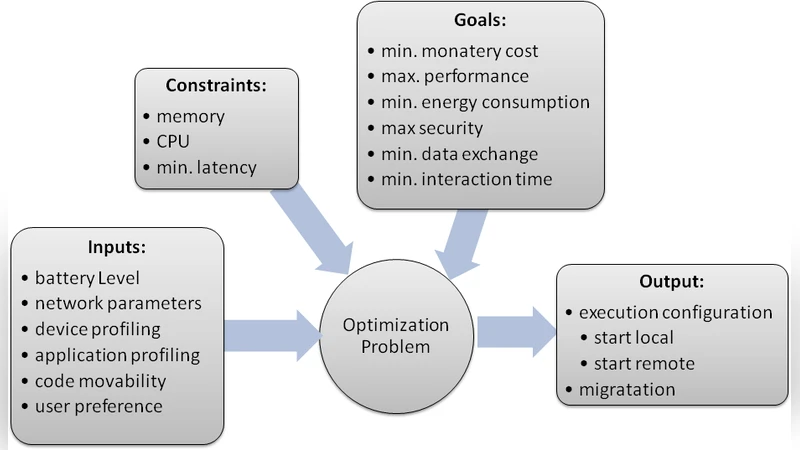
Cloud computing is an emerging concept combining many fields of computing. The foundation of cloud computing is the delivery of services, software and processing capacity over the Internet, reducing cost, increasing storage, automating systems, decoupling of service delivery from underlying technology, and providing flexibility and mobility of information. However, the actual realization of these benefits is far from being achieved for mobile applications and open many new research questions. In order to better understand how to facilitate the building of mobile cloud-based applications, we have surveyed existing work in mobile computing through the prism of cloud computing principles. We give a definition of mobile cloud coputing and provide an overview of the results from this review, in particular, models of mobile cloud applications. We also highlight research challenges in the area of mobile cloud computing. We conclude with recommendations for how this better understanding of mobile cloud computing can help building more powerful mobile applications.
💡 Research Summary
The paper provides a comprehensive survey of Mobile Cloud Computing (MCC) with a focus on application models that aim to extend the capabilities of resource‑constrained mobile devices by leveraging cloud resources. It begins by defining MCC as “a model for transparent elastic augmentation of mobile device capabilities via ubiquitous wireless access to cloud storage and computing resources, with context‑aware dynamic adjusting of offloading in respect to changes in operating conditions, while preserving available sensing and interactivity capabilities of mobile devices.” This definition emphasizes four core attributes: transparency, elasticity, context awareness, and preservation of native device functions.
The authors first review traditional mobile application paradigms—offline (native) and online (web) apps. Offline apps run most of the logic locally, offering high performance and full sensor access but suffer from poor portability, higher development cost, and longer time‑to‑market. Online apps, built with web technologies, are platform‑independent and instantly reachable, yet they introduce latency, lack direct hardware access, and struggle with long‑lived interactive sessions. The paper argues that static partitioning (either fully on‑device or fully remote) cannot satisfy the highly dynamic mobile environment characterized by fluctuating bandwidth, variable battery levels, and intermittent connectivity.
To address these limitations, the survey categorizes three emerging MCC application models:
-
Augmented Execution – Techniques that offload computation from the device to a more powerful remote replica. The paper discusses CloneCloud, which creates a virtual clone of the smartphone in the cloud and migrates selected execution threads based on policies that balance execution time, energy consumption, monetary cost, and security. Cloudlets are presented as nearby edge servers that host lightweight virtual machines; they reduce wide‑area network latency by exploiting one‑hop high‑bandwidth wireless links. The authors note that dynamic VM synthesis, required by cloudlet approaches, can take 60‑90 seconds, limiting suitability for ad‑hoc tasks. Public‑kiosk VM approaches are also mentioned, illustrating how personal VMs can be instantiated on shared infrastructure to provide trusted, personalized environments.
-
Elastic Partitioned/Modularized Applications – Frameworks that dynamically split an application into modules or components and distribute them between device and cloud. AlfredO (built on R‑OSGi) automatically decides at runtime which Java bundles should run locally and which should be proxied to the server, using measurements of latency, bandwidth, and battery state. MAUI enables method‑level offloading: developers annotate methods that may be offloaded, and a profiling engine predicts future invocations to solve an optimization problem that decides when and where to execute each method. Experiments show that fine‑grained method offloading can be counter‑productive if not grouped appropriately. The Weblet model introduces language‑agnostic, platform‑independent “weblets” that can be instantiated on mobile devices or IaaS clouds (e.g., Amazon EC2). An elasticity manager transparently migrates weblets based on current QoS metrics, offering broader applicability than OSGi‑based solutions.
-
Application Mobility – The ability to migrate a running application’s state from one host to another during execution, akin to process migration in operating systems. This model promises seamless user experience across heterogeneous devices but raises challenges in state consistency, security, and network latency during migration.
After detailing each model, the authors evaluate them against MCC requirements (latency, energy efficiency, security, scalability, and user interactivity). They conclude that existing solutions each satisfy only a subset of these requirements; none provides a fully integrated “unlimited computing” environment. Consequently, the paper identifies several open research challenges:
- Unified Abstraction Layer – A middleware that hides heterogeneity of cloud, edge, and device resources, exposing a consistent API for developers.
- Multi‑objective Dynamic Adaptation – Algorithms that simultaneously optimize latency, energy consumption, monetary cost, and security, possibly using machine‑learning‑based prediction of network conditions and workload characteristics.
- Privacy and Security Guarantees – End‑to‑end encryption, sandboxed execution, and trusted execution environments to protect data during offloading and migration.
- Developer‑friendly Programming Models – High‑level languages, annotation systems, and automated partitioning tools that reduce the burden on developers and accelerate time‑to‑market.
The paper ends with a set of recommendations: adopt a modular, context‑aware architecture; integrate edge computing (cloudlets) to mitigate WAN latency; employ fine‑grained profiling combined with coarse‑grained module management to avoid overhead; and prioritize security mechanisms that do not compromise performance. By systematically comparing the three major MCC application models and outlining the gaps, the authors provide a clear roadmap for future research aimed at realizing truly elastic, secure, and energy‑efficient mobile cloud applications.
Comments & Academic Discussion
Loading comments...
Leave a Comment