Computational Difficulty of Computing the Density of States
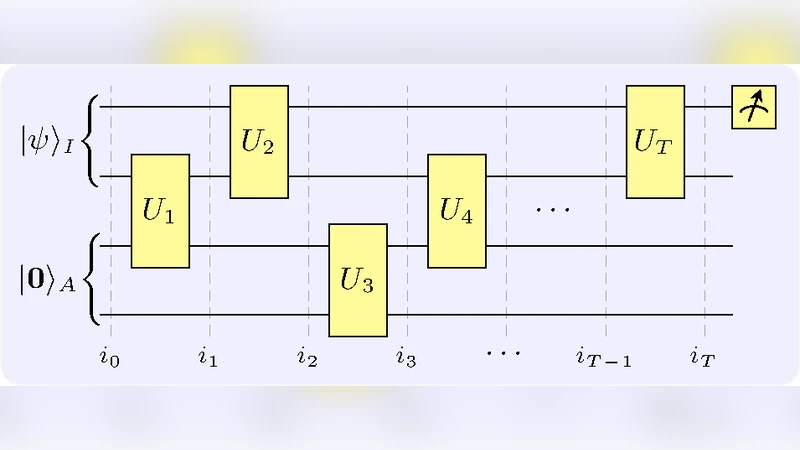
We study the computational difficulty of computing the ground state degeneracy and the density of states for local Hamiltonians. We show that the difficulty of both problems is exactly captured by a class which we call #BQP, which is the counting version of the quantum complexity class QMA. We show that #BQP is not harder than its classical counting counterpart #P, which in turn implies that computing the ground state degeneracy or the density of states for classical Hamiltonians is just as hard as it is for quantum Hamiltonians.
💡 Research Summary
The paper investigates the computational hardness of two fundamental spectral quantities associated with local Hamiltonians: the ground‑state degeneracy (GSD) and the density of states (DOS). Both quantities require counting eigenvalues of a Hamiltonian within a specified energy range, a task that is notoriously difficult for quantum many‑body systems.
To formalize the difficulty, the authors introduce a new counting complexity class called #BQP. #BQP is defined as the counting version of the quantum decision class BQP (bounded‑error quantum polynomial time). Concretely, given a quantum circuit C that on input x accepts with probability p(x), the #BQP problem asks for the sum of p(x) over all possible inputs x. This definition captures the notion of “how many accepting paths” a quantum algorithm has, analogous to the classical class #P but with quantum amplitudes instead of deterministic certificates.
The first major result is that computing GSD and computing DOS are #BQP‑complete. The authors construct a polynomial‑time reduction that maps any instance of a #BQP problem to a local Hamiltonian H such that:
- The ground‑state energy of H is zero, and the multiplicity of this zero eigenvalue equals the number of inputs that cause the original quantum circuit to accept (i.e., the #BQP count).
- More generally, by inserting an “energy window” projector, the number of eigenvalues of H lying in a chosen interval
Comments & Academic Discussion
Loading comments...
Leave a Comment