The Track Imaging Cerenkov Experiment
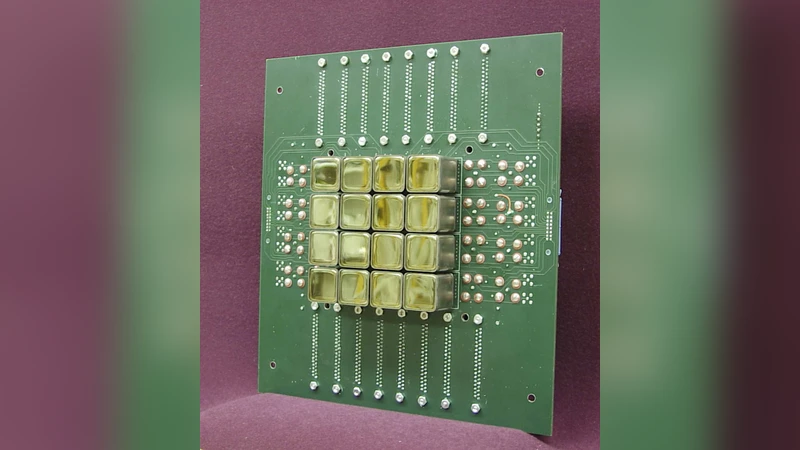
We describe a dedicated cosmic-ray telescope that explores a new method for detecting Cerenkov radiation from high-energy primary cosmic rays and the large particle air shower they induce upon entering the atmosphere. Using a camera comprising 16 multi-anode photomultiplier tubes for a total of 256 pixels, the Track Imaging Cerenkov Experiment (TrICE) resolves substructures in particle air showers with 0.086 degree resolution. Cerenkov radiation is imaged using a novel two-part optical system in which a Fresnel lens provides a wide-field optical trigger and a mirror system collects delayed light with four times the magnification. TrICE records well-resolved cosmic-ray air showers at rates ranging between 0.01-0.1 Hz.
💡 Research Summary
The Track Imaging Cerenkov Experiment (TrICE) is a ground‑based cosmic‑ray telescope designed to exploit the distinct angular and temporal characteristics of direct Cherenkov (DC) light emitted by a primary cosmic‑ray nucleus and the much more abundant Cherenkov light produced by the extensive air shower (EAS) it generates. By separating these two components, TrICE can simultaneously determine the primary particle’s charge (from the DC signal, which scales with Z²) and its energy (from the EAS signal).
Instrument concept – TrICE combines a dual‑optical path with a high‑resolution camera. A 3.7°‑field Fresnel lens sits directly above the focal plane and provides a fast, wide‑field trigger on the total Cherenkov flash. Eight 1‑m spherical mirrors (focal length 4 m) arranged on a square perimeter reflect light onto a central planar mirror, which then focuses the image onto the same focal plane. Because the mirror path is longer, the image arrives a few nanoseconds after the Fresnel‑lens trigger, giving a natural time stamp that separates DC and EAS photons. The mirror system also provides a ≈4× magnification, yielding an effective angular pixel size of 0.086°, substantially finer than the ≈0.15° typical of imaging atmospheric Cherenkov telescopes (IACTs).
Camera – The focal plane hosts 16 Hamamatsu R8900 multi‑anode photomultiplier tubes (MAPMTs), for a total of 256 pixels. Each pixel subtends 0.086° and the overall fill factor is 0.79. Laboratory characterization demonstrated single‑photoelectron (PE) resolution, low inter‑pixel crosstalk (2–3 %), and a linear response up to ~200 PE with <5 % deviation. Pixel‑to‑pixel gain variations of a factor 2–3 are monitored nightly with a diffuse light source; after an initial warm‑up period the gains are stable to within a few percent. Night‑sky background (NSB) currents of ~1 µA per pixel were measured, and the MAPMT bases were modified to operate safely under this load.
Optical alignment – Mirror curvatures were measured to within 0.64 cm of the design radius (7.945 m). Alignment was performed using a 0.56 cm LED placed 11 m above ground, a laser reference, and a Starlight Xpress CCD to evaluate the point‑spread function (PSF). The final PSF at the focal plane is 2.2 mm (well below the 6 mm pixel width), corresponding to a 0.6 cm 90 % enclosure diameter. The planar mirror flatness is within 0.02° tolerance.
Electronics and DAQ – Signals from each MAPMT are routed without pre‑amplification to charge‑integrating encoders (QIEs) originally developed for the MINOS Near Detector. The system operates in a “PMT‑trigger” mode: the summed fast signal from the MAPMTs initiates readout, capturing both the early Fresnel‑lens trigger and the delayed, magnified image. Two VME crates host digitization and buffering modules; a 10 µs “fast spill” window records the full waveform for each event.
Performance and results – Monte‑Carlo simulations (CORSIKA, version 6.2040) at an observation altitude of 1275 m show that a 50 TeV iron nucleus interacting 25 km above ground produces a compact DC flash (≈0.05° angular width, ≈1 ns duration) that is offset by ~0.2° and ~2 ns from the broader EAS light (0.2–2.0°). With TrICE’s 0.086° pixels, the DC component occupies multiple pixels with up to 89 % DC purity, compared to only ~57 % in a conventional IACT pixel. In situ data collected at Argonne National Laboratory confirm the expected trigger rates (0.01–0.1 Hz) and demonstrate well‑resolved shower images consistent with the simulated angular and temporal separation.
Scientific impact – By achieving an angular resolution roughly half that of standard IACTs and providing a built‑in timing offset, TrICE dramatically reduces contamination of the DC signal by EAS photons. This enables a charge measurement that depends only weakly on hadronic interaction models, addressing a long‑standing limitation of ground‑based composition studies. The experiment serves as a test‑bed for MAPMT‑based cameras, dual‑optical triggering, and precise mirror alignment techniques that could be scaled to larger arrays.
Limitations and future work – The current effective mirror area (6.4 m²) yields modest event statistics at the highest energies, so expanding the collection area or deploying multiple units will be necessary for precise composition measurements in the PeV regime. Further development is needed for real‑time gain calibration, dynamic NSB compensation, and refined timing calibration to fully exploit the ≈2 ns DC/EAS separation. Nonetheless, TrICE demonstrates that high‑resolution, dual‑path Cherenkov imaging is a viable strategy for ground‑based cosmic‑ray charge determination, opening a new avenue for studying the composition of ultra‑high‑energy cosmic rays.
Comments & Academic Discussion
Loading comments...
Leave a Comment