Deconvolution of dynamic mechanical networks
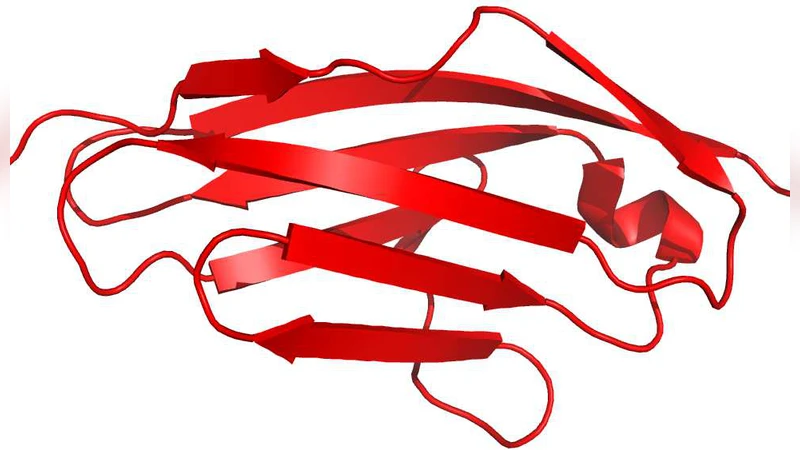
Time-resolved single-molecule biophysical experiments yield data that contain a wealth of dynamic information, in addition to the equilibrium distributions derived from histograms of the time series. In typical force spectroscopic setups the molecule is connected via linkers to a read-out device, forming a mechanically coupled dynamic network. Deconvolution of equilibrium distributions, filtering out the influence of the linkers, is a straightforward and common practice. We have developed an analogous dynamic deconvolution theory for the more challenging task of extracting kinetic properties of individual components in networks of arbitrary complexity and topology. Our method determines the intrinsic linear response functions of a given molecule in the network, describing the power spectrum of conformational fluctuations. The practicality of our approach is demonstrated for the particular case of a protein linked via DNA handles to two optically trapped beads at constant stretching force, which we mimic through Brownian dynamics simulations. Each well in the protein free energy landscape (corresponding to folded, unfolded, or possibly intermediate states) will have its own characteristic equilibrium fluctuations. The associated linear response function is rich in physical content, since it depends both on the shape of the well and its diffusivity—a measure of the internal friction arising from such processes like the transient breaking and reformation of bonds in the protein structure. Starting from the autocorrelation functions of the equilibrium bead fluctuations measured in this force clamp setup, we show how an experimentalist can accurately extract the state-dependent protein diffusivity using a straightforward two-step procedure.
💡 Research Summary
This paper introduces a comprehensive dynamic deconvolution framework for single‑molecule force spectroscopy experiments in which the molecule of interest is mechanically coupled to auxiliary components such as polymeric handles and optically trapped beads. While static deconvolution techniques are well‑established for extracting equilibrium free‑energy landscapes from histograms of extension data, no analogous method existed for recovering the full frequency‑dependent response of each constituent in a complex mechanical network. The authors fill this gap by formulating linear response functions for any element under a constant stretching force and by deriving exact convolution rules that combine these functions when elements are connected in series or in parallel.
The central objects are three complex response functions: the left‑self response J_self,L(ω), the right‑self response J_self,R(ω), and the cross response J_cross(ω). These are defined via the amplitudes of end‑point displacements produced by a small sinusoidal force applied at one end. An end‑to‑end response J_ee(ω) is then expressed as a linear combination of the three. For a simple two‑sphere system linked by a harmonic spring, the authors obtain explicit analytic forms that illustrate the Lorentzian character of J_ee and the role of mobility coefficients.
The convolution rules are derived by treating the internal spring between two elements as a “virtual” connector whose stiffness is taken to infinity after the algebraic manipulation. For series connections the resulting self‑ and cross‑responses of the composite object are rational functions of the individual responses (Eq. 2). For parallel connections the inverse response functions simply add (G_X + G_Y), a result that naturally incorporates long‑range hydrodynamic coupling between beads and handles. By iterating these rules, the response of an arbitrarily complex network can be built up from the responses of its elementary parts, analogous to transfer‑function algebra in linear time‑invariant electrical circuits.
The authors apply the theory to a concrete experimental configuration: a protein tethered between two double‑stranded DNA handles, each attached to an optically trapped polystyrene bead, all held at a constant force (force‑clamp). The only experimentally accessible quantities are the equilibrium autocorrelation functions of the bead‑bead separation, measured both with and without the protein. The deconvolution proceeds in two steps. First, the “bare” system (beads + handles) is analyzed to extract the three response functions of the handle‑bead composite (HB). Second, the full system (HB + protein + HB) is analyzed; using the previously obtained HB functions and the series convolution rule (Eq. 3), the protein’s intrinsic end‑to‑end response J_P,ee(ω) is isolated.
The protein is modeled as diffusion in a one‑dimensional free‑energy well U_P(z) with a local curvature k_P and an internal mobility μ_P (the inverse of internal friction). In the harmonic approximation J_P,ee(ω)=μ_P/(k_P−iω), a Lorentzian whose width encodes μ_P. More complex wells or position‑dependent diffusivities can be accommodated by fitting the measured J_P,ee to richer functional forms. To validate the method, the authors perform Brownian‑dynamics simulations of the full network, generating synthetic bead‑bead trajectories for both folded and unfolded protein states. Applying the two‑step deconvolution, they recover the state‑specific μ_P values with high accuracy, demonstrating robustness against noise and finite sampling.
Key insights from the work include: (1) a universal, topology‑independent algebra for combining linear mechanical response functions; (2) a practical experimental protocol that requires only equilibrium fluctuation data, avoiding the need for active perturbations; (3) direct access to internal protein friction, a quantity that influences folding kinetics especially for fast‑folding proteins and is not captured by static free‑energy profiles alone. The authors argue that the method opens the door to systematic studies of internal friction, energy‑landscape roughness, and viscoelastic properties of biomolecules in force‑clamp experiments, and can be extended to systems with multiple intermediate states, non‑linear feedback control, or more elaborate network architectures.
Comments & Academic Discussion
Loading comments...
Leave a Comment