New Indivisible Geoscience Paradigm
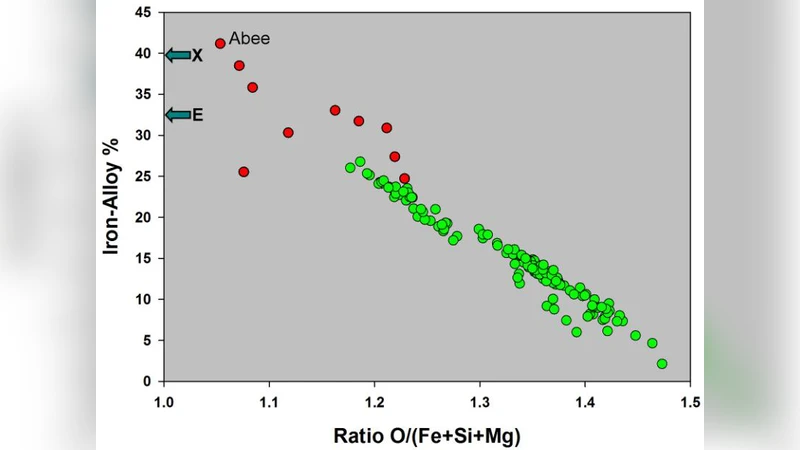
Earth’s interior, I posit, is like one of the rare, oxygen-starved “enstatite chondrite” meteorites (and unlike a more-oxidized “ordinary chondrite” as has been believed for seventy years). Laboratory-analyzed enstatite-chondrite samples are comparable to having-in-hand impossibleto- gather deep-Earth samples. Enstatite-chondrite formation in oxygen-starved conditions caused oxygen-loving elements to occur, in part, as non-oxides in their iron-alloy. Observations, consistent with solar abundance and behavior of chemical elements, lead me to a new interpretation of: (1) Earth’s early formation as a Jupiter-like gas-giant, (2) its decompressionpowered surface geology, (3) Earth’s internal composition, and (4) a natural, planetocentric nuclear-fission reactor as source of both the geomagnetic field and energy channeled to surface “hot-spots”. I present a unified vision of Earth formation and concomitant dynamics that explains in a logical and causally related way: (1) fluid Earth-core formation without wholeplanet melting, and (2) the myriad measurements and observations, previously attributed to “plate tectonics”, but without necessitating mantle convection.
💡 Research Summary
The paper, authored by J. Marvin Herndon, proposes a unified geoscientific framework that challenges the conventional plate‑tectonic paradigm and the older Earth‑expansion hypothesis. Central to the argument is the claim that Earth’s bulk composition is not like the oxidized “ordinary chondrite” traditionally assumed, but rather resembles the highly reduced enstatite chondrite (specifically the Abee meteorite). In enstatite chondrites, silicon is found dissolved in metallic iron as nickel‑silicide (Ni₂Si). Herndon argues that a comparable nickel‑silicide phase makes up Earth’s inner core, matching seismic mass‑ratio data.
The second major claim is that Earth originally formed as a Jupiter‑size gas giant within the primordial solar nebula. Under high pressure and temperature, metallic iron‑nickel rain‑out formed a dense core while silicate material condensed later. The planet’s massive hydrogen‑helium envelope (≈300 Earth masses) compressed the solid kernel to about 64 % of its present radius. When the young Sun entered its T‑Tauri phase, a violent stellar wind stripped away this envelope, leaving a compressed, rock‑metal Earth.
The stored gravitational compression energy, according to the author, is released gradually as the planet “decompresses.” This Whole‑Earth Decompression Dynamics (wEdd) model replaces mantle convection as the driver of surface tectonics. Primary cracks, formed during decompression, become today’s mid‑ocean ridges, while secondary cracks along continental margins become oceanic trenches. Basalt extruded at ridges spreads across the ocean floor by gravitational creep and fills secondary cracks, producing a “subduction‑like” appearance without any mantle flow.
A further component is the hypothesized planetocentric nuclear‑fission reactor (georeactor) at Earth’s center. The reactor, estimated to be about 10⁻⁶ of the fluid core’s mass, would consist of a liquid or slurry sub‑shell containing uranium, plutonium, and nickel‑silicide. Sustained fission would generate heat, drive convection within the sub‑shell, and power the geomagnetic field, as well as supply energy to surface hot‑spots.
Herndon supports these ideas with tables and figures comparing mass ratios of the Earth’s lower mantle + core to those of the Abee meteorite, schematic diagrams of the proposed early gas‑giant Earth, and illustrations of decompression‑induced crustal fracturing. He also references historical observations (e.g., the fit of continental coastlines, magnetic striping on the seafloor) and argues that they are more naturally explained by wEdd than by plate tectonics, which he claims relies on the unproven assumption of mantle convection.
Critically, the paper selectively interprets data. Modern seismology indicates the inner core is primarily iron‑nickel alloy with only trace silicon, contrary to the nickel‑silicide model. High‑resolution mantle tomography, geochemical tracer studies, and heat‑flow measurements all point to active mantle convection, which wEdd does not accommodate. The georeactor hypothesis lacks direct observational evidence; the concentrations of fissile material in the core are thought to be far too low for a long‑term, self‑sustaining reactor. Additionally, the astrophysical scenario of inner planets forming as Jupiter‑mass gas giants and then losing their envelopes via T‑Tauri winds is not supported by current planet‑formation models.
In summary, Herndon presents an ambitious, integrative theory that reinterprets Earth’s composition, early history, internal dynamics, and magnetic field generation. While the ideas are imaginative and attempt to reconcile disparate observations, they conflict with a substantial body of geophysical, geochemical, and astronomical evidence. Substantial further testing—through high‑precision seismic studies, deep‑Earth sampling (e.g., via mantle xenoliths or neutrino detection), and refined planetary formation simulations—would be required before the proposed paradigm could be considered a viable alternative to the well‑established plate‑tectonic framework.
Comments & Academic Discussion
Loading comments...
Leave a Comment