Operations-Based Planning for Placement and Sizing of Energy Storage in a Grid With a High Penetration of Renewables
As the penetration level of transmission-scale time-intermittent renewable generation resources increases, control of flexible resources will become important to mitigating the fluctuations due to these new renewable resources. Flexible resources may include new or existing synchronous generators as well as new energy storage devices. The addition of energy storage, if needed, should be done optimally to minimize the integration cost of renewable resources, however, optimal placement and sizing of energy storage is a difficult optimization problem. The fidelity of such results may be questionable because optimal planning procedures typically do not consider the effect of the time dynamics of operations and controls. Here, we use an optimal energy storage control algorithm to develop a heuristic procedure for energy storage placement and sizing. We generate many instances of intermittent generation time profiles and allow the control algorithm access to unlimited amounts of storage, both energy and power, at all nodes. Based on the activity of the storage at each node, we restrict the number of storage node in a staged procedure seeking the minimum number of storage nodes and total network storage that can still mitigate the effects of renewable fluctuations on network constraints. The quality of the heuristic is explored by comparing our results to seemingly “intuitive” placements of storage.
💡 Research Summary
The paper addresses the increasingly critical problem of determining where to place and how large to size energy storage systems (ESS) in electric power grids that are experiencing high penetration of time‑intermittent renewable generation, particularly wind. Traditional power‑system planning separates short‑term operational planning (unit commitment, economic dispatch) from long‑term expansion planning (new asset investment). This separation works well when generation is fully controllable and loads are well‑forecasted, but it breaks down as renewable output becomes volatile and spatially uncorrelated, causing rapid, unpredictable changes in power flows and potentially violating transmission and generation limits.
To bridge this gap, the authors propose an “operations‑based” heuristic that uses optimal storage control results—derived from a detailed operational simulation—to guide the expansion decision of where and how much storage to install. The methodology proceeds in several steps:
-
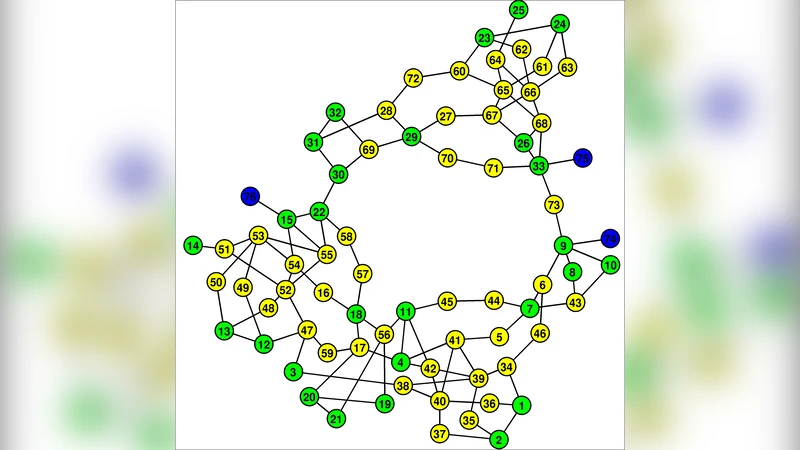
System Model – The grid is represented as an undirected graph with nodes classified as loads, conventional generators, and renewable generators. A linearized DC power‑flow model is employed, allowing the relationship between nodal injections and line flows to be expressed via the graph Laplacian.
-
Baseline Dispatch – At the beginning of each control window of length T, a DC optimal power flow (DC‑OPF) is solved using the mean forecast of wind output. This yields an initial generation schedule (p_0) and the corresponding line flows.
-
Dynamic Fluctuations – Within the window, actual wind generation deviates from the mean, producing a mismatch (\mathbf{p}_r(t)). Conventional generators respond proportionally to this mismatch according to a pre‑specified vector (\alpha) (a simplified droop‑type control).
-
Optimal Storage Control – The authors formulate a deterministic, discrete‑time optimal control problem for the ESS. The control variables are the power injections/withdrawals (p_s(t)) at a set of candidate storage nodes (G_s). Three soft‑constraint penalty terms are introduced: (i) line‑flow violations, (ii) generator‑capacity violations, and (iii) a slowly increasing cost on the magnitude of storage power to keep the first two terms dominant. The penalties are cubic for violations (via function (f)) and logarithmic‑cosh for storage power (via function (h)). The total cost is the sum of these three terms integrated over the window.
By discretizing time and enforcing the energy‑balance condition (s(0)=s(T)) (no net energy exchange over the window), the problem reduces to an unconstrained convex optimization over the storage state trajectory (s(t)). Because the cost is convex, standard nonlinear programming solvers (Newton’s method) can find the global optimum efficiently.
-
Statistical Harvesting – The optimal control algorithm is run on a large ensemble of wind‑realization scenarios (thousands per penetration level) while assuming unlimited storage capacity at all nodes. For each node, the authors record the magnitude and frequency of storage activity across all scenarios.
-
Heuristic Placement and Sizing – Using the activity statistics, the authors iteratively prune the candidate set (G_s). Nodes with negligible storage usage are removed, and the optimization is re‑run on the reduced set. This staged reduction continues until further removal would cause constraint violations in the simulated ensemble. The final set constitutes the minimal number of storage locations and the minimal total storage energy required to keep the grid within limits for the given renewable penetration.
-
Case Study – The methodology is applied to a slightly modified IEEE RTS‑96 test system. Wind penetration levels of 10 %, 20 %, and 30 % are examined, each with 5 000 random wind time‑series. The authors compare the heuristic‑derived placement against “intuitive” placements (e.g., co‑locating storage with wind farms or with large loads). Results show that the heuristic achieves the same zero‑violation performance while reducing total installed storage energy by roughly 20‑30 % and decreasing the number of storage sites by about one‑third.
Key Insights
- Operating‑level optimal control provides a rich, data‑driven signal about where storage is most needed; this signal can be harvested without solving the full mixed‑integer expansion problem.
- The convex formulation with soft penalties ensures that the controller prioritizes constraint satisfaction over minimizing storage usage, leading to realistic, safety‑first operation.
- The staged pruning heuristic effectively balances the trade‑off between investment cost (fewer, smaller storage units) and reliability (maintaining all network constraints).
Limitations and Future Work
The study assumes perfect knowledge of the mean wind forecast over each window and ignores forecast error, which in practice would require stochastic or robust extensions. The DC power‑flow model neglects voltage and reactive power constraints; incorporating an AC model would increase fidelity. Storage dynamics such as round‑trip efficiency, charge/discharge rate limits, degradation, and state‑of‑charge constraints are simplified away. Future research directions include (i) stochastic or probabilistic wind forecasts, (ii) AC‑OPF based operational constraints, (iii) detailed battery models, and (iv) multi‑period investment planning that integrates the operational heuristic into a larger mixed‑integer optimization framework.
Overall, the paper demonstrates that an operations‑centric perspective can substantially improve the strategic placement and sizing of energy storage in high‑renewable grids, offering a practical pathway for utilities and planners to reduce integration costs while preserving system security.
Comments & Academic Discussion
Loading comments...
Leave a Comment