A random walk on image patches
In this paper we address the problem of understanding the success of algorithms that organize patches according to graph-based metrics. Algorithms that analyze patches extracted from images or time series have led to state-of-the art techniques for classification, denoising, and the study of nonlinear dynamics. The main contribution of this work is to provide a theoretical explanation for the above experimental observations. Our approach relies on a detailed analysis of the commute time metric on prototypical graph models that epitomize the geometry observed in general patch graphs. We prove that a parametrization of the graph based on commute times shrinks the mutual distances between patches that correspond to rapid local changes in the signal, while the distances between patches that correspond to slow local changes expand. In effect, our results explain why the parametrization of the set of patches based on the eigenfunctions of the Laplacian can concentrate patches that correspond to rapid local changes, which would otherwise be shattered in the space of patches. While our results are based on a large sample analysis, numerical experimentations on synthetic and real data indicate that the results hold for datasets that are very small in practice.
💡 Research Summary
The paper investigates why graph‑based methods that organize image or time‑series patches work so well in applications such as classification, denoising, and dynamical‑system analysis. The authors model a collection of overlapping patches as vertices of a weighted graph. Similarity between patches is measured by a normalized Euclidean distance, and each vertex is connected to its ν nearest neighbors with Gaussian weights wₙₘ = exp(−ρ²/σ²). The resulting graph Laplacian (or its normalized version) admits a spectral decomposition that can be used for dimensionality reduction (diffusion maps, Laplacian eigenmaps, etc.).
The central theoretical tool is the commute time κ(i,j), the expected number of steps a random walk needs to travel from vertex i to j and back. κ(i,j) can be expressed as a weighted sum over Laplacian eigenvalues λₖ and eigenvectors φₖ:
κ(i,j) = ∑_{k≥2} (1/λₖ)(φₖ(i)−φₖ(j))².
Because high‑frequency eigenmodes have large λₖ, they contribute little to κ, whereas low‑frequency modes dominate. Consequently, patches that contain rapid local changes (edges, textures, transient events) – which are rich in high‑frequency content – become close to each other in the commute‑time embedding, while smooth patches (low‑frequency content) are pushed apart.
To formalize this phenomenon, the authors introduce two prototypical graph models. The “slow subgraph” represents patches sampled from a smoothly varying region; its vertices lie near a one‑dimensional manifold, its Laplacian has many small eigenvalues, and commute times between its vertices are large. The “fast subgraph” captures patches that contain singularities or fast oscillations; its connectivity is weaker, its spectrum is dominated by large eigenvalues, and commute times are small. When the two subgraphs are merged into a single patch graph, the commute‑time matrix exhibits a block structure that mathematically guarantees the concentration of anomalous patches after embedding.
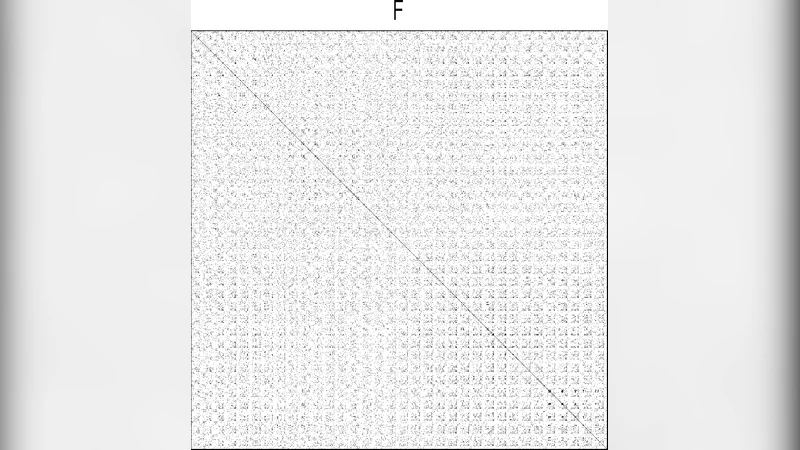
A large‑sample (N → ∞) probabilistic analysis shows that the distance scaling predicted by the theory holds with probability one, i.e., the separation between fast and slow patches becomes asymptotically exact. Importantly, numerical experiments on synthetic signals (chirps, piecewise‑smooth functions) and real data (Lenna image patches, seismic recordings) confirm that the theoretical behavior persists even for very small datasets (a few hundred patches). Visualizations of the weight matrix W reveal strong diagonal bands for smooth regions (reflecting temporal or spatial locality) and a dispersed pattern for rapid‑change regions, matching the theoretical predictions.
The paper concludes that commute‑time based embeddings provide a principled explanation for the empirical success of Laplacian eigenmaps and diffusion‑map techniques in patch‑based processing. By naturally shrinking distances among high‑frequency patches, the method facilitates clustering of edges, textures, and transients, which can be exploited for denoising, feature extraction, and classification. The authors suggest future work on asymmetric graphs, multi‑scale patch constructions, and integration with deep learning to automatically tune parameters such as σ and ν. Overall, the work bridges a gap between empirical graph‑based patch algorithms and rigorous spectral graph theory, offering both theoretical insight and practical guidance.
Comments & Academic Discussion
Loading comments...
Leave a Comment