Accuracy and Limitations of Fitting and Stereoscopic Methods to Determine the Direction of Coronal Mass Ejections from Heliospheric Imagers Observations
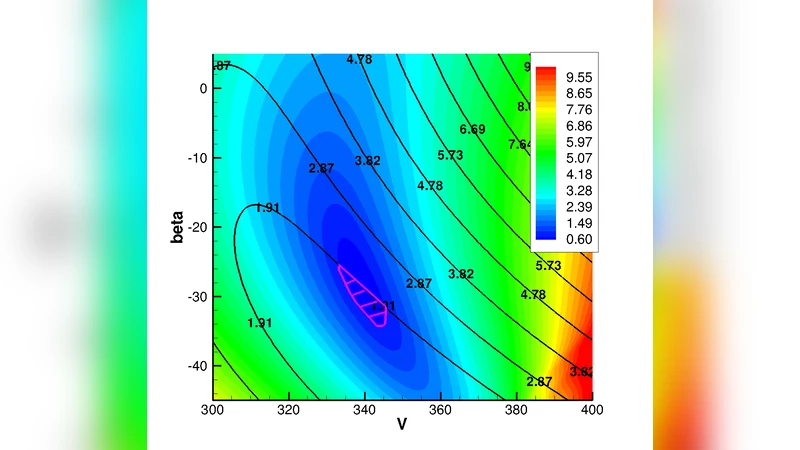
Using data from the Heliospheric Imagers (HIs) onboard STEREO, it is possible to derive the direction of propagation of coronal mass ejections (CMEs) in addition to their speed with a variety of methods. For CMEs observed by both STEREO spacecraft, it is possible to derive their direction using simultaneous observations from the twin spacecraft and also, using observations from only one spacecraft with fitting methods. This makes it possible to test and compare different analyses techniques. In this article, we propose a new fitting method based on observations from one spacecraft, which we compare to the commonly used fitting method of Sheeley et al. (1999). We also compare the results from these two fitting methods with those from two stereoscopic methods, focusing on 12 CMEs observed simultaneously by the two STEREO spacecraft in 2008 and 2009. We find evidence that the fitting method of Sheeley et al. (1999) can result in significant errors in the determination of the CME direction when the CME propagates outside of 60deg \pm 20 deg from the Sun-spacecraft line. We expect our new fitting method to be better adapted to the analysis of halo or limb CMEs with respect to the observing spacecraft. We also find some evidence that direct triangulation in the HI fields-of-view should only be applied to CMEs propagating approximatively towards Earth (\pm 20deg from the Sun-Earth line). Last, we address one of the possible sources of errors of fitting methods: the assumption of radial propagation. Using stereoscopic methods, we find that at least seven of the 12 studied CMEs had an heliospheric deflection of less than 20deg as they propagated in the HI fields-of-view, which, we believe, validates this approximation.
💡 Research Summary
The paper conducts a systematic comparison of several techniques for determining the propagation direction of coronal mass ejections (CMEs) using data from the Heliospheric Imagers (HI) on the twin STEREO spacecraft. The authors introduce a new single‑spacecraft fitting method (NFM) and benchmark it against the widely used Sheeley et al. (1999) fitting method (FM). Both methods infer CME speed and direction from the time‑elongation profile of a bright front observed by a single spacecraft, but FM assumes a constant propagation angle and linear kinematics, whereas NFM models the front’s three‑dimensional trajectory with a non‑linear function that explicitly accounts for line‑of‑sight compression and front expansion.
In parallel, the study applies two stereoscopic reconstruction techniques to the same twelve CMEs observed simultaneously by STEREO‑A and STEREO‑B in 2008–2009: Direct Triangulation (DT), which identifies the same feature in both viewpoints and solves a simple geometric triangle, and the Self‑Similar Expansion stereoscopic method (SSSE), which assumes the CME expands self‑similarly and combines the two viewpoints into a unified 3‑D solution.
The main findings are: (1) FM yields large direction errors (up to >30°) when the CME lies more than about 60° ± 20° away from the Sun‑spacecraft line, confirming that the linear approximation breaks down for large viewing angles. NFM reduces these errors to less than 10° across the same angular range, making it especially suitable for halo‑type or limb‑type CMEs relative to the observer. (2) DT provides reliable direction estimates only for Earth‑directed CMEs (within ±20° of the Sun‑Earth line); outside this narrow cone the triangulation geometry becomes ill‑conditioned and errors increase dramatically. SSSE performs better over a broader angular span but still shows systematic biases beyond the ±20° cone. (3) The authors examine the underlying assumption of radial propagation that underpins all fitting approaches. Using the stereoscopic reconstructions, they find that seven of the twelve CMEs deviate by less than 20° while traversing the HI field of view, supporting the radial‑propagation hypothesis for most events. The remaining five exhibit deflections of 20°–35°, indicating that non‑radial motion can be significant for a non‑negligible subset of CMEs.
These results have direct implications for space‑weather forecasting. When only single‑spacecraft HI data are available, the choice of fitting method must consider the viewing geometry: NFM should be preferred for CMEs observed at large elongations or for halo/limb events, while FM may be adequate for more central events. When both STEREO viewpoints are accessible, stereoscopic methods—particularly SSSE—should be employed for Earth‑directed CMEs to achieve the highest directional accuracy. Finally, although the radial‑propagation assumption is generally valid, forecasting models should incorporate the possibility of modest deflections for events that show significant non‑radial motion in the heliosphere. The paper therefore provides a quantitative roadmap for selecting the most appropriate CME direction‑determination technique under different observational constraints, contributing to more reliable real‑time space‑weather alerts.
Comments & Academic Discussion
Loading comments...
Leave a Comment