Analysis of Equilibria and Strategic Interaction in Complex Networks
This paper studies $n$-person simultaneous-move games with linear best response function, where individuals interact within a given network structure. This class of games have been used to model various settings, such as, public goods, belief formation, peer effects, and oligopoly. The purpose of this paper is to study the effect of the network structure on Nash equilibrium outcomes of this class of games. Bramoull'{e} et al. derived conditions for uniqueness and stability of a Nash equilibrium in terms of the smallest eigenvalue of the adjacency matrix representing the network of interactions. Motivated by this result, we study how local structural properties of the network of interactions affect this eigenvalue, influencing game equilibria. In particular, we use algebraic graph theory and convex optimization to derive new bounds on the smallest eigenvalue in terms of the distribution of degrees, cycles, and other relevant substructures. We illustrate our results with numerical simulations involving online social networks.
💡 Research Summary
The paper investigates how the topology of a network influences the Nash equilibrium outcomes of n‑person simultaneous‑move games whose best‑response functions are linear in the actions of neighboring players. Building on earlier results by Bramoullé et al. and Ballester et al., the authors focus on the smallest eigenvalue λₙ of the adjacency matrix A_G, which governs both the existence/uniqueness and the local asymptotic stability of equilibria.
First, the authors translate local structural descriptors—node degrees d_i, counts of triangles, quadrangles, pentagons, and mixed terms such as the sum of squared degrees W₂ and the degree‑triangle product C_dt—into explicit formulas for the first five spectral moments m_k = (1/n)∑ λ_i^k. For example, m₂ = 2e/n (e = number of edges) and m₃ = 6Δ/n (Δ = number of triangles). Higher‑order moments incorporate increasingly complex subgraph statistics (Q for quadrangles, Π for pentagons, etc.). These relationships are derived via combinatorial counting of closed walks of length k, linking the graph’s micro‑structure directly to its eigenvalue distribution.
Second, the paper leverages convex optimization, specifically semidefinite programming (SDP), to extract bounds on λₙ from a finite sequence of moments. By constructing the moment matrix M_k and imposing positive semidefiniteness, the authors formulate an SDP whose optimal solution yields the tightest possible upper bound on the smallest eigenvalue consistent with the observed moments. This approach improves upon classical Gershgorin‑type or Chebyshev‑polynomial bounds, offering a systematic way to translate limited local information into rigorous spectral guarantees.
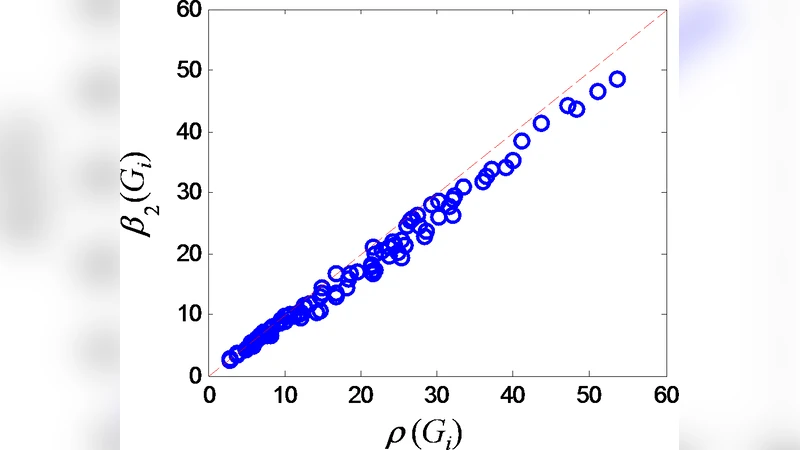
Third, the theoretical framework is applied to a real‑world online social network. The authors crawl a Facebook subgraph (2,404 nodes, 22,786 edges), compute the required structural aggregates, and obtain numerical values for m₂ through m₅. Solving the SDP provides an estimated upper bound for λₙ that closely matches the true eigenvalue obtained by full spectral decomposition, demonstrating the practical relevance of the method.
The game‑theoretic implications are then revisited. Proposition 2 states that a unique Nash equilibrium exists if δ < –1/λₙ(A_G) (or equivalently δ < 1/ρ(A_G) where ρ is the spectral radius). Lemma 5 further shows that asymptotic stability of a given equilibrium requires δ < –1/λₙ(A_S), where A_S is the adjacency matrix of the active subgraph. By bounding λₙ using only local graph statistics, the authors can predict ranges of the influence parameter δ for which the game will have a single, globally stable equilibrium, even when the full network is too large to compute eigenvalues directly.
Strengths of the work include: (i) a clear bridge between combinatorial graph properties and spectral characteristics; (ii) a rigorous SDP‑based bounding technique that is both theoretically sound and computationally tractable for moderate moment orders; (iii) empirical validation on a sizable social network, confirming that the bounds are not merely asymptotic artifacts.
Limitations are also acknowledged. Computing higher‑order moments requires enumeration of increasingly complex subgraphs, which may become infeasible for massive graphs or for networks with rich heterogeneous motifs. The SDP bounds, while tight, can be conservative when the moment information is insufficient to uniquely determine the spectrum. Moreover, the analysis is confined to games with linear best‑responses; extending the methodology to nonlinear or dynamic response functions would demand new theoretical tools.
In conclusion, the paper provides a systematic, data‑driven methodology for assessing how local network structure shapes equilibrium existence, uniqueness, and stability in linear‑best‑response games. By converting easily observable graph metrics into spectral bounds via convex optimization, it equips economists, engineers, and network scientists with a practical instrument for policy design, market analysis, and the study of collective behavior on complex networks.
Comments & Academic Discussion
Loading comments...
Leave a Comment