Coarse Graining for Synchronization in Directed Networks
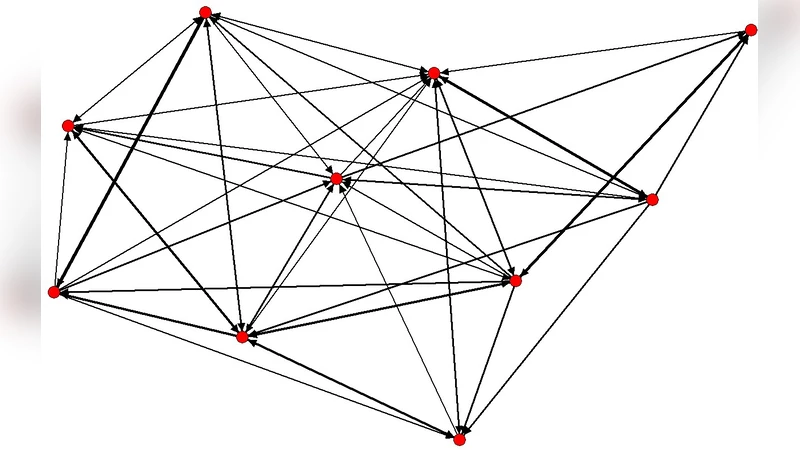
Coarse graining model is a promising way to analyze and visualize large-scale networks. The coarse-grained networks are required to preserve the same statistical properties as well as the dynamic behaviors as the initial networks. Some methods have been proposed and found effective in undirected networks, while the study on coarse graining in directed networks lacks of consideration. In this paper, we proposed a Topology-aware Coarse Graining (TCG) method to coarse grain the directed networks. Performing the linear stability analysis of synchronization and numerical simulation of the Kuramoto model on four kinds of directed networks, including tree-like networks and variants of Barab'{a}si-Albert networks, Watts-Strogatz networks and Erd"{o}s-R'{e}nyi networks, we find our method can effectively preserve the network synchronizability.
💡 Research Summary
The paper addresses the challenge of reducing the size of large directed complex networks while preserving their dynamical property of synchronization. Existing coarse‑graining techniques are largely designed for undirected graphs; applying them to directed networks either discards valuable information about edge direction or fails to capture the nodes’ functional roles. To overcome these limitations, the authors propose a novel Path‑based Coarse Graining (PCG) method specifically tailored for directed networks.
The method begins by quantifying the “impact” that each node receives from all its upstream ancestors. For a pair of nodes x (source) and y (target), every directed path from x to y is counted, and each path of length l is weighted by β^l, where β is a tunable parameter that emphasizes short paths when β<1 and long paths when β>1. Summing over all paths up to a maximum length l_max (chosen as the longest shortest‑path length in the network) yields an impact matrix F. The column of F corresponding to node y forms an N‑dimensional impact vector f_y that encodes the total upstream influence on y. Nodes with similar impact vectors are expected to have similar phase dynamics in a synchronized state.
Next, the N impact vectors are clustered into K groups using the k‑means algorithm. The clustering objective minimizes the within‑cluster sum of squared Euclidean distances, thereby grouping together nodes that receive comparable upstream influence. Because the synchronizability of a directed network can be approximated by the ratio R = λ_rN / λ_r2 (the largest to the second‑smallest real parts of the Laplacian eigenvalues), the authors enforce that the maximum and minimum in‑degrees of the coarse‑grained network remain identical to those of the original network. This constraint helps keep λ_rN and λ_r2, and thus R, stable after reduction.
After the clusters are defined, the links between the newly formed super‑nodes are re‑weighted according to a scheme originally proposed by Gfeller et al. For an incoming link to a super‑node m_i, the weight is the average of the original incoming weights from all nodes in the corresponding cluster; similarly for outgoing links. This preserves the total flow of coupling strength while adapting it to the reduced topology.
The authors evaluate PCG on four representative directed network models: (1) a directed tree with hierarchical layers, (2) a directed Barabási‑Albert (BA) network (acyclic), (3) a directed Watts‑Strogatz (WS) network with varying rewiring probability, and (4) a directed Erdős‑Rényi (ER) random network. For each model they perform linear stability analysis of the synchronized state (computing R) and numerical simulations of the Kuramoto model to assess phase coherence. Results are visualized in the (β, K) plane, where K is the size of the reduced network.
Key findings include:
- In tree and acyclic BA networks, larger β (≈ 1 or higher) yields the best preservation of synchronizability; β≈1 produces a sharp transition where the coarse‑grained network matches the original R almost exactly.
- In cyclic WS networks, the optimal β is around 0.1, indicating that emphasizing short paths is advantageous when many loops are present.
- In ER networks, synchronizability is relatively insensitive to β, with fluctuations in R below 0.07 across all K.
- Compared with Random Coarse Graining (RCG) and Spectral Coarse Graining (SCG), PCG consistently achieves lower deviations in R and higher order parameters in the Kuramoto simulations. RCG ignores structural information entirely, while SCG, though powerful for undirected graphs, fails to capture direction‑dependent node roles because Laplacian eigenvectors do not reflect upstream influence in directed cycles.
Complexity analysis shows that computing the impact matrix naïvely requires O(N³) operations, and k‑means clustering adds O(N²). However, when β < 1 the impact calculation reduces to a Katz‑like series that can be evaluated in O(N + M) time using sparse matrix techniques, making the method scalable to large real‑world networks.
In conclusion, the PCG framework provides a principled way to coarse‑grain directed networks by directly measuring upstream influence, clustering nodes with similar dynamical impact, and preserving key topological constraints that maintain synchronizability. The method adapts to different network motifs through the β parameter, offering flexibility for hierarchical, tree‑like structures as well as highly loopy graphs. The authors suggest future extensions to other dynamical processes such as epidemic spreading and to time‑varying directed networks.
Comments & Academic Discussion
Loading comments...
Leave a Comment