QED cascades induced by circularly polarized laser fields
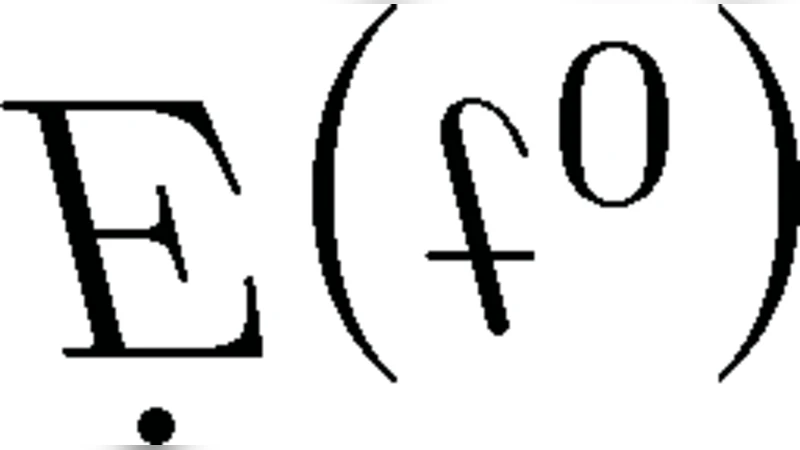
The results of Monte-Carlo simulations of electron-positron-photon cascades initiated by slow electrons in circularly polarized fields of ultra-high strength are presented and discussed. Our results confirm previous qualitative estimations [A.M. Fedotov, et al., PRL 105, 080402 (2010)] of the formation of cascades. This sort of cascades has revealed the new property of the restoration of energy and dynamical quantum parameter due to the acceleration of electrons and positrons by the field and may become a dominating feature of laser-matter interactions at ultra-high intensities. Our approach incorporates radiation friction acting on individual electrons and positrons.
💡 Research Summary
The paper presents a comprehensive Monte‑Carlo study of electron‑positron‑photon (QED) cascades that develop when a low‑energy electron population is immersed in an ultra‑intense, circularly polarized laser field. Building on the qualitative predictions of Fedotov et al. (Phys. Rev. Lett. 105, 080402, 2010), the authors implement a particle‑by‑particle treatment of radiation reaction using the Landau‑Lifshitz formulation, and they model the full nonlinear QED processes (nonlinear Compton scattering, nonlinear Breit‑Wheeler pair creation, and multiphoton cascade steps) with exact quantum probabilities.
Key aspects of the simulation framework include: (i) a realistic description of the circularly polarized wave, with electric and magnetic components phase‑shifted by 90°, which forces charged particles onto a helical trajectory while continuously supplying transverse acceleration; (ii) the inclusion of stochastic photon emission and pair creation events based on the local quantum nonlinearity parameters χₑ = (eħ/m³c⁴)√{-(F_{\mu\nu}p^\nu)²} for electrons/positrons and χ_γ for photons; (iii) a time‑resolved tracking of each particle’s momentum, energy loss, and subsequent re‑acceleration by the laser field.
The simulations start from a cold electron bunch (γ≈1) placed in a laser field with peak intensity I ≳ 10²³ W·cm⁻² and wavelength λ≈1 µm. Within a few femtoseconds, the electrons emit high‑energy photons (χ_γ≈1–10) via nonlinear Compton scattering. These photons, in turn, generate secondary electron‑positron pairs through the nonlinear Breit‑Wheeler process. Crucially, because the circular polarization continuously accelerates the newly created charges, their dynamical quantum parameter χₑ is restored after each emission event. This “energy and χ‑recovery” mechanism is absent in linearly polarized or static field configurations and leads to a self‑sustaining cascade.
Quantitatively, the cascade growth rate becomes exponential once χₑ reaches ≈0.5–1. The number of charged particles increases as N(t)∝exp(Γt) with Γ≈0.3–0.5 fs⁻¹ for the chosen parameters, meaning that within ≈10 fs the particle count can exceed the initial electron number by two orders of magnitude. The particle energy spectrum develops a pronounced high‑energy tail that is constantly replenished by laser acceleration, while the low‑energy part is rapidly depleted by radiation reaction. This bimodal distribution is a distinctive signature of the interplay between stochastic photon emission and deterministic field‑driven acceleration.
Parameter scans reveal that the cascade threshold scales with the product a₀·λ (where a₀ is the normalized vector potential). For a₀≈300 (corresponding to I≈10²³ W·cm⁻² at λ=1 µm) the cascade ignites robustly; reducing the wavelength to 0.8 µm lowers the required intensity by roughly a factor of two, reflecting the stronger field invariants at shorter wavelengths. Conversely, if the initial electron energy is increased (γ≫1), the cascade onset is delayed because the particles spend more time in the radiation‑reaction dominated regime before χₑ can be regenerated.
The authors discuss experimental feasibility. Present‑day multi‑petawatt facilities such as the Extreme Light Infrastructure (ELI) and the Shanghai Superintense Laser Facility (SULF) are already capable of delivering the necessary intensities. Circular polarization can be achieved with quarter‑wave plates or plasma‑based polarization converters. Diagnostics would involve high‑resolution γ‑ray spectrometers to capture the emitted photon spectrum, and magnetic spectrometers or time‑of‑flight detectors to resolve the emerging electron‑positron plasma. Observation of the predicted energy‑recovery plateau and the exponential particle number growth would constitute direct evidence of the cascade mechanism.
In conclusion, the study confirms that circularly polarized ultra‑intense laser fields provide an optimal environment for QED cascade development. The combined effect of stochastic radiation reaction and deterministic field acceleration restores both particle energy and the quantum nonlinearity parameter χ after each emission, enabling a self‑sustaining exponential multiplication of particles. This phenomenon is expected to dominate laser‑matter interactions at intensities beyond 10²³ W·cm⁻², opening new avenues for laboratory astrophysics, high‑energy density physics, and the exploration of strong‑field quantum electrodynamics.