Hypergraph topological quantities for tagged social networks
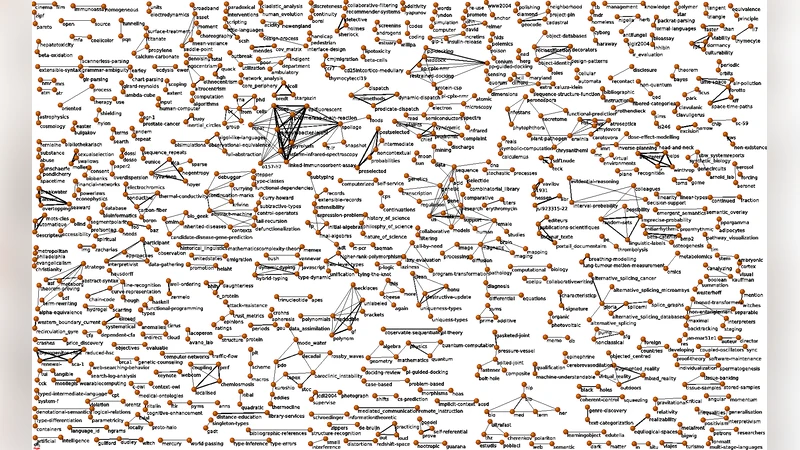
Recent years have witnessed the emergence of a new class of social networks, that require us to move beyond previously employed representations of complex graph structures. A notable example is that of the folksonomy, an online process where users collaboratively employ tags to resources to impart structure to an otherwise undifferentiated database. In a recent paper[1] we proposed a mathematical model that represents these structures as tripartite hypergraphs and defined basic topological quantities of interest. In this paper we extend our model by defining additional quantities such as edge distributions, vertex similarity and correlations as well as clustering. We then empirically measure these quantities on two real life folksonomies, the popular online photo sharing site Flickr and the bookmarking site CiteULike. We find that these systems share similar qualitative features with the majority of complex networks that have been previously studied. We propose that the quantities and methodology described here can be used as a standard tool in measuring the structure of tagged networks.
💡 Research Summary
The paper addresses a fundamental limitation in the representation of modern social media platforms that involve three-way interactions among users, tags, and resources—a structure commonly referred to as a “folksonomy.” Traditional graph models, whether simple graphs or bipartite networks, collapse these ternary relations into pairwise edges, thereby losing essential information about how a user’s tagging activity simultaneously connects a tag and a resource. To overcome this, the authors propose a tripartite hypergraph model in which each hyper‑edge explicitly contains a user (U), a tag (T), and a resource (R). This representation preserves the full semantics of a tagging event: “user u applied tag t to resource r.”
Within this framework the authors introduce several novel topological metrics that extend classic complex‑network analysis:
-
Edge‑degree distribution P(k) – the probability that a vertex participates in k hyper‑edges. Empirical measurements on two large‑scale folksonomies (Flickr and CiteULike) reveal a clear power‑law tail with exponents γ≈2.1–2.5, indicating a scale‑free organization similar to many previously studied networks.
-
Vertex similarity S(i,j) – defined via cosine or Jaccard similarity of the hyper‑edge incidence sets of two vertices. This metric quantifies how often two users share the same tags and resources, or how two tags co‑occur on the same resources, providing a direct measure of semantic proximity.
-
Degree correlation C(k,k′) – the tendency of vertices of degree k to connect to vertices of degree k′ within hyper‑edges. Positive assortative mixing (rich‑club effect) is observed: high‑degree users preferentially use high‑degree tags, and high‑degree resources attract high‑degree users and tags.
-
Hyper‑graph clustering coefficient C_h – a generalisation of the classic triangle‑based clustering coefficient. Here a “triangle” corresponds to two vertices sharing both a tag and a resource (i.e., three vertices mutually connected through two hyper‑edges). The measured C_h values (≈0.27 for Flickr, ≈0.31 for CiteULike) are substantially larger than typical clustering coefficients in one‑mode projections, reflecting the dense overlapping of tagging activity.
The authors collected extensive datasets: over two million hyper‑edges from Flickr (≈1.2 M photos, 250 k users, 300 k tags) and 1.5 M hyper‑edges from CiteULike (≈800 k papers, 150 k users, 200 k tags). After filtering out low‑frequency elements, they computed the above metrics and performed a series of analyses. The degree distributions confirm a scale‑free regime; similarity analysis shows that the top‑similarity pairs correspond to tightly‑focused topical communities (e.g., landscape photography or specific research domains). Degree‑correlation plots reveal a pronounced assortative pattern, supporting the existence of a “core” of prolific users and popular tags that dominate the network. The high clustering coefficient indicates that many users repeatedly tag the same resources with the same tags, creating tightly knit triadic structures that are invisible in ordinary bipartite projections.
Beyond the empirical findings, the paper discusses the broader implications of the hyper‑graph approach. Because the model retains the full ternary information, it can be directly leveraged for recommendation systems: similarity scores derived from hyper‑edge co‑occurrence can improve collaborative filtering by incorporating tag semantics. Moreover, the framework is readily extensible—temporal stamps, geographic locations, or device identifiers can be added as additional vertex types, yielding multi‑layer hyper‑graphs capable of modeling dynamic, multi‑modal social phenomena.
In conclusion, the study demonstrates that tripartite hyper‑graphs provide a mathematically rigorous and practically useful representation for tagged social networks. The introduced topological quantities capture both the universal features of complex networks (scale‑free degree distributions, assortative mixing, high clustering) and the distinctive patterns arising from simultaneous user‑tag‑resource interactions. The authors argue convincingly that these metrics constitute a standard toolbox for future research on folksonomies, enabling more accurate structural analyses, community detection, and the design of intelligent services that exploit the rich semantics embedded in modern collaborative tagging platforms.
Comments & Academic Discussion
Loading comments...
Leave a Comment