Social network dynamics of face-to-face interactions
The recent availability of data describing social networks is changing our understanding of the “microscopic structure” of a social tie. A social tie indeed is an aggregated outcome of many social interactions such as face-to-face conversations or phone-calls. Analysis of data on face-to-face interactions shows that such events, as many other human activities, are bursty, with very heterogeneous durations. In this paper we present a model for social interactions at short time scales, aimed at describing contexts such as conference venues in which individuals interact in small groups. We present a detailed anayltical and numerical study of the model’s dynamical properties, and show that it reproduces important features of empirical data. The model allows for many generalizations toward an increasingly realistic description of social interactions. In particular in this paper we investigate the case where the agents have intrinsic heterogeneities in their social behavior, or where dynamic variations of the local number of individuals are included. Finally we propose this model as a very flexible framework to investigate how dynamical processes unfold in social networks.
💡 Research Summary
The paper addresses the need for dynamic models that capture the bursty nature of human face‑to‑face interactions, as revealed by recent high‑resolution RFID data collected at social gatherings such as conferences. The authors propose an agent‑based framework in which each of N agents carries two state variables: a coordination number n_i indicating the size of the group (clique) the agent currently belongs to, and a timestamp t_i recording the last moment the agent’s coordination number changed. At each discrete time step a random agent i is selected; with a state‑dependent probability p_n(t, t_i) it attempts to update its coordination number. If the agent is isolated (n_i = 0) it may form a new pair with another isolated agent j, chosen proportionally to p_0(t, t_j). If the agent belongs to a group of size n + 1, it either (i) leaves the group with probability λ, causing its own n_i to become 0 and reducing the coordination numbers of all former group members by one, or (ii) recruits an isolated agent into the group with probability 1 − λ, increasing the coordination numbers of all members by one.
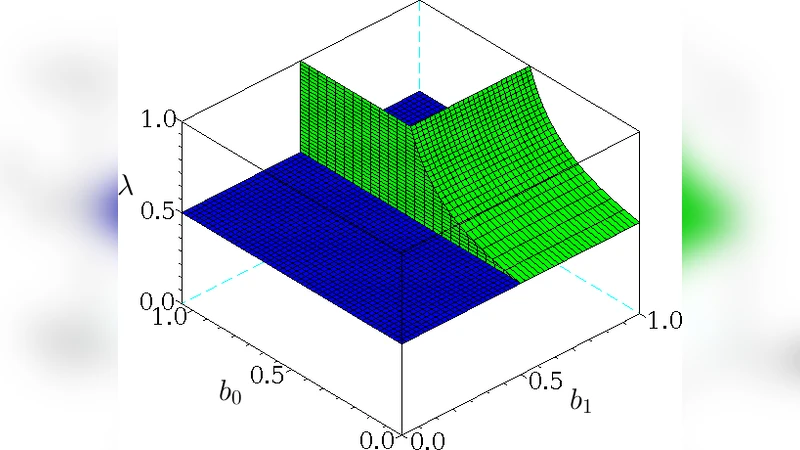
The crucial ingredient is the functional form of p_n(t, t_i). The authors adopt a reinforcement mechanism: the longer an agent has remained in a given state, the smaller the probability of leaving (or, for isolated agents, the smaller the probability of forming a new group). Mathematically, p_n(t, t_i) ∝ (t − t_i)^{−α}, where α > 0 yields a power‑law tail. This choice reproduces the empirically observed heavy‑tailed distributions of contact durations and inter‑contact intervals, which deviate strongly from Poisson expectations. Analytical treatment via master equations yields stationary distributions for group lifetimes and coordination numbers, while numerical simulations explore the phase diagram as a function of α and λ. For λ < ½ the system exhibits non‑stationary “activity bursts” with extremely long‑lived groups; for λ > ½ it settles into a stationary regime with bounded average group size.
The model is calibrated against a real dataset collected during the 6th European Semantic Web Conference (ESWC 2009). The RFID system recorded ~20 000 face‑to‑face contacts among 175 participants over three days, with contact durations averaging 46 s but spanning several orders of magnitude. Empirical distributions of contact duration, inter‑contact time, group size, and group lifetime all display power‑law behavior. By tuning α≈0.8 and λ≈0.6, the simulated system reproduces these distributions with high fidelity. Moreover, aggregated networks built over various time windows (12 h, 24 h, 48 h) show degree, weight, strength, and Herfindahl‑Hirschman index (Y²) patterns that match the data, confirming that the model captures both microscopic (event‑level) and mesoscopic (aggregated network) features.
To increase realism, two extensions are introduced. First, agents are endowed with heterogeneous activity propensities ε_i, modifying the pair‑formation probability to p_0(t, t_i) ∝ ε_i (t − t_i)^{−α}. This heterogeneity reproduces the observed variability in individual contact rates and the skewed distribution of node strengths. Second, the total population N(t) is allowed to vary in time, mimicking arrivals and departures of participants. New agents enter as isolated nodes, while departing agents are removed randomly from existing groups. Simulations with realistic entry/exit schedules still generate group‑size‑dependent lifetime distributions and weight statistics consistent with the empirical observations.
The authors argue that despite its simplicity, the model captures three essential empirical facts: (1) bursty contact durations and inter‑contact intervals, (2) decreasing stability of larger groups, and (3) weak correlation between node degree and edge weight. Because the model can generate synthetic, yet realistic, temporal interaction networks, it provides a valuable testbed for studying dynamical processes such as epidemic spreading, information diffusion, or opinion formation on time‑varying social structures. The paper concludes by suggesting future directions, including spatially constrained interactions, multilayer extensions (online vs. offline contacts), and feedback mechanisms where the state of a dynamical process (e.g., infection) influences interaction probabilities.
Comments & Academic Discussion
Loading comments...
Leave a Comment