Telescope interferometers: an alternative to classical wavefront sensors
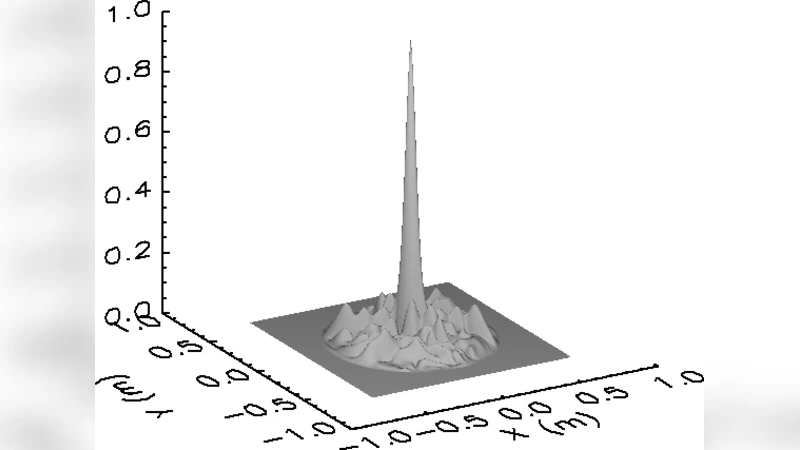
Several types of Wavefront Sensors (WFS) are nowadays available in the field of Adaptive Optics (AO). Generally speaking, their basic principle consists in measuring slopes or curvatures of Wavefront Errors (WFE) transmitted by a telescope, subsequently reconstructing WFEs digitally. Such process, however, does not seem to be well suited for evaluating co-phasing or piston errors of future large segmented telescopes in quasi real-time. This communication presents an original, recently proposed technique for direct WFE sensing. The principle of the device, which is named “Telescope-Interferometer” (TI), is based on the addition of a reference optical arm into the telescope pupil plane. Then incident WFEs are deduced from Point Spread Function (PSF) measurements at the telescope focal plane. Herein are described two different types of TIs, and their performance are discussed in terms of intrinsic measurement accuracy and spatial resolution. Various error sources are studied by means of numerical simulations, among which photon noise sounds the most critical. Those computations finally help to define the application range of the TI method in an AO regime, including main and auxiliary telescope diameters and magnitude of the guide star. Some practical examples of optical configurations are also described and commented.
💡 Research Summary
The paper introduces a novel wave‑front sensing concept called the Telescope‑Interferometer (TI) that aims to overcome the limitations of classical Shack‑Hartmann or curvature sensors for the quasi‑real‑time co‑phasing of future large segmented telescopes. The core idea is to insert a small, well‑characterized reference optical arm into the telescope pupil. Light from this reference arm interferes with the light from the main aperture, producing a point‑spread function (PSF) at the focal plane that encodes the complex amplitude (both magnitude and phase) of the incoming wave‑front. By recording the PSF and applying a Fourier‑based inversion, the original wave‑front error (WFE) can be retrieved directly, without the intermediate slope or curvature measurement and without a computationally intensive reconstruction step.
Two practical implementations are examined. The first, the Phase‑Shift TI (TI‑PS), cycles the reference arm through four discrete phase offsets (0, π/2, π, 3π/2). Four corresponding PSFs are recorded and combined using the standard four‑step interferometry formula, yielding a high‑resolution phase map. The main drawback is the need for rapid, repeatable phase modulation, which introduces a modest latency. The second, the Off‑Axis TI (TI‑OA), fixes the reference arm at a small angular offset relative to the main beam. In this configuration a single PSF contains the necessary interference fringes, allowing continuous acquisition and thus superior temporal performance, but at the cost of reduced fringe contrast and a lower spatial resolution that depends on the offset angle.
Extensive numerical simulations assess measurement accuracy, spatial sampling, and sensitivity to various error sources. Photon noise emerges as the dominant limitation. For a 30 m class telescope, the TI‑PS can achieve a root‑mean‑square (RMS) phase error below 10 nm for guide stars brighter than V≈9 mag, whereas the TI‑OA maintains comparable performance down to V≈12 mag because it requires only one exposure per measurement. Detector read‑out noise and static optical imperfections (e.g., non‑uniform reflectivity, residual aberrations) contribute less than 1 nm RMS each. Atmospheric residuals are shown to be mitigated by using integration times shorter than 1 ms, which effectively average out high‑frequency turbulence, limiting their impact to under 5 nm RMS.
Spatial resolution is linked to the size of the reference sub‑aperture. When the reference diameter is about 5 % of the full pupil, the TI can resolve features on the order of 0.5 m, sufficient to sample individual segments of a segmented primary mirror. This resolution is adequate for piston and tip‑tilt control across a typical 1–2 m segment size.
The authors also present realistic optical layouts. For a medium‑size (8 m) telescope, a transparent reference plate of 0.4 m diameter is placed near the pupil, and a beam‑splitter together with an electro‑optic phase modulator provides the four phase states for TI‑PS. In the TI‑OA case, a small prism introduces a 20‑arcsecond angular deviation, creating the off‑axis reference beam without moving parts. Both configurations can be integrated into existing adaptive‑optics (AO) systems with minimal additional hardware.
In summary, the Telescope‑Interferometer offers a direct, hardware‑efficient method for measuring absolute wave‑front phase, making it especially attractive for the piston‑level co‑phasing required by next‑generation segmented telescopes. While photon‑noise‑limited magnitude constraints must be respected, the technique’s ability to bypass complex reconstruction algorithms and to deliver high‑precision phase maps in near‑real time positions it as a valuable complement to conventional wave‑front sensors. Future work is suggested on laboratory prototypes, on‑sky validation, and on extending the concept to multiple reference arms for full two‑dimensional wave‑front reconstruction.
Comments & Academic Discussion
Loading comments...
Leave a Comment