Signal-to-noise ratio of phase sensing telescope interferometers
This paper is the third part of a trilogy dealing with the principles, performance and limitations of what I named “Telescope-Interferometers” (TIs). The basic idea consists in transforming one telescope into a Wavefront Error (WFE) sensing device. This can be achieved in two different ways, namely the off axis and phase-shifting TIs. In both cases the Point-Spread Function (PSF) measured in the focal plane of the telescope carries information about the transmitted WFE, which is retrieved by fast and simple algorithms suitable to an Adaptive Optics (AO) regime. Herein are evaluated the uncertainties of both types of TIs, in terms of noise and systematic errors. Numerical models are developed in order to establish the dependence of driving parameters such as useful spectral range, angular size of the observed star, or detector noise on the total WFE measurement error. The latter is found particularly sensitive to photon noise, which rapidly governs the achieved accuracy for telescope diameters higher than 10 m. We study a few practical examples, showing that TI method is applicable to AO systems on telescope diameters ranging from 10 to 50 m, depending on seeing conditions and magnitude of the observed stars. We also discuss the case of a space-borne coronagraph where TI technique provides high sampling of the input WFE map.
💡 Research Summary
The paper presents a comprehensive study of Telescope‑Interferometers (TIs) as wavefront‑error (WFE) sensors suitable for adaptive optics (AO) systems, focusing on their signal‑to‑noise ratio (SNR) performance. Two configurations are examined: the off‑axis TI, where a small reference aperture is displaced laterally from the main pupil, and the phase‑shifting TI, where the reference aperture is placed centrally and moved axially to introduce known phase steps (0, π/2, π, 3π/2). In both cases the focal‑plane point‑spread function (PSF) contains interference fringes that encode the WFE. By measuring the PSF and applying an inverse Fourier transform, the optical transfer function (OTF) is obtained; the third term of the OTF, isolated through spatial separation (off‑axis) or linear combination of four phase‑shifted OTFs, carries a convolution of the reference pupil with the unknown WFE. A crucial “Dirac approximation” assumes the reference pupil area S_r is much smaller than the main pupil area S_R, allowing the convolution kernel to be treated as a delta function. This approximation limits spatial resolution to roughly √(S_R/S_r) but also reduces the contrast ratio C = S_r/S_R, making the signal weak.
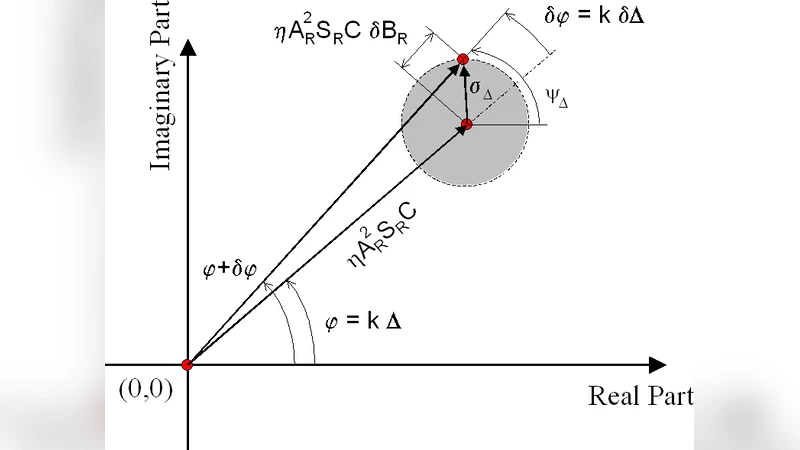
The noise model treats the complex signal A_R² S_R C B_R(x,y) e^{ikΔ(x,y)} and adds detector noise components: photon (shot) noise, read‑out noise, and dark current, all scaled by the overall radiometric efficiency η (including atmospheric transmission, telescope optics, and detector quantum efficiency). First‑order analysis yields a noise term σ_Δ that is dominated by photon noise because the signal scales with the small contrast C. The derived bound Δ ≤ C S_A/(k R² η σ) shows that for large telescopes (diameter > 10 m) the photon budget quickly becomes the limiting factor, preventing sub‑λ/10 accuracy unless the observed star is sufficiently bright.
Simulations explore the influence of spectral bandwidth, source angular size, and reference pupil diameter. A broader bandwidth (Δλ/λ ≈ 0.1) increases photon count and improves SNR, but introduces chromatic bias that must be calibrated. The source must be effectively point‑like (angular size < 0.5 mas) to avoid spatial averaging of the interference pattern. For a 30 m ELT under good seeing (≈ 0.5″) and a target of visual magnitude m_V ≈ 8, the authors predict an RMS WFE error of ~0.05 λ.
The phase‑shifting TI requires precise piston control of the reference mirror; however, only four PSF acquisitions are needed, making the method computationally light. The off‑axis TI demands a separation B ≥ 3R + r to avoid cross‑talk between OTF terms, which is feasible with modest mechanical offsets.
Application to space‑based coronagraphs is discussed. In the absence of atmospheric turbulence, photon noise remains the sole stochastic limitation, but thermal and vibration‑induced piston errors become systematic concerns. The high contrast ratio achievable with a small reference pupil enables dense sampling of the input WFE (≈ 10 cm resolution) for wavefront control in high‑contrast imaging.
Overall, the study concludes that TIs offer fast, real‑time WFE sensing compatible with AO loops, but their performance is strongly tied to the contrast ratio C. For telescopes larger than 10 m, the method is viable only for relatively bright guide stars and modest spectral bandwidths, whereas for 10–50 m ground‑based facilities and space coronagraphs the technique can meet the required accuracy if the system design carefully balances reference pupil size, detector noise, and spectral filtering. Further experimental validation and optimization of the Dirac approximation and phase‑unwrapping strategies are recommended to fully exploit TIs in next‑generation astronomical instrumentation.
Comments & Academic Discussion
Loading comments...
Leave a Comment