Large-distance and long-time asymptotic behavior of the reduced density matrix in the non-linear Schr"{o}dinger model
Starting from the form factor expansion in finite volume, we derive the multidimensional generalization of the so-called Natte series for the zero-temperature, time and distance dependent reduced density matrix in the non-linear Schr\"{o}dinger model…
Authors: K. K. Kozlowski
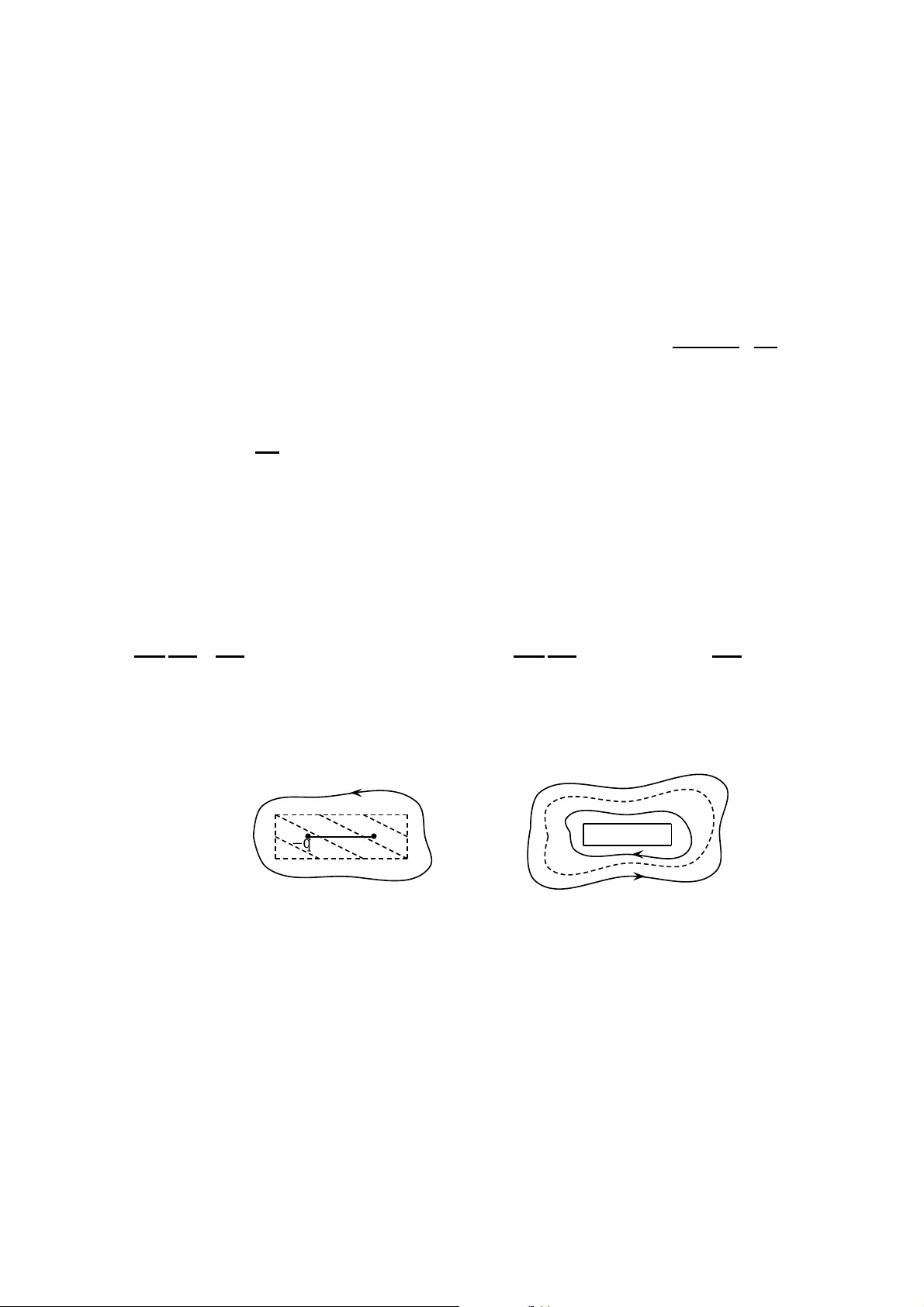
DESY 10-23 0 Large-distanc e and long-time asympto tic beh a vior of the reduced density matrix in the non-linear Schrödinger model. K. K. Kozlowski 1 Abstract Starting from the form factor expansion in finite volume, we derive the mu ltidimen- sional generalizatio n of the so-called Natte series for the time and distance dependent reduced density matrix at zero-temperatur e in the non -linear Schrödin ger mod el. This representatio n allows on e to r ead-o ff straightfor wardly the long-time / large-distanc e asymptotic behavior of this correlato r . This method of analysis reduce s the complexity of the computation of the asymptotic b ehavior of correlation function s in the so-called interacting inte grable models, to the one appearing in free fermion equi valent models. W e compute e xplicitly the first few terms a ppearing in the asym ptotic e xpansion. Part of these term s stems from e xcitations lying aw ay from the Fermi boundar y , and hence go beyond what can be obtained by using the CFT / Luttinger liquid based predictions. 1 Introd uction One-dimens ional quantu m model s with a gapless spectrum are belie ved to be critical at zero temperatu re. In other wo rds, in these models, the ground state e xpect ation values o f prod ucts of local ope rators should decay , for lar ge distances of s eparati on between the ope rators, as some po w er -la w in the distan ce. It is also belie ved that, for a generic class of Hamiltonians, the actual value of the exp onents gove rning this po w er -la w decay , the so-cal led critical exponen ts, does not depend on the microscopic details of the interaction s in the model, but only on its o ve rall symmetries [21, 24]. There fore two models bel ongin g to the same uni v ersalit y class should be charac terized by the same critic al expo nents . It has been arg ued that the equal-t ime correla tion functions in quantum critical one-di mension al models exhibit confor mal in v arianc e in the large- distan ce regime [74]. Hence, its appears plausibl e to infer their lar ge-di stance asympto tics from those o f the associated confor mal field theo ry (CFT). The centra l char ge of th e CFT lying in the uni versality class of the model can be deduc ed from the finite-size corrections to the groun d state ener gy [3, 11]. The possibilit y to compute such fini te-size correction s for many inte grable models a llo wed the identification of the centra l char ge and scalin g dimension s leading to the predicti ons for the critica l expo nents [5, 17, 18, 54, 55, 84] 1 DESY , Ha mbur g, Deutsch land, karol.kajetan.kozlo wski@desy .de 1 of the long-dista nce asymptotics. W e remind that it is also sometimes possibl e to giv e predictions for the critical exp onent s [25, 26, 67] by putting the model in correspo ndenc e with a Luttinger liquid [27]. Due to their wide applica bility and relativ e simplicity , it is more than desirable to test these CFT / L uttinge r liquid based prediction s v ersus some exac t calcula tions carried out on such models; t his starting from first principl e and in such a way that no approximatio n (apart from assuming a larg e distance) is made to the very end. Such exa ct computati ons hav e been carried out in the 70’ s and 80’ s on v ariou s two-poin t functions appeari ng in free fermion equi v alen t models such as th e I sing [13, 70, 71], the X Y model at the critical magn etic field [68, 69] or the impenetr able Bose gas [83]. The latter approaches w ere then m ade much more systematic (and also simplified ) with the occurre nce of a Riemann–Hilber t based a pproac h to fr ee-fermio n models’ asy mptotics [30] together with the de v elopmen t of the non-line ar steepest- descen t method [16]. Indee d, the latter constitutes a relati vely simple and systemat ic tool for carrying out the as ymptoti c analysis [29, 31, 32] o f Riemann–Hilb ert problems associate d with Fredholm determina nts repres enting the correl ators in free fermion ic models. Ho wev er , obtainin g long-d istanc e asympto tic expan sions of two-point functions for models not equi v alent to free fermio ns face d sev eral additional problems of tech nical nature. This fac t tak es its roo ts in that e ven obt aining exp licit expr ession s for the correlation functio ns in the so-called interacting integ rable m odels demands to ove r - come new types of combin atoria l intricac y th at disappears when dealing with free f ermion equiv alent models. The first approac h to the problem of computing correlat ors out of the free fermion point can be attrib uted to Izer gin and Korep in [35, 36]. These authors managed to construct certain series representati ons for the correlation func- tions of the non-line ar Schrödinger m odel and the XXZ spin-1 / 2 chain. Ho wev er , the n th summand appea ring in these series was only defined implicitly by induc tion. Lo w- n calcula tion allo wed them for an e ff ectiv e per- turbat i ve charac terizat ion of a vicinity of the free fermion point. First manageable express ions for correlato rs at zero temperature in an interact ing inte grable model were obtaine d by Jimbo, Miki, Miwa, Nakayashiki through the ve rtex operator approach. They hav e pr ovi ded multiple integral representati ons for the matrix elements of the so-cal led elementary blocks † in the massi v e [39] regime of the infinite XXZ chain. These results where later ext ended to the massles s regime of this chain [40] or to a half-infinite chain subjec t to a longitudi nal m agneti c field acting on one of its ends [38]. The multipl e integral represen tation s were then reprodu ced, in the frame work of the alg ebraic Bethe Ansatz b y Kitanin e, Maillet and T erras for the massiv e and massless reg ime of the pe riodic XXZ chain [52]. These two series of works opened a way toward s a systematic and e ff ecti ve computatio n of v ariou s types of multiple integral and / or combinatorial represen tation s for the correlat ion functions in numerous inte grable models. In par ticular , it was possible to deri ve e ff ecti ve rep resent ations in th e case of finite temperat ure [23], non-equ al times [49], m odels in finite volu me [37], higher spin chains [15],... These results should be seen as of utter most impo rtance f rom the conc eptua l point of view: the mult iple i nte gral rep resent ations for the corr ela- tors of interactin g integrab le models natu rally prov ides an interpretat ion for t hese ob jects as a ne w class of specia l functi ons (of the distance, time, coupling constants, ...). Howe ve r , the complex ity of the integ rands appearing in such multiple integral represent ations makes the thoro ugh descr iption (computa tion at certain specific v alue s of the distance / co uplin g or extractin g their larg e-dista nce / lon g-time beha vior etc ...) of these ne w specia l function s a quite challengi ng proble m. Many in vestigat ions that follo wed w here oriented to war ds a better understan ding of these special functions . In particular , it was obs erv ed that the multiple inte gral representati ons for the elementary blocks of the XXZ chain can be reduced to one dimensiona l integrals by a case-b y-case analysis [10, 47, 50, 75]. This observ atio n led to the proof that it is possib le to separate the multiple integr als represen ting the elementa ry blocks of the XXZ chain on the algebra ic lev el [7 ]. In its turn, this led to the disco very of a Grassmann structur e in the XXZ chain [6, 8, 9]. Among m any other dev elopments such as the possibi lity to compute the one-poi nt functi ons of the sine-Gordo n model [41, 42], the existen ce of such a Grassmann structure constitutes a promisi ng directi on toward s bringin g the complexi ty of the analysis of the correlation function in the XXZ chain to the one of a free fermion proble m. A completel y other method for reduc ing the complexi ty of the multiple integral repre- † these constitute a basis on which it is possible to decompo se all correlation functions of the model 2 sentat ions for the correla tion functio ns was the so-c alled dual field approach [59]. It led to represe ntatio ns for the correla tors in terms of expecta tion valu es in an infinite dimension al H ilbert space of unboun ded operator v alued Fredholm determina nts [56, 57]. Ho w e ver , apart from con ver gence issues posed by such an infinite dimension al frame wor k, the m ain problem of that m ethod was posed by the non-commutati vity of the dual field’ s va cuum exp ectatio n v alues and the asymptotic exp ansio n of a dual-field val ued Fredholm deter minant. Its and Sla vno v [33] carried out, on a formal lev el, such a dual field-based analysis for the lar ge-di stance / long-time decay of the so-cal led one-particle reduced densit y matrix at finite temperature in the non-linear Schrödinge r model (NLS M). They ha ve been able to provide operator valued expre ssions for the correlatio n length. The dual field vacu um ex- pectat ion v alues w here compute d in [80], which l ed to a description of the cor relatio n length in terms of a sol ution to a non-linea r int egr al equation. W e would like to mention that until recently , alth ough formal, the dual field approa ch was the only appro ach alternati ve to a CFT / Luttinger liquid based correspond ence that allo wed one to write do wn certain predic tions for the critical expo nents . There hav e also be en dev elopmen ts aiming at o btainin g altern ati ve types of e ff ect i ve series of multip le integral repres entatio ns for the distance dependent two-p oint functi ons [48, 51]. The guideline being a const ruction of such a rep resenta tion that woul d allo w one to carry out a lo ng-dis tance asymptotic analysis of the two -point functi ons. This projec t has met a succes s in [45]. This article de veloped a first fairly rigorous method allowin g one to compute, starting from "first principles", the long- distan ce asymptot ic behav ior of the spin-s pin correlatio n functi on in the m assles s re gime of the XXZ spin-1 / 2 cha in. This method relied on a fe w conjectu res relati ve to the permutat ion of symbols, summability of the remainders, con ver gence of the obtained series repres entatio ns, b ut was rigorous otherwise. These last results not only confirmed the CFT / L utting er liquid- based predictions for the critica l expon ents in this model b ut also pro vided exp licit exp ressio ns for th e ampli tudes in front of the po wer-la w which, in their turn, cannot be predicte d by uni versality argu ments. These expli cit formulae for the amplitudes were then identified with certain, pr operly normalized in respect to the size of the system, form factors of the spin operators [44, 46]. This identification allo w ed one to point out the uni versality in the power of the system- size that one uses for normalizing the form factor assoc iated with the amplitudes. The afore mentione d method of asymptotic analysis was applied rec ently to st udy th e long- distan ce asympto tic beha vior of the correlati on functi ons at finite temperat ure in the NLSM [63]. The large- distan ce / long-time asymptotic beha vior of the correl ation function s in massless one dimensional quantu m models goes beyond the predicti ons stemming from a corresp onden ce with a CFT / L utting er liquid. Hence, this constitu tes a clear motiv ation for obtain ing such an asymptoti c beha vior from exact considerat ions on some integrab le model as this could help to understa nd their struct ure and origin in the gener al case where exa ct computat ions are not feasible. W e would like to mention that there already exists sev eral exact result s rel- ati v e to this regi me of the asympto tics in the case of free fermion equi v alent models [32, 68, 69, 72]. W e also would like to remind that there has been proposed recentl y [28 ] a non-linea r Luttinger liquid theory allowin g one to predict the leading po wer -law beha vior near the edges of the purely hole or particle specta for dynamic struc- ture factors and spectra l functio ns † at lo w energ y and m omentum. This approach has been combined with Bethe Ansatz consi deratio ns to propos e value s for the amplitud es in front of this beha vior [12]. This artic le de ve lops a m ethod allo wing one to compute the zero- temperat ure asymptoti c behav ior of the correla tion function s in inte grable models startin g from the form factor expan sion for two-poin t functions . T he fact that we bui ld our method on the form factor expansio n allo ws us to include the time-depend ence and hence access to the lar ge-di stance and long-time asy mptotic beh a vior . The metho d has been introduce d recently on the example of the current-cur rent correl ators [65]. Here, we provi de many elements of rigor to the m ethod and treat the e xample of the one particle red uced density matrix in the non- linear Schrö dinger mode l. W e would like to stress that this method of asymptotic analysi s no t only allows us to carry out the analysis in the large- † These quantities refer to space and time Fourier transforms of particular tw o-point functions 3 distan ce / long -time regi me but als o constitutes an important technical and computationa l simplification of the approa ch propo sed in [45]. It has also the adv antage of being applic able to a much wider class of algebraic Bethe Ansatz solv able models as it solely relies on the uni ver sal structure of the form factors in these models. All the more than th e n umber of mode ls w here these hav e been determined is constan tly gro wing [14, 36, 5 3, 61, 73]. T he main result of this p aper can b e summarized as follo ws. W e pro vide a method for co nstru cting a new type of series repres entatio n for the correlation functions of inte grable models, that w e call multidimensio nal Natte series. This repres entatio n is THE one that is fit for an asymptotic analys is, as the first fe w terms of the asymptotic expa nsion can be simply r ead-o ff without any e ff ort by looking at the terms of the series. Moreov er , the computation of the higher order asymptotics e ff ecti ve ly boils down to the case of a free fermionic model ( ie computation of subleadi ng asympto tics of the Fred holm determinant of an inte grable inte gral operator) and thus bears t he same combin atoria l comple xity . The main implicat ion of our result for physi cs is that the asymptot ics in the time-depende nt case are not only dri ven by excita tions on the Fermi bound ary (the latter coincides w ith the regio n of the spectrum that can be take n into accoun t by using CFT / Luttinger liquid -based predictions ), b ut also by excitat ions around the saddle -point λ 0 of the "plane-wa ve" combination x p ( λ ) − t ε ( λ ) of the dressed momentum p and dressed ener gy ε o f the exci tation s. A lso, we pro vide expli cit express ions and identif y the associat ed amplitud es with the infinite v olume limit of the properly normalize d in the size of the system form fact ors of the fi eld. W e stress that althoug h we ha ve been able to set our method in a more rigorous frame wor k then it was done in [45, 63], we still ha ve to rely on a few conjectures. More precisely , we ha ve been able to split the asymptotic analys is part from the one of pro ving the con ver genc e of certa in series of mult iple integ rals repre sentin g the correla tors. The part related to asymptotic analysis has been set into a rigorou s framewo rk. Howe ver , in order to raise the result s of this asymptotic analysis to the le vel of the two-poi nt function of interest, we still need to assume the con ver gence of the series of multiple integ rals w e obt ain. The main nov elty of this m ethod is that it provid es a systematic way for c arryin g out the asymptotic analysis o f multiple inte grals or series thereof whose integr ands contain some larg e-para meter depende nt drivin g term being dresse d up by coupled functi ons of the inte gratio n v ariable s. W e provi de a setting that allo ws one to interpret the "coupl ed" case as s ome deformation o f the "uncoupled " one. T his deformation is such that, provid ed on e is able to carry ou t the a nalys is in the "uncoupled" case (b ut with a su ffi ciently rich ran ge of functi ons in vo lve d), one is ab le to defor m the "uncoupled " asymptotic s back to the "coupled" case of interes t. It is in thi s respect that the analys is carried out in this article strongly relies on the results obtained in [62 ] (where the relev ant "uncoupl ed" series of multiple integral s of interest has been an alyzed ) as w ell as o n the fact th at correl ation funct ions of generali zed free fermioni c models (which correspond to the "uncoup led" case) are naturally represent able in terms of Fredholm determin ants [60]. This paper is organ ized as follo ws. In sectio n 2, we remind the definition and main properties of the m odel. W e also introd uce a ll the necessary no tation s all o wing us t o present the asymptotic beha vior of th e reduced d ensity matrix. In section 3, we present our result and discuss the strateg y of our method. Then, in section 4, we outlin e the main prope rties of the form factor s in the model and write do wn the form fa ctor series for the reduc ed density matrix. W e explain ho w this series can be re-summed into the so-ca lled multidimension al deformat ion of the Natte se ries. Once that such a r eprese ntatio n is b uilt, thanks t o the very p roper ties of th e Natte series, it i s pos sible to literal ly rea d-o ff the first fe w terms of the asymptoti c e xpan sion. W e gather all the auxilia ry and tec hnical results in sev eral append ices. W e discuss the lar ge size-beh a vior of the form facto rs of the fields in append ix A. In append ix B, we deri ve finite-size Fredholm minor representa tions for the form factor based expans ions of certain two-point functions in general ized fr ee fermion models. In appendix C, we prov e the existenc e of the thermody namic ( ie infinite volume ) limit for certain quant ities of interest. W e also prov ide variou s alternati ve exp ressio ns for thi s limit. In appen dix D, we dev elop the theory of functiona l translati on in s paces o f holomorp hic functi ons. The result s establish ed in this appendix constitut e the main tools of our analy sis. They allow for an e ff ecti ve separation of v ariab les in the intermed iate steps so that one is a ble to carry out v arious re-summations of 4 the formul ae by b uildi ng on the result s stemming from the gene ralized free fermion model st udied in ap pendix B. 2 The non-linear Schrödin ger m odel 2.1 The eigenstates and Bethe equations The non-li near Schröding er model corresp onds to the Hamiltonia n H N LS = L Z 0 n ∂ y Φ † ( y ) ∂ y Φ ( y ) + c Φ † ( y ) Φ † ( y ) Φ ( y ) Φ ( y ) − h Φ † ( y ) Φ ( y ) o d y . (2.1) The model is defined on a circle of length L , so that the canon ical B ose fields Φ , Φ † are subjec t to L -period ic bound ary conditio ns. In the followin g, we will focus on the repulsi ve regi me c > 0 in the presence of a positi ve chemical potentia l h > 0. The Hamiltonian H N LS commutes with the number of particles operator , and thus can be diagonalize d indepen dentl y in ev ery sector with a fixed number of particles N . In each of these sectors, the model is equi v alen t to a N-body gas of bosons subject to δ -like repulsi ve interac tions. The correspondi ng m odel of interac ting bosons was first propose d and studied by Girardeau [22] in the c = + ∞ case and then introdu ced and solved, through the coordinate Bethe Ansatz, by Lieb and Liniger [66] in the case of arbitrary c . It is also possib le to b uild the eigenst ates of the Hamiltonian by m eans of the algebraic Bethe Ansatz. This was first done by S klyani n [77] directly in the infinite v olume. In the case of finite v olume L , as observ ed by Izer gin and K orepin [34], it is po ssible to pu t the con tinuo us model on a la ttice in su ch a way that the s tandar d constructio n [20] of the algebr aic Bethe Ansa tz ho lds. At the end of th e co mputatio ns, it is t hen possib le to sen d the lattice spaci ng to zero and recov er the spectr um and eigensta tes of the contin uous model. The fact that this manipulatio n is indeed fully rigoro us has been sho w n by Dorlas [19]. In the algebraic Bethe Ansatz approach, the Hamiltonian (2.1) appears as a member of a one-parameter com- muting family of operators λ 7→ T ( λ ) . It is sometimes useful to consid er a β -deformati on of this family T β ( λ ) , such that T β ( λ ) | β = 0 = T ( λ ) . The common eigenstate s | ψ β ( { µ } ) i of T β ( λ ) in the N κ -partic le sector are param- eterize d by a set of real numbers µ ℓ a N κ a = 1 which are the unique solutions to the β -deformed logarithmic Bethe equati ons [4 , 85] L p 0 µ ℓ a + N κ X b = 1 θ µ ℓ a − µ ℓ b = 2 π ℓ a − N κ + 1 2 ! + 2 i πβ with p 0 ( λ ) = λ and θ ( λ ) = i ln ic + λ ic − λ . (2.2) p 0 is ca lled the b are momentu m and θ the bare p hase. The set of solutions corre spond ing to all choices of inte gers ℓ a ∈ Z such that ℓ 1 < · · · < ℓ N κ yield the complet e set of eigenst ates in the N κ -partic le sector [19]. In each sector with a fixed number of particles N κ , the so-called groun d state’ s Bethe roots are gi v en by the soluti on to (2.2) corresp ondin g to the cho ice of N κ consec uti ve inte gers ℓ a = a , with a = 1 , . . . , N κ and β = 0. The number N κ corres pondin g to the number of particle s in the overa ll ground state of H N LS is imposed by the chemical potent ial h a nd scales with L . It will be denoted by N in th e fol lo wing. One sh o ws that i n the t hermody namic limit ( N , L → + ∞ so that N / L → D ) the parameters { λ j } N 1 associ ated to this ground state conden sate on a symmetric interv al − q ; q called the Fermi zone. All other choices of sets of integers ℓ a lead to ( β -defor med) excit ed states. In principle , these exc ited states can also be found in sectors with a di ff erent number N κ , N of particles . It is con venie nt to describe the excited states in the language of particle- hole excitati ons abov e the N κ -partic le β -defor med ground state † . Namely , such † the β -deformed ground state corresponds to the choice ℓ a = a , with a = 1 , . . . , N κ 5 an excit ed state correspon ds to a choice of intege rs ℓ j in (2.2) such that ℓ j = j for j ∈ [ [ 1 ; N κ ] ] \ h 1 , . . . , h n and ℓ h a = p a for a = 1 , . . . , n . (2.3) The integ ers p a and h a are such that p a < [ [ 1 ; N κ ] ] ≡ { 1 , . . . , N κ } and h a ∈ [ [ 1 ; N κ ] ]. There is thus a one-to-on e corres ponde nce between inte gers ℓ j and the inte gers h a and p a descri bing particle -hole exc itation s. In this pictur e, the inte gers h a corres pond to holes in the increa sing sequen ce of integer s defining the β - deformed ground state roots, whereas p a corres pond to extr a integ ers appearin g in the equation and can be seen as defining some new position of "particles". G i ven a solution µ ℓ a N κ 1 corres pondin g to a fixed choice of integers ℓ 1 < · · · < ℓ N κ it is con venient to intro duce their count ing function: b ξ { ℓ a } ( ω ) ≡ b ξ { ℓ a } ω | µ ℓ a N κ 1 = p 0 ( ω ) 2 π + 1 2 π L N κ X a = 1 θ ω − µ ℓ a + N κ + 1 2 L − i β L . (2.4) By c onstru ction, it is s uch tha t b ξ { ℓ a } µ ℓ a = ℓ a / L , for a = 1 , . . . , N κ . Actually , b ξ { ℓ a } ( ω ) defines † a set of backgr ound paramete rs { µ a } , a ∈ Z , as the unique ‡ soluti ons to b ξ { ℓ a } ( µ a ) = a / L . The latter allows one to define the rapidi ties µ p a , resp. µ h a , of the particle s, resp. holes, entering in the descript ion of µ ℓ a N κ 1 . 2.2 The thermodynamic limit When the thermodyn amic limit of the model is considered , it is possib le to provid e a slightly more precise de- scripti on of the solut ion to the Bethe equation s for the ground state { λ a } N a = 1 as well as for an y particle -hole type β -defor med excited states µ ℓ a N κ a = 1 abo ve it wit h N κ − N being fixed and not dependin g on L or N . Introdu cing the counti ng functi on for the grou nd state b ξ ( ω ) ≡ b ξ ω | { λ a } N 1 = p 0 ( ω ) 2 π + 1 2 π L N κ X a = 1 θ ( ω − λ a ) + N + 1 2 L , ie b ξ ( λ a ) = a L , (2.5) it can be sho wn that, in the thermody namic limit, it beha ves as b ξ ( ω ) = ξ ( ω ) + O L − 1 where ξ ( ω ) = p ( ω ) 2 π + D 2 and N / L → D . (2.6) There, the O L − 1 is uniform and hol omorphi c in ω belongin g to a strip of some fix ed width arou nd the real axis, p is the so-ca lled dressed momentum, defined as the uniqu e solution to the inte gral equatio n p ( λ ) − q Z − q θ ( λ − µ ) p ′ ( µ ) d µ 2 π = p 0 ( λ ) . (2.7) The parameter q correspon ds to the right end of the F ermi interv al − q ; q on which the ground state’ s Bethe roots conden sate. It is fixed by the value of the chemical potentia l h by demanding that the dressed ener gy ε ( λ ) , defined as the unique solutio n to the belo w integr al equation, van ishes at ± q : ε ( λ ) − q Z − q K ( λ − µ ) ε ( µ ) d µ 2 π = ε 0 ( λ ) with ε 0 ( λ ) = λ 2 − h and ε ( ± q ) = 0 . (2.8) † Note that di ff erent sets of roots µ ℓ a and { µ ℓ ′ a } lead to di ff erent sets of backgro und parameters ‡ The unique ness of solutions follows from the f act that the solution to (2.2) are such that µ ℓ a ( β ) = µ ℓ a ( 0 ) + 2 i πβ/ L . T his allows one to sho w that b ξ { ℓ a } ( ω ) is strictly incre asing on R + 2 i πβ/ L and maps it onto R . Moreover , one can check that ℑ b ξ { ℓ a } , 0 on C \ ( R + 2 i πβ/ L ) . 6 W e also remind the relation p F = π D where p F = p ( q ) is the Fermi momentum. In th e fol lo wing, we will focus on the e xcited states in the N κ = N + 1-pa rticle secto r onl y . In ord er to describe the thermodyna mic properties of such β -deformed excited states, it is con venien t to introduc e the associated shift functi on b F { ℓ a } ( ω ) ≡ b F ω | µ ℓ a N + 1 1 = L h b ξ ( ω ) − b ξ { ℓ a } ( ω ) i = 1 2 π N X a = 1 θ ( ω − λ a ) − 1 2 π N + 1 X a = 1 θ ω − µ ℓ a − 1 2 + i β . (2.9) It can be sho wn that this countin g functio n ad mits a thermody namic l imit F β that solv es the linear integra l equati on F β λ n µ p a o µ h a − q Z − q K ( λ − µ ) F β µ n µ p a o µ h a d µ 2 π = i β − 1 2 − 1 2 π θ ( λ − q ) − 1 2 π n X a = 1 h θ ( λ − µ p a ) − θ λ − µ h a i . There µ p a , resp. µ h a , are to be unders tood as the unique solutions to ξ µ p a = p a / L , resp. ξ µ h a = h a / L , where ξ is gi ven by (2.6). Note that we ha ve expl icitly insiste d on the auxiliar y dependenc e of the thermodyn amic limit of the shift function on the positions of the partic les / hol es. Howe ver , in the follo wing, whene ver the value of { µ p a } and µ h a will be dictated by the co ntex t, we will omit it. W e also remind that th e abov e shift fu nction measures the spacing betwee n the ground state roo ts λ a and the background paramete rs µ a defined by b ξ { ℓ a } : µ a − λ a = F β ( λ a ) · L ξ ′ ( λ a ) − 1 1 + O L − 1 . The integ ral equation for th e thermodyna mic limit of the shift f unctio n F β can be solv ed in terms o f the dressed phase φ ( λ, µ ) and dresse d charg e Z ( λ ) φ ( λ, µ ) − q Z − q K ( λ − τ ) φ ( τ , µ ) d τ 2 π = 1 2 π θ ( λ − µ ) and Z ( λ ) − q Z − q K ( λ − τ ) Z ( τ ) d τ 2 π = 1 . (2.10) Namely , F β ( λ ) ≡ F β λ { µ p a } µ h a ! = ( i β − 1 / 2 ) Z ( λ ) − φ ( λ, q ) − n X a = 1 h φ ( λ, µ p a ) − φ λ, µ h a i (2.11) Here, we also remind two ve ry nice relation ships that exi st between the dressed phase and dressed char ge Z ( λ ) = 1 + φ ( λ, − q ) − φ ( λ, q ) and Z − 1 ( q ) = 1 + φ ( − q , q ) − φ ( q , q ) . (2.12) The first one is easy to obtain and the secon d one has been obtaine d in [58, 79]. The shift function allows one to compute many thermodyn amic limits in volvi ng the parameters µ ℓ a . For instan ce, introducin g the combinatio n of bare momentum and energ y u 0 ( λ ) = p 0 ( λ ) − t ε 0 ( λ ) / x , one readily sees that for a n partic le / hole exc ited state µ ℓ a at β = 0 lim N , L → + ∞ N + 1 X a = 1 u 0 µ ℓ a − N X a = 1 u 0 ( λ a ) | β = 0 = n X a = 1 u ( µ p a ) − u ( µ h a ) . (2.13) Abov e and in the follo wing, u stands f or the c ombinati on of dressed momenta and ener gies u ( λ ) = p ( λ ) − t ε ( λ ) / x . It admits the inte gral representa tion u ( λ ) = u 0 ( λ ) − q Z − q u ′ 0 ( µ ) φ ( µ, λ ) d µ . (2.14) 7 The function u ′ 0 admits a u nique z ero of firs t o rder on R . It is belie ve d that this proper ty is preserv ed for u . C learly , in vi rtue of Rou ché’ s theorem, this ho lds true for c large eno ugh. W e wil l not purse the disc ussio n of this prop erty here as it goes out of the scope of this paper and will use it as a working hypothesis. In other words, we assume that gi v en a fixed ratio t / x , there e xists a unique λ 0 such that u ′ ( λ 0 ) = 0 and u ′′ ( λ 0 ) < 0. W e do stress ho we ve r that this working hypothesis should not be consider ed as a restriction but a simplification of the exp ositio n at most. Indeed, it follo ws from | u ′ ( λ ) | → + ∞ when ℜ ( λ ) → ±∞ that, for any value of c > 0, u ′ has a finite n umber of real zeroe s. The case when u ′ has multip le real zeroes of arbitra ry order could be treate d within out method bu t would make the an alysis hea vier . As a conclud ing remark to this section, we woul d like to stress that all functions that hav e been introduced abo ve (the dressed momentum p , the dressed energy ε , the dressed charg e Z and the dressed phase φ ) are holo- morphic in the strip U δ = n z ∈ C : ℑ ( z ) < 2 δ o (2.15) around the real axis. The parameter δ satisfies c / 8 > δ > 0 and is chosen su ffi cientl y small so that p is injecti ve on U δ and that one has inf λ ∈ U δ ℜ ( Z ( λ )) > 0. W e w ill tacitly assume such a choice in the follo wing each time the strip U δ will be used. 3 The method and main r esults The zero-t emperatu re one-par ticle reduced density matrix in finite v olume refers to the be lo w groun d state expe c- tation v alue: ρ N ( x , t ) ≡ D ψ { λ a } N 1 Φ ( x , t ) Φ † ( 0 , 0 ) ψ { λ a } N 1 E · ψ { λ a } N 1 − 2 . (3.1) The paramete rs { λ a } N 1 corres pond to the set of Bethe root s parameteriz ing the gro und state of (2.1) . W e recall that the fields ev olve in space and time accord ing to Φ ( x , t ) = e − i xP + it H N LS Φ ( 0 , 0 ) e i xP − it H N LS , (3.2) where H N LS is the Hamiltonian of the model giv en in (2.1) and P is the total momentum operator . T he action of P on the eigenst ates of H N LS has been compute d in [4]. W e denote by ρ ( x , t ) = lim N , L → + ∞ ρ N ( x , t ) the, presumabl y exist ing, thermodynamic limit of ρ N ( x , t ) . W e will not de ve lop further on the existen ce of this limit, and tak e this as a quite reasona ble working hypot hesis. 3.1 Description of the method In this article, we carry out se ver al manipulatio ns that lead us to propose a series representati on for ρ ( x , t ) gi ving a straig htforw ard access to its leading large -dista nce / lon g-time asymptotic behav ior . The starting point of our analysis is the model in finite v olume. W e w ill first pro vide certain re-summation formulae for ρ N ( x , t ) startin g from the form fac tor expansio n of (3.1). The latter in vo lve s a summation ov er all the ex cited states ( ie ove r all solutions to (2.2)-(2.3) at β = 0). This sum has a very intricate structure which pre vents us from analy zing its thermod ynamic limit rigoro usly from the ve ry be ginni ng. W e therefo re introduce a simplify ing hypothes is. N amely , denot ing the ener gy of an ex cited state by E ex and the one o f the gro und state by E gs we ar gue that all contrib utions issued from excit ed states such that E ex − E gs scales with L do not contrib ute to the thermodyn amic limit of the form factor expans ion of ρ N ( x , t ) . In the light of these ar gument s, we are led to analyz e an e ff ectiv e form factor series ρ N ;e ff ( x , t ) and a certain γ -deformatio n ρ N ;e ff ( x , t | γ ) thereo f. O ur conjecture is that ρ N ;e ff ( x , t | γ = 1 ) = ρ N ;e ff ( x , t ) has the same thermodyn amic limit as ρ N ( x , t ) . 8 W e study γ 7→ ρ N ;e ff ( x , t | γ ) by means of its T aylor coe ffi c ients at γ = 0: ρ ( m ) N ;e ff ( x , t ) ≡ ∂ m ∂ γ m ρ N ;e ff ( x , t | γ ) γ = 0 . (3.3) All rigoro us, conjectu re-fre e, results of this paper are relati ve to these T aylor coe ffi cient s. W e sho w that these admit a well defined thermody namic limit ρ ( m ) e ff ( x , t ) . In addition, we prov ide two di ff erent representa tions for this limit, each being a finite sum of multiple integ rals. • The first repr esenta tion is in the spirit of the ones obtained in [45, 63]. It corresp onds to some trunca tion of a multidimensio nal deformatio n of a Fredholm series for a Fredholm minor . • The second represen tation is structur ed in such a way that it allo ws one to r ead-o ff stra ightfo rward ly the first few terms of the asymptoti c expansi on of ρ ( m ) e ff ( x , t ) . The v arious terms appearing in this representatio n are o r ganize d in such a way that the identificatio n of tho se that are neg ligible ( e g expo nentia lly small) in the x → + ∞ limit is triv ial. The abov e two results are deriv ed rigorou sly without any approxi mation or additional conjecture. Howe ver , in order to push the analysi s a little further and pro vide results that would hav e applic ations to physics , we need to rely on se v eral conjectur es. Namely , we assume that 1. the series of multiple inte grals that arises upon summing up the thermody namic limits of the T aylor coe ffi - cients P + ∞ m = 0 ρ ( m ) e ff ( x , t ) / m ! is con verg ent; 2. this sum moreov er coincide s with the thermodyna mic limit of ρ N ;e ff ( x , t | γ = 1 ) and hence, due to our first conjec ture, with ρ ( x , t ) . These conjec tures allow us to claim that ρ ( x , t ) can be repres ented in terms of a series of multiple inte grals. The latter series correspo nds to a multidimension al deformation of the Natte series expansio n for Fredholm minors of inte grable integr al operators [62]. This multidimens ional N atte series has all the virtue s in respect to the computa tion of the long-time / lar ge-distance asymptotic beha vior of ρ ( x , t ) ; it is structured in such a way that one readily r eads-o ff from its very form, the sub-lead ing and the first few lea ding terms of the asymptoic s. So as to conclude the descrip tion of our method, we would like to stress that the aforementi oned conjectur es of con ver gence are supported by the fact that they can be prov en to hold in the limiting case of a generalized free fermion m odel [62]. Unfortun ately , the highly coupled nature of the integ rands in volv ed in our represent ations does not allo w one for any simple che ck of the con ver gen ce proper ties in the gene ral + ∞ > c > 0 case. 3.2 Large-d istance / long-time a symptotic beha vior of the o ne-particle r educed density matrix W e hav e no w in troduc ed enou gh n otatio ns so as to be able to present the physically interesting part of o ur analysis . Let x > 0 be lar ge and the ratio x / t is fixed. Let λ 0 be the associ ated, presumably unique ( cf (2.14)), saddle- point of u ( λ ) = p ( λ ) − t ε ( λ ) / x . Assume in addition that λ 0 , ± q and λ 0 > − q . Then, under the validity of the afor ementioned conje ctur es , the thermod ynamic limit o f the z ero-temp erature one-p article reduce d densit y matrix 9 ρ ( x , t ) admits the asympto tic expansi on ρ ( x , t ) = s − 2 i π t ε ′′ ( λ 0 ) − x p ′′ ( λ 0 ) p ′ ( λ 0 ) e i x [ u ( λ 0 ) − u ( q ) ] F λ 0 q 2 [ i ( x + v F t ) ] F λ 0 q ( − q ) 2 [ − i ( x − v F t ) ] F λ 0 q ( q ) 2 1 ] q ; + ∞ [ ( λ 0 ) + o ( 1 ) + e − 2 i x p F F − q q 2 [ i ( x + v F t ) ] F − q q ( − q ) − 1 2 [ − i ( x − v F t ) ] F − q q ( q ) 2 ( 1 + o ( 1 )) + F ∅ ∅ 2 [ i ( x + v F t ) ] F ∅ ∅ ( − q ) 2 [ − i ( x − v F t ) ] F ∅ ∅ ( q ) + 1 2 ( 1 + o ( 1 )) + X ℓ + ,ℓ − ∈ Z η ( ℓ + + ℓ − ) ≥ 0 ∗ C ℓ + ; ℓ − e i x ϕ ℓ + ; ℓ − x ∆ ℓ + ,ℓ − ( 1 + o ( 1 )) (3.4) The critical exponen ts gov ernin g the algebraic decay in the distance of separatio n are express ed in terms of the thermody namic limit F µ p µ h of the shift fu nction (at β = 0) associated with an excit ed state of (2.1) havin g one particl e at µ p and one hole at µ h , namely , F ∅ ∅ ( λ ) = − Z ( λ ) 2 − φ ( λ, q ) F − q q ( λ ) = − Z ( λ ) 2 − φ ( λ, − q ) F λ 0 q ( λ ) = − Z ( λ ) 2 − φ ( λ, λ 0 ) . (3.5) The type of algebraic decay in the explic it terms in (3.4) can be org anized in two classes. T here is a square root po wer -la w decay ( t ε ′′ ( λ 0 ) − x p ′′ ( λ 0 )) − 1 2 stemming from the saddle-po int λ 0 . All other sources of algebraic decay appear in the so-call ed relati vistic combinatio ns x ± v F t and exhi bit non-t ri vial critica l exponen ts driv en by the shift functio n of the under lying type of exc itatio n. W e recall that ± v F corres ponds to the velocity of the exc itation s on the right / left Fermi boundar y: v F = ε ′ ( q ) / p ′ ( q ) . Each of the three exp licit terms in these asymptotics has its amplitude ( F λ 0 q 2 , F ∅ ∅ 2 or F − q q 2 ) giv en by the thermody namic limit of properly normaliz ed in the length L moduli squared of form f acto rs of the conjugat ed field Φ † . More precisely , • F λ 0 q 2 in vo lve s the form factor of Φ † tak en between the N -particle ground state and an excit ed state abov e the N + 1 particle ground state with one particle at λ 0 and one hole at q . • F − q q 2 corres ponds to the case when one cons iders an excit ed state above the N + 1-particle groun d state with one particle at − q and one hole at q . • F ∅ ∅ 2 corres ponds to the case where the form factor av erag e of Φ † is tak en between the N and the N + 1- particl e ground state. The expl icit (bu t rather cumbersome) expres sions for the amplitudes together with a more precise definition are postpo ned to append ix A.3. Also, 1 ] q ; + ∞ [ stands f or th e charac teristic function o f the interv al q ; + ∞ . It is there so a s to in dicate t hat, to the leadin g order , the contrib ution stemming from the saddle -poin t only appears in the space-lik e regime λ 0 > q . W e stress ho we ver that hole-type e xcitations in a vicinity of the saddle-po int also contrib ute in the time-like regime where λ 0 ∈ − q ; q . This fact follo ws from the structure of the terms present in the sum ov er ℓ + , ℓ − . W e would no w like to discuss the sum ov er the inte gers ℓ + , ℓ − in (3.4). The latter represents the contri b ution s to the asymptotics associated to the so-calle d quick er harmonics. Ineed, eve ry term in this sum oscilla tes w ith a phase ϕ ℓ + ; ℓ − = ℓ + u ( q ) + ℓ − u ( − q ) − ( ℓ + + ℓ − ) u ( λ 0 ) . (3.6) 10 It is also caracte rized by its o wn critica l exponen ts ∆ ℓ + ; ℓ − = 1 + ℓ + + ∆ + 2 + ∆ − − ℓ − 2 + | ℓ + + ℓ − | 2 , (3.7) where, ∆ ± = − Z ( ± q ) 2 − ℓ − φ ( ± q , − q ) − ( ℓ + + 1) φ ( ± q , q ) + ( ℓ + + ℓ − ) φ ( ± q , λ 0 ) . (3.8) Our method of analysis only allo ws us to pro ve tha t the only ha rmonics present in th e as ymptotic s are th ose oscilla ting with one of the frequen cies ϕ ℓ + ,ℓ − and that they decay , to the leading order ( ie up to o ( 1 ) terms), with the critica l exponen t ∆ ℓ + ,ℓ − . W e are ho we ve r unable to giv e an explicit predic tion for the amplitude s C ℓ + ,ℓ − . Note that the sum runs ov er all intege rs ℓ ± subjec t to the constra int η ( ℓ + + ℓ − ) ≥ 0. The parameter η depends on the reg ime: η = 1 in the space-li ke regime ( λ 0 > q ) and η = − 1 in the time-lik e regime ( | λ 0 | < q ). Finally , the ∗ in the sums indi cates that one shou ld not sum up o ve r those inte gers ℓ + , ℓ − gi ving rise t o the freq uenci es that are pr esent in the first three lines of (3.4). Note that we ha ve org anized the large x (with x / t fixed) asymptotic exp ansio n in respect to the va rious oscil- lating phases . E ach phase appears with its own ex ponen t drivin g the po wer -law decay in x . Our computations allo w ed us to co mpute the l eading ( ie up to o ( 1 ) correc tions) beha vior of e ach harmo nic. N ote th at th e o ( 1 ) terms stemming from one of the harmonic s may be dominant e ven in respect to the leading terms coming from another harmonic . Remarks The oscillating phases and amplitudes appearing in (3.4) are reminiscent of the type of exci tation s that giv e rise to their associat ed contrib ution . E ach term in (3.4) can be associated with some macroscopic state of the model. For instance, the one occuring † in the first line of (3.4) correspo nds to a macrosco pic state characterized by one particl e at λ 0 and one hole at q . There are infinitely many microscopi c realiz ations of such a macroscopic state. For ins tance, any exc ited state realized as one particle at λ 0 , one hole at q , • n + particl es µ ( r ) p a and holes µ ( r ) h a locate d at q in the thermod ynamic limit: µ ( r ) p a , µ ( r ) h a − → N , L → + ∞ q for a = 1 , . . . , n + , • n − particl es µ ( l ) p a and holes µ ( l ) h a locate d at − q in the thermody namic l imit: µ ( l ) p a , µ ( l ) h a − → N , L → + ∞ − q for a = 1 , . . . , n − . would giv e rise to the same (from the point of view of ene r gy E = ε ( λ 0 ) , momentu m P = p ( λ 0 ) − p ( q ) ,...) macrosco pic state. In a joint collaborat ion w ith Kitanine, Maillet, Sla vno v and T erras we hav e shown [43] that indeed , in the zero-time case, the contrib ution of a giv en macrosco pic sta te to the asympto tics is obtai ned by summing up over all such zero-momentu m exci tations on each of the Fermi bound aries. Clearly , this picture persis ts in the time-dep endent cas e a s well. The only di ff eren ce be ing that, in the time-dep enden t case, t he number of rele v ant macrosc opic states contrib utin g to the asymptotics is bigger (one has to includ e the contri b ution s of exc itation s aro und the saddle-p oint in addition to the excitatio ns o n the F ermi bound ary). Moreov er , we would like to draw the reader’ s attention to the fact that it is precisely the sum ov er such zero momentum exc itation s on the Fermi boundary that giv es rise, throu gh some intricate microscopic mechanism of summation, to the relati vistic combina tions ( x + v F t ) α + (in what concerns the left Fermi bound ary) and ( x − v F t ) α − (in what concer ns the right Fermi boundar y) arising in the asymptotics. Thi s mechanism can be considered as yet anoth er manifes tation of confor mal field theory on the le v el of asymptotics . † The o ( 1 ) corrections being excluded 11 Our analy sis leads us to propose an alternat i ve interpr etation of the univ ersality hypot hesis. Namely , w hen dealin g with asymptoti cs (lar ge-distanc e, etc ) of correlation functio ns, one is brought to the analysis of the con- trib utions of "relev ant" saddle-poin ts. As one can expe ct from the saddle-po int type analysis of one-dimensi onal inte grals, the leading asymptoti cs are only depend ing on the loca l behav ior aroun d the saddle-po int of the dri ving term. All other detai ls of the integrand do not matter for fixin g the exponen t gov erning the algebraic d ecay . T here- fore, it is quite reasonable to expec t that models sharing the same types of saddle-p oints exh ibit the same type of critical beha vior . T he uni versality hypothesis [24] stating that models sharing the same symmetry class ha ve the same v alue for their critical exponen ts can be no w re-interpr eted as the fact that the symmetries of a model uniqu ely determin e the structu re of the dri ving terms in the saddle -point s th at are rele v ant for the asymptotics. As a conseq uence, the leadi ng power -law decay stemming from the local analysi s aroun d these saddle-poin ts is alw ays characterize d by the same critical expon ents rega rdless of the fine, model dependen t, functi on content of the inte grals describi ng the correlatio n functio ns. W e draw the reader’ s attention to the fac t that the terms appearing in the 2 nd and 3 rd lines of (3.4) corresp ond solely to excitatio ns on the Fermi bou ndari es and confirm the CF T / Luttinger liquid-based predicti ons for the long-d istanc e asymptoti cs ‡ at t = 0 due to the identi fications follo wing from (2.12): F ∅ ∅ ( q ) + 1 = Z − 1 ( q ) 2 , F ∅ ∅ ( − q ) = − Z − 1 ( q ) 2 , F − q q ( q ) = Z − 1 ( q ) 2 − Z ( q ) , F − q q ( − q ) − 1 = − Z − 1 ( q ) 2 − Z ( q ) . (3.9) Ho wev er , we do stress th at (3.4) clearly shows the need to go beyo nd the CF T / Luttinger liquid pict ure so as to prov ide the correct long-t ime / lar ge-d istance asymptotic beha vior of the correla tion functions in gapless one- dimensio nal quantu m Hamilton ians. In part icular , our res ults co ntain ad dition al terms in respect to the pre dictio ns obtain ed in [2]. Our result has a strong structu ral resemblance with the non-lin ear L utting er liquid based predic - tions for the edge expo nents [28 ] and amplitud es [12] arizin g in the lo w momentum k and lo w ener gy ω beha vior of the spect ral functio n ∗ . 4 The f orm factor series In this section, we will provide two new represen tation s for the zero-temp erature reduced density m atrix (3.1) startin g from its form fac tor issued expans ion: ρ N ( x , t ) = X ℓ 1 < ··· <ℓ N + 1 ℓ a ∈ Z N + 1 Q a = 1 e i xu 0 ( µ ℓ a ) N Q a = 1 e i xu 0 ( λ a ) D ψ µ ℓ a N + 1 1 Φ † ( 0 , 0 ) ψ { λ a } N 1 E 2 ψ µ ℓ a N + 1 1 2 · ψ { λ a } N 1 2 . (4.1) The abo ve serie s runs through all the pos sible choices of integers ℓ a , a = 1 , . . . , N + 1 such that ℓ 1 < · · · < ℓ N + 1 . Belo w , we shall ar gue in fa v or of se v eral reasona ble approximati ons that allo w us to reduce the form factor series to another , e ff ecti ve one, whose structure is simple enough so as to be able to continue the calculatio ns directl y on it. ‡ T aking the t → 0 limit of (3.4) is slightly subtle. T he first line produces a contribution propo rtional to t − 1 2 e i x 2 4 t . In the t → 0 limit, this function approaches, i n t he sense of distributions, a Dirac δ ( x ) function. The presence of this δ ( x ) function is expected from t he form of the commutation relations between the fields. Howe ver , in the large- x limit of interest to us, it does not contribute. ∗ The latter corresponds to the space and time Fourier transform of h Φ ( x , t ) Φ † ( 0 , 0 ) i 1 ] 0 ; + ∞ [ ( t ) + h Φ † ( 0 , 0 ) Φ ( x , t ) i 1 ] −∞ ;0 [ ( t ) 12 4.1 The e ff ectiv e form factors It has been shown in [64] (slightly di ff erent determinan t representati ons for these form factors hav e already ap- peared in [61, 73]) that the form factors of the operator Φ † tak en between the N -particl e groun d state { λ a } N 1 and any par ticle-h ole type excit ed state µ ℓ a N + 1 1 as descr ibed in (2.3) tak es the form D ψ µ ℓ a N + 1 1 Φ † ( 0 , 0 ) ψ { λ a } N 1 E 2 ψ µ ℓ a N + 1 1 2 ψ { λ a } N 1 2 = b G N ;1 { p a } n 1 { h a } n 1 ! h b F { ℓ a } , b ξ { ℓ a } , b ξ i · b D N { p a } n 1 { h a } n 1 ! h b F { ℓ a } , b ξ { ℓ a } , b ξ i . (4.2) This representa tion in volv es two functi onals, the so-called smooth part of the form factor b G N ;1 and the so-called discre et part b D N . T hese are functio nals of the countin g function b ξ for the ground state, of the counting functio n b ξ { ℓ a } for the excit ed state and of the associat ed shift function b F { ℓ a } . It has been s ho w in [64], that, in the lar ge L -limit and for any n p article -hole type excited state, with n boun ded indepe ndent ly of L , these function als satisfy b G N ;1 b D N { p a } n 1 { h a } n 1 ! h b F { ℓ a } , b ξ { ℓ a } , b ξ i = b G N ;1 { p a } n 1 { h a } n 1 ! F 0 , ξ , ξ F 0 · b D N { p a } n 1 { h a } n 1 ! F 0 , ξ , ξ F 0 1 + O ln L L !! . (4.3) W e stress that the functi onals appear ing on the rhs of the abo ve equa tion act on i) the thermodynamic limit F 0 ( λ ) of the shift function at β = 0 associated to the excite d state labeled by the set of intege rs { ℓ a } N + 1 1 (2.11), ii) the thermody namic limit ξ ( λ ) of the count ing function (2.6), iii) the count ing function associ ated w ith F 0 : ξ F 0 ( λ ) = ξ ( λ ) + F 0 ( λ ) / L . W e do stress that the shift function F 0 depen ds implicitly on the rapiditie s of the particles { µ p a } n 1 and holes µ h a n 1 enterin g in the descrip tion of the excite d state of inte rest, cf (2.11 ). W e chose no t to write this dep enden ce exp licitly in (4.3) as the a uxilia ry argumen ts of F 0 are undercu rrent by those of the functionals b D N and b G N , 1 . Giv en any h olomorp hic function ν ( λ ) in a neighborho od of R , th e e xplic it expre ssions for b D N ν , ξ , ξ ν (and b G N ν , ξ , ξ ν ) in vo lve s two sets of paramete rs { λ a } N 1 and { µ ℓ a } N + 1 1 which are defined as follo w s • µ k , k ∈ Z is the uniq ue ∗ soluti on to ξ ( µ k ) = k / L , ie the second ar gument of the functiona ls; • λ k , k ∈ [ [ 1 ; N ] ] is the uniqu e † soluti on to ξ ν ( λ k ) = k / L , ie the thir d argu ment of the functi onals. W e insist that here and in the follo wing, th e parameter s µ k or λ p enterin g in the explicit express ions fo r these functi onals are always to be understoo d in this way . Also, we remind that the inte gers ℓ a are obtained from the inte gers { p a } n 1 and { h a } n 1 as expla ined in (2.3). • The discr eet part The functi onal b D N repres ents the uni versal part of the form-facto r: b D N { p a } n 1 { h a } n 1 ! F 0 , ξ , ξ F 0 = Q N k = 1 n 4 sin 2 [ π F 0 ( λ k ) ] o N + 1 Q a = 1 2 π L ξ ′ µ ℓ a N Q a = 1 2 π L ξ ′ F 0 ( λ a ) N Y a = 1 µ ℓ a − µ ℓ N + 1 λ a − µ ℓ N + 1 ! 2 det 2 N " 1 µ ℓ a − λ b # . (4.4) ∗ The uniquene ss follows from the fact that the dressed momentum p ( λ ) is a biholomorphism on some su ffi ciently narro w strip U δ around the real axis and that p ( λ ) ∈ R ⇒ λ ∈ R . † The uniqueness follo ws from Rouché’ s theorem when L is large enough. 13 The large N , L beha vior of (4.4) can be computed explici tly and is gi v en in (A.2)-(A.4). Howe ve r , it is the abov e finite produc t repres entati on of b D N that is suited for carryi ng out resummation s. • The smooth part The functi onal b G N , 1 repres ents the so-cal led smooth part of the form factor: b G N ; γ { p a } { h a } ! F 0 , ξ , ξ F 0 = V N ;1 ( µ N + 1 ) V N ; − 1 ( µ N + 1 ) det N + 1 Ξ ( µ ) ξ det N Ξ ( λ ) ξ F 0 W n { µ p a } n 1 { µ h a } n 1 ! n Y a = 1 Y ǫ = ± ( V N ; ǫ ( µ p a ) V N ; ǫ ( µ h a ) µ h a − µ N + 1 + i ǫ c µ p a − µ N + 1 + i ǫ c ) × W N { λ a } N 1 { µ a } N 1 ! det N h δ jk + γ b V jk [ F 0 ] { λ a } N 1 ; { µ ℓ a } N + 1 1 i det N δ jk + γ b V jk [ F 0 ] { λ a } N 1 ; { µ ℓ a } N + 1 1 . (4.5) Abov e, we ha ve introduced sev eral functi ons. For an y set of generic paramete rs { z a } n 1 ; { y a } n 1 ∈ U n δ × U n δ W n { z a } n 1 { y a } n 1 ! = n Y a , b = 1 ( z a − y b − ic ) ( y a − z b − ic ) ( y a − y b − ic ) ( z a − z b − ic ) and V N ; ǫ ( ω ) = N Y a = 1 ω − λ b + i ǫ c ω − µ b + i ǫ c (4.6) Also we ha v e set Ξ ( µ ) jk ξ = δ jk − K µ ℓ a − µ ℓ b 2 π L ξ ′ µ ℓ b and Ξ ( λ ) jk ξ F 0 = δ jk − K ( λ a − λ b ) 2 π L ξ ′ F 0 ( λ b ) (4.7) Finally , for any set of generic parameters { z a } n 1 ; { y a } n + 1 1 ∈ U n δ × U n + 1 δ the entries of the two determinan ts in the numerato r read b V k ℓ [ ν ] { z a } n 1 ; { y a } n + 1 1 = − i n + 1 Q a = 1 ( z k − y a ) n Q a , k ( z k − z a ) n Q a = 1 ( z k − z a + ic ) n + 1 Q a = 1 ( z k − y a + ic ) K ( z k − z ℓ ) e − 2 i πν ( z k ) − 1 b V k ℓ [ ν ] { z a } n 1 ; { y a } n + 1 1 = i n + 1 Q a = 1 ( z k − y a ) n Q a , k ( z k − z a ) n Q a = 1 ( z k − z a − ic ) n + 1 Q a = 1 ( z k − y a − ic ) K ( z k − z ℓ ) e 2 i πν ( z k ) − 1 (4.8) Note that the singular ities of the associ ated determinants at z k = z j , j , k are only apparen t, cf [45, 64]. 4.2 Argument s for the e ff ectiv e f orm factors series It is belie ve d † that when computing the T = 0 K form factor expa nsion of a two-poi nt fu nction h G . S . | O 1 O 2 | G . S . i on the intermed iate excited states (as in (4.1)), the contrib ution of those e xcited states whose ener gies di ff er macrosco picall y from the ground state’ s one ( ie by a quantity scaling as some positi ve po wer of L ) v anis hes in the L → + ∞ limit. T his can, for instance, be attrib uted to an extreme ly quick oscillation of the phase factors and the decay of form fac tors for states hav ing lar ge exc itation momenta and ener gies. Therefore, we shall assume in the followin g that the only part of the form factor expa nsion in (4.1) that has a non-v anishing contrib ution to † The computations presented in appendices B.2 and B.3 can be seen as a proof of this statement in the case of a generalized free fermion model. 14 the thermody namic limit ρ ( x , t ) of ρ N ( x , t ) corres ponds to a summation over all those excited states which are realize d as some fi nite (in the sense that not scaling with L ) number n , n = 0 , 1 , . . . , of particl e-hole excitatio ns abo ve the ( N + 1 ) -partic le ground state. Indeed , these are the only exc ited states that can ha ve a finite ( ie not scalin g w ith L ) ener gy gap abov e the ground state in the N -particle sector . Even when dealing w ith excit ed stat es realized as a finite nu mber n of particle-hol e excitatio ns abo ve the ( N + 1 ) -partic le ground state, it is st ill poss ible to generate a macro scopi cally di ff erent ener gy from the one o f the N -particle grou nd stat e i f the ra piditi es of the partic les beco me v ery larg e ( ie scale with L ). This cas e cor respon ds, among others, to in teg ers p a becomin g v ery lar ge and scaling w ith L . W e will drop the c ontrib ution of such excited states in the follo wing. Limiting the sum ov er all the excited states in the ( N + 1 ) -partic le sector to those ha ving the same per -site ener gy that the ground s tate means tha t one e ff ectiv ely neglec ts correc ting terms in the lattice si ze L . It thus se ems ver y reasonable to assume that, on the same ground, only the leadin g large - L asymp totic behav ior of the form fact ors will contrib ute to the thermodyna mic limit of ρ N ( x , t ) . It is clearly so when focusing on states with a low number n of particle / hole excita tions. Ho we ver , in prin ciple, problems co uld aris e when the number n beco mes of the order of L . Our assumption lead to the follo wing consequ ences: • we discard all summations ove r the excite d states havin g a too large excitati on ener gy . This means that we introd uce a "cut-o ff " in respect to the ra nge of th e int ege rs entering in th e des cripti on of th e rapidi ties of the particl es. Namely , we assume that the integ ers p a are restrict ed to belon g to the set ‡ B ext L ≡ n n ∈ Z : − w L < n < w L o \ [ [ 1 ; N + 1 ] ] whe re w L ∼ L 1 + 1 4 . (4.9) • The oscil lating expon ent N + 1 P a = 1 u 0 µ ℓ a − N P a = 1 u 0 ( λ a ) is repla ced by its thermod ynamic limit as giv en in (2.13). • W e dro p the con trib ution of the O L − 1 · ln L terms in the l ar ge-siz e beha vior of form fac tors gi v en in ( 4.3). Note that, within our approximation s, the localization of the Bethe roots µ ℓ a N + 1 1 for an excite d state whose particl es’ (res p. holes’) rapidities are labeled by th e intege rs { p a } n a = 1 (resp. { h a } n a = 1 ) does not de pend on the specific choice of the excite d state one consid ers. Hence, we e ff ecti vely reco ver a description of the excit ations that is in the spirit of a free fermioni c m odel. Our simplify ing hypot hesis sugge st to raise the belo w conjecture Conjectur e 4.1 The thermodynamic limit of the r educ ed density matrix ρ N ( x , t ) coinci des with the thermody- namic limit of the e ff ective r educed density matrix ρ N ;e ff ( x , t ) : lim N , L → + ∞ ρ N ( x , t ) = lim N , L → + ∞ ρ N ;e ff ( x , t ) (4.10) wher e ρ N ;e ff ( x , t ) is given by the serie s ρ N ;e ff ( x , t ) = N + 1 X n = 0 X p 1 < ··· < p n p a ∈B ext L X h 1 < ··· < h n h a ∈B int L n Y a = 1 e − i xu ( µ h a ) e − i xu ( µ p a ) · b D N b G N ;1 { p a } n 1 { h a } n 1 ! " F 0 ∗ { µ p a } µ h a ! ; ξ ; ξ F 0 # . (4.11) Ther e B L = { n ∈ Z : − w L < n < w L } , B ext L = B L \ [ [ 1 ; N + 1 ] ] and B int L = [ [ 1 ; N + 1 ] ] . A lso, the ∗ re fers to the runnin g variab le of F 0 on which th e two function als act. ‡ Note that we could choose w L to scale a s L 1 + ǫ , where ǫ > 0 is small enough b ut a rbitrary otherwise. W e choose ǫ = 1 / 4 for definiteness. cf appendix B.1 for a better discussion of the origin of such a property . 15 The e ff ectiv e form factor series (4.11 ) possess es sev eral di ff erent feature s in respect to the form facto r expans ion- based series that would appe ar in a generaliz ed free fermion model ( cf (B. 20)). Namely , • the sh ift fun ction F 0 depen ds parametrical ly on the rapid ities of th e parti cles and ho les enteri ng in the descri ption of each ex cited state one consid ers, cf (2.11). It is thus summation dependen t . • Each summand is weighted by the factor b G N ;1 that takes into account the more complex structure of the scatter ing and of the scalar products in the interacting model. This introduc es a strong coupling between the summation v ariab les { p a } n 1 and { h a } n 1 . Indeed , the explici t exp ressio n for b G N ;1 in vo lve s compli cated functi ons of the rapiditi es { µ p a } n 1 and { µ h a } n 1 , which, in their turn, depend on the afore mention ed inte gers. A separati on of va riable s that would allow one for a resummation of (4.11) is not possible for precisel y these two reasons. T o ov ercome this problem, we proceed in sev eral steps. First, we introduce a γ -deformation of the e ff ecti ve form factor series such that ρ N ;e ff ( x , t | γ ) | γ = 1 = ρ N ;e ff ( x , t ) : ρ N ;e ff ( x , t | γ ) = N + 1 X n = 0 X p 1 < ··· < p n p a ∈B ext L X h 1 < ··· < h n h a ∈B int L n Y a = 1 e − i xu ( µ h a ) e − i xu ( µ p a ) b D N b G N ; γ { p a } n 1 { h a } n 1 ! " γ F 0 ∗ { µ p a } n 1 µ h a n 1 ! ; ξ ; ξ γ F 0 # . (4.12 ) For any finite N and L , it is readily checke d by using the explici t represen tation s (4.4) for b D N and (4.5 ) for b G N ; γ that the γ -deformation ρ N ;e ff ( x , t | γ ) is holomorp hic in γ belong ing to an open neighborho od of the closed unit disc † . Hence, its T aylor series around γ = 0 con ver ges up to γ = 1. W e will then sho w in theorem C.1 that, giv en any fixe d m , the m th T aylor coe ffi cien t of ρ N ;e ff ( x , t | γ ) at γ = 0: ρ ( m ) N ;e ff ( x , t ) = ∂ m ∂ γ m ρ N ;e ff ( x , t | γ ) γ = 0 , (4.13) can be re-summed into a represen tation where the exist ence of the thermodynamic limit ρ ( m ) e ff ( x , t ) is readily seen. This fact is absolu tely not-clear on the lev el of (4.13) as, due to (A.3)-(A.4), each indiv idual summand vani shes as a complicated po w er -la w in L that depen ds on the excited state considere d. W e will then show that one can repres ent the thermodyna mic limit ρ ( m ) e ff ( x , t ) in another wa y . T his represen tation is giv en in terms of a finite sum of multiple i nteg rals an d cor respon ds to a truncation of the so-cal led multidimen sional Natte series that we introduce belo w . The latter descripti on of ρ ( m ) e ff ( x , t ) gi ve s a straight forwar d access to its asymptotic expansio n. The proof of the e xisten ce of the thermody namic limit a nd the const ructio n of the trun cated multidimens ional Natte series for ρ ( m ) e ff ( x , t ) consti tute the rigorou s and conject ure free part of our analysis. This is summarized in theore m 4.1. W orking on the T aylor coe ffi cien ts ρ ( m ) N ;e ff ( x , t ) instea d of the full function ρ N ;e ff ( x , t | γ ) tak en at γ = 1 has the adv antage of separating all quest ions of con ver gence of the representat ions we obtain from the questio n of well-definit eness of the va rious re-summati ons and deformation procedu res that we carry out on ρ ( m ) N ;e ff ( x , t ) (and subseq uentl y on ρ ( m ) e ff ( x , t ) once that the thermodyn amic limit is taken). Indeed, by taking the m th γ -deri v ati ve at γ = 0, we always end up dealin g with a finite number of sums. Howe ver , if we had carried out the forthcoming re-summati on directly on the le vel o f ρ e ff ( x , t ) , we wo uld ha ve ended up with a ser ies of multiple inte grals instead of a finite sum. The con ver gence of such a series constitute s a separ ate question that deserv es, in its own right, anothe r study . Nonetheless , in the presen t paper , in order to provi de physically interes ting results, we will take this con verg ence as a reasona ble conjectu re in a subsequ ent part of the paper . † The apperent singularity of the determinants at e ± 2 i π F 0 ( λ k ) − 1 = 0, cf (4.8), are candelled by the pre-factors sin 2 [ π F 0 ( λ k )] present in b D N , cf (4.4). 16 4.3 An operator ordering Prior to carrying out th e re-summation of the for m factor expansio n for ρ ( m ) N ;e ff ( x , t ) , we need to discuss a way of representin g func tional translation s an d genera lizatio ns thereof . These objects w ill allow us to separate the v ariabl es in the sums occuri ng in (4.13), and carry out the v ariou s re-su mmations. A more precise analysis and discus sion of these constructio ns is postpo ned to appendix D. In the followin g, we denote by O ( W ) , the ring of holomor phic functions in ℓ variab les on W ⊂ C ℓ . A lso, here and in the followin g f ∈ O ( W ) , with W no n-ope n means that f is a holomorphic function on so me open neighbo rhood of W . Finally , for a set S on which the functi on f is defined we denote k f k S = sup s ∈ S | f ( s ) | . Through out this paper we w ill deal w ith v ariou s ex amples ( b D N , b G ( β ) N , . . . ) of fun ctiona ls F [ ν ] acting on holomor phic functio ns ν . The function ν will always be defined on some compact subset M of C whereas the exp licit express ion for F [ ν ] will only in v olve the val ues taken by ν on a smaller compact ‡ K ⊂ Int ( M ) . In fact, all the function als that w e will consi der share the re gularit y propert y belo w : Definition 4.1 Let M , K be co mpacts in C such that K ⊂ Int ( M ) . Let W z be a compact i n C ℓ z , ℓ z ∈ N ≡ { 0 , 1 , . . . } . An ℓ z -par ameter family of functionals F [ · ] ( z ) depen ding on a set of auxiliary variabl es z ∈ W z is said to be r e gular (in r espect to the pair ( M , K ) ) if i) ther e ex ists constant s C F > 0 and C ′ > 0 suc h that for any f , g ∈ O ( M ) k f k K + k g k K < C F ⇒ F f ( · ) − F g ( · ) W z < C ′ k f − g k K , (4.14) wher e the · indicates that the norm is computed in re spect to the set of auxiliary variable s z ∈ W z . ii) Given a ny open n eighbo rhood W y of 0 in C ℓ y , for some ℓ y ∈ N , i f ν ( λ, y ) ∈ O M × W y is such that k ν k K × W y < C F , then the function ( y , z ) 7→ F ν ( ∗ , y ) ( z ) is holomorphic on W y × W z . Her e, the ∗ indicated the running variab le λ of ν ( λ, y ) on which th e function al F [ · ] ( z ) acts. The consta nt C F appea ring abov e w ill be cal led constant of r e gularit y of the functiona l. This regulari ty property is at the heart of the aforementio ned represe ntation for the functional translatio n and genera lizatio ns thereof that we briefly discuss belo w . Howe ver , prior to this discuss ion we need to define the discre tizatio n of the bound ary of a compact. Definition 4.2 Let M be a compact w ith n holes (i e C \ M has n bounded c onnec ted c omponen ts) a nd such that ∂ M can be r ealize d as a disjoin t union of n + 1 smooth Jor dan curves γ a : [ 0 ; 1 ] → ∂ M , ie ∂ M = F n + 1 a = 1 γ a ( [ 0 ; 1 ] ) . A discr etization (of ord er s) of ∂ M will corr espond to a col lection of ( n + 1 ) ( s + 2 ) points t j , a = γ a ( x j ) with j = 0 , . . . , s + 1 and a = 1 , . . . , n + 1 w her e x 0 = 0 ≤ x 1 < · · · < x s ≤ 1 = x s + 1 is a partition of [ 0 ; 1 ] of m esh 2 / s: x j + 1 − x j ≤ 2 / s. 4.3.1 T ranslations Suppose t hat one is giv en a compac t M in C without holes w hose boundary is a smoo th Jo rdan cu rve γ : [ 0 ; 1 ] → ∂ M . Let K be a compa ct such that K ⊂ Int ( M ) and F a reg ular funct ional ( cf definition 4.1) in respect to ( M , K ) , for simplicity , not depending on aux iliary parameters z . ‡ Here and in the follo wing, Int ( M ) stands for the interior of the set M. 17 It is sho wn in propo sition D.1 that, then, for | γ | small enough one has the identity F " γ W n ∗ { y a } n 1 { z a } n 1 !# = lim s → + ∞ n Y a = 1 e b g s ( y a ) − b g s ( z a ) · F γ f s | ς k = 0 . (4.15) The functio n W n appear ing abo ve is defined in terms of an auxiliary function ψ ( λ, µ ) that is holomorphic on M × M W n λ { y a } n 1 { z a } n 1 ! = n X a = 1 ψ ( λ, y a ) − ψ ( λ, z a ) whereas f s λ | { ς a } s 1 ≡ f s ( λ ) = s X j = 1 t j + 1 − t j t j − λ · ς j 2 i π . (4.16) Finally , b g s ( λ ) is a di ff eren tial opera tor in respect to ς a , with a = 1 , . . . , s : b g s ( λ ) = s X j = 1 ψ t j , λ ∂ ∂ ς j . (4.17) The definitio ns of b g s and f s in vo lve a set of s + 1 discretizatio n points t j of ∂ M . The limit in (4.15 ) is u niform in the p arameter s y a and z a belong ing to M and in | γ | small enou gh. Actually , the magnitud e of γ depends on the valu e of the constant of regulari ty C F . If the latter is larg e enough, one can ev en set γ = 1. T he limit in (4.15) also holds uniformly in respect to any finite order partial deri v ati ve of the auxiliary paramete rs. In particu lar , n Y a = 1 ∂ p a ∂ y p a a ∂ h a ∂ z h a a · ∂ m ∂ γ m F " γ W n ∗ { µ p a } µ h a !# | γ = 0 = lim s → + ∞ n Y a = 1 ∂ p a ∂ y p a a ∂ h a ∂ z h a a n Y a = 1 e b g s ( y a ) − b g s ( z a ) · ∂ m ∂ γ m F γ f s ς k = 0 γ = 0 . (4.18) b b − q q K 2 q C out K A C ( K A ) C in C out Figure 1: Example of di scretiz ed cont ours. In t he lh s th e compact M is lo cated inside of its b ounda ry C out whereas the compact K correspon ds to K 2 q as defined in (4.27). In this case M has no holes. In the r h s the compact M is delimited by the two Jordan curves C in and C out depict ed in solid lines. The associated compact K (of definitio n 4.1) correspo nds to the loop C ( K A ) depict ed by dotted lines. The compact M depicted in the rhs has one hole. This hole contain s a compact K A inside . W e refer to appendix D for a proof of the abov e statement . Here, we would like to describ e in word s ho w formula (4.15) works. By properly tuning the value of γ and in vo king the regul arity propert y of the functio nal F γ f s one gets that, for any s , { ς a } s 1 7→ F γ f s is holomorphic in a su ffi ciently large neighbo rhood of 0 ∈ C s . 18 This allo ws one to act with the tr anslati on operat ors Q n b = 1 e b g s ( y b ) − b g s ( z b ) . Their action replaces each variab le ς a occurr ing in f s by the combination P n b = 1 ψ ( t a , y b ) − ψ ( t a , z b ) . T aki ng the limit s → + ∞ changes the sum over t a occurr ing in f s into a contour integr al over C out , cf lhs of Fig. 1. Due to the presence of a pole at t = λ , this contou r integ ral exactly reprod uces the function W n that appea rs in the rhs of (4.15 ). Note that such a realization of the functional translation can also be bu ild in the case of compacts M ha ving se ve ral holes as depicted in the rhs of Fig. 1. A lso, there is no problem to consider regular functiona ls F [ · ] ( z ) that depen d on auxili ary sets of parameter s z . 4.3.2 Generalizat ion of translati ons In the course of our analysis, in additi on to dealing with functional translations as defined abov e, we will also ha v e to manipulate more in v olv ed exp ressio ns in vo lving series of partial deri v ati ves. Namely , assume that one is gi ve n a regular functiona l F f , g of two argumen ts f and g . Then, the expres sion : ∂ m γ F γ f s , b g s | γ = 0 : is to be unders tood as the left substi tution of the v ario us ∂ ς a deri vati ves symbols stemming from b g s . More precise ly , let e g s be the belo w holomorph ic functio n of a 1 , . . . , a s e g s ( λ ) = s X j = 1 ψ t j , λ a j . (4.19) The reg ularity of the functional F ensur es that the function { a p } 7→ ∂ m γ F γ f s , e g s is holomorph ic in a 1 , . . . , a s small enough . As a consequ ence, the belo w multi-dimensi onal series is con ver gent for a j small enou gh: ∂ m ∂ γ m · F γ f s , e g s | γ = 0 = X n j ≥ 0 s Y j = 1 a n j j n j ! ∂ n j ∂ a n j j ∂ m ∂ γ m · F γ f s , e g s γ = 0 a j = 0 . (4.20) W e stress that as f s (4.16) is a holomorp hic function of ς 1 , . . . , ς s , the functio nal of f s coe ffi cie nts of the above series giv e rise to a family of holomorp hic function s in the v ariabl es ς 1 , . . . , ς s . This analyticit y follows, again , from the reg ularit y of the functional F f , g and the smallness of | γ | . The : · : orderi ng constitute s in sub stituti ng a j ֒ → ∂ ς j , j = 1 , . . . , s in suc h a way that all di ff erential opera tors appear to the left. That is to say , : ∂ m ∂ γ m · F γ f s , b g s | γ = 0 : ≡ X n j ≥ 0 s Y j = 1 ∂ n j ∂ ς n j j · s Y j = 1 1 n j ! ∂ n j ∂ a n j j · ∂ m ∂ γ m · F γ f s , e g s γ = 0 a j = 0; ς j = 0 . (4.21) Although there where no con verg ence issues on the le v el of exp ansion (4.20), these can a priori arise on the le vel of the r h s in (4.21). Clearly , con ver gence depends on the precise form of the funct ional F , and shoul d thus be studie d on a case-by-ca se basis. Howe ver , in the case of interest to us, this w ill not be a problem due to the quite specific class of function als that we will deal with. At this point, two obser v ations are in order . • (4.21) bears a stron g resemblance with an s -dimensional Lagrange series . • The functio nal (of f s ) coe ffi ci ents appearing in the r h s of (4.21) are completely determin ed by the func- tional F γ f s , e g s whose expre ssion only in vo lve s standar d ( ie non-opera tor value d) functions . Should this functi onal ha ve two (or more) equi v alent representa tions, then any one of them can be used as a startin g point for computing the coe ffi cie nts in (4.20) and then carrying out the substitu tion (4.21). 19 Actually , for the class of func tionals that we focus on, no con ver gence issues arise. Indee d, in all of th e cases , the m th γ -deri v ati ve at γ = 0 of the : · : ordered function als of interest appears as a fi nite linear combinations (or inte grals thereof) of express ions of the type b E m = : ∂ m ∂ γ m r Y a = 1 e ǫ a b g s ( λ α a ) · e r Y b = 1 e υ b b g s ( y b ) · F γ f s | γ = 0 : where α a ∈ [ [ 1 ; N ] ] and ǫ a , υ b ∈ {± 1 } . (4.22) Abov e y a are some auxiliary and generic parameters whereas λ α a are implicit functions of γ and ς 1 , . . . , ς s . For L -lar ge enough, λ α a is the uniqu e solution to the equa tion ξ γ f s λ α a = α a / L . The prescriptio n that we hav e agreed up on implies th at one should first substitute b g s ֒ → e g s as defined in (4 .19). Then, one computes the m th γ -deri v ati ve at γ = 0 of (4.22), this in the presence of non-operat or v alued functions e g s . In the process, one has to di ff erentiate in respect to γ the functio nal F γ f s and the argumen ts of e g s λ α a . Using that λ α a | γ = 0 = µ α a , one arri ves to e E m ≡ ∂ m ∂ γ m r Y b = 1 e ǫ b e g s ( λ α b ) e r Y b = 1 e υ b e g s ( y b ) · F γ f s | γ = 0 = r Y b = 1 e ǫ b e g s ( µ α b ) e r Y b = 1 e υ b e g s ( y b ) m X n 1 ,..., n s = 0 s Y j = 1 a n j j · c { n j } f s . (4.23) The sum is truncate d at most at n j = m , j = 1 , . . . , m due to taking the m th γ -deri v ati ve at γ = 0. It is readily ver ified that the { n j }− depend ent coe ffi cients c { n j } f s are re gular functio nals of f s with su ffi cientl y lar ge cons tants of regu larity . I t remains to impose the operator substitutio n on the lev el of (4.23) a j ֒ → ∂ ς j with all di ff erenti al operat ors ∂ ς k , k = 1 , . . . , s appeari ng to the left. It is clearly not a problem to impose such an operator order on the le ve l of the polynomial part of the abo ve exp ressio n. Indeed, the regu larity of the functi onals c { n j } f s implies that these are holomorphi c in ς 1 , . . . , ς s belong ing to an open neighbor hood N 0 of 0 ∈ C s . Hence, Q s k = 1 ∂ m k ς k · c { n j } f s | ς k = 0 is well-defined for any set of integers { m k } . In fact, in all the cases of interes t for us, the neighb orhoo d N 0 is always lar ge enough so as to make the T aylor series issued from the products of transla tion operat ors Q r a = 1 e ǫ a b g s ( µ α a ) Q e r b = 1 e υ b b g s ( y b ) con ver gent. T heir action can then be incorporat ed by a re-definition of f s leadin g to E m = m X n 1 ,..., n s = 0 s Y j = 1 ∂ n j ∂ ς n j j · c { n j } e f s | ς k = 0 (4.24) with e f s ( λ ) = f s ( λ ) + s X b = 1 ( t b + 1 − t b ) 2 i π ( t b − λ ) r X k = 1 ǫ k ψ t b , µ α k + e r X k = 1 υ k ψ ( t b , y k ) . In this way , one obtains a (truncate d to a finite number of terms) s-dimensional L agrang e series. T he procedure for dealin g with such series and taking their s → + ∞ limits is described in proposit ion D.2. In the follo wing, all operat or v alued expr ession s ordered by : · : should be underst ood in this way . 4.4 Resummation of the finite-volume T aylor coe ffi cients In order to carry out the re-summatio n of the e ff ectiv e f orm factor expansio n with the help of functio nal transla tions and ge neraliz ations thereof , w e nee d to re gula rize the ex pressi on for the fun ctiona l b G N ; γ with the help of an additi onal parameter β . This regula rizatio n will allo w us to repres ent it as a regu lar functiona l that, moreov er , has a form suitable for carryin g out the intermed iate calcula tions. 20 The parameter β It is easy to see that b D N b G N ; γ { p a } n 1 { h a } n 1 ! h γ F 0 ; ξ ; ξ γ F 0 i = lim β → 0 ( b D N { p a } n 1 { h a } n 1 ! h γ F β ; ξ ; ξ γ F β i b G N ; γ { p a } n 1 { h a } n 1 ! h γ F β ; ξ ; ξ γ F β i ) (4.25) W e now introduce a prescripti on for taking the β → 0 limit. When consider ed as a separate object from b D N , the function al b G N ; γ may exhibit singularit ies should it happen that γ − 1 { e 2 i πγ F β ( λ j ) − 1 } = 0, cf (4.5)-(4.8). For | γ | small enou gh, as it w ill alw ays be the case for us , such p otenti al zeroes correspo nd to the e xisten ce of soluti ons to F β ( λ j ) = 0. For β ∈ e U β 0 with e U β 0 = n z ∈ C : 10 ℜ ( β 0 ) ≥ ℜ ( z ) ≥ ℜ ( β 0 ) and ℑ ( z ) ≤ ℑ ( β 0 ) o (4.26) ℜ ( β 0 ) > 0 lar ge enough and ℑ ( β 0 ) > 0 small enough , there are no solutio ns of F β ω { y a } n 1 { z a } n 1 ! = 0 for ω ∈ U δ , this uniformly in 0 ≤ n ≤ m and β, { y a } n 1 , { z a } n 1 ∈ e U β 0 × U n δ × U n δ . It is clear that the optimal value of β 0 pre venting the ex istenc e of such solutions depend s on the w idth δ of the strip U δ and on the integ er m . Hence, our strate gy is as follows. W e will alway s start our computations on a representatio n that is holomor - phic in the half-plan e ℜ β ≥ 0, as for instance (4.12)-(4.13). In the intermedia te calcul ations whose purpose is to allo w one to relate the initial repres entatio n to anothe r one, we will assume that β ∈ e U β 0 . This will allo w us to a v oid th e p roble m of the afo rementio ned poles and repre sent b G N ; γ in terms of a r egu lar fu nctio nal that is moreo v er fit for carrying out the intermed iate calculati ons. Then, once that we obtain the final exp ressio n, we will check that this ne w represen tation is in fact holomor phic in the half-plan e ℜ ( β ) ≥ 0 and has thus a unique ext ension from e U β 0 up to β = 0. As the same property holds for the initial representat ion, both will be equal at β = 0. Hav ing agreed on such a prescrip tion for dealing with the β -re gulari zation and treating the β → 0 limit, the e ff ecti ve form facto r e xpans ion-b ased representati on for ρ ( m ) N ;e ff ( x , t ) (4.12) can be simplified w ith the use of t he two proper ties below . The functional b G N ; γ Giv en A ∈ R + , we define the compa ct K A contai ned in U δ : K A = n z ∈ C : ℑ z ≤ δ , ℜ z ≤ A o , (4.27) and denote the open disk of radius r by D 0 , r = { z ∈ C : | z | < r } . As follo w s from lemma A.2, giv en A > 0 and larg e and m ∈ N ∗ fixed, the re exist s • a comple x number β 0 with a su ffi ci ently large real part and an imaginary part small enough • a positi ve number e γ 0 > 0 small enough • a regu lar functio nal b G ( β ) γ ; A 21 such that, unifo rmly in 0 ≤ n ≤ m , γ, β, { µ p a } n 1 , { µ h a } n 1 ∈ D 0 , e γ 0 × e U β 0 × K n A × K n A one has b G N ; γ { p a } n 1 { h a } n 1 ! h γ F β ; ξ ; ξ γ F β i = b G ( β ) γ ; A " H ∗ { µ p a } n 1 { µ h a } n 1 !# with H λ { µ p a } n 1 { µ h a } n 1 ! = n X a = 1 1 λ − µ p a − 1 λ − µ h a . (4.28) The ∗ in the ar gument of b G ( β ) γ ; A appear ing above indicates the running var iable of H on which this function al acts. The expl icit express ion f or the functional b G ( β ) γ ; A is giv en in lemma A.1. The main adv antage of such a represen tation is that all the depend ence on the auxiliary parameters is no w solely contained in the functio n H giv en in (4.28). The consta nt e γ 0 is such that γ F β ω { y a } n 1 { z a } n 1 ! < 1 2 unifor mly in γ, β, { y a } n 1 , { z a } n 1 ∈ D 0 , e γ 0 × e U β 0 × K n A × K n A and 0 ≤ n ≤ m . (4.29) The functi onal b G ( β ) γ ; A is reg ular in resp ect to the to the pair M G A , C ( K A ) where C ( K A ) in a loop in U δ around K A as depic ted in the rh s of Fig. 1 a nd M G A corres ponds to the comp act with one hol e that is de limited by C in and C out . This ho le conta ins K A . Finally , the paramet ers β 0 ∈ C and e γ 0 > 0 a re such that the co nstant of regularity C G A of b G ( β ) γ ; A satisfies to the estimates C G A π d ∂ M G A , C ( K A ) ∂ M G A + 2 π d ∂ M G A , C ( K A ) > A , (4.30) where ∂ M G A stands for the lengt h of the boundary ∂ M G A and d ∂ M G A , C ( K A ) > 0 stands for the distan ce of C ( K A ) to ∂ M G A . Similarly to the discuss ion carried out in section 4.3.2 and according to propos ition D.1, one has that, uni- formly in n , p ∈ { 0 , . . . , m } , and z j , y j , j = 1 , . . . , m belo nging to K A : ∂ p ∂ γ p · b G ( β ) γ ; A H ∗ { z j } n 1 { y j } n 1 | γ = 0 = lim r → + ∞ ( n Y j = 1 e b g 2 , r ( z j ) − b g 2 , r ( y j ) · ∂ p ∂ γ p b G ( β ) γ ; A [ r ] ) η a , p = 0 γ = 0 . (4.31) The compact M G A has one hole. Hence, as discuss ed in sectio n D. 3 one has to co nside r two sets of disc retiza- tion points t 1 , p , p = 1 , . . . , r + 1 for C in and t 2 , p , p = 1 , . . . , r + 1 for C out . The function r appear ing in (4.31) is a linear polyno mial in the v ariab les η a , p with a = 1 , 2 and p = 1 , . . . , r : r λ | { η a , p } = r X p = 1 t 1 , p + 1 − t 1 , p 2 i π t 1 , p − λ η 1 , p + r X p = 1 t 2 , p + 1 − t 2 , p 2 i π t 2 , p − λ η 2 , p . (4.32) Finally , b g 2 , r ( λ ) is a di ff eren tial opera tor in respect to η a , p with a = 1 , 2 and p = 1 , . . . , r : b g 2 , r ( λ ) = r X p = 1 1 t 1 , p − λ ∂ ∂ η 1 , p + r X p = 1 1 t 2 , p − λ ∂ ∂ η 2 , p . (4.33) The functional b D N One can dra w a small loop C out around K 2 q in U δ as depicted in the lh s of Fig. 1. L et M b D be the compac t without holes whose boun dary is delimited by C out . Then, giv en L large enough , the functional b D N , as define d by (4.4), is 22 a reg ular function al (in respect to the pair ( M b D , K 2 q )) of γ F β with β ∈ e U β 0 and | γ | ≤ e γ 0 . The parameters β 0 and e γ 0 are as defined pre viou sly . T his regu larity is readily seen by writing do wn the integra l representati on: λ j = I ∂ K 2 q ξ ′ γ F β ( ω ) ξ γ F β ( ω ) − j / L · d ω 2 i π , j = 1 , . . . , N (4.34) which h olds pr ovi ded tha t L is large en ough (i ndeed t hen all λ j ’ s are lo cated i n a v ery small v icinity of th e i nterv al − q ; q ). T herefo re, according to the results dev eloped in appendix D and outlined in section 4.3, one has that, unifor mly in β ∈ e U β 0 and 0 ≤ p , n ≤ m ∂ p ∂ γ p ( b D N { p a } n 1 { h a } n 1 ! " γ F β · { µ p a } n 1 µ h a n 1 ! ; ξ ; ξ γ F β # ) | γ = 0 = lim s → + ∞ " n Y a = 1 e b g 1 , s ( µ p a ) − b g 1 , s ( µ h a ) · ∂ p ∂ γ p ( b D N { p a } n 1 { h a } n 1 ! h γν s ; ξ ; ξ γν s i ) γ = 0 ς k = 0 # . (4.35) The functi on λ 7→ ν s ( λ ) appear ing above is ho lomorphi c in some open neighb orhoo d of K 2 q in M b D and gi ven by ν s λ | { ς a } s 1 ≡ ν s ( λ ) = ( i β − 1 / 2 ) Z ( λ ) − φ ( λ, q ) + s X j = 1 t j + 1 − t j t j − λ · ς j 2 i π . (4.36) The parameters t j , j = 1 , . . . , s correspond to a discretisati on ( cf definition 4.2) of the loop C out around K 2 q in U δ that has been depicted in the lh s of Fig. 1. ς j are some su ffi ciently small complex numbers and b g 1 , s ( λ ) is a di ff erenti al operato r in respec t to ς a : b g 1 , s ( λ ) = − s X j = 1 φ t j , λ ∂ ∂ ς j . (4.37) W e remind that the parameters λ a appear ing in the second line of (4.35) through the expressi on (4.4) for b D N , are the unique † soluti ons to ξ γν s ( λ a ) = a / L . As such , the λ a ’ s become holomorp hic function s of { ς a } s 1 when these belong to a su ffi cien tly small neighb orhoo d of the origin in C s . Repre sentatio n fo r the T aylor coe ffi cients T o imple ment the si mplification s induced by the fu nction al translation s on the l e vel of ρ ( m ) N ;e ff ( x , t ) , we first obs erv e that all of the rapiditie s µ p a and µ h a occurr ing in the course of summation in (4.12) belong to the interv al [ − A L ; B L ] with L ξ ( − A L ) = − w L − 1 / 2 and L ξ ( B L ) = w L + 1 / 2 ( A L > B L ). Hence, a fortio ri, they belong to the compact K 2 A L . W e can thus represent the smooth part functio nal as b G ( β ) γ ;2 A L . W e are intereste d solely in the m th γ -deri v ati ve of (4.12) at γ = 0. As b D N { p a } n 1 , { h a } n 1 ∝ γ 2 ( n − 1 ) and b G ( β ) γ ;2 A L [ r ] has no singularit ies around γ = 0, all terms issuin g from n pa rticle / h ole exc itation s with n ≥ m w ill not contrib ute to the v alue of the deri vati ve. Hence, † Here, as previously , the uniqueness follows from R ouché’ s theorem. By writing down an integral representation for ξ − 1 γν s , one readily con vinces oneself that, for γ small enough and gi v en any fix ed s , λ a is holomorp hic in { ς a } s 1 . It is also holo morphic in γ belonging to some open neighborho od of γ = 0. 23 we can truncate the sum ov er n in (4.12) at n = m . O nce that the sum is truncat ed, w e represe nt the functiona l ∂ m γ · n b D N · b G ( β ) γ ;2 A L o | γ = 0 with the help of iden tities (4.35) and (4.31). T his leads to ρ ( m ) N ;e ff ( x , t ) = lim β → 0 lim s → + ∞ lim r → + ∞ " m X n = 0 X p 1 < ··· < p n p a ∈B ext L X h 1 < ··· < h n h a ∈B int L n Y a = 1 b E 2 − µ h a b E 2 − ( µ p a ) · ∂ m ∂ γ m ( b D N { p a } n 1 { h a } n 1 ! h γν s ; ξ ; ξ γν s i b G ( β ) γ ;2 A L [ r ] ) γ = 0 ς p = 0 = η a , p # . (4.38) W e ha ve set b E 2 − ( λ ) = e − i xu ( λ ) − b g ( λ ) with b g ( λ ) ≡ b g 1 , s ( λ ) + b g 2 , r ( λ ) . (4.39) Abov e, in order to lighten the notation we hav e not written explici tly the dependence of ν s , r on the auxilia ry paramete rs ς p , η a , p nor t he on e of b E − ( λ ) on th e dis cretiz ation indices r and s . Howe ver , we ha ve k ept the hat so as to insist on the operator nature of b E − . W e do insist that (4.38 ) has to be understood as it was discuss ed in section 4.3. Starting from representat ion (4.38), ρ ( m ) N ;e ff ( x , t ) can be related with the m th γ -deri v ati ve of the form factor like repres entatio n of the functional † X N h γν s , b E 2 − i gi ve n in (B.20). Namely , for such an identificat ion to hold, on e has to extend the upper bound in the summation over n from m up to N + 1. This does not alter the result as it corres ponds to adding up a finite amount of terms that are zero due to the presence of γ -deri v ativ es. Then, one should use the identit y ∂ m ∂ γ m ( b D N { p a } n 1 { h a } n 1 ! h γν s ; ξ ; ξ γν s i b G ( β ) γ ;2 A L [ r ] ) γ = 0 ς p = 0 = η a , p = : ∂ m ∂ γ m ( Q N + 1 a = 1 b E 2 − ( µ a ) Q N a = 1 b E 2 − ( λ a ) · Q N a = 1 b E 2 − ( λ a ) Q N + 1 a = 1 b E 2 − ( µ a ) b D N { p a } n 1 { h a } n 1 ! h γν s ; ξ ; ξ γν s i b G ( β ) γ ;2 A L [ r ] ) γ = 0 ς p = 0 = η a , p : (4.40) Just as it is th e cas e for the pa rameters λ j appear ing in th e exp ression for b D N , th e ones app earing in the pre -fac tors of the rhs in (4.40) are the unique solution s to ξ γν s ( λ s ) = s / L . (4.40) is an express ion of the type (4.22), and to deal correctl y with it one should implement a : · : presc ription for the way the di ff erential operators ∂ ς a or ∂ η a , p should be substit uted in the rhs of (4.40). W ith the help of identity (4.40), one is able to force the ap pearan ce of the product of fun ction b E − whose presen ce is necessa ry for identifyin g the sum over the particle-hole type labelin g of integ ers in (4.38) w ith the functi onal ∂ m γ X N h γν s b E 2 − i | γ = 0 gi ve n in (B.20). This leads to the belo w representati on: ρ ( m ) N ;e ff ( x , t ) = lim β → 0 lim s → + ∞ lim r → + ∞ : ∂ m ∂ γ m ( Q N + 1 a = 1 b E 2 − ( µ a ) Q N a = 1 b E 2 − ( λ a ) X N h γν s , b E 2 − i b G ( β ) γ ;2 A L [ r ] ) γ = 0 ς p = 0 = η a , p : . (4.41) 4.5 T aking the thermodynamic limit It is shown in appen dix C , theorem C.1 that ρ ( m ) N ;e ff ( x , t ) admits a well defined thermod ynamic limit that we denote ρ ( m ) e ff ( x , t ) . This limit is gi ven in terms of a multidime nsiona l analogue of a (truncate d) Fredholm serie s. This series † The latter is a functional of ν s and b g as discussed in subsection 4.3.2 24 is close in spirit to the type of series that hav e appeared in [45, 63]. It is also sho wn in that append ix (propo sition C.1) that it is allo wed to ex change • the thermodynamic limit N , L → + ∞ , N / L → D with • the ∂ m γ di ff erenti ation along with its asso ciated opera tor substituti on, • the computation of the transla tion generated by b g 2 , r , • the computation of the s -dimensio nal L agrang e series assoc iated with b g 1 , s , • the computation of the r → + ∞ and s → + ∞ limits, • the analytic contin uation in β from e U β 0 up to β = 0. The result of such an exc hange of symbols is that ρ ( m ) e ff ( x , t ) admits the repres entatio n ρ ( m ) e ff ( x , t ) = lim w → + ∞ lim β → 0 lim s → + ∞ lim r → + ∞ : ∂ m ∂ γ m ( b E 2 − ( q ) · e − q R − q [ i xu ′ ( λ ) + b g ′ ( λ ) ] γν s ( λ ) d λ X C ( w ) E h γν s , b E 2 − i G ( β ) γ ;2 w [ r ] ) | γ = 0 : . (4.42) This formula des erve s a fe w comments. In the case of comple x v alued functio ns e E − , the funct ional X C ( w ) E γν s , e E 2 − appear ing in (4.42) correspond s to a Fredholm minor (B.34) of an inte grable integral operator I + V acting on L 2 − q ; q . The kernel V of this operato r is gi ve n by (B.35). R R + i δ R − i δ b b b b b − q q λ 0 − w w C ( w ) E C ( ∞ ) E Figure 2: The contou r C ( w ) E consis ts of the solid line. The contour C ( ∞ ) E corres ponds to the union of the solid and dotted lines. T he localizati on of the saddl e-poin t λ 0 corres ponds to the space-lik e regime. Both contou rs lie in U δ/ 2 . The subscript C ( w ) E in X C ( w ) E γν s , e E 2 − refers to an auxiliary compact contour entering in the definition of the ker nel V . The parameter w delimiting the size of this contour plays the role of a regular ization . T he limit of an unbou nded contour C ( ∞ ) E can only be tak en after r and s are sent to infinity and the analyt ic continu ation up to β = 0 is carried ou t. Finally , in (4.42 ) also appe ars the functional G ( β ) γ ;2 w . It can b e thoug ht of as the thermodynamic limit of the functio nal b G ( β ) γ ;2 w . Its precise express ion and properties are discussed in lemma A.1. W e also would like to stress that the parameter β 0 defining the regi on e U β 0 from which one shou ld carry out the analyti c continu ation up to β = 0 depends on 2 w as stated in lemma A. 1. T his depend ence is chose n in such a 25 way that the co nstan t of re gularit y C G A for th e fu nction al G ( β ) γ ;2 w is lar ge enough so as to ma ke licit all t he ne cessar y manipula tions with the transl ation operat ors and genera lizatio ns thereof. W e stress that formula (4.42) constitute s th e most important result of append ix C. Ind eed, it provi des one with a con venien t represent ation for th e t hermody namic limit ρ ( m ) e ff ( x , t ) . The l atter constitutes the first ste p to ward s ext racting the lar ge-dis tance x and long-time t asymptotic beha vior of ρ ( m ) e ff ( x , t ) . The proof of such a representatio n for the th ermodyn amic limit is ho w e ver quite technica l and lengthy . It can d efinitely be skipped on a first reading. Moreo ver , should one be solely interested in a "short path" to extracti ng the asymptoti cs, we stress that formula (4.42) can be readily obtain ed without the use of an y complicate d and long computa tions. It is enough to take the thermody namic limit formally on the le ve l of formula (4.41). Such a formal mani pulati on leads straig htforw ardly to the repres entati on (4.42 ). 4.6 The multidimensional Natte series and asymptotics Theor em 4.1 The thermodynamic limit of the T aylor coe ffi cients ρ ( m ) e ff ( x , t ) admits the below truncat ed m ultidi - mensiona l Natte series r epr esent ation ρ ( m ) e ff ( x , t ) = ∂ m ∂ γ m 1 ] q ; + ∞ [ ( λ 0 ) √ − 2 π xu ′′ ( λ 0 ) × e i x [ u ( λ 0 ) − u ( q ) ] B h γ F λ 0 q ; p i A 0 h γ F λ 0 q i ( x − t v F + i 0 + ) γ F λ 0 q ( q ) 2 ( x + t v F ) γ F λ 0 q ( − q ) 2 G ( 0 ) 1; γ λ 0 q ! + e i x [ u ( − q ) − u ( q ) ] ( BA − ) h γ F − q q ; p i G ( 0 ) 1; γ − q q ! ( x − t v F + i 0 + ) γ F − q q ( q ) 2 ( x + t v F ) γ F − q q ( − q ) − 1 2 + ( BA + ) h γ F ∅ ∅ ; p i G ( 0 ) 0; γ ∅ ∅ ! ( x − t v F + i 0 + ) h γ F ∅ ∅ ( q ) + 1 i 2 ( x + t v F ) h γ F ∅ ∅ ( − q ) i 2 + e − i xu ( q ) m X n = 1 X K n X E n ( ~ k ) Z C ( w ) ǫ t H ( { ǫ t } ) n ; x ( { u ( z t ) } ; { z t } ) γ F z + z − B γ F z + z − ; p ( x − t v F + i 0 + ) [ γ F z + z − ( q ) ] 2 ( x + t v F ) [ γ F z + z − ( − q ) ] 2 G ( 0 ) |{ z + }| ; γ { z + } { z − } ∪ { q } ! d n z t ( 2 i π ) n | γ = 0 . (4.43) Ther e, we have intr oduced the notati ons z + = z t , t ∈ J { ~ k } : ǫ t = 1 , z − = z t , t ∈ J { ~ k } : ǫ t = − 1 , z + ≡ # z t , t ∈ J { ~ k } : ǫ t = 1 . (4.44) F ∅ ∅ , F λ 0 q , F − q q have been defin ed in (3.5) and, in g ener al, we agr ee upon F z + z − ( λ ) ≡ F λ { z + } { z − } ∪ { q } ! = − Z ( λ ) 2 − X t ∈ J { k } ǫ t = 1 φ ( λ, z t ) + X t ∈ J { k } ǫ t = − 1 φ ( λ, z t ) . (4.45) The function G ( 0 ) n ; γ is r elat ed to the thermodyna mic limit of the smooth part of the form factor . Its expr ession can be found in (A.8) . The function als B , A ± and A 0 ar e given by B ν , p = κ [ ν ] ( − q ) ν ( − q ) κ [ ν ] ( q ) ν ( q ) G 2 ( 1 + ν ( q )) G 2 ( 1 − ν ( − q )) e i π 2 ( ν 2 ( q ) − ν 2 ( − q ) ) 2 q p ′ ( q ) ν 2 ( q ) 2 q p ′ ( − q ) ν 2 ( − q ) ( 2 π ) ν ( q ) − ν ( − q ) e 1 2 q R − q ν ′ ( λ ) ν ( µ ) − ν ′ ( µ ) ν ( λ ) λ − µ d λ d µ , (4.46) wher e G is the B arnes double Gamma func tion, A + ν , p = − 2 q κ − 2 [ ν ] ( q ) 2 q p ′ ( q ) 2 ν ( q ) + 1 Γ 1 + ν ( q ) − ν ( q ) ! 1 e − 2 i πν ( q ) − 1 , κ [ ν ] ( λ ) = exp ( − Z q − q ν ( λ ) − ν ( µ ) λ − µ d µ ) , (4.47) 26 and A − ν , p = − 2 q κ 2 [ ν ] ( − q ) Γ 1 − ν ( − q ) ν ( − q ) ! 2 q p ′ ( − q ) 2 ν ( − q ) − 1 e − 2 i πν ( − q ) − 1 and A 0 [ ν ] = e − i π 4 κ − 2 [ ν ] ( λ 0 ) λ 0 − q λ 0 + q ! 2 ν ( λ 0 ) . (4.48) The secon d sum appearing in the last line of (4.43) runs thr ough all the elements ~ k belongin g to K n = ( ~ k = ( k 1 , . . . , k n + 1 ) : k n + 1 ∈ N ∗ and k a ∈ N , a = 1 , . . . , n such that n X a = 1 ak a + k n + 1 = n ) . (4.49) Once that an element of K n has been fixed, one defin es the asso ciated set of tripl ets J { ~ k } : J { ~ k } = ( t 1 , t 2 , t 3 ) , t 1 ∈ [ [ 1 ; n + 1 ] ] , t 2 ∈ [ [ 1 ; k t 1 ] ] , t 3 ∈ [ [ 1 ; t 1 − n δ t 1 , n + 1 ] ] . (4.50) The thir d sum runs thr ough all the elements { ǫ t } t ∈ J { ~ k } belong ing to the set E n ( ~ k ) = ( { ǫ t } t ∈ J { ~ k } : ǫ t ∈ {± 1 , 0 } ∀ t ∈ J { ~ k } with t 1 X t 3 = 1 ǫ t = 0 for t 1 = 1 , . . . , n and k n + 1 X p = 1 ǫ n + 1 , p , 1 = 1 ) . In other wor ds, E n ( ~ k ) consists of n-uples of parameter s ǫ t labele d by triplets t = ( t 1 , t 2 , t 3 ) belong ing to J { ~ k } . Each element of such an n-upl e tak es its val ues in {± 1 , 0 } . In a dditio n, the co mponen ts of th is n -uple ar e subjec t to summation cons tra ints. These h old for a ny va lue of t 1 or t 2 and ar e di ff e r ent w hether o ne deal s with t 1 = 1 , . . . , n or with t 1 = n + 1 . The inte gral appea ring in the n th summand occurrin g in the thir d line of (4.43) is n-fold. The contour s of inte gration C ( w ) ǫ t depen d on the ch oices of ele ments in E n ( ~ k ) and ar e r ealiz ed as n-fold Carte sian pr oducts of one- dimensio nal compact curves that corr espo nd to variou s defor mations of the base curve C ( w ) E depict ed in Fig . 2. In the w → + ∞ limit, these curves go to analo gous deformation s of the base curve C ( ∞ ) E . All these contour s lie in U δ/ 2 The inte grand H ( { ǫ t } ) n ; x ( { u ( z t ) } ; { z t } ) [ ν ] is a re gular functio nal of ν , that is simultan eously a funct ion of u ( z t ) and z t with t running th r ough th e set J { ~ k } . This fun ctiona l depen ds on the choice of an element { ǫ t } t ∈ J { ~ k } fr om E n ( ~ k ) and on x. It appear s origina lly as a b uildin g bloc k of the Natte series (cf appendix B.5 for m or e details). W e st ress t hat a ll summands in volvin g the fun ctiona l G ( β ) n ; γ are well defined at β = 0. T he potential sin gulari ties presen t in G ( β ) n ; γ are canc eled by the zeroes of the pre-f acto rs. Pr oof — As a starting point for the proof, we need to introduce the below set of functions depending on the auxili ary paramete rs a p , b 1 , p and b 2 , p . A s it has been discussed in section 4.3.2, these functions will allo w us to compute the (functi onal) coe ffi cie nts neces sary for carryi ng out the oper ator substitutio n. W e set e E 2 − ( λ ) = e − i xu ( λ ) − e g ( λ ) with e g ( λ ) = e g 1 , s ( λ ) + e g 2 , r ( λ ) , (4.51) where e g 1 , s ( λ ) = − s X p = 1 φ t p , λ a p and e g 2 , r ( λ ) = r X p = 1 b 1 , p t 1 , p − λ + r X p = 1 b 2 , p t 2 , p − λ . (4.52) 27 It is readily check ed with the help of lemma A.1 and propositio n B.3 that for γ small enough F gi ven belo w is a reg ular functiona l of ν s , r and e g : F γν s , e g , r ( γ ) = e E 2 − ( q ) · e − q R − q [ i xu ′ ( λ ) + e g ′ ( λ ) ] γν s ( λ ) d λ X C ( w ) E γν s , e E 2 − G ( β ) γ ;2 w [ r ] . (4.53) In parti cular F γν s , e g , r ( γ ) is ho lomorph ic in γ , at l east for γ small enoug h. In orde r to impl ement the ope rator substi tution , we hav e to compute the T aylor coe ffi cie nts of the series expans ion of F γν s , e g , r ( γ ) into powers of b 1 , p , b 2 , p with p = 1 , . . . , r and a p with p = 1 , . . . , s . These T aylor coe ffi cients are solely deter mined by the functi onal F γν s , e g , r ( γ ) depen ding on the classical function e g (4.19 ). T herefor e, one can use any equiv alent repres entatio n for F γν s , e g , r ( γ ) as a starting point for computing the variou s parti al deri vati ves in respect to b j , p or a p . In other words, one can use any equiv alent series representa tion † for the Fredholm minor X C ( w ) E γν s , e E 2 − . Clearly , di ff erent series representati ons for the Fredholm minor will lead to di ff erent type of expres sions for the T aylor coe ffi ci ents. Howe v er , in virtu e of the uniquene ss of the T aylor coe ffi cients, their values coincid e. As sho w n in [62], the Fredholm minor we’ re interested in admits the so-called Natte series representa tion. The latter series of multiple integrals is b uilt in such a way that it giv es a quasi-dire ct acces s to the asymptotic beha vior of X C ( w ) E γν , e E 2 − . It is thus c lear tha t this is THE s eries rep resen tation that is fit for provi ding the lar ge-distance / l ong- time asymptotic expa nsion of the two-point functio n. W e will thus take this series represen tation as a starting point for our calcu lations . The first remarkab le consequ ence of the use of the Natte series is that the expo nenti al pre-facto r in front of X C ( w ) E γν s , e E 2 − in (4.53) exact ly compensat es the one appearing in the N atte series (B.48). O nce that these pre- fact ors are simplified, one sho uld take the m th γ -deri v ati ve of the remaining part of the Natte s eries represen tation (B.48) fo r X C ( w ) E γν s , e E 2 − G ( β ) γ ;2 w [ r ]. One of the conse quenc es of taking t he m th - γ deri v ati ve is tha t the Natte series gi ve n in (B.48) becomes truncated at n = m due to the property ii ) of the function s H ( { ǫ t } ) n ; x ( cf append ix B.5): ∂ m ∂ γ m F γν s , e g , r ( γ ) | γ = 0 = e i x [ u ( λ 0 ) − u ( q ) ] e e g ( λ 0 ) − e g ( q ) ∂ m ∂ γ m ( B γν s ; u + i 0 + A 0 γν s √ − 2 π u ′′ ( λ 0 ) x · x γ 2 ν 2 s ( q ) + γ 2 ν 2 s ( − q ) G ( β ) γ ;2 w [ r ] ) | γ = 0 × 1 ] q ; + ∞ [ ( λ 0 ) + e i x [ u ( − q ) − u ( q ) ] e e g ( − q ) − e g ( q ) ∂ m ∂ γ m ( ( BA − ) γν s ; u + i 0 + x ( 1 − γν s ( − q )) 2 + γ 2 ν 2 s ( q ) G ( β ) γ ;2 w [ r ] ) | γ = 0 + ∂ m ∂ γ m ( ( BA + ) γν s ; u + i 0 + x γ 2 ν 2 s ( − q ) + ( γν s ( q ) + 1 ) 2 G ( β ) γ ;2 w [ r ] ) | γ = 0 + e − e g ( q ) − i xu ( q ) m X n = 1 X K n X E n ( ~ k ) I C ( w ) ǫ t Y t ∈ J { k } n e ǫ t e g ( z t ) o · ∂ m ∂ γ m ( H ( { ǫ t } ) n ; x ( { u ( z t ) } ; { z t } ) γν s B γν s ; u + i 0 + x γ 2 ν 2 s ( q ) + γ 2 ν 2 s ( − q ) G ( β ) γ ;2 w [ r ] ) | γ = 0 d n z t ( 2 i π ) n . (4.54) It follo ws from lemma A.1, representat ion (B.50) and the expli cit formulae for the functio nals B , A 0 and A ± (4.46)-(4.48) that the function als occurring in (4.54) are all regular ( cf definition 4.1). Moreov er , as follo ws from the pre vious discus sion relati ve to the pro cedur e of taking the β → 0 limit, at this stag e of th e calcu lations , ℜ ( β ) > 0 is large enough so that the constant of reg ularity C G 2 w of the function als G ( β ) γ ;2 w is su ffi cie ntly lar ge to be able to apply proposi tion D.1 and corollary D.1 (due to the estimates (4.30) for C G 2 w , the constant γ 0 occurr ing in (D.4) is greater then 1 for w large enough, which is the limit of interest ) to this functional. Proposition D.1 and coroll ary D.1 are also directly applicable to all funct ionals of γν s in as much as, at the end of the day , one sets γ = 0. † One natural representation that can be used as a starting point for taking the deriv ati ves is the F redholm series-like representation for X C ( w ) E γν s , e E 2 − . In fact, it is this series representation that has been used for the computations carried out in theroem C.1. 28 Clearly , there is no problem to implement the substitu tion a p 7→ ∂ ς p and b i , p 7→ ∂ η i , p on the le ve l of (4.54) in such a way that all the p artial deriv ativ e operator s appear to the left of all η i , p and ς p depen dent functi ons. T he first two lines in (4.54 ) will giv e rise to trans lation operators. In the case of the ultimate line in (4.54) , this operator substi tution will produ ce exp ressio ns of the type + ∞ X n p ≥ 0 + ∞ X n a , p ≥ 0 s Y p = 1 1 n p ! ∂ n p ∂ ς n p p r Y p = 1 2 Y a = 1 1 ( n a , p )! ∂ n a , p ∂ η n a , p a , p I C ( w ) ǫ t s Y p = 1 h Ω p ( { z t } ) i n p r Y p = 1 2 Y a = 1 h Ω ′ a , p ( { z t } ) i n a , p × ∂ m ∂ γ m ( H ( { ǫ t } ) n ; x ( { u ( z t ) } ; { z t } ) γν s B γν s ; u + i 0 + x γ 2 ν 2 s ( q ) + γ 2 ν 2 s ( − q ) G ( β ) γ ;2 w [ r ] ) γ = 0 ς p = 0 = η a , p d n z t ( 2 i π ) n . (4.55) Where Ω p and Ω ′ a , p tak e the form Ω p ( { z t } ) = φ t p , q − X t ∈ J { k } ǫ t φ t p , z t and Ω ′ a , p ( { z t } ) = − 1 t a , p − q + X t ∈ J { k } ǫ t 1 t a , p − z t . (4.56) One can compute the r , s → + ∞ limit of such series of integra ls by apply ing corollary † D.1 and observ ing that C ( w ) ǫ t is a Cartesian product of a fi nite number of compact one dimension al curves that are contained in U δ/ 2 . In fact, the result of this corollary allo ws one to carry out the operator substitutio n in (4.54) directly under the inte gratio n sign. In other words, one is allo wed to replace e g 1 , s ֒ → b g 1 , s and e g 2 , r ֒ → b g 2 , r directl y on the lev el of (4.54), this without pulling out the partial ς p or η a , p deri vati ves out of the inte grals . Hence, on e is brought to computin g the actio n of translation operato rs. T he latter can be estimate d by applying propos ition D.1. Again, there is no problem to apply this propositio n either because we compute the m th γ -deri v ati ve at γ = 0 (so that γ can be as small as desired in the case of functio nals of γ ν s ) or because the constant of regula rity is larg e enough for G ( β ) γ ;2 w . As follo ws from this proposit ion, one can permute the partial γ -deri v ati ve symbols at γ = 0 with the action of the finite s and r tran slatio n operators. It the n remains to take the r → + ∞ and the s → + ∞ limits. As in each case the con ver gence is uniform, the limit can be taken directly under the fi nite sum, compact integra ls and partial γ -deri v ati ves symbols. Then, in order to compute the e ff ect of the s → + ∞ limit we apply the identity (4.15) (also cf appendix D.3): lim s → + ∞ n Y a = 1 e b g 1 , s ( z a ) − b g 1 , s ( y a ) · F γν s = F γ F β with F β ( λ ) ≡ F β λ { z a } n 1 { y a } n 1 ! , (4.57) v alid for any regu lar functio nal F , | γ | small eno ugh and z a , y a all lyin g in U δ . Here, we would li ke to remin d that F β appear ing abo ve corre spond s to the the rmodyna mic limit of the β -deformed sh ift function, cf (2.11). S imilarly , lim r → + ∞ n Y a = 1 e b g 2 , r ( z a ) − b g 2 , r ( y a ) · G ( β ) γ ;2 w [ r ] = G ( β ) γ ;2 w " H ∗ { z a } n 1 { y a } n 1 !# with H λ { z a } n 1 { y a } n 1 ! = n X a = 1 1 λ − z a − 1 λ − y a . (4.58) All this for { z a } n 1 ; { y a } n 1 ∈ K 2 n 2 w . Then, by applying lemma A.1 backwards , we get G ( β ) γ ;2 w " H ∗ { z a } n 1 { y a } n 1 !# = G ( β ) n ; γ { z a } n 1 { y a } n 1 ! . (4.59) † This corollary can be applied to G ( β ) γ ;2 w precisely because its constan t of regularity is large enou gh. 29 The functi on G ( β ) n ; γ has been defined in (A.8). Therefore , we obtain ρ ( m ) e ff ( x , t ) = lim w → + ∞ lim β → 0 ∂ m ∂ γ m ( B γ e F λ 0 q ; u + i 0 + A 0 γ e F λ 0 q √ − 2 π u ′′ ( λ 0 ) x e i x [ u ( λ 0 ) − u ( q ) ] x γ e F λ 0 q ( q ) 2 + γ e F λ 0 q ( − q ) 2 G ( β ) 1; γ λ 0 q ! + e i x [ u ( − q ) − u ( q ) ] x γ e F − q q ( q ) 2 + 1 − γ e F − q q ( − q ) 2 · ( BA − ) γ e F − q q ; u + i 0 + G ( β ) 1; γ − q q ! + ( BA + ) γ e F ∅ ∅ ; u + i 0 + x 1 + γ e F ∅ ∅ ( q ) 2 + γ e F ∅ ∅ ( − q ) 2 G ( β ) 0; γ ∅ ∅ ! + e − i xu ( q ) m X n = 1 X K n X E n ( ~ k ) I C ( w ) ǫ t B γ e F z + z − ; u + i 0 + x γ e F z + z − ( q ) 2 + γ e F z + z − ( − q ) 2 × H ( { ǫ t } ) n ; x u ( z t ) ; z t γ e F z + z − G ( β ) |{ z + }| ; γ { z + } { z − } ∪ { q } ! d n z t ( 2 i π ) n ) | γ = 0 . (4.60) Here e F z + z − ( λ ) = F z + z − ( λ ) + i β Z ( λ ) and F z + z − has been defined in (4.45). Once that the funct ional transla tions ha ve been computed , one should carry out the analytic continuati on of the expres sion in bracke ts from β ∈ e U β 0 up to β = 0 and then send w to + ∞ . For this, we recall that the functions H ( { ǫ t } ) n ; x admit the belo w decompos ition ( cf (B.50)): H ( { ǫ t } ) n ; x u ( z t ) ; z t γ e F z + z − = e H ( { ǫ t } ) n ; x { γ e F z + z − ( z t ) } , { u ( z t ) } , { z t } Y t ∈ J { k } κ [ e F z + z − ] ( z t ) − 2 ǫ t Y z t ∈{ z + } e − 2 i πγ e F z + z − ( z t ) − 1 2 . (4.61) It follo ws from the way H ( { ǫ t } ) n ; x depen ds on the set of its ν -type arg uments (4.61) and from the expre ssion for the functi onal B [ ν , u ] (4.46) and G ( β ) n ; γ (A.8) that all of the exp ressio ns one deals with contain the combina tion G 2 1 − γ e F z + z − ( − q ) G 2 1 + γ e F z + z − ( q ) Y z t ∈{ z + } e − 2 i πγ e F z + z − ( z t ) − 1 2 det C q + ǫ h I + γ V γ e F z + z − i det C q + ǫ h I + γ V γ e F z + z − i In virtue of propositio n A.1, the function appeari ng above is holomorp hic in ( β, γ , { z + } , { z − } ) ∈ {ℜ ( β ) ≥ 0 } × D 0 , 1 × U |{ z + }| δ × K |{ z + }| q + ǫ . The fu nction e H ( { ǫ t } ) n ; x { γ e F z + z − ( z t ) } , { u ( z t ) } , { z t } is analytic in ( γ, β ) ∈ D 0 , e γ 0 × e U β 0 (here e γ 0 is chosen so that γ e F z + z − ( z t ) < 1 / 2 uniformly in the var iables z t , t ∈ J { ~ k } belong ing to U δ ), and inte grable in respect to the { z t } t ∈ J { k a } v ariabl es. The remaining part of G ( β ) n ; γ has also the same properties. A s the int egr als are compactly support ed it follo ws that the whole ex pressio n appearing inside of the "big" brackets in (4.60) is holomor phic in ( γ, β ) ∈ D 0 , e γ 0 × e U β 0 . As a cons equen ce, the m th γ -deri v ati ve at γ = 0 can be co ntinue d up to β = 0. T o get th e v alue of the analyt ic continu ation at this poin t it is in fa ct enough to set β = 0 in (4.60). The last ste p consists in tak ing the limit w → + ∞ . This opera tion will result in an e xtens ion of the inte grati on contou rs from bounded ones C ( w ) ǫ t to ones going to infinity C ( ∞ ) ǫ t . Hence, one needs to check that the resul ting inte grals w ill be con ver gen t. Note that the fun ction F z + z − ( z t ) are bounded when e ve r z t or any of the v ariable s belong ing to the set { z + } or { z − } goes to infinity . Also, the fun ction G ( β ) n ;1 is bounded at infinity by a po lyno- mial in z t of degr ee n , this uniformly in respect to γ -deri v ati ves of order 0 , . . . , m . Therefore, as the functions e H ( { ǫ t } ) n ; x { e F z + z − ( z t ) } , { u ( z t ) } , { z t } go to zero ex ponen tially fast in all directions where C ( ∞ ) ǫ t goes to ∞ , the integrals ov er C ( ∞ ) ǫ t are indeed con ver gent. 30 4.7 Some more conj ectur es leading to the domi nant asymptotics of ρ ( x , t ) Under the assumptio n that 1. the T aylor series P + ∞ m = 0 γ m ρ ( m ) e ff ( x , t ) / m ! is con verg ent up to γ = 1, 2. its sum gi ves ρ ( x , t ) , 3. the m ultidime nsiona l Natte series gi v en belo w is con ver gent. W e get that ρ ( x , t ) is obtained from (4.43) by removing the m th γ -deri v ati ve symbol and setting γ = 1. It then remains to id entify t he coe ffi cient s in the first two lines with the properly nor malized th ermodyn amic limit of form fact ors of the field as giv en in (A.46), (A.47) and (A. 48). One then obtains the below series of multiple integral repres entatio n for the thermod ynamic limit of the one-pa rticle reduced densi ty matrix: ρ ( x , t ) = s − 2 i π t ε ′′ ( λ 0 ) − x p ′′ ( λ 0 ) × p ′ ( λ 0 ) e i x [ u ( λ 0 ) − u ( q ) ] F λ 0 q 2 [ − i ( x − t v F ) ] F λ 0 q ( q ) 2 [ i ( x + t v F ) ] F λ 0 q ( − q ) 2 1 ] q ; + ∞ [ ( λ 0 ) + e − 2 i x p F F − q q 2 [ − i ( x − t v F ) ] F − q q ( q ) 2 [ i ( x + t v F ) ] F − q q ( − q ) − 1 2 + F ∅ ∅ 2 [ − i ( x − t v F ) ] F ∅ ∅ ( q ) + 1] 2 [ i ( x + t v F ) ] F ∅ ∅ ( − q ) 2 + e − i xu ( q ) + ∞ X n = 1 X K n X E n ( ~ k ) I C ( w ) ǫ t G ( 0 ) |{ z + }| ;1 { z + } { z − } ! H ( { ǫ t } ) n ; x ( { u ( z t ) } ; { z t } ) F z + z − B F z + z − ; p ( x − t v F + i 0 + ) [ F z + z − ( q ) ] 2 ( x + t v F ) [ F z + z − ( − q ) ] 2 · d n z t ( 2 i π ) n . (4.62) It follo ws from the abo ve repre sentat ion and from conjecture B .1 that Cor ollar y 4.1 The r educ ed density matrix admits the asympto tic expa nsion as given in subsec tion 3.2. Pr oof — The proof is immediate as far as the m ultidi mensiona l Natte series defini ng ρ ( x , t ) is con ver gent. Indeed, then, the fi ne struc ture of the functions H ( { ǫ t } ) n ; x gi ve n in (B.51) implies that all the contrib utions stemming from inte gratio ns are subdominan t in respect to the first two lines in (4.62), this provide d th at F z + z − ( ± q ) < 1 / 2 for all configurations of vari ables in { z ± } that belong to { λ 0 , ± q } . T his condidtion is not satisfied, especi ally if |{ z + }| becomes large. One should then in vok e conje cture B .1 stating that, in fact, higher order oscillat ing terms in the repres entatio n (B.51) fo r H ( { ǫ t } ) n ; x are more dampen than it is appare nt from the sum in (B.51). This is en ough to sho w that, indeed, the contrib utions to the oscillating tems at − 2 p F , u ( λ 0 ) − u ( q ) and 0 frequenc ies that are stemming fro m H ( { ǫ t } ) n ; x are s ubdomin ant in respe ct to the terms appear ing in the first two l ines of (4.62). T here w ill of course arize terms oscillating at higher m ultiple s of these freque ncies exac tly as it happens in (B.51). These higher oscill ating terms giv e rise to other critical expon ents. For insta nce, one can con vince oneself that, from this structur e, one reco ver s the whole expect ed to wer of critical exponen ts for the terms correspo nding purely to oscilla tions at inte ger multiples of u ( q ) − u ( − q ) as predi cted in [2] on the basis of CFT -based te chniqu e. Conclusion In this article , w e hav e continu ed dev elopin g a new method allo wing one to build two types of series of multiple inte gral rep resent ation for the corr elation fun ctions o f integrabl e models starting fro m th eir f orm fact or e xpan sion. One of the se series which we call ed the multidimen sional Natte series yields a strai ghtfor ward access to the 31 lar ge-d istanc e / long-time asymptotic behav ior of the two-po int function s. In this way , w e w ere able to extr act the long-t ime / lar ge-distance asymptotic beha vior of the reduced densit y matrix for the non- linear Schröding er model. In order to provide applicat ions to physica lly pertinen t cases, the method we hav e dev eloped has to recours e to a few conjectur es. The fi rst one is relati ve to the con ver genc e of the series of multiple integrals represen ting the corre lators. This conjectu re is supporte d by the free fermion case, where the con ver gen ce is rather quick, especi ally in the lar ge-distance / long-time regi me. T he second co njectu re concerns the possi bility of using an e ff ecti ve serie s ins tead of the o ne a ppeari ng in the form f actors e xpansion of two-poin t functi ons. Both series ha ve been assumed to hav e the same thermodyn amic limit N , L → + ∞ . This conject ure is supported, on the physical groun d, by the ar gumen t that sums ov er states whose ener gies scale as some po wer of the system-siz e ought to gi ve a van ishing contrib ution to the sum ov er form factors once that the thermodynamic limit is taken. It would be very interestin g and important from the conceptua l point of vie w to prov e these two conjecture s in the case of models that are aw ay from their free fermion points . Ho wev er , we do insist that we ha ve or ganized the analysi s in such a way that all of the aforementio ned con ver gence issues are separated from the asymptotic analysis part. Therefore, all the part of this work related purely to the asymptoti c analysis is rigorous. Moreov er , we do expec t that the scheme of asymptotic analysis we hav e dev elop ed can be applied in full rigor to many cases which are free of con ver gence issues. W e do also stress that , for the moment, the proof s of con ver genc e of series of multiple inte gral represen tation s for correl ation functi ons of m odels away from thei r free -fermion poin t are , in general, an open problem. A part from v ery specific repres entatio ns relat ed to the spin-1 / 2 XXZ chain, the proof of con ver gence of a series representatio n fo r two-po int functi ons could ha ve bee n carried out only in the case of the Lee-Y ang model by F . Smirno v . W e hav e chosen to dev elop our method on the example of the one-partic le reduced density matrix in the non- linear Schrödin ger model. The case of the current-to- curren t correl ation functions in this model will appea r in [65]. It seems howe ver that the method is quite general and applicable to a vast class of integrab le models where the form facto rs of local operators a re kno wn. In p articul ar , it should be applicabl e not only to lattice models w here the form factor s admit determinant-li ke representa tions [14, 53, 61, 73] but also to inte grable field theories where the form facto rs of local operators can be computed throug h the resolut ion of the so-cal led boots trap program. For instan ce, the method seems applicable to the analysis of certain two-point functi ons (and their short-distan ce asympto tics) in the sine-Gord on m odel whose form facto rs hav e been obtained in [81, 82]. In the latter case, we exp ect to deal with some multidime nsiona l deformati on of the 3 rd Painle vé transcend ent, a new type of special functi on whose descrip tion and asymptot ic behav ior is interest ing in its o wn right . Ackno wledgment I ackno wledge the support of the EU Marie-Curie Excellence G rant ME XT -CT -2006- 04269 5. I would like to thank N.Kitanine, J.-M. Maillet, N. Slav nov and V . T erras for numero us stimulating discussio ns. A Thermodynamic limit of the F orm Factors of conjugated fiel ds A.1 Thermodynamic limit of form fact ors It has been shown in [64] with the help of techniques introd uced in [46, 78] that the normaliz ed modulus square d of the form factor of the conjug ated field taken between the ground state { λ a } N 1 and any finite n particle / ho le type 32 exc ited state { µ ℓ a } N + 1 1 admits the belo w beha vior in the thermodyna mic limit N , L → + ∞ , N / L → D D ψ µ ℓ a N + 1 1 Φ † ( 0 , 0 ) ψ { λ } N 1 E 2 ψ µ ℓ a N + 1 1 2 ψ { λ } N 1 2 = D 0; L F 0 R N , n { µ p a } n 1 ; { p a } n 1 µ h a n 1 ; { h a } n 1 ! F 0 G ( 0 ) n ;1 { µ p a } n 1 µ h a n 1 ! 1 + O ln L L !! . (A.1) Abov e, F 0 corres ponds to the thermod ynamic limit of the shift function associ ated to the excit ed state of interest (at β = 0). The auxiliar y parameters of F 0 are und ercurre nt by the v ariou s functionals appearing abov e. W e recall that the paramete rs µ k appear ing in the rhs of (A. 1) are defined as the unique soluti ons to ξ ( µ a ) = a / L . The discr eet part The first two functio nals appeari ng in (A.1) correspon d to the leading in L beha vior of the so-called singula r part b D N b F { ℓ a } , b ξ { ℓ a } , b ξ of the form facto r , namely b D N { p a } n 1 { h a } n 1 ! b F { ℓ a } , b ξ { ℓ a } , b ξ = D 0; L F 0 R N , n { µ p a } n 1 ; { p a } n 1 µ h a n 1 ; { h a } n 1 ! F 0 1 + O ln L L !! . (A.2) Giv en any functio n ν ( λ ) holomor phic in some neighbo rhood of − q ; q , one has D 0; L [ ν ] = κ [ ν ] ( − q ) ν ( − q ) κ [ ν ] ( q ) ν ( q ) + 2 n Y a = 1 λ N + 1 − µ p a λ N + 1 − µ h a ! 2 q G 2 ( 1 − ν ( − q )) G 2 ( 2 + ν ( q )) /π ( 2 π ) ν ( q ) − ν ( − q ) · 2 qL ξ ′ ( q ) ( ν ( q ) + 1 ) 2 + ν 2 ( − q ) · e 1 2 q R − q ν ′ ( λ ) ν ( µ ) − ν ′ ( µ ) ν ( λ ) λ − µ d λ d µ , (A.3) The parameter λ N + 1 appear ing above is defined as the unique solution to L ξ ν ( λ N + 1 ) = N + 1, κ [ ν ] ( λ ) is gi v en by (4.47) and G stands for the Barnes double Gamma functi on. Finally , w e agree upon R N , n { µ p a } n 1 ; { p a } n 1 µ h a n 1 ; { h a } n 1 ! [ ν ] = n Y a = 1 ϕ µ h a , µ h a ϕ ( µ p a , µ p a )e ℵ [ ν ] ( µ p a ) ϕ ( µ p a , µ h a ) ϕ ( µ h a , µ p a )e ℵ [ ν ] ( µ h a ) n Q a < b ϕ 2 ( µ p a , µ p b ) ϕ 2 µ h a , µ h b n Q a , b ϕ 2 ( µ p a , µ h b ) det 2 n " 1 h a − p b # × n Y a = 1 sin πν µ h a π ! 2 · n Y a = 1 Γ 2 p a − N − 1 + ν ( µ p a ) , p a , N + 2 − h a − ν µ h a , h a + ν µ h a p a − N − 1 , p a + ν ( µ p a ) , N + 2 − h a , h a ! . (A.4) There ℵ [ ν ] ( ω ) = 2 ν ( ω ) ln ϕ ( ω, q ) ϕ ( ω, − q ) ! + 2 q Z − q ν ( λ ) − ν ( ω ) λ − ω d λ and ϕ ( λ, µ ) = 2 π λ − µ p ( λ ) − p ( µ ) . (A.5) Abov e, we ha ve used the stan dard hyper geometr ic-typ e representa tion for products of Γ -functions: Γ a 1 , . . . , a n b 1 , . . . , b n ! = n Y k = 1 Γ ( a k ) Γ ( b k ) . (A.6) 33 Description of G ( β ) n ;1 In order to gi ve an expli cit representati on for G ( β ) n ; γ we need to introdu ce a few notation s. F irst, let F β corres pond to the the rmodyna mic limit of the β -defo rmed shift function associa ted to the choice of the rapid ities { µ p a } for the particl es and { µ h a } for the holes. The auxiliary argu ments of the shift functi on will be kept und ercurr ent. Also, let m ∈ N and U δ be the open strip (2.15) around R . Then there exists e γ 0 > 0 small enough and β 0 ∈ C with ℜ ( β 0 ) > 0 lar ge enough and ℑ ( β 0 ) > 0 small enough such that e 2 i πγ F β ( ω ) − 1 , 0 uniformly in n = 0 , . . . , m and γ, ω, β, { µ p a } n 1 , { µ h a } n 1 ∈ D 0 , e γ 0 × U δ × e U β 0 × U n δ × U n δ . (A.7) Let all parameters µ h a , a = 1 , . . . , n belong to a compact K q + ǫ ⊃ − q ; q for some ǫ > 0 and let C q + ǫ be a small counte rclock wise loop aroun d this compact K q + ǫ , then G ( β ) n ,γ admits the belo w repres entatio n G ( β ) n ; γ { µ p a } n 1 µ h a n 1 ! = e − 2 i π P ǫ = ± C [ γ F β ] ( q + ǫ ic ) n Y a = 1 Y ǫ = ± µ h a − q + ǫ ic µ p a − q + ǫ ic e 2 i π C [ γ F β ] ( µ h a + ǫ ic ) e 2 i π C [ γ F β ] ( µ p a + ǫ ic ) e C 0 [ γ F β ] × n Y a , b = 1 µ p a − µ h b − ic µ h a − µ p b − ic µ p a − µ p b − ic µ h a − µ h b − ic · det C q + ǫ h I + γ V γ F β i det C q + ǫ h I + γ V γ F β i det 2 [ I − K / 2 π ] . (A.8) There C F β stands for the Cauchy tran sform on − q ; q and C 0 F β is gi ven by a d ouble integra l C F β ( λ ) = q Z − q d µ 2 i π F β ( µ ) µ − λ and C 0 F β = − q Z − q F β ( λ ) F β ( µ ) ( λ − µ − ic ) 2 d λ d µ . (A.9) The inte gral kerne ls V and V read V [ ν ] ω, ω ′ = − 1 2 π ω − q ω − q + ic n Y a = 1 ω − µ p a ω − µ h a + ic ω − µ h a ω − µ p a + ic · e C [2 i πν ] ( ω ) − C [2 i πν ] ( ω + ic ) K ( ω − ω ′ ) e − 2 i πν ( ω ) − 1 (A.10) and V [ ν ] ω, ω ′ = 1 2 π ω − q ω − q − ic n Y a = 1 ω − µ p a ω − µ h a − ic ω − µ h a ω − µ p a − ic · e C [ 2 i πν ] ( ω ) − C [2 i πν ] ( ω − ic ) K ( ω − ω ′ ) e 2 i πν ( ω ) − 1 . (A.11) The represen tation (A.8) is v alid for n = 0 , . . . , m and γ, β, { µ p a } n 1 , { µ h a } n 1 ∈ D 0 ,γ 0 × e U β 0 × U n δ × K n q + ǫ and defines a holomorph ic functio n of these parameter s belonging to this set. It is also valid at γ = 1, provide d that ℜ ( β 0 ) > 0 is taken lar ge enough for conditio n (A.7) to be fulfilled at γ = 1. Finally as follo ws from proposition A. 1 giv en belo w , the product D 0; L [ F β ] R N , n [ F β ] G ( β ) n ;1 is holomorp hic in ℜ β ≥ 0, and can thus be analytically continued from e U β 0 up to β = 0. It is in this sense that the formula (A.1) for the leading asympto tics in the size L of the form fac tors of Φ † is to be unde rstood . Pro position A.1 [64] Let m ∈ N , δ > 0 small enough define the width of the strip U δ ar ound R and { µ p a } n 1 ; { µ h a } n 1 ∈ U n δ × K n q + ǫ , wher e ǫ > 0 and the compact K q + ǫ is as defined by (4.27) . Let ν , h and τ be holomorphi c function in the strip U δ ar ound R and such that h ( U δ ) ⊂ z : ℜ ( z ) > 0 and ℑ ( h ( z )) is boun ded on U δ . Set ν β ( λ ) = ν ( λ ) + i β h ( λ ) . Then, ther e e xists 34 • β 0 ∈ C with ℜ ( β 0 ) > 0 lar ge enough and ℑ ( β 0 ) > 0 small enough • e γ 0 > 0 and small enough • a small loop C q + ǫ ⊂ U δ ar ound the compact K q + ǫ suc h that uniformly in β ∈ e U β 0 the function λ 7→ e − 2 i πγ ( ν + i β h )( λ ) − 1 has no r oots inside of C q + ǫ . In addition, the functi on { µ p a } n 1 , µ h a n 1 , γ , β 7→ G ( 1 − γ τ ( − q )) G ( 2 + γτ ( q )) n Y a = 1 e − 2 i πγν β ( µ h a ) − 1 · det C q + ǫ h I + γ V h γν β i { µ p a } n 1 , µ h a n 1 i (A.12) is a holomorp hic functi on in U n δ × K n q + ǫ × D 0 , e γ 0 × e U β 0 , this unifo rmly in 0 ≤ n ≤ m. It admits a (unique) analytic contin uation to U n δ × K n q + ǫ × D 0 , 1 × z ∈ C : ℜ ( z ) ≥ 0 . In particu lar , it has a well defined β → 0 limit. The β → 0 limit of this analytic continuati on is still holomorph ic in { µ p a } n 1 , µ h a n 1 ∈ U n δ × K n q + ǫ . In (A.12) we ha ve insisted explic itly on the dependen ce of the integ ral kernel V on the auxiliary parameters { µ p a } n 1 , µ h a n 1 , cf (A.10). The same pr oposit ion holds when the k ernel V is repl aced by V as it has be en defined in (A.11). Alternat iv e repr esentation for G ( β ) n ; γ It so happens that the smooth part of the form fact or’ s asymptotics admits a representa tion as a functiona l acting on a unique functio n H . More precisel y , Lemma A.1 Let m ∈ N and the strip U δ be fixed . L et A > 0 be some con stant defining the size of the compact K A (4.27) . Then, ther e ex ists A, δ , m depende nt paramete rs • β 0 ∈ C with ℜ ( β 0 ) > 0 lar ge enough and ℑ ( β 0 ) > 0 small enough • e γ 0 > 0 small enough suc h that uniformly in { y a } n 1 , { z a } n 1 ∈ K n A × K n A , | γ | ≤ e γ 0 , β ∈ e U β 0 and 0 ≤ n ≤ m G ( β ) n ; γ { y a } n 1 { z a } n 1 ! = G ( β ) γ ; A " H · { y a } n 1 { z a } n 1 !# with H λ { y a } n 1 { z a } n 1 ! = n X a = 1 1 λ − y a − 1 λ − z a . (A.13) The function al G ( β ) γ ; A acts on a bounde d loop C ( K A ) ⊂ U δ ar ound the compact K A . The functional G ( β ) γ ; A [ ] is a r e gular functional (cf definition 4.1) of in r espect to the pair M G A , C ( K A ) wher e the compact M G A has its bound aries given by C out and C in as depi cted in the rhs of F ig. 1. F or all ∈ O M G A suc h that k k C ( K A ) ≤ C G A , wher e C G A is a cons tant of re gularity of the functi onal G ( β ) γ ; A , one has G ( β ) γ ; A [ ] = e C 0 [ γ G β ] Y ǫ = ± exp ( − I C ( K A ) d z 2 i π ( z ) n 2 i π C h γ G β i ( z + i ǫ c ) + ln ( z − q + i ǫ c ) o ) × exp ( − I C ( K A ) d y d z ( 2 i π ) 2 ( y ) ( z ) ln ( z − y − ic ) ) det C A h I + γ V h γ G β , ii det C A h I + γ V h γ G β , ii det 2 [ I − K / 2 π ] exp n 2 i π P ǫ = ± C γ G β ( q + i ǫ c ) o . (A.14) 35 In the abo ve formula, one should underst and G β as a one para meter family of function als of given by G β ( λ ) ≡ G β [ ] ( λ ) = ( i β − 1 / 2 ) Z ( λ ) − φ ( λ, q ) − I C ( K A ) d z 2 i π ( z ) φ ( λ, z ) . (A.15) In the second line of (A. 25) ther e appear F red holm determinan ts of inte gral operato rs acting on a contour C A . The conto ur C A corr esponds to a loop ar ound C ( K A ) suc h that C A ⊂ U δ . The kernel s rea d V [ ν , ] ω, ω ′ = − 1 2 π ω − q ω − q + ic exp ( I C ( K A ) d z 2 i π ( z ) ln ω − z ω − z + ic ) · e C [ 2 i πν ] ( ω ) − C [2 i πν ] ( ω + ic ) K ( ω − ω ′ ) e − 2 i πν ( ω ) − 1 (A.16) and V [ ν , ] ω, ω ′ = 1 2 π ω − q ω − q − ic exp ( I C ( K A ) d z 2 i π ( z ) ln ω − z ω − z − ic ) · e C [2 i πν ] ( ω ) − C [2 i πν ] ( ω − ic ) K ( ω − ω ′ ) e 2 i πν ( ω ) − 1 (A.17) The A, m and δ -depend ent paramet ers β 0 and e γ 0 and the compacts C ( K A ) , M G A ar e suc h that the constan t of r e gular ity C G A satisfi es to the estimates given in (4.30) and is suc h that one has ∀ k k C ( K A ) < C G A e γ 0 G β [ ] U δ < 1 / 2 and k H k C ( K A ) < C G A unifor mly in { y a } n 1 , { z a } n 1 ∈ K n A × K n A . Pr oof — W e first check that G ( β ) γ ; A is a regul ar function al. • G β [ ] is a regul ar function al as it is linear in and C ( K A ) is compact. • the estimate s | e x − e y | ≤ e | x | + | y | | x − y | , majoratio ns of i nte grals in terms of sup norm an d de ri v atio n under t he inte gral sign theorems ensu re that all of the ex ponen tial pre-f acto rs in (A.25) are also re gular functio nals of . The associat ed constant s of regularit y can be taken as lar ge as desired. It thus remains to focus on the Fredholm determin ants. For this let us first assume that we are able to pick the contours C out / in delimitin g the boundary of the compact M G A in such a way tha t there exists β 0 ∈ C and e γ 0 > 0 such that e 2 i πγ G β [ ( ∗ , y ) ] ( λ ) − 1 , 0 ∀ ( λ, y , β, γ ) ∈ U δ × W y × e U β 0 × D 0 , e γ 0 (A.18) this for any holo morphic function ( λ, y ) on M G A × W y , W y ⊂ C ℓ y , that satis fies k k C ( K A ) × W y < C G A . If this condition is satisfied, then the integ ral kerne ls γ V h γ G β , γ G β , i ( ω, ω ′ ) and γ V h γ G β , γ G β , i ( ω, ω ′ ) are holomorphi c in ω, ω ′ belong ing to a small neighbor hood of C A and y ∈ W y . The contour C A being compact, the two inte gral operato rs γ V h γ G β , γ G β , i and γ V h γ G β , γ G β , i are trace class oper ators that hav e an analytic depen dence on y ∈ W y . Recall that if A , B are trace class operato rs ( k·k 1 stands for the trace class norm) then | det [ I + A ] − det [ I + B ] | ≤ k A − B k 1 e k A k 1 + k B k 1 + 1 . (A.19) Also [76], if A ( y ) , y ∈ W y ⊂ C ℓ y , is an analytic trace class operator then det I + A ( y ) is holo morphic on W y These two propertie s show that, indeed , in (A.25), the two Fredholm determinants of integral operators acting on the contou r C A are regu lar functiona ls of . 36 Hence, it remains to prov e the existen ce of e γ 0 and β 0 such that co nditio n (A.18) ho lds. Giv en ( λ, y ) ∈ O M G A × W y , the function ω 7→ e 2 i πγ G β [ ] ( ω ) − 1 has no zeroes pro vided that e γ 0 G β ( ∗ , y ) ( λ ) < 1 / 2 an d ℑ G β ( ∗ , y ) ( λ ) > 0 unifo rmly in ( λ, y , β ) ∈ U δ × W y × e U β 0 . (A.20) One has that, for β ∈ e U β 0 ℑ G β [ ] ( λ ) > ℜ ( β 0 ) inf λ ∈ U δ ℜ ( Z ( λ )) − ℑ ( β 0 ) + 1 / 2 ℑ ( Z ) U δ − k φ k U 2 δ − k k C ( K A ) × W y sup λ ∈ U δ I C ( K A ) | d z | 2 π | φ ( λ, z ) | . Hence, ℑ G β [ ] ( λ ) > 0 as soon as k k C ( K A ) × W y ≤ C G A with C G A = ( 2 sup λ ∈ U δ I C ( K A ) | d z | 2 π | φ ( λ, z ) | ) − 1 · ( ℜ ( β 0 ) inf λ ∈ U δ ℜ ( Z ( λ )) − ℑ ( β 0 ) + 1 / 2 ℑ ( Z ) U δ − k φ k U 2 δ ) . (A.21) Here ℜ ( β 0 ) > 0 is taken larg e enough for C G A as defined abov e to be positi ve. Then, if k k C ( K A ) × W y ≤ C G A with C G A as gi ven above , one has sup ω ∈ U δ y ∈ W y G β ( ∗ , y ) ( ω ) ≤ 10 ℜ ( β 0 ) + ℑ ( β 0 ) + 1 / 2 k Z k U δ + k φ k U 2 δ + k k C ( K A ) × W y sup λ ∈ U δ I C ( K A ) | d z | 2 π | φ ( λ, z ) | < 11 ℜ ( β 0 ) + 2 ℑ ( β 0 ) + 1 k Z k U δ . (A.22) Hence, if we take e γ − 1 0 = 2 11 ℜ ( β 0 ) + 2 ℑ ( β 0 ) + 1 k Z k U δ , the conditio n γ G β [ ] < 1 / 2 will be satisfied for all | γ | ≤ e γ 0 and β ∈ e U β 0 . It remains to tune ℜ ( β 0 ) so that conditi ons C G A · π d ∂ M G A , C ( K A ) ∂ M G A + 2 π d ∂ M G A , C ( K A ) > A and 2 m d ( K A , C ( K A )) < C G A . (A.23) are satisfied. One can always ch oose the contours C out / in defining ∂ M G A in such a way that d ∂ M G A , C ( K A ) > c this unifor mly in A > 0. T hese contou rs can also be chosen such that there exist s an A -indepen dent constant c 1 with ∂ M G A < c 1 A . It is also clear that the contour C ( K A ) surrou nding the compact K A can be chosen suc h th at | C ( K A ) | < c 2 A for so me A -indep enden t constan t c 2 and als o d ( K A , C ( K A )) > c ′ . It is then enough to take ℜ ( β 0 ) > c β 0 A 3 with c β 0 being properly tuned in terms of c , c ′ , c 1 , c 2 so that conditio ns (A. 23) hold for an y A su ffi cien tly large. Note that the s econd c onditi on in (A.23) guara ntees that the fun ction H as g i ven in (A.13) satisfies k H k C ( K A ) < C G A unifor mly in the parameter s { µ p a } n 1 , { µ h a } n 1 ∈ K n A × K n A . Hav ing prov ed that G ( β ) γ ; A is a regular functiona l with a regulari ty constan t C G A > 0 su ffi ciently lar ge, w e can e v aluat e it on H . Then, it is readily seen that G β [ ] ( λ ) coinci des with the shift function F β once upon taking = H as giv en in (A.13). All other integra ls in volvi ng = H are computed by the residues at µ p a and µ h a . A ll calcul ations don e, one recov ers the representat ion (A.8) f or the f unctio n G ( β ) n ; γ . W e stress that the paramete rs e γ 0 and β 0 ensuri ng the re gulari ty of the fun ctiona l G ( β ) γ ; A are also such that G ( β ) n ; γ is well defined due to co nditio ns (A.20). 37 Regular functional fo r b G N ; γ A very si milar representa tion to the one giv en in the pre vious lemma exis ts for the functiona l b G N ; γ . Lemma A.2 Let m ∈ N and the strip U δ be fixed . L et A > 0 be some con stant defining the size of the compact K A (4.27) . Then, ther e ex ists A, m and δ -depende nt constants • β 0 ∈ C with ℜ ( β 0 ) > 0 lar ge enough and ℑ ( β 0 ) > 0 small enough , • e γ 0 > 0 small enough , suc h that for L lar g e enough and uniformly in { µ p a } n 1 , { µ h a } n 1 ∈ K n A × K n A , | γ | ≤ e γ 0 and 0 ≤ n ≤ m b G N ; γ { p a } n 1 { h a } n 1 ! γ F β , ξ , ξ γ F β = b G ( β ) γ ; A " H ∗ { µ p a } n 1 µ h a n 1 !# with H λ { µ p a } n 1 µ h a n 1 ! = n X a = 1 1 λ − µ p a − 1 λ − µ h a . (A.24) The function al b G ( β ) γ ; A acts on a boun ded loop C ( K A ) ⊂ U δ ar ound the compact K A . The functional b G ( β ) γ ; A [ ] is a r e gular functional (cf definition 4.1) of in r espect to the pair M G A , C ( K A ) wher e the compact M G A has its bound aries given by C out and C in as depi cted in the rhs of F ig. 1. F or all ∈ O M G A suc h that k k C ( K A ) ≤ C G A , wher e C G A is a cons tant of re gularity of the functi onal b G ( β ) γ ; A , b G ( β ) γ ; A [ ] = W N γ G β { λ a } N 1 { µ a } N 1 ! Y ǫ = ± exp ( − I C ( K A ) d z 2 i π ( z ) n − ln V N ; ǫ γ G β ( z ) + ln ( z − µ N + 1 + i ǫ c ) o ) × exp ( − I C ( K A ) d y d z ( 2 i π ) 2 ( y ) ( z ) ln ( z − y − ic ) ) det C A h I + γ b V N h γ G β , γ G β , ii det C A I + γ b V N h γ G β , γ G β , i det N + 1 Ξ ( µ ) ξ det N Ξ ( λ ) ξ γ G β Q ǫ = ± V − 1 N ; ǫ h γ G β [ ] i ( µ N + 1 ) . (A.25) In the abov e for mula, one should under stand G β as the one-par ameters family of r e gular functionals of as define d by (A.15) . W e did not make the functional depend ence of G β on exp licit in (A.25) . The functional s W N and V N ; ǫ have been defined in (4.6) . W e have added the γ G β symbol so as to make it clear that the paramet ers { λ a } N 1 enteri ng in their definiti on ar e functi onals of γ G β thr ough the rel ation λ a = ξ − 1 γ G β ( a / L ) . In the second line of (A.25 ) ther e appear F r edholm determina nts of inte gra l operator s acting on a conto ur C A . The contour C A corr esponds to a loop ar ound C ( K A ) suc h that C A ⊂ U δ . The kernel s rea d b V N [ ν , ] ω, ω ′ = − 1 2 π ω − µ N + 1 ω − µ N + 1 + ic exp ( I C ( K A ) d z 2 i π ( z ) ln ω − z ω − z + ic ) · V N ;1 [ ν ] ( ω ) V N ;0 [ ν ] ( ω ) · K ( ω − ω ′ ) e − 2 i πν ( ω ) − 1 (A.26) and b V N [ ν , ] ω, ω ′ = 1 2 π ω − µ N + 1 ω − µ N + 1 − ic exp ( I C ( K A ) d z 2 i π ( z ) ln ω − z ω − z − ic ) · V N ; − 1 [ ν ] ( ω ) V N ;0 [ ν ] ( ω ) · K ( ω − ω ′ ) e 2 i πν ( ω ) − 1 (A.27) The consta nt of r e gulari ty C G A satisfi es to the estimates alr eady given in (4.30) and is such that ∀ k k C ( K A ) < C G A e γ 0 G β [ ] U δ < 1 / 2 and k H k C ( K A ) < C G A unifor mly in { µ p a } n 1 , { µ h a } n 1 ∈ K n A × K n A . 38 Pr oof — The proof is ver y similar to the one of lemma A .1. H ence, we only specify that for L -lar ge enoug h, and as s oon as conditio n γ G β [ ] ( λ ) < 1 / 2 for all λ ∈ U δ is satisfied, the paramete rs λ j are seen to be regul ar functio nals of thanks to their integ ral representa tion λ j [ ] = I C q d z 2 i π ξ ′ γ G β [ ] ( z ) ξ γ G β [ ] ( z ) − j / L . (A.28) All other details are left to the reader . A.2 Specific values of the func tionals G ( β ) γ ; A and b G ( β ) γ ; A In this subsection, we estimate the value of the function al G ( β ) γ ; A [ ] for a specific type of function . This result will play a role later on. Lemma A.3 Let the function ν ( λ ) ≡ ν λ | { z k } n 1 , { y k } n + 1 1 be the unique solutio n to the linear inte gral equation driven by the r esolv ent R of the Lieb kernel (ie ( I − K / 2 π ) ( I + R / 2 π ) = I ): ν ( λ ) + γ q Z − q d µ 2 π R ( λ, µ ) ν ( µ ) = ( i β − 1 / 2 ) Z ( λ ) + n X k = 1 φ ( λ, z k ) − n + 1 X k = 1 φ ( λ, y k ) . (A.29) Let A > 0 be lar ge enough and such that { z k } n 1 , { y k } n + 1 1 ∈ K n A × K n + 1 A . Let β 0 ∈ C and e γ 0 be the two numbers associ ated to the consta nt A as stated in lemma A.1. Then defining ( λ ) = n + 1 X a = 1 1 λ − y a − 1 λ − q − n X a = 1 1 λ − z a − q Z − q γν ( τ ) ( λ − τ ) 2 d τ , (A.30) the below identit y holds G ( β ) γ ; A [ ] = − ic n Q a = 1 n + 1 Q b = 1 ( y b − z a − ic ) ( z a − y b − ic ) n + 1 Q a , b = 1 ( y a − y b − ic ) n Q a , b = 1 ( z a − z b − ic ) det n h δ k ℓ + γ b V k ℓ γν i det n δ k ℓ + γ b V k ℓ γν det 2 [ I − K / 2 π ] . (A.31) The non-tr ivial entrie s of the two determinant s ar e g iven by (4.8) . The auxi liary varia bles { z k } n 1 , { y k } n + 1 1 on w hic h these entries depend ar e under curr ent by the set of auxiliary variables on which depe nds ν . Pr oof — The function ν is bounded on the strip U δ . As a consequence , the associated fu nction (A.30) is also bou nded by an A independe nt const ant. The estimates (4.30) f or the c onstan t of regula rity C G A for the f unctio nal G ( β ) γ ; A ensure that there e xists A lar ge e nough such tha t k k C ( K A ) < C G A unifor mly in ( { z k } n 1 , { y k } n + 1 1 ) ∈ K n A × K n + 1 A . Thus, G ( β ) γ ; A [ ] is then well definied. A direct calcul ation leads to exp I C A d z 2 i π ( z ) ln ω − z ω − z ± ic = ω − q ± ic ω − q n + 1 Y a = 1 ω − y a ω − y a ± ic n Y a = 1 ω − z a ± ic ω − z a e C [ 2 i πγν ] ( ω ± ic ) − C [ 2 i πγν ] ( ω ) . (A.32) 39 By using the linear inte gral equation satisfied by ν and the representa tion (A.15) we get that G β [ ] ( λ ) = ν ( λ ) . (A.33) As a conseq uence , the kern el V and V simplify V h γ G β [ ] , i ω, ω ′ = − n + 1 Y a = 1 ω − y a ω − y a + ic n Y a = 1 ω − z a + ic ω − z a K ( ω − ω ′ ) 2 π e − 2 i πγν ( ω ) − 1 (A.34) and V h γ G β [ ] , i ω, ω ′ = n + 1 Y a = 1 ω − y a ω − y a − ic n Y a = 1 ω − z a − ic ω − z a K ( ω − ω ′ ) 2 π e 2 i πγν ( ω ) − 1 (A.35) The ass ociate d F redhol m determinan ts can no w be reduce d to finite-s ize determina nts by computing the p oles at ω = z a with a = 1 , . . . , n (by definition of e γ 0 and β 0 , since | γ | ≤ e γ 0 and β ∈ e U β 0 , there are no po les o f e 2 i πγν ( ω ) − 1 inside of C A ). This leads to det C A h I + γ V γ G β [ ] , i = det n h δ k ℓ + γ b V k ℓ γν { z a } n 1 , { y a } n + 1 1 i (A.36) det C A h I + γ V γ G β [ ] , i = det n δ k ℓ + γ b V k ℓ γν { z a } n 1 , { y a } n + 1 1 . ( A.37) The claim then follo ws once upon applying the identity − ic n Q a = 1 n + 1 Q b = 1 ( y b − z a − ic ) ( z a − y b − ic ) n + 1 Q a , b = 1 ( y a − y b − ic ) n Q a , b = 1 ( z a − z b − ic ) = exp ( − I C ( K A ) d y d z ( 2 i π ) 2 ( y ) ( z ) ln ( z − y − ic ) ) × e C 0 [ γ G β [ ] ] e − 2 i π P ǫ = ± C [ γ G β [ ] ] ( q + i ǫ c ) Y ǫ = ± exp ( − I C ( K A ) d z 2 i π ( z ) n 2 i π C h γ G β [ ] i ( z + i ǫ c ) + ln ( z − q + i ǫ c ) o ) (A.38) Lemma A.4 Let γ be small enough and L lar ge enoug h such tha t ν ( L ) ( µ ) is the unique solution to the non-lin ear inte gral equatio n ν ( L ) ( λ ) = ( i β − 1 / 2 ) Z ( λ ) − φ ( λ, q ) + N + 1 X a = 1 φ ( λ, µ a ) − n + 1 X a = 1 φ ( λ, y a ) − N X a = 1 , i 1 ,..., i n φ ( λ, e λ a ) (A.39) The para meters e λ a appea ring above ar e function al of ν ( L ) thr ough the rela tion ξ γν ( L ) ( e λ a ) = a / L, µ a ar e such that ξ ( µ a ) = a / L a nd the parameter s y a ∈ U δ/ 2 ar e arbitrar y . F inally , L is assumed lar ge e nough so that all paramete rs { µ a } N + 1 1 , { e λ a } N 1 , { y a } n + 1 1 of the 2 N + 2 + n-uple belong to K 2 A L . Then, given β 0 and e γ 0 as in lemma A .2, one has 40 the identit y b G ( β ) γ ;2 A L " H ∗ { y a } n + 1 1 ∪ { e λ a } N 1 { e λ i a } n 1 ∪ { µ a } N + 1 1 !# = − ic n Q a = 1 n + 1 Q b = 1 y b − e λ i a − ic e λ i a − y b − ic n + 1 Q a , b = 1 ( y a − y b − ic ) n Q a , b = 1 e λ i a − e λ i b − ic det − 1 N + 1 h Ξ ( µ ) ξ i det − 1 N h Ξ ( λ ) ξ γν ( L ) i × det n h δ k ℓ + γ b V k ℓ γν ( L ) { e λ i a } n 1 , { y a } n + 1 1 i det n h δ k ℓ + γ b V k ℓ γν ( L ) { e λ i a } n 1 , { y a } n + 1 1 i (A.40) Pr oof — It has been shown in propos ition D. 3 that for | γ | small enoug h and L large enough the solution ν ( L ) to the non-li near integr al equa tion occurr ing in the rhs o f (A.39) is unique and e xists . M oreo ve r this solutio n is bou nded on U δ by an L -indep enden t constant. As discus sed in the proof of lemma A. 1, the contour C K 2 A L can always be taken such that, uniformly in L , d( C K 2 A L , K 2 A L ) > c ′ > 0 for some cons tant c ′ . Hence, the p rincip al ar gument λ of H is uniformly awa y from the compact K 2 A L where the auxiliary argumen ts of H are located. As a consequen ce, it follo ws from the exp ressio n for H and the estima tes for the spaci ng between the parame ters µ a and e λ a µ a − e λ a = 2 πγν ( L ) ( µ a ) / L p ′ ( µ a ) + O L − 2 , unifor mly in a = 1 , . . . , N (A.41) that k H k C ( K 2 A L ) is bound ed by an L -independe nt constant, this uniformly in L lar ge enough . In particular , for L lar ge enough, due to the estimates (4.30 ) for the constant C G 2 A L of regula rity for b G ( β ) γ ;2 A L , w e get that k H k C ( K A ) < C G 2 A L . One can thus acts with the functional b G ( β ) γ ;2 A L on H . A straight forwar d residue calcul ation shows that G β " H ∗ { y a } n + 1 1 ∪ { e λ a } N 1 { e λ i a } n 1 ∪ { µ a } N + 1 1 !# = ν ( L ) ( λ ) . (A.42) This means that all the λ a appear ing in the e xpres sion (A.25) for th e funct ional b G ( β ) γ ;2 A L [ H ] coincid e with the paramete rs e λ a defined abo ve . T he claim of the lemma then follo ws from straightf orward residue computation s and multiple cancelatio ns. T he Fredholm determinants reduce to finite rank determin ants that can be computed by the residues at ω = e λ i a , a = 1 , . . . , n . A.3 Leading asymptotic beha vior of one particle / one hole for m factors W e now build on the formulae fo r the leading asymptotic beh a vior of form factors so as to provide, properl y normaliz ed in the size of the model, express ions for the lar ge- L limit of the form factor s of the fields between the N -particl e groun d state and N + 1-particle excit ed states correspond ing to one hole at one of the ends of the Fermi zone and one partic le either at the other end of the Fermi zone or at the saddle-poi nt λ 0 of the function u ( λ ) gi ve n in (2.14). Such thermodynamic limits of properl y normalize d form facto rs appear as amplitude s in the l ar ge-di stance / long-time asymptotic e xpans ion of th e reduce d density matr ix. The e xplici t exp ressio ns that we write do wn will allo w for such an identifica tion. W e do stress that all shift functions appearing belo w are take n at β = 0. The fact that (A.46)-(A.48) are well-defined in this limit follo ws from propositi on A.1. In the follo wing, let { λ } ≡ { λ a } N 1 stand for the Bethe roots corresp ondin g to the ground state in the N -particle sector . Let { µ ∅ ∅ } ≡ { µ ∅ ∅ } N + 1 1 stand for the Bethe roots c orresp ondin g to the ground s tate in the ( N + 1 ) -partic le se ctor . T aking into accoun t that F ∅ ∅ stands for the thermod ynamic limit of the correspond ing shift function cf (3.5), we 41 define F ∅ ∅ 2 = lim N , L → + ∞ L 2 π F ∅ ∅ ( q ) + 1 2 + F ∅ ∅ ( − q ) 2 D ψ µ ∅ ∅ Φ † ( 0 , 0 ) ψ λ E ψ λ · ψ µ ∅ ∅ 2 . (A.43) Similarly , gi v en the set { µ − q q } ≡ { µ − q q } N + 1 1 corres pondin g to a particle-h ole exci tation such that p 1 = 0 and h 1 = N + 1, we denote by F − q q the ther modynamic limit of the corres pondi ng shift function cf (3.5), and define F − q q 2 = lim N , L → + ∞ L 2 π F − q q ( q ) 2 + F − q q ( − q ) − 1 2 D ψ µ − q q Φ † ( 0 , 0 ) ψ λ E ψ λ · ψ µ − q q 2 . (A.44) Finally , giv en the set { µ λ 0 q } ≡ { µ λ 0 q } N + 1 1 corres pondin g to a particle -hole ex citatio n such that h 1 = N + 1 and µ p a = λ 0 we denote by F λ 0 q the ther modynamic limit of the corres pondi ng shift function cf (3.5), and define F λ 0 q 2 = lim N , L → + ∞ L 2 π F λ 0 q ( q ) 2 + F λ 0 q ( − q ) 2 + 1 D ψ µ λ 0 q Φ † ( 0 , 0 ) ψ λ E ψ λ · ψ µ λ 0 q 2 . (A.45) By using (A.1) and expr ession s (A.3)-(A.5) we are lead to F λ 0 q 2 = e i π 4 2 π p ′ ( λ 0 ) A 0 h F λ 0 q i B h F λ 0 q , p i G ( 0 ) 1;1 λ 0 q ! exp i π 2 F λ 0 q ( − q ) 2 − F λ 0 q ( q ) 2 , (A. 46) F − q q 2 = A − h F − q q , p i B h F − q q , p i G ( 0 ) 1;1 − q q ! exp i π 2 F − q q ( − q ) − 1 2 − F − q q ( q ) 2 , (A.47) and finally F ∅ ∅ 2 = A + h F ∅ ∅ , p i B h F ∅ ∅ , p i G ( 0 ) 0;1 ∅ ∅ ! exp i π 2 F ∅ ∅ ( − q ) 2 − F ∅ ∅ ( q ) + 1 2 . (A.48) The functi onals B , A ± and A 0 appear ing above ha ve been defined in (4.46), (4.47) and (4.48). B The generalized fr ee-fermion summation f ormulae In this appendix, w e establish summation identitie s allo w ing one to recast the form fact or expan sion of an analogue of the field / conjuga ted-field two-point functi on that would appear in a general ized free fermion model in terms of a finite-size determin ant. The represe ntatio n we obtain constitute s the very corner stone for deri ving v ariou s repres entatio ns for the correl ation function s in the interacting case. In particu lar , it allo ws on e for an analysis of their asymptotic beha vior in the large-d istanc e / long-time regi me. W e first establ ish re-summation formulae allo w ing one to estimate discreet analogs of singular integra ls. This will open the way for obtain ing F redhol m determin ant lik e represent ations out of the form factor based expan sions . 42 B.1 Computation of singular sums Let ξ stand for th e thermodyna mic limit of the counting function ( 2.6) and E − be a non-v anis hing and holomorp hic functi on in some open neigh borho od U δ ( cf (2.15)) of R such that ℜ ln E − 2 − has, at most, polynomia l gro wth, ie ℜ h ln E − 2 − ( λ ) − iC 1 λ k i ≤ C 2 ℜ i λ k − 1 + C 3 , for some C 1 , C 2 , C 3 ∈ R + and k > 1 unifo rmly in λ ∈ U δ . (B.1) W e remind that the neighb orhood U δ is alway s taken such that ξ is a biholomo rphism on U δ In the follo wing, we study the belo w singul ar sums ov er the set { µ a } : S ( L ) r h E − 2 − i ( λ ) = X a ∈B L E − 2 − ( µ a ) 2 π L ξ ′ ( µ a ) ( µ a − λ ) r with µ a being the unique solution to ξ ( µ a ) = a / L . (B.2) The summation runs through the set B L = { a ∈ Z : − w L ≤ a ≤ w L } where w L is some L -depen dent sequence in N such that L = o ( w L ) and w L · L − 1 k − 1 = o ( L ) . Pro position B.1 Let N q be a compact neighborh ood of − q ; q lying in U δ , then under the above assumptio ns and pr ovid ed that L is lar ge enough, one has, uniformly in λ ∈ N q S ( L ) 0 h E − 2 − i ( λ ) = Z C bk ; L d µ 2 π E − 2 − ( µ ) + I ( L ) 0 h E − 2 − i ( λ ) (B.3) S ( L ) 1 h E − 2 − i ( λ ) = Z C bk ; L d µ 2 π E − 2 − ( µ ) µ − λ − i E − 2 − ( λ ) e 2 i π L ξ ( λ ) − 1 + I ( L ) 1 h E − 2 − i ( λ ) (B.4) S ( L ) 2 h E − 2 − i ( λ ) = ∂ ∂ λ Z C bk ; L d µ 2 π E − 2 − ( µ ) µ − λ − i ∂ λ h E − 2 − ( λ ) i e 2 i π L ξ ( λ ) − 1 + π E − 2 − ( λ ) L ξ ′ ( λ ) 2 sin 2 π L ξ ( λ ) + I ( L ) 2 h E − 2 − i ( λ ) . (B.5) The inte gration goes along the curve C bk ; L depict ed on F ig . 4. A lso, given r ∈ N , I ( L ) r h E − 2 − i ( λ ) = Z C ↑ ; L d z 2 π E − 2 − ( z ) ( z − λ ) r 1 1 − e − 2 i π L ξ ( z ) + Z C ↓ ; L d z 2 π E − 2 − ( z ) ( z − λ ) r 1 e 2 i π L ξ ( z ) − 1 + Z C bd ; L d z 2 π E − 2 − ( z ) ( z − λ ) r . (B.6) The conto urs C ↑ / ↓ ; L ar e depicted in F ig. 3 whe r eas C bd ; L is depic ted on F ig. 4. The functi onals I ( L ) r h E − 2 − i ( λ ) ar e suc h that I ( L ) r h E − 2 − i ( λ ) = O ( L / w L ) k + r − 1 , uniformly in λ ∈ N q . Pr oof — Let N q be a compact neighborh ood of − q ; q in U δ . T hen, for L large enough it is contain ed inside of the contou r C ↑ ; L ∪ C ↓ ; L as depicted in Fig. 3, and thus 43 b b − A L B L C ↑ ; L C ↓ ; L b b − w L L − 1 2 L w L L + 1 2 L ξ ξ − 1 R + i α R − i α Figure 3: Contour C ↑ ; L ∪ C ↓ ; L lying in U δ . b b b b − A L B L − A A C bk ; L N q C bd ; L C bd ; L b b b b − A L B L − A A C bk ; L N q C bd ; L C bd ; L Figure 4: Contours C bk ; L (solid lines) and C bd ; L (dashe d lines) in the case of k odd ( lhs ) and k ev en ( rhs ) both in the case C 1 < 0. The dashed lines C bd ; L are pre-images of the segments [ ǫ υ w L + ǫ υ / 2 ; ǫ υ w L + ǫ υ / 2 + i ǫ ′ α ], with υ ∈ { l , r } and ǫ l = − 1 and ǫ r = 1. T he sign of ǫ ′ depen ds on the left or right boundary , the parity of k and the sign of C 1 . S ( L ) 1 h E − 2 − i ( λ ) = − iE − 2 − ( λ ) e 2 i π L ξ ( λ ) − 1 + Z C ↑ ; L ∪ C ↓ ; L E − 2 − ( z ) 2 π ( z − λ ) · 1 e 2 i π L ξ ( z ) − 1 d z = Z C ↓ ; L E − 2 − ( z ) 2 π ( z − λ ) 1 e 2 i π L ξ ( z ) − 1 d z + Z C ↑ ; L E − 2 − ( z ) 2 π ( z − λ ) ( e 2 i π L ξ ( z ) e 2 i π L ξ ( z ) − 1 − 1 ) d z − iE − 2 − ( λ ) e 2 i π L ξ ( λ ) − 1 = Z C bk ; L d µ 2 π E − 2 − ( µ ) µ − λ − i E − 2 − ( λ ) e 2 i π L ξ ( λ ) − 1 + I ( L ) 1 h E − 2 − i ( λ ) . (B.7) In order to obtain the last line, we ha v e deformed the contour C ↑ ; L into the conto ur C bk ; L ∪ C bd ; L as depict ed in Fig. 4. T he intermed iate points ± A enterin g in the definition of C bk ; L are chos en larg e (in order to incl ude N q ) b ut fixed, in the se nse that L independe nt. The rep resent ation for S ( L ) 2 h E − 2 − i ( λ ) follo ws by di ff ere ntiatio n. T he computations for S ( L ) 0 h E − 2 − i ( λ ) are c arried out similarly with the sole di ff erenc e that there is no pole at z = λ . In now remains to prove the stateme nt relati ve to the asymptotic beha vior in L of the functionals I ( L ) r h E − 2 − i . The main di ffi culty is that the function E − ( λ ) might hav e an exponent ial increase when λ belongs to the upper or lo wer half-pl ane. W e establish the claimed estimates for the C ↑ ; L -part of the contour . This can be done similarly for C ↓ ; L , and we lea ve these detai ls to the read er . 44 W e first perform the change of variab les † z = ξ − 1 ( s ) and set u L = w L / L + 1 / (2 L ). The conto ur of integ ration is then mapped to the contour depicted on the rh s of F ig. 3. W e stress that the parameter α > 0 is chosen in such a way that C ↑ ; L ∪ C ↓ ; L lies in U δ . The aforementio ned change of var iables leads to Z C ↑ ; L d z 2 π E − 2 − ( z ) ( z − λ ) r · 1 1 − e − 2 i π L ξ ( z ) = − u L Z u L d s 2 π E − 2 − ξ ′ ◦ ξ − 1 ( s + i α ) 1 ξ − 1 ( s + i α ) − λ r n 1 − e 2 π L α e − 2 i π s L o − 1 + X ǫ = ± ǫ α Z 0 i d s 2 π E − 2 − ξ ′ ◦ ξ − 1 ( i s + ǫ u L ) 1 ξ − 1 ( i s + ǫ u L ) − λ r n 1 + e 2 π s L o − 1 . (B.8) W e first establis h a bound for the inte gral ov er the line [ − u L ; u L ]. It follo ws from the integ ral equatio n (2 .7) satisfied by p that, p ( λ ) = λ ± π D − 2 cD /λ + O λ − 2 when ℜ ( λ ) → ±∞ . (B.9) Hence, uniformly in 0 ≤ τ ≤ α and for s ∈ R large, ξ − 1 ( s + i τ ) = ψ s + 2 i πτ + O( s − 2 ) where ψ s = 2 π s − π D ( 1 ± 1 ) + cD π s ∈ R . (B.10) The condi tion (B. 1) implies that there exist s constants C > 0, C ′ > 0 such that ℜ h ln E − 2 − ( λ ) i ≤ C ℜ i λ k + C ′ , unifor mly in λ ∈ U δ . (B.11) As a conseq uence , uniformly in 0 ≤ τ ≤ α , ℜ h ln E − 2 − ◦ ξ − 1 ( s + i τ ) i ≤ C ℑ h ( ψ s ) k + 2 i π k τ ( ψ s ) k − 1 + O s k − 2 i + C ′ ≤ C τ k ( 2 π ) k | s | k − 1 ℑ h 1 + O s − 1 i + C ′ . (B.12) There exists an s 0 such that O( s − 1 ) < 1 for | s | ≥ s 0 , this uniformly in 0 ≤ τ ≤ α . Moreov er , for such an s 0 , we define C ′′ = C ′ + m ax ℜ h ln E − 2 − ◦ ξ − 1 ( s + i τ ) i , (B.13) with the maximum being taken o ve r | s | ≤ s 0 and 0 ≤ τ ≤ α . Hence, for any s ∈ R and 0 ≤ τ ≤ α ℜ h ln E − 2 − ◦ ξ − 1 ( s + i τ ) i ≤ 2 kC α ( 2 π ) k | s | k − 1 + C ′′ . (B.14) Therefore , we obtain the estimate − u L Z u L d s 2 π E − 2 − ξ ′ ◦ ξ − 1 ( s + i α ) 1 ξ − 1 ( s + i α ) − λ r n 1 − e 2 π L α e − 2 i π s L o − 1 ≤ sup z ∈ ξ − 1 ( R + i α ) ( e C ′′ | z − λ | r ξ ′ ( z ) ) · 2 w L + 1 2 π L · e 2 kC α ( 2 π ) k u k − 1 L e 2 π L α − 1 = O L −∞ , (B.15) † we remind that ξ is a biholomorp hism on U δ and that p ′ > 0 of R . 45 where we ha ve used tha t w L · L − 1 k − 1 = o ( L ) . It remains to estimate the integra l over the lin es [ 0 ; α ]: X ǫ = ± ǫ α Z 0 i d s 2 π E − 2 − ξ ′ ◦ ξ − 1 ( i s + ǫ u L ) 1 ξ − 1 ( i s + ǫ u L ) − λ r n 1 + e 2 π s L o − 1 ≤ sup s ∈ [ 0 ; α ] ǫ ∈ {± 1 } 1 ξ ′ ◦ ξ − 1 ( i s + ǫ u L ) ξ − 1 ( i s + ǫ u L ) − λ r × e C ′′ π α Z 0 e 2 C k ( 2 π ) k ( u L ) k − 1 τ 1 + e 2 π L τ d τ . (B.16) By making the change of va riables y = L τ and then applying Lebesgue ’ s dominated con ver gence theorem, one can con vince oneself that the inte gral in the second line of (B.16) is a O L − 1 . The last class of integrals to consid er stems from integ ration s along C bd ; L . In order to carry the estimates, we need to use the finer co nditio n (B. 1). Here, we on ly treat t he ca se of k ev en and C 1 < 0. All oth er cases are tr eated ver y similarly . An analogo us reasoning to (B.12) leads, uniformly in 0 ≤ τ ≤ α to ℜ h ln E − 2 − ◦ ξ − 1 ( s ± i τ ) i = τ ∓ k ( 2 π ) k C 1 s k − 1 + O s k − 2 for ∓ s > 0 . (B.17) There exists s ′ 0 such that for | s | ≥ s ′ 0 one has O s k − 2 ≤ k ( 2 π ) k C 1 s k − 1 / 2. As a consequ ence, for | s | ≥ s ′ 0 and ∓ s > 0 ℜ h ln E − 2 − ◦ ξ − 1 ( s ± i τ ) i ≤ − k ( 2 π ) k 2 τ C 1 s k − 1 unifor mly 0 ≤ τ ≤ α . (B.18) Therefore , Z C bd ; L d µ 2 π E − 2 − ( µ ) ( λ − µ ) r = X ǫ = ± 1 ǫ α Z 0 d τ 2 i π E − 2 − /ξ ′ ◦ ξ − 1 ( ǫ u L − i ǫ τ ) ξ − 1 ( ǫ u L − i ǫ τ ) − λ r ≤ 2 sup τ ∈ [ 0 ; α ] ǫ ∈ {± 1 } h ξ − 1 ( ǫ u L − i ǫ τ ) − λ i − r ξ ′ ◦ ξ − 1 ( ǫ u L − i ǫ τ ) α Z 0 d τ 2 π e − k ( 2 π ) k u k − 1 L | C 1 | τ 2 = O u 1 − k − r L . (B.19) B.2 The generating function: form factor -like r epr esentation From no w on, we assume that the function E − tak es the form E − 2 − ( λ ) = e i xu ( λ ) + g ( λ ) where u ( λ ) is giv en by (2.14) and g is a bounded holomorphic function on the strip U δ around R (2.15). W e also assume that ν ∈ O ( U δ ) . W e remind that the parameters { µ a } a ∈ Z (resp. { λ a } a ∈ Z ) are defined as the unique solutions to L ξ ( µ a ) = a , (resp. L ξ ν ( λ a ) = a ), where ξ is giv en by (2.6) and ξ ν ( λ ) = ξ ( λ ) + ν ( λ ) / L . W e define the function al X N h ν , E 2 − i as X N h ν , E 2 − i = N + 1 X n = 0 X p 1 < ··· < p n p k ∈B ext L X h 1 < ··· < h n h k ∈B int L N Q a = 1 E 2 − ( λ a ) N + 1 Q a = 1 E 2 − µ ℓ a b D N { p a } n 1 { h a } n 1 ! ν , ξ , ξ ν . (B.20) The functional b D N , n has been introduced in (4.4). The sums in (B.20) run throug h ordered n − u ple s of integ ers p 1 < · · · < p n belong ing to B ext L = B L \ [ [ 1 ; N + 1 ] ] and through ordere d n − u ple s of intege rs h 1 < · · · < h n 46 belong ing to B in L = [ [ 1 ; N + 1 ] ]. F inally , B L = { j ∈ Z : − w L ≤ j ≤ w L } and the seque nce w L ∼ L 5 4 . In particul ar , when L → + ∞ , w L gro w s much faster then N . T he integers { p a } and { h a } define the sequen ce ℓ 1 < · · · < ℓ N + 1 as exp lained in (2.3). The functio nal X N ν , E 2 − admits two di ff erent representa tions. On the one hand, as written in (B.20), X N ν , E 2 − is close ly related to a form facto r expan sion of certain two-point functio ns in generali zed free-fermion models. On the other hand, after some standard manipulati ons [60], one can also recast X N ν , E 2 − in terms of a finite-size determin ant which goes to a Fredholm minor in the N , L → + ∞ limit. W e deri v e this finite-size determinant representat ion for X N ν , E 2 − belo w . Pro position B.2 Under the afor estat ed assumptions concerni ng the functions E − and ν , the function al X N ν , E 2 − admits a finite-si ze determina nt r epr esenta tion X N h ν , E 2 − i = ( S ( L ) 0 h E − 2 − i + ∂ ∂ α ) | α = 0 · det N " δ k ℓ + V ( L ) ( λ k , λ ℓ ) L ξ ′ ν ( λ ℓ ) + α P ( L ) ( λ k , λ ℓ ) L ξ ′ ν ( λ ℓ ) # , (B.21) wher e V ( L ) ( λ, µ ) = 4 sin [ πν ( λ ) ] sin πν ( µ ) 2 i π ( λ − µ ) E − ( µ ) E − ( λ ) · n O ( L ) h ν , E − 2 − i ( λ ) − O ( L ) h ν , E − 2 − i ( µ ) o , (B.22) P ( L ) ( λ, µ ) = 4 sin [ πν ( λ ) ] sin πν ( µ ) 2 π E − ( λ ) E − ( µ ) · O ( L ) h ν , E − 2 − i ( λ ) · O ( L ) h ν , E − 2 − i ( µ ) . (B.23) Also, we have set O ( L ) h ν , E − 2 − i ( λ ) = i Z C bk ; L d µ 2 π E − 2 − ( µ ) µ − λ + E − 2 − ( λ ) e − 2 i πν ( λ ) − 1 + iI ( L ) 1 h E − 2 − i ( λ ) . (B.24) The conto ur of inte gration has been depic ted on F ig. 5 and S ( L ) 0 (r esp. I ( L ) r ) is given by (B.3) (r esp. (B.6) ). b b b b b b − 3 q − q q 3 q − A L B L L ξ ( − A L ) = − w L − 1 / 2 L ξ ( B L ) = w L + 1 / 2 e C q C q C bk ; L Figure 5: Contour C bk ; L appear ing in the definition of O ( L ) ν , E − 2 − ( λ ) , cont our C q (solid line) and contour e C q (dashe d line). The contour C bk ; L is such that, for ℜ λ ≥ 4 q , it stays uniformly aw ay from the real axis. Pr oof — W e first recast the sum ov er the i nteg ers { p a } and { h a } correspondi ng to pa rticle- hole like e xcita tions into the equi valen t sum ov er all possib le choices of integ ers ℓ a : ℓ 1 < · · · < ℓ N + 1 with ℓ a ∈ B L = B int L ∪ B ext L , cf (2.3). As all the sums are finite, there is no problem in permuting the orders of summation . Therefore, X N ν , E 2 − = X ℓ 1 < ··· <ℓ N + 1 ℓ a ∈B L N Q a = 1 E 2 − ( λ a ) N + 1 Q a = 1 E 2 − µ ℓ a · b D N { p a } n 1 { h a } n 1 ! ν , ξ , ξ ν . (B.25) 47 The determin ant enteri ng in the definitio n of b D N can be repre sented as N Y a = 1 µ ℓ a − µ ℓ N + 1 λ a − µ ℓ N + 1 · det N " 1 µ ℓ a − λ b # = det N + 1 " 1 − δ b , N + 1 µ ℓ a − λ b + δ b , N + 1 # = 1 + ∂ ∂ α ! | α = 0 det N " 1 µ ℓ a − λ b − α µ ℓ N + 1 − λ b # . (B.26) There we ha ve used tha t for any polyno mial Q of degr ee 1, one has Q ( 1 ) = Q ( 0 ) + Q ′ ( 0 ) . It follo ws from the abo ve represe ntatio n that the summand in (B .25) is a symmetric function of the N + 1 summation vari ables µ ℓ a that is moreov er van ishing whenev er ℓ k = ℓ a , k , a . Therefore, we can repla ce the summation ov er the fundament al simple x ℓ 1 < · · · < ℓ N + 1 in the ( N + 1 ) th po wer C artesia n product B N + 1 L by a summation ov er the whole space B N + 1 L , prov ided that we divid e the result by ( N + 1 ) !. Once that the summation domain is symmetric, we can in vok e the antisymmet ry of the determinant so as to replace one of the Cauchy determin ants by ( N + 1 ) ! times the product of its diagonal entries. This last operation produces a separation of v ariabl es [60]. Eventua lly , the result can be recast in the form of a single N × N determin ant: X N h ν , E 2 − i = N Y a = 1 4 sin 2 [ πν ( λ a ) ] b ξ ′ ν ( λ a ) · X n ∈B L E − 2 − ( µ n ) 2 π L ξ ′ ( µ n ) 1 + ∂ ∂ α ! | α = 0 det N h M jk + α e P jk ( µ n ) i , (B.27) with M k ℓ = δ k ,ℓ E 2 − ( λ ℓ ) 2 π L S ( L ) 2 E − 2 − ( λ ℓ ) + 1 − δ k ,ℓ E 2 − ( λ ℓ ) 2 π L ( λ k − λ ℓ ) S ( L ) 1 E − 2 − ( λ k ) − S ( L ) 1 E − 2 − ( λ ℓ ) , (B.28) S ( L ) r being gi ve n by (B.2), (B.3)-(B.5) and e P jk ( µ n ) being a µ n -depen dent rank 1 matrix: e P jk ( µ n ) = − E 2 − ( λ k ) µ n − λ j · S ( L ) 1 E − 2 − ( λ k ) 2 π L . (B.29) Using the fact that e P jk ( µ n ) is a rank one matrix that contains all the depend ence of the determina nt on the summation v ariabl e µ n , it is readil y seen that X n ∈B L E − 2 − ( µ n ) 2 π L ξ ′ ( µ n ) 1 + ∂ ∂ α ! | α = 0 · det N h M jk + α e P jk ( µ n ) i = S ( L ) 0 E − 2 − + ∂ ∂ α | α = 0 · det N h M jk + α P jk i (B.30) where P jk = − E 2 − ( λ k ) 2 π L S ( L ) 1 E − 2 − ( λ k ) · S ( L ) 1 E − 2 − ( λ j ) . (B.31) Applying (B.4), (B.5) and then using that L ξ ( λ k ) = L ξ ν ( λ k ) − ν ( λ k ) = k − ν ( λ k ) , we obtain that M k ℓ E − ( λ k ) E − ( λ ℓ ) = δ k ℓ ξ ′ ν ( λ ℓ ) 4 sin 2 [ πν ( λ ℓ ) ] + E − ( λ ℓ ) E − ( λ k ) O ( L ) h ν , E − 2 − i ( λ k ) − O ( L ) h ν , E − 2 − i ( λ ℓ ) 2 i π L ( λ k − λ ℓ ) , (B.32) where O ( L ) h ν , E − 2 − i is gi ve n by (B.24). Note that we ha v e slightly deformed the form of the conto urs C bk ; L in respec t to Fig. 4. V ery similarly , we find P jk E − ( λ j ) E − ( λ k ) = E − λ j E − ( λ k ) 2 π L O ( L ) h ν , E − 2 − i ( λ k ) O ( L ) h ν , E − 2 − i λ j = P ( L ) λ j , λ k 4 L sin πν λ j sin πν ( λ k ) . (B.33) where P ( L ) λ j , λ k is gi ven by (B.23). It then remains to fact or out the pre-fa ctors from the determin ant. 48 B.3 Thermodynamic limit of X N h ν , E − 2 − i Pro position B.3 The thermodyn amic limit of X N h ν , E 2 − i is well defined and can be exp r essed in terms of a F r ed- holm determina nt minor . Namely , X N h ν , E 2 − i − → N / L → D X C ( ∞ ) E h ν , E 2 − i with X C ( ∞ ) E h ν , E 2 − i = S C ( ∞ ) E h E − 2 − i + 2 q Z − q d λ π sin 2 [ πν ( λ ) ] F + ( λ ) E − ( λ ) O C ( ∞ ) E ν , E − 2 − ( λ ) · det [ I + V ] h ν , E − 2 − i . (B.34) Her e I + V is an inte gral operator on − q ; q acting on L 2 − q ; q with a kern el V ( λ, µ ) = 4 sin [ π ν ( λ ) ] sin πν ( µ ) 2 i π ( λ − µ ) E − ( λ ) E − ( µ ) · O C ( ∞ ) E h ν , E − 2 − i ( λ ) − O C ( ∞ ) E h ν , E − 2 − i ( µ ) (B.35) and the contou r C ( w ) E depen dent function als O C ( w ) E h ν , E − 2 − i ( λ ) and S C ( w ) E h E − 2 − i ar e given by O C ( w ) E h ν , E − 2 − i ( λ ) = i Z C ( w ) E d µ 2 π E − 2 − ( µ ) µ − λ + E − 2 − ( λ ) e − 2 i πν ( λ ) − 1 and S C ( w ) E h E − 2 − i = Z C ( w ) E d λ 2 π E − 2 − ( λ ) . (B.36) F + ( λ ) is the uniqu e solution to the inte gral equati on † sin [ πν ( λ ) ] F + ( λ ) + q Z − q V ( λ, µ ) sin πν ( µ ) F + ( µ ) d µ = sin [ π ν ( λ ) ] E − ( λ ) O C ( ∞ ) E h ν , E − 2 − i ( λ ) . (B.37) Also, C ( w ) E = C ( ∞ ) E ∩ n z ∈ C : ℜ ( z ) ≤ w o and C ( ∞ ) E have been depicte d on F ig. 2. This represen tation can be seen as a genera lizatio n of the results obtained in [60]. Also, the contour C ( ∞ ) E can be though t of as the L → + ∞ limit of the contour C bk ; L . Pr oof — It is a direct conseq uence of the estimates obtai ned in appendix B.1 for I ( L ) r E − 2 − togeth er with the fact that det N h δ k ℓ + o L − 1 i → 1 in the case of remainder s o L − 1 that are uniform in the entries , that X N h ν , E 2 − i − → N / L → D S C ( ∞ ) E h E − 2 − i + ∂ ∂ α ! | α = 0 · det [ I + V + α P ] (B.38) with I + V + α P acting on − q ; q and P ( λ, µ ) = 2 π sin [ πν ( λ ) ] sin πν ( µ ) E − ( λ ) E − ( µ ) O C ( ∞ ) E h ν , E − 2 − i ( λ ) O C ( ∞ ) E h ν , E − 2 − i ( µ ) . (B.39) Note that there is no problem wit h the integrati on o v er an infinite co ntour C ( ∞ ) E in O C ( ∞ ) E h ν , E − 2 − i ( µ ) and S C ( ∞ ) E h E − 2 − i in as much as C ( ∞ ) E is b uilt precise ly in such a way to ensur e the expone ntial decay of the inte grand at infinity . Using that P is a one dimensio nal projecto r , w e get that det [ I + V + α P ] = det [ I + V ] 1 + α q Z − q ( I + V ) − 1 ( λ, µ ) P ( µ, λ ) d λ d µ . (B.40) It then remains to take the α -deri vati ve and use the definition of F + ( λ ) . † By no means F + ought to be confused with the shift function 49 B.4 An algebraic re pr esentation for the Fr edholm minor Pro position B.4 F or L lar ge enough, the finite N F r edholm minor X N h ν , E 2 − i define d in (B.21) can be r epr esented, thr ough pur ely alg ebr aic m anipu lation s, as the belo w finite sum: X N h ν , E 2 − i = N X n = 0 i ( − 1 ) n n ! X i 1 ,..., i n i a ∈ [ [ 1 ; N ] ] I C q d n z ( 2 i π ) 2 n Z C ( L ) d n + 1 y ( 2 i π ) n + 1 n + 1 Y k = 1 n f ( L ) ( y k , ν ( y k )) · E − 2 − ( y k ) o n Y a = 1 E 2 − λ i a × n Y k = 1 y n + 1 − z k y n + 1 − λ i k ( y k − z k ) · det n " 1 z a − λ i b # n Y k = 1 4 sin 2 πν λ i k z k − λ i k L ξ ′ ν λ i k . (B.41) Above , appear two contour s, C q which stands for a small counter cloc kwise loop ar ound − q ; q as depict ed on F ig. 5 an d C ( L ) = C bk ; L ∪ C ↑ ; L ∪ C ↓ ; L ∪ C bd ; L ∪ f C q . Note that C bk; L is as it has been depic ted on F igs. 3-4. As shown on F ig. 5, e C q stands for a small counter cloc kwise loop encir cling C q . Fin ally , the functi on f ( L ) ( y , ν ) is supported on C ( L ) and r eads f ( L ) ( y , ν ) = 1 C bk ; L ( y ) + 1 1 − e − 2 i π L ξ ( y ) 1 C ↑ ; L ( y ) + 1 e 2 i π L ξ ( y ) − 1 1 C ↓ ; L ( y ) − 1 e − 2 i πν − 1 1 e C q ( y ) + 1 C bd ; L ( y ) . (B.42) wher e 1 A stands for the indicat or functio n of A . Pr oof — The function al O ( L ) ν , E − 2 − ( z ) as defined in (B.24) is holomor phic in some su ffi ciently small open neighbor - hood of − q ; q . Hence, there exists a small countercloc kwise loop C q around − q ; q ( cf Fig. 5) such that the ker nel V ( L ) ( λ, µ ) admits the inte gral represen tation V ( L ) ( λ, µ ) = 4 sin [ πν ( λ ) ] sin πν ( µ ) E − ( λ ) E − ( µ ) I C q O ( L ) ν , E − 2 − ( z ) ( z − λ ) ( z − µ ) d z ( 2 i π ) 2 , for λ, µ ∈ { λ 1 , . . . , λ N } . (B.43) In (B.43) we ha ve used that λ 1 , . . . , λ N are all insi de of C q for L lar ge enou gh. W e first e xpand the N × N determin ant appea ring in the final exp ressio n for X N ν , E 2 − into its discree t Fredholm series: det N " δ k ℓ + V ( L ) ( λ k , λ ℓ ) L ξ ′ ν ( λ ℓ ) + α P ( L ) ( λ k , λ ℓ ) L ξ ′ ν ( λ ℓ ) # = N X n = 0 X i 1 ,..., i n i a ∈ [ [ 1 ; N ] ] det n h V ( L ) λ i a , λ i b + α P ( L ) λ i a , λ i b i n ! Q n k = 1 L ξ ′ ν λ i k . (B.44) Next, ob serv e that det n h V ( L ) λ i a , λ i b + α P ( L ) λ i a , λ i b i = I C q d n z ( 2 i π ) 2 n n Y a = 1 ( O ( L ) ν , E − 2 − ( z a ) z a − λ i a ) × n Y a = 1 n 4 sin 2 πν λ i a E 2 − λ i a o × det n + 1 z a − λ i b − 1 α − iO ( L ) ν , E − 2 − λ i b 1 (B.45) It can be readily seen that for any z bel onging to the interior of e C q O ( L ) h ν , E − 2 − i ( z ) = Z C ( L ) i d y 2 π f ( L ) ( y , ν ( y )) y − z E − 2 − ( y ) with C ( L ) = C bk ; L ∪ C ↑ ; L ∪ C ↓ ; L ∪ e C q ∪ C bd ; L , (B.46) 50 and f ( L ) is as gi ve n by (B.42). Then, using the multil inear structure of a determinant , one gets that ( S ( L ) 0 h E − 2 − i + ∂ ∂ α ) α = 0 · det n + 1 z a − λ i b − 1 α − iO ( L ) h ν , E − 2 − i λ i a 1 = det n + 1 z a − λ i b − 1 1 − iO ( L ) h ν , E − 2 − i λ i b S ( L ) 0 h E − 2 − i = Z C ( L ) d y 2 π E − 2 − ( y ) f ( L ) ( y , ν ( y )) det n + 1 z a − λ i b − 1 1 y − λ i b − 1 1 = Z C ( L ) d y 2 π E − 2 − ( y ) f ( L ) ( y , ν ( y )) n Y k = 1 z k − y λ i k − y det n " 1 z a − λ i b # . (B.47) This leads to the claim, once upon insertin g this represe ntation into the discr eet Fredholm serie s. B.5 The Natte series for a Fredholm minor In this su bsecti on, we recal l the form of th e Natte seri es represen tation for the Fredholm minor (B.34) in volv ed in the representati on of form facto r sums in generali zed free fermionic models. W e refer the reader to theorem 2.2 and propo sition 7.2 of referen ce [62] for further details relati ve to this Natte series expan sion. Let E 2 − = e − i xu ( λ ) − g ( λ ) be such that • u and g are holomorp hic in the open neighb orhoo d U δ/ 2 of R ; • u has a unique saddle -point λ 0 on the real axis which is of order 1, ie u ′′ ( λ 0 ) < 0; • the function ν is holomor phic in an open neighb orhoo d N q ⊂ U δ/ 2 of − q ; q . Also, let C ( w ) E = C ( ∞ ) E ∩ n z ∈ C : ℜ z < w o . The contours C ( ∞ ) E and C ( w ) E ha v e been depicted in Fig. 2. For w > | λ 0 | + q > 0 and x lar ge enoug h, the Fredholm minor X C ( w ) E ν , E 2 − defined in (B.34) admits the below Natte series represen tation X C ( w ) E ν , E 2 − = B ν , u + i 0 + x ν 2 ( q ) + ν 2 ( − q ) e q R − q [ i xu ′ ( λ ) + g ′ ( λ ) ] ν ( λ ) d λ ( A 0 [ ν ] 1 ] q ; + ∞ [ ( λ 0 ) √ − 2 π xu ′′ ( λ 0 ) e i xu ( λ 0 ) + g ( λ 0 ) + A + ν , u + i 0 + x 1 + 2 ν ( q ) e i xu ( q ) + g ( q ) + A − [ ν , u ] x 1 − 2 ν ( − q ) e i xu ( − q ) + g ( − q ) + X n ≥ 1 X K n X E n ( ~ k ) Z C ( w ) ǫ t H ( { ǫ t } ) n ; x ( { u ( z t ) } ; { z t } ) [ ν ] Y t ∈ J { k } e ǫ t g ( z t ) d n z t ( 2 i π ) n ) . (B.48) The + i 0 + reg ulariza tion of u only matte rs in the ti me-lik e regime (whe re | λ 0 | < q ). The func tional s B , A ± and A 0 are giv en respect i vel y by (4.46) (4.47) and (4.48). The notation s and the structure of the sums appea ring in the second line of (B. 48) are exac tly as explai ned in theorem 4.1 . The Natte series is con ver gent for x lar ge enough in as much as, for n larg e enough, X K n X E n ( ~ k ) H ( { ǫ t } ) n ; x [ ν ] Y t ∈ J { k } e ǫ t g L 1 C ( ∞ ) ǫ t ≤ c 2 c 1 x nc 3 . (B.49) There c 1 and c 2 are some n -indepen dent consta nts. They only depend on the v alues taken by u , and g in some small neighb orhoo d of the base curv e C ( ∞ ) E and by ν on a small neighbo rhood of − q ; q , whereas c 3 = 3 4 min 1 / 2 , 1 − 2 m ax τ = ± ℜ ν ( τ q ) − Υ ǫ where Υ ǫ = 2 sup ℜ ν ( z ) − ν ( τ q ) : | z − τ q | ≤ ǫ , τ = ± . 51 Here ǫ > 0 is su ffi cient ly small but arbit rary otherwise. W e stress that, should these norms change, then so would chang e the consta nts c 1 , c 2 and c 3 b ut the ov erall structur e of the estimates in x would remain . The Natte series e xpa nsion (B.48 ) has a well defined w → + ∞ limit: all the co ncerne d in tegr als a re con ver gent as the functions H ( { ǫ t } ) n ; x approa ch zero expo nenti ally fast in respect to an y vari able that run s to ∞ along C ( ∞ ) ǫ t . Moreo ver , this limit does not alter in any way the estimates (B.49) ensuring the con ver gence of the Natte series (the consta nts c 1 - c 3 are w -indepen dent) . W e no w list se ver al properti es of the functions H ( { ǫ t } ) n ; x : i) H ( { ǫ t } ) n ; x ( { u ( z t ) } ; { z t } ) [ ν ] is a func tion of { u ( z t ) } and { z t } . It is also a regu lar functional of ν . ii) H ( { ǫ t } ) n ; x ( { u ( z t ) } ; { z t } ) γν = O ( γ n ) and the O holds in the L 1 ∩ L ∞ C ( ∞ ) ǫ t sense. iii) H ( { ǫ t } ) n ; x can be represen ted as: H ( { ǫ t } ) n ; x ( { u ( z t ) } ; { z t } ) [ ν ] = e H ( { ǫ t } ) n ; x ( { ν ( z t ) } ; { u ( z t ) } ; { z t } ) Y t ∈ J { k } ( κ [ ν ] ( z t )) − 2 ǫ t × Y t ∈ J { k } ǫ t = 1 e − 2 i πν ( z t ) − 1 2 . (B.50) with e H ( { ǫ t } ) n ; x is a holo morphic functio n for ℜ ( ν ) ≤ 1 / 2 and κ [ ν ] ( λ ) is gi ven by (4 .47). i v) One has H ( { ǫ t } ) 1; x = O x −∞ and for n ≥ 2 H ( { ǫ t } ) n ; x = O x −∞ + [ n / 2] X b = 0 b X p = 0 [ n / 2] − b X m = b − [ n 2 ] e i x [ u ( λ 0 ) − u ( − q ) ] x 2 ν ( − q ) η b · e i x [ u ( q ) − u ( − q ) ] x 2 [ ν ( q ) + ν ( − q ) ] m − η p · X τ ∈{± 1;0 } e τ x n − b 2 · h H ( { ǫ t } ) n ; x i m , p , b ,τ . (B.51) The O x −∞ appear ing abo ve h olds in the L 1 ∩ L ∞ C ( ∞ ) E sense. In order to lighten th e formula, we h a ve dropped the ar gument-depen dent part. H o we ver , we do st ress tha t the O x −∞ as well a s H ( { ǫ t } ) n ; x m , p , b ,τ depen d on the sa me set of v ariab les as H ( ǫ t ) n ; x . Also, we agree upon η = 1 for λ 0 > q , η = − 1 for | λ 0 | < q and we made use of the shorth and notation e + = e i xu ( q ) x − 2 ν ( q ) , e − = e i xu ( − q ) x 2 ν ( − q ) and e 0 = 1 + η e i xu ( λ 0 ) . (B.52) Finally , the function s H ( { ǫ t } ) n ; x m , p , b ,τ are only suppo rted on a small vicinity of the points ± q and λ 0 . In such a case, the contour of integra tion reduces to an inte grati on for each va riable z t to a small circle ∂ D 0; v τ around v τ ( v ± = ± q , v 0 = λ 0 ). T heir dependenc e on x is as follo ws. If a var iable z t is inte grate d in a vicini ty of v τ , The functi on H ( { ǫ t } ) n ; x m , p , b ,τ contai ns a fractional power of x ± [2 ν ( z t ) − ν ( v τ ) ] , multiplied by a function of z t which has an asympto tic expa nsion into in verse powers of x . This asymptotic expan sion holds on ∂ D 0; v τ . The coe ffi cient s in this asympto tic expans ions contain poles at z t = v τ . B y computing the inte grals associ ated to the terms in this asympto tic expa nsion through the poles at z t = v τ one obtains that function coe ffi cients assoc iated to x − r terms produ ce, in fine , a con trib ution that is a ( ln x / x ) r . Finally , the st ructure of these poles is such that, up on compu ting all the pa rtial deri vati ves and for an y hol omorphi c function h in th e vicin ity of the poi nts ± q , λ 0 , on e shoul d make the replace ment: X t ∈ J { ~ k } ǫ t h ( z t ) ֒ → η b ( h ( λ 0 ) − h ( − q )) + m − η p ( h ( q ) − h ( − q )) + δ τ ;1 + δ τ ; − 1 + 1 + η δ τ ;0 / 2 h ( v τ ) . (B.53) There is one last property which we conjecture to be true for the detailed represe ntatio n (B.51) of H ( { ǫ t } ) n ; x b ut that has not been pro ve n so far . Namely , 52 Conjectur e B.1 F or a given n the sum in (B.51) only conta ins those combinatio ns of the inte gers m , p , b and τ that satisf y to the constr aint m − η p + δ τ , 1 2 + b 2 + m + η ( b − p ) − δ τ , − 1 2 ≤ n . (B.54) C Multidimensional Fr edholm series f or lim N → + ∞ ρ ( m ) N ;e ff ( x , t ) W e begin this appendix by deri ving the so-call ed discreet multidime nsiona l Fredh olm series represe ntatio n for ρ ( m ) N ;e ff ( x , t ) . W e w ill prov e in theorem C.1 that this representa tion ha s a well defined thermodynamic limit that we denote ρ ( m ) e ff ( x , t ) . This analy sis will allo w us to pro vide (prop ositio n C.1) yet another repres entatio n for the thermody namic limit ρ ( m ) e ff ( x , t ) . T his alternati ve represe ntatio n for ρ ( m ) e ff ( x , t ) is used in subsection 4.6 so as to constr uct the multidimen sional N atte series for ρ ( m ) e ff ( x , t ) . Theor em C.1 ρ ( m ) N ;e ff ( x , t ) admits a well defin ed thermodynamic limit ρ ( m ) e ff ( x , t ) that is given by a mul tidimens ional F r edho lm series ρ ( m ) e ff ( x , t ) = m X n = 0 c ( − 1 ) n n ! ∂ m ∂ γ m q Z − q d n λ ( 2 i π ) n I C q d n z ( 2 i π ) n Z C d n + 1 y ( 2 i π ) n + 1 e i x U ( { λ a } n 1 ; { y a } n + 1 1 | γ ) Q n + 1 k = 1 f ( y k , γ ν ( y k )) Q n k = 1 ( z k − λ k ) ( y k − z k ) ( y n + 1 − λ k ) det n " ( y n + 1 − z k ) z a − λ b # × n Q a = 1 n + 1 Q b = 1 ( y b − λ a − ic ) ( λ a − y b − ic ) n + 1 Q a , b = 1 ( y a − y b − ic ) n Q a , b = 1 ( λ a − λ b − ic ) n Y k = 1 n 4 sin 2 πγν ( λ k ) o det n h δ k ℓ + γ b V k ℓ γν i det n h δ k ℓ + γ b V k ℓ γν i det I + γ R / 2 π det 2 [ I − K / 2 π ] γ = 0 . (C.1) The functi on f appear ing abov e is supported on the contour C = C ( ∞ ) E ∪ e C q . The contour C q is a small loop ar ound − q ; q wher eas e C q is a small loop ar ound C q . B oth C q and e C q lie below the curve C ( ∞ ) E as depicte d on F ig. 6. All of the afor ementi oned contour s lie inside of the strip U δ (2.15) . T he function f is supported on C and r eads f ( y , ν ( y )) = 1 C ( ∞ ) E ( y ) − 1 e − 2 i πν ( y ) − 1 1 e C q ( y ) with C = C ( ∞ ) E ∪ e C q . (C.2) Ther e 1 A stands for the indica tor function of the set A. The function ν appea ring in the n th -summand of (C. 1) corr esponds to the unique solution of the linear inte gral equatio n driven by the r esol vent R of the Lieb kernel ( ie [ I − K / 2 π ] [ I + R / 2 π ] = I ) : ν ( λ ) + γ q Z − q d µ 2 π R ( λ, µ ) ν ( µ ) = − Z ( λ ) / 2 + n X a = 1 φ ( λ, λ a ) − n + 1 X a = 1 φ ( λ, y a ) . (C.3) Hence , ν depends on the inte gration variables λ a (with a = 1 , . . . , n) and y a (with a = 1 , . . . , n + 1 ), ie ν ( λ ) ≡ ν λ | { λ a } n 1 ; { y a } n + 1 1 . W e kept this dependen ce im plicit in (C.1) so as to shorten the formulae. The entries of the finite- size determina nts ar e as defined in (4.8) . The y depend on the same set of auxilia ry variables as ν . F inally , we agr ee upon U { λ a } n 1 ; { y a } n + 1 1 | γ = n + 1 X a = 1 u 0 ( y a ) − n X a = 1 u 0 ( λ a ) + ( 1 − γ ) q Z − q u ′ 0 ( λ ) ν ( λ ) d λ . (C.4) 53 R R + i δ R − i δ b b b b − q q − w w C q e C q C ( w ) E C ( ∞ ) E Figure 6: The contou r C ( w ) E consis ts of the solid line. The contour C ( ∞ ) E corres ponds to the union of the solid and dotted lines. The loop C q is depic ted in solid lines wherea s the loop e C q is depic ted in dott ed lines. Pr oof — In order to i mplement the sub stituti on of the operato rs ∂ ς p and ∂ η j , p ( cf section 4.3) in the re presen tation (4.41) we introdu ce, exactly as it was done in the proof of theorem 4.1, the function s e E − ( λ ) (4.51) (whose definition in vo lve s the function s e g = e g 1 , s + e g 2 , r cf (4.52)) as well as ν s (4.36) and r (4.32). W e then consider the discree t Fredholm series representati on for ∂ m γ X N h γν s , e E 2 − i | γ = 0 obtain ed in propositio n B.4. This will allow us to compute the rele vant T aylor coe ffi cients ( cf subsectio n 4.3 equatio n (4.20) and (4.21)) arising in the represen tation (4.41 ) for ρ ( m ) N ;e ff ( x , t ) . One has that ∂ m ∂ γ m N + 1 Y a = 1 e E 2 − ( µ a ) · N Y a = 1 e E − 2 − ( λ a ) · X N h γν s , e E 2 − i b G ( β ) γ ;2 A L [ r ] | γ = 0 = m X n = 0 i ( − 1 ) n n ! X i 1 ,..., i n i a ∈ [ [ 1 ; N ] ] I C q d n z ( 2 i π ) 2 n Z C ( L ) d n + 1 y ( 2 i π ) n + 1 e L ( m ) Γ ( L ) h F i 1 ,... i n b G ( β ) γ ;2 A L i . (C.5) The contour s C ( L ) , C q ha v e been defined in propos ition B.4. W e stress that the summation ov er n in (C.5) could ha v e been stopped at n = m since, prior to taking the γ -deri v ati ve at γ = 0, the n th term of the series (B.41) is a smooth function of γ that beha ves as O ( γ n ) . W e ha ve set F i 1 ,..., i n γν s = n Y k = 1 4 sin 2 πγν s λ i k L ξ ′ γν s λ i k z k − λ i k Q n + 1 k = 1 f ( L ) ( y k , γ ν s ( y k )) n Q k = 1 y n + 1 − λ i k ( y k − z k ) × det n " y n + 1 − z j z j − λ i k # e i x U ( L ) ( { λ k } ; { µ k } ; { y k }| γ ) , (C.6) the functio n f ( L ) ( y , ν ( y )) is gi v en in (B.42) and we ha ve set U ( L ) ( { λ k } ; { µ k } ; { y k } | γ ) = n + 1 X k = 1 u ( y k ) − n X k = 1 u µ i k − u ( µ N + 1 ) + N X k = 1 , i 1 ,..., i n u ( λ k ) − u ( µ k ) . (C.7) 54 Last b ut not least, e L ( m ) Γ ( L ) h F i 1 ,... i n G ( β ) γ ;2 A L i = m X n 1 ,..., n s = 0 s Y p = 1 a n p p n p ! ∂ m ∂ γ m ( Q n + 1 k = 1 e e g 1 , s ( y k ) e e g 1 , s ( µ N + 1 ) Q n k = 1 e e g 1 , s ( µ i k ) s Y p = 1 n Γ ( L ) γν s t p o n p × N + 1 Y j = 1 e − e g 2 , r ( µ j ) N Y j = 1 , i 1 ,..., i n e e g 2 , r ( λ j ) n + 1 Y j = 1 e e g 2 , r ( y j ) · F i 1 ,..., i n γν s γ = 0 ς a = 0 b G ( β ) γ ;2 A L [ r ] ) | γ = 0 . (C.8) The functional Γ ( L ) is ev aluated at the discreti zation points ( cf definition 4.2, subsectio n 4.4 and subsection 4.2) t p , p = 1 , . . . , s for the contour C out encirc ling the compact K 2 q . C out has been depicted in the lh s of Fig. 1. The functi onal Γ ( L ) reads Γ ( L ) [ ν ] ( µ ) = N X j = 1 j , i 1 ,..., i n φ ( µ, µ j ) − φ ( µ, λ j ) w ith µ j and λ j defined by ξ ( µ j ) = j / L and ξ ν ( λ j ) = j / L . (C.9) W e do stre ss that the vari ables y k , with k = 1 , . . . , n + 1, and µ p or λ p with p = 1 , . . . , N + 1 app earing in (C.5)-(C.8) are all located inside of the compact K 2 A L , where A L is such that L ξ ( − A L ) = − w L − 1 / 2. As a conseq uence , the si ngula rities at λ = t i , p of th e functio ns e g 2 , r ( λ ) (C.8) are always di sjoint fr om t he v ariables y k , µ p or λ i b . Indeed, t 1 , p and t 2 , p with p = 1 , . . . , r stand for discretizat ion points of the contour C out / in appear ing in the rh s of Fig. 1, cf subse ction 4.4. These two contour s are such that d C out / in , K 2 A L > 0 unifor mly in L . Accordin g to the prescripti on that has been adopted in section 4.3, one has to compute the m th γ -deri v ati ve of repres entatio n (C.8) prior to implementin g the operato r substitu tion. For this, consid er any smoot h function w ( γ ) such that w ( γ ) = O ( γ n ) at γ = 0. By apply ing the Faa-d í-Bruno formula, we get that 1 m ! ∂ m ∂ γ m ( w ( γ ) N Y a = 1 , i 1 ,..., i n e e g 2 , r ( λ a ) b G ( β ) γ ;2 A L [ r ] ) | γ = 0 = X { ℓ a } ′ w ( ℓ N + 1 ) ( 0 ) ℓ 0 ! ℓ N + 1 ! N Y p = 1 , i 1 ,..., i n 1 ℓ p ! ∂ ℓ p ∂ γ ℓ p n e e g 2 , r ( λ p ) o | γ = 0 × ∂ ℓ 0 ∂ γ ℓ 0 n b G ( β ) γ ;2 A L [ r ] o | γ = 0 = X { ℓ a } ′ w ( ℓ N + 1 ) ( 0 ) ℓ 0 ! ℓ N + 1 ! X { k a , j } ′ N Y p = 1 , i 1 ,..., i n ( ∂ | k p | e e g 2 , r ( τ p ) ∂ τ | k p | p τ p = µ p × ℓ p Y j = 1 λ ( j ) p j ! k p , j ) × ∂ ℓ 0 ∂ γ ℓ 0 n b G ( β ) γ ;2 A L [ r ] o | γ = 0 . (C.10) There the ′ in front of the sums in dicates that these are cons trained . The first su ms runs throu gh all choices of N + 2 intege rs ℓ p ≥ 0 such that ℓ i p = 0 , for p = 1 , . . . , n , ℓ N + 1 ≥ n and N + 1 X p = 0 ℓ p = m . (C.11) The secon d sum runs throug h all the possib le choice s of sequen ces of integers k p , j with p = 1 , . . . , N and j = 1 , . . . , ℓ p such that ℓ p X j = 1 jk p , j = ℓ p . (C.12) Finally , we agree upon k p = ℓ p X j = 1 k p , j and hav e set λ ( j ) p = ∂ j γ p h λ p γ p i | γ p = 0 with λ p defined by ξ γ p ν s λ p = p / L . (C.13) 55 In (C.13), we hav e explici tly insisted on the fact that λ p is a function of the parameter γ p . By substituti ng the repres entatio n (C.10) on the lev el of (C.5)-(C.8), one can implement the operator sub stituti on a k ֒ → ∂ ς k and b j , k ֒ → ∂ η j , k on the le v el of (C.8). The functi onals F i 1 ,..., i n and b G ( β ) γ ;2 A L are re gular in the s ense of d efinition 4.1. Moreov er , as L and hen ce 2 A L are lar ge enough, and β 0 defining e U β 0 is chosen in such a specific way † that the constant of regul arity C G 2 A L of b G ( β ) γ ;2 A L satisfies (4.30), one gets that { ς a } s 1 7→ F i 1 ,..., i n γν s ( ∗ | { ς a } ) and { η 1 , p } r 1 ∪ { η 2 , p } r 1 7→ b G ( β ) γ ;2 A L h r ∗ | { η a , p } i (C.14) are holomorphic in respect to { ς a } s 1 ∈ N s 0 , { η 1 , p } r 1 ∪{ η 2 , p } r 1 ∈ N 2 r 0 , w here N 0 is an r a nd s independe nt ne ighbo rhood of 0 ∈ C . As the constan t of regularit y C G 2 A L is larg e enough and | γ | can be taken small enough, the size of the neighb orhoo d N 0 is lar ge enough in order to ensure the con ver genc e of the series of di ff erential operat ors issuin g from the expo nentia ls e e g 1 , s and e e g 2 , r , once upon the operator substit ution is carried out. In virtue of corollary D.1, and similarly to the summation s (4.55)-(4.56), the action of the transl ation operat ors can be computed directly under the inte gral sign in (C.5) (the inte grati on conto urs being Cartesia n products of one dimensional compact curv es) and prior to taking the partial τ p or γ -deri v ativ es in (C.10). There ar e a lso t he d i ff erentia l operat ors arising from the substitution s a p ֒ → ∂ ς p in (C.8) for those parameters a p that are written do wn explicitl y . The resulting ∂ ς p -deri vati ves should appear outside of the integr als that are written down in (C.5). Howe ver , the inte grand of these compactly supported integra ls is a continuo us function of the integr ation v ariable s that is holomorphi c in respec t to { ς p } s 1 , this uniformly in respe ct to the inte grati on vari ables. As a consequen ce, one can excha nge the deri vation and integr ation symbols in this case as well. Note th at the constr aints (C.13) on the k p , j ’ s ens ure tha t in (C.10) there is at most m − n inte gers k p , j that di ff er from zero. As a consequen ce, there will be at most m transla tion operato rs in respect to the η i , k v ariabl es to take into account once that the operato r substitut ion is m ade. More precisel y , the substitutio n b j , k ֒ → ∂ η j , k shifts the paramete rs η j , k in r λ, { η j , k } (4.32) to the belo w valu e η j , k = n + 1 X p = 1 1 t j , k − y p − n X p = 1 1 t j , k − µ i p − 1 t j , k − µ N + 1 + N X p = 1 ℓ p , 0 1 t j , k − τ p − 1 t j , k − µ p , (C.15) where the uli mate su m in (C.15) only in volv es m terms at most. Under the substitutio n a p ֒ → ∂ ς a , the exp onenti als in (C.8) produce a transl ation of the functi on ν s ֒ → e ν s , where e ν s ( λ ; { ς a } ) = ν s ( λ ; { ς a } ) + s X j = 1 t j + 1 − t j 2 i π t j − λ φ t j , µ N + 1 − φ t j , y n + 1 + n X a = 1 φ t j , µ i a − φ t j , y a . ( C.16) After carrying out all these manipulati ons, we are led to the represen tation ρ ( m ) N ;e ff ( x , t ) = lim β → 0 lim s → + ∞ lim r → + ∞ m X n = 0 i ( − 1 ) n n ! X i 1 ,..., i n i a ∈ [ [ 1 ; N ] ] I C q d n z ( 2 i π ) 2 n Z C ( L ) d n + 1 y ( 2 i π ) n + 1 L ( m ) Γ ( L ) h F i 1 ,... i n b G ( β ) γ ;2 A L i . (C.17) † in particular it depends on L, cf lemma A. 2. Ho wev er, | γβ | · L − 1 is still very small cf lemma A.2. 56 where L ( m ) Γ ( L ) is a truncate d Lagrange series: L ( m ) Γ ( L ) h F i 1 ,... i n G ( β ) γ ;2 A L i = m X n 1 ,..., n s = 0 s Y p = 1 1 n p ! ∂ n p ∂ ς n p p X { ℓ a } ′ m ! ℓ 0 ! ℓ N + 1 ! ∂ ℓ N + 1 ∂ γ ℓ N + 1 s Y p = 1 n Γ ( L ) γ e ν s t p o n p F i 1 ,..., i n γ e ν s | γ = 0 × X { k a , j } ′ N Y a = 1 , i 1 ,..., i n ℓ a Y j = 1 λ ( j ) a j ! k a , j · ∂ ℓ 0 ∂ γ ℓ 0 · N Y a = 1 , i 1 ,..., i n ∂ | k a | ∂ τ | k a | a × n b G ( β ) γ ;2 A L r ∗ | η i , k o γ = 0 τ a = µ a . (C.18) W e no w take the r → + ∞ limit of (C.17)-(C.18). The ve ry const ructio n of r ( λ | { η j , k } ) a long with th e ch oice of parameters η i , k gi ve n by (C.15) associa ted w ith the fact that G ( β ) γ ;2 A L is a regular funct ional with a su ffi cientl y lar ge regul arity constant, leads to ( cf proof of propositio n D.1) lim r → + ∞ b G ( β ) γ ;2 A L [ r ] = b G ( β ) γ ;2 A L " H ∗ { y a } n + 1 1 ∪ { τ a } a : ℓ a , 0 µ i a n 1 ∪ { µ N + 1 } ∪ { µ a } a : ℓ a , 0 !# , (C.19) this unifor mly in y a , µ a λ a and τ a belong ing to K 2 A L . The function H has been defined in (A.13) This uniform con ver gence also holds in respect to any finite order partial deri v ati ve in these parameters. The unifor mness of this limit in respec t to the inte gratio n parameters occurring in (C.17) allo ws one to tak e it directly under the integ ral sign ove r a compact domain. As a conseq uence , we get that lim r → + ∞ X { k a , j } ′ N Y a = 1 , i 1 ,..., i n ℓ a Y j = 1 λ ( j ) a j ! k a , j ∂ ℓ 0 ∂ γ ℓ 0 N Y a = 1 , i 1 ,..., i n ∂ | k a | ∂ τ | k a | a × n b G ( β ) γ ;2 A L h r ∗ | { η j , k } io γ = 0 τ a = µ a = N Y a = 0 , i 1 ,..., i n 1 ℓ a ! ∂ ℓ a ∂ γ ℓ a a ( b G ( β ) γ 0 ;2 A L " H ∗ { y a } n + 1 1 ∪ { λ a ( γ a ) } N 1 { µ a } N + 1 1 ∪ λ i a γ i a n 1 !#) | γ a = 0 . (C.20) T o get the rh s of this equality we hav e, in addition to exchan ging the limits and deri vati ves, appli ed the Faa-dí - Bruno formula backwa rds. The consta nt of regul arity of b G ( β ) γ 0 ;2 A L being lar ge enough, the action of b G ( β ) γ 0 ;2 A L on H as written in the second line of (C.20) is indeed well defined. After collecti ng the v arious γ a deri vati ves into a single one, we arri ve to the representati on lim r → + ∞ L ( m ) Γ ( L ) h F i 1 ,... i n b G ( β ) γ ;2 A L i = m X n 1 ,..., n s = 0 s Y a = 1 ( 1 n a ! ∂ n a ∂ ς n a a ) ∂ m ∂ γ m ( s Y a = 1 n Γ ( L ) γ e ν s ( t a ) o n a · J i 1 ,..., i n γ e ν s ) γ = 0 ς a = 0 , (C.21) where we ha ve set J i 1 ,..., i n γ e ν s = F i 1 ,..., i n γ e ν s b G ( β ) γ ;2 A L " H ∗ { y a } n + 1 1 ∪ { λ a } N 1 { µ a } N + 1 1 ∪ λ i a n 1 !# . (C.22) Since, no confusi on is possible on the lev el of (C.21)-(C.22), the γ -depen dence of the parameters λ p , p = 1 , . . . , N is kept implici t again. W e also remind that these are funct ions of e ν s . The trunc ated s -dimensio nal L agrang e series (C.21) toget her with its s → + ∞ limit has been studied in appen dix D .5.2. It follo ws from the latter analysis that the s → + ∞ limit is uniform in respect to the paramete rs ( { y k } n + 1 1 , { z k } n 1 ) on which J i 1 ,..., i n depen ds. Therefor e, this limit can be taken under the integ rals signs. Similarly , 57 one can exchange the limit w ith the m th γ -deri v ati ve symbol. It follo ws from the result s gathere d in appendix D.5.2 that lim s → + ∞ lim r → + ∞ L ( m ) Γ ( L ) h F i 1 ,... i n G ( β ) γ ;2 A L i = ∂ m ∂ γ m ( J i 1 ,..., i n h γν ( L ) i · det − 1 C q " I − γ δ Γ ( L ) ρ δρ ( ζ ) ( µ ) # ρ = γν ( L ) ) | γ = 0 . (C.23) The answer is expresse d with the help of ν ( L ) , the unique solution (for γ -small enough) to the non-line ar inte gral equati on dri v en by the functiona l Γ ( L ) : ν ( L ) ( λ ) = ( i β − 1 / 2 ) Z ( λ ) − φ ( λ, q ) + N + 1 X a = 1 φ ( λ, µ a ) − n + 1 X a = 1 φ ( λ, y a ) − N X a = 1 , i 1 ,..., i n φ ( λ, λ a ) with λ a = ξ − 1 γν ( L ) ( a / L ) µ a = ξ − 1 ( a / L ) . (C.24) Also, in (C. 23), a ppears the F redho lm determina nt of the linear inte gral opera tor acting o n a small loop C q around − q ; q whose kernel is gi ven in terms of the functional deri vati ve δ Γ ( L ) ρ ( µ ) /δρ ( ζ ) . The definition of the functi onal deri v ativ e is giv en in (D.11). Lemma A.4 allo w s one to reex press the function al b G ( β ) γ ;2 A L appear ing (C.22) in the case where the parameters λ a and µ a are defined exa ctly as in (C.24) in terms of the unique solution ν ( L ) . This leads to the belo w represe ntatio n: ρ ( m ) N ;e ff ( x , t ) = lim β → 0 m X n = 0 c ( − 1 ) n n ! ∂ m ∂ γ m X i 1 ,..., i n i a ∈ [ [ 1 ; N ] ] I C q d n z ( 2 i π ) 2 n Z C ( L ) d n + 1 y ( 2 i π ) n + 1 n Y k = 1 4 sin 2 h πγν ( L ) λ i k i L ξ ′ γν ( L ) λ i k z k − λ i k det n " 1 z a − λ i b # × n Y k = 1 y n + 1 − z k ( y k − z k ) y n + 1 − λ i k ! e i x U ( L ) ( { λ a } N 1 ; { µ a } N + 1 1 ; { y a } n + 1 1 | γ ) det C q " I − γ δ Γ ( L ) ρ δρ ( ζ ) ( µ ) # ρ = γν ( L ) n Q a = 1 n + 1 Q b = 1 y b − λ i a − ic λ i a − y b − ic n + 1 Q a , b = 1 ( y a − y b − ic ) n Q a , b = 1 λ i a − λ i b − ic × Q n + 1 k = 1 f ( L ) y k , γ ν ( L ) ( y k ) det N + 1 Ξ ( µ ) ξ det N Ξ ( λ ) [ ξ γν ( L ) ] · det n h δ k ℓ + γ b V k ℓ γν ( L ) i det n h δ k ℓ + γ b V k ℓ γν ( L ) i { λ i a } n 1 , { y a } n + 1 1 (C.25) Abov e we ha ve written down the depe ndenc e of both determinants on { λ i a } and { y a } as a common ar gument . There is no problem to carry out the analytic continua tion in (C.30) from β ∈ e U β 0 up to β = 0: the potential singul arities that could ap pear in the determin ants are canceled by the pref actor Q n k = 1 sin 2 h πγν ( L ) λ i k i . From now on, we can thus set β = 0 In order to prov e the theorem, it remains to tak e the thermodyn amic limit of (C.30) at β = 0. L → + ∞ b eha vior of ν ( L ) It was sho w n in appendi x D.5.2, equatio n (D.46), that ν ( L ) admits a lar ge L asymptotic expa nsion ν ( L ) ( λ ) = ν λ | λ i a n 1 ; { y a } n + 1 1 + O L − 1 . There the O is holomo rphic and unifor m in some open neighb orhood of the real axis and the function ν ( λ ) = ν λ | λ i a n 1 , { y a } n + 1 1 stands for the unique solution to the linear integral equati on (C. 3) (here we ha v e already set β = 0). As all of the functio ns w e deal with are smooth functions of ν ( L ) , we are thus able to replace ev erywher e ν ( L ) by ν , up to O L − 1 correc tions. 58 Building on the lar ge L asymptotic s of Γ ( L ) and ν ( L ) it is sho wn in subsec tion D.5.2, (D.44)-(D.45), that det C q " I − γ δ Γ ( L ) ρ δρ ( ζ ) ( µ ) # ρ = γν ( L ) = det [ − q ; q ] I + γ R 2 π 1 + O L − 1 , (C.26) with a O that has the same uniformnes s propertie s as stated befor e. A bov e, we did not insist that the Fredholm determin ant det I + γ R / 2 π corres ponds to an action on − q ; q . L → + ∞ limit of U ( L ) The thermod ynamic limit of U ( L ) ( { λ a } ; { µ a } ; { y a } | γ ) is readi ly computed by using that ξ ( µ a ) − ξ γν ( L ) ( λ a ) = 0 = − γν ( L ) ( µ a ) L + p ′ ( µ a ) 2 π ( µ a − λ a ) + O L − 2 . (C.27) The remainde r O L − 2 is un iform in a ∈ [ [ 1 ; N ] ] and holomorph ic in respec t to the v ariab les y a and z a belong ing to U δ/ 2 . By using the Euler-Mac Laurin formula, the linear inte gral equation (C.3) satisfied by ν and the integral repres entatio n (2.13) for u one gets that U ( L ) { λ a } N 1 ; { µ a } N + 1 1 ; { y a } n + 1 1 | γ = U µ i a n 1 ; { y a } n + 1 1 | γ + O L − 1 . (C .28) with a O that, again, is uniform and holomorp hic in respect to µ i a or y a belong ing to U δ/ 2 . It is also holomorph ic in ℜ ( β ) ≥ 0. By using the densificati on of the paramete rs λ a and µ a on − q ; q , it is lik e wise easy to check that det N + 1 Ξ ( µ ) ξ det N Ξ ( λ ) [ ξ γν ( L ) ] = det 2 [ I − K / 2 π ] · 1 + O L − 1 . (C.29) L → + ∞ limit of the rema ining terms It is also readily seen due to the densification of the parameters λ a on − q ; q that the sums ov er the discr eet sets λ i a can be replaced by inte grals ov er − q ; q up to O L − 1 correc tions. Finally , it remains to estimate the contri b ution s of the functions f ( L ) . If one focus es on the contrib utions of the integr als over y a , a = 1 , . . . , n + 1 along the curve s C ↑ / ↓ ; L and C bd ; L , then one readily con vinces on eself that one deals with the type of integ rals studie d in the proof of propositi on B .1. Namely , these are precis ely the integral s appeari ng when deri ving the estimates for the functio nals I ( L ) k gi ve n in (B.6). C learly , each of these integra ls can be estimated successi vely . By repeating word for word the proof gi ve n in proposition B .1, one has that each of these inte grals produ ces a O ( L / w L ) = o ( 1 ) contri b ution . Hence, this part of the contour C ( L ) does not contrib ute to the thermodynamic limit. As a conseq uence one obtain s the follo w ing representa tion for ρ ( m ) N ;e ff ( x , t ) : ρ ( m ) N ;e ff ( x , t ) = m X n = 0 c ( − 1 ) n n ! ∂ m ∂ γ m q Z − q d n λ I C q d n z ( 2 i π ) 2 n Z C d n + 1 y ( 2 i π ) n + 1 e i x U ( { λ a } n 1 ; { y a } n + 1 1 | γ ) Q n + 1 k = 1 f ( y k , γ ν ( y k )) n Q k = 1 ( z k − λ k ) ( y k − z k ) ( y n + 1 − λ k ) det n " y n + 1 − z b z a − λ b # × n Q a = 1 n + 1 Q b = 1 ( y b − λ a − ic ) ( λ a − y b − ic ) n + 1 Q a , b = 1 ( y a − y b − ic ) n Q a , b = 1 ( λ a − λ b − ic ) n Y k = 1 n 4 sin 2 πγν ( λ k ) o det n h δ k ℓ + γ b V k ℓ γν i det n δ k ℓ + γ b V k ℓ γν det I + γ R / 2 π det 2 [ I − K / 2 π ] × ( 1 + o ( 1 )) | γ = 0 . (C.30) 59 In or der to obtain the representat ion (C.1) for th e th ermodyn amic limit it remains to drop the o ( 1 ) correc tions. W e no w prov ide an alternati ve repres entatio n for the thermodyn amic limit ρ ( m ) ext ( x , t ) . Pro position C.1 The function ρ ( m ) ext ( x , t ) admits the r epr esenta tion ρ ( m ) e ff ( x , t ) = lim w → + ∞ lim β → 0 lim s → + ∞ lim r → + ∞ : ∂ m ∂ γ m ( b E 2 − ( q ) e − q R − q [ i xu ′ ( λ ) + b g ′ ( λ ) ] γν s ( λ ) d λ X C ( w ) E h γν s , b E − 2 − i G ( β ) γ ;2 w [ r ] ) | γ = 0 : . (C. 31) The contou r C ( w ) E = C ( ∞ ) E ∩ n z ∈ C : ℜ ( z ) ≤ w o corr esponds to a compact appr oximation o f C ( ∞ ) E as depicted in F ig . 2. It is suc h that lim w → + ∞ C ( w ) E = C ( ∞ ) E . The functiona l X C ( w ) E has been defined in (B.34) . The functi onal G ( β ) γ ;2 w [ r ] appea ring in (C.31) acts on the loop C ( K 2 w ) and has been defin ed in lemm a A.1. The compact approx imation C ( w ) E of the contour C ( ∞ ) E appear ing in (C.31) is there to ensure the well-definiten ess of the transla tion operators. Indee d, in the setting discussed in subsection 4.14 and appendix D, the translation operat ors are, a priori , only defined for functional s that in vo lve the valu es of their ar gument on some compact subset of C . As a conseque nce, a priori , the w → + ∞ limit and r → + ∞ limit do not commute. Also, the β → 0 limit and the w → + ∞ limits do not commute. These limit should be understo od as follo ws. Giv en w fixed and l ar ge eno ugh, one considers the regular fun ction al G ( β ) γ ;2 w as introduced in l emma A.1. The v alue of w d efines an as sociat ed β 0 ∈ C and e γ 0 > 0 suc h that G ( β ) γ ;2 w is a re gular functional for β ∈ e U β 0 and | γ | ≤ e γ 0 with a reg ularity consta nt large eno ugh (in part icular satisfy ing (4.30)). T hese ℜ ( β 0 ) and e γ 0 are such that ℜ ( β 0 ) → + ∞ and e γ 0 → 0 when w → + ∞ . Pr oof — Let e E − 2 − be as gi ven in (4.51)-(4.52), ν s as in (4.36) and r (4.32). In order to implement the operator substi tution , w e first expa nd the functional X C ( w ) E ν , e E 2 − appear ing in the rhs of (C.31) into a series very similar to the one occurring in the proof of propos ition B.4. The sole exceptio n is that, th is time, the sums over λ i a ’ s are directly replaced by integ rals over − q ; q of the correspo nding v ariabl es. Also, the function f ( L ) (resp. its associ ated contour C ( L ) ) should be replac ed by f (resp. C ( w ) = C ( w ) E ∪ e C q ). At the end of the day , one deals with the multi-dimen siona l L agrang e series below lim w → + ∞ lim s → + ∞ lim r → + ∞ m X n = 0 i ( − 1 ) n n ! q Z − q d n λ ( 2 i π ) n I C q d n z ( 2 i π ) n Z C ( w ) d n + 1 y ( 2 i π ) n + 1 e L ( m ) Γ h F G ( β ) γ ;2 w i . (C.32) The functi onal F appearing abov e reads F γν s = Q n + 1 k = 1 f ( y k , γ ν s ( y k )) n Q k = 1 ( z k − λ k ) ( y k − z k ) n Y k = 1 y n + 1 − z k y n + 1 − λ k ! · det n " 4 sin 2 πγν s ( λ k ) z a − λ k # e − i x R q − q u ′ ( λ ) γν s ( λ ) d λ e − i xu ( q ) n Q a = 1 e − i xu ( λ a ) n + 1 Q a = 1 e − i xu ( y a ) . And we ha v e set e L ( m ) Γ h F G ( β ) γ ;2 w i = m X n 1 ,..., n s = 0 s Y p = 1 ( a p n p n p ! ) ∂ m ∂ γ m ( Q n + 1 k = 1 e e g 1 , s ( y k ) e e g 1 , s ( q ) Q n k = 1 e e g 1 , s ( λ k ) s Y p = 1 n Γ γν s t p o n p × Q n + 1 k = 1 e e g 2 , r ( y k ) e e g 2 , r ( q ) Q n k = 1 e e g 2 , r ( λ k ) e − q R − q e g ′ 2 , r ( λ ) γν s ( λ ) d λ · F γν s γ = 0 ς a = 0 G ( β ) γ ;2 w [ r ] ) | γ = 0 . (C.33) 60 The functional Γ is ev aluated at the discretizatio n points t p , p = 1 , . . . , s for the conto ur C out appear ing in the lh s of Fig. 1. One can implement the operator substitution on the le ve l of (C.33) as it was done in the proof of theorem C.1. The wel l-foun dednes s of these m anipul ations (in particular the justificat ion of the e xchan ge of v arious limits , partial deri vati ves and integrals ov er comp act contours) is justified along v ery similar lines. Once upon taking the r → + ∞ limit we end-up with the belo w multidimens ional Lagrange series L ( m ) Γ h F G ( β ) γ ;2 w i = m X n 1 ,..., n s = 0 s Y p = 1 1 n p ! ∂ n p ∂ ς n p p ∂ m ∂ γ m ( s Y p = 1 n Γ γ e ν s t p o n p · F γ e ν s γ = 0 ς a = 0 G ( β ) γ ;2 w [ ] ) | γ = 0 . (C.34) There, we agree upon e ν s ( λ ; { ς a } ) = ν s ( λ ; { ς a } ) + s X b = 1 t b + 1 − t b 2 i π ( t b − λ ) ( φ ( t b , q ) + n X a = 1 φ ( t b , λ a ) − n + 1 X a = 1 φ ( t b , y a ) ) . (C.35) Also, the functi on is to be consid ered as a functi onal of e ν s e ν s ( λ ) = n + 1 X k = 1 1 λ − y k − 1 λ − q − n X k = 1 1 λ − λ k − q Z − q γ e ν s ( τ ) ( τ − λ ) 2 d τ . (C.36) The multidimension al Lagrange series ( C.34) has been s tudied in a ppend ix D.5.1. Its s → + ∞ limit i s uniform in respect to the auxiliar y paramet ers { λ a } n 1 , { z a } n 1 and { y a } n + 1 1 . Hence, just as in the proof of theorem D.1, one is allo w ed to exchan ge the s → + ∞ limit with the integra tion ov er the compact contours. One can then apply the results of append ix D.5.1 leadi ng to lim s → + ∞ L ( m ) Γ h F G ( β ) γ ;2 w i = ∂ m ∂ γ m ( F γν G ( β ) γ ;2 w [ [ ν ]] det [ − q ; q ] I + γ R / 2 π ) | γ = 0 . (C.37) The functi on ν appearin g abov e is the unique soluti on to the linear inte gral equation ν ( λ ) + γ q Z − q d µ 2 π R ( λ, µ ) ν ( µ ) = ( i β − 1 / 2 ) Z ( λ ) + n X a = 1 φ ( λ, λ a ) − n + 1 X a = 1 φ ( λ, y a ) . (C.38) One can bu ild on this result so as to simplify the obtained express ion. The exp ressio n for the functional function G ( β ) γ ;2 w [ ν ] is simplified with the help of lemma A.3. By using the linear integ ral equation satisfied by ν togethe r with the represen tation of u in terms of φ and u 0 (2.14), we get that the oscillat ing fac tor present in F γν coinci des with the one appea ring in theore m C.1: n + 1 X a = 1 u ( y a ) − n X a = 1 u ( λ a ) − u ( q ) − γ q Z − q u ′ ( λ ) ν ( λ ) d λ = U { λ a } n 1 , { y a } n + 1 1 | γ − 2 i β p F . (C. 39) 61 W e are thus led to the belo w representa tion for the rhs of (C.31) lim w → + ∞ lim β → 0 e 2 x β p F m X n = 0 c ( − 1 ) n n ! ∂ m ∂ γ m q Z − q d n λ I C q d n z ( 2 i π ) 2 n Z C ( w ) d n + 1 y ( 2 i π ) n + 1 e i x U ( { λ a } n 1 ; { y a } n + 1 1 | γ ) Q n + 1 k = 1 f ( y k , γ ν ( y k )) n Q k = 1 ( z k − λ k ) ( y k − z k ) ( y n + 1 − λ k ) det n " y n + 1 − z b z a − λ b # × n Q a = 1 n + 1 Q b = 1 ( y b − λ a − ic ) ( λ a − y b − ic ) n + 1 Q a , b = 1 ( y a − y b − ic ) n Q a , b = 1 ( λ a − λ b − ic ) n Y k = 1 h 4 sin 2 πγν ( λ k ) i det n h δ k ℓ + γ b V k ℓ γν i det n δ k ℓ + γ b V k ℓ γν det I + γ R / 2 π det 2 [ I − K / 2 π ] . (C.40) Tha auxili ary ar gument s of the entries b V k ℓ [ ν ] and b V k ℓ [ ν ] are underc urrent by those of ν . One can carry out the analytic continua tion from β ∈ e U β 0 up to β = 0 as the potenti al singula rities of the two determin ants are cance led by the pre-f actors Q n k = 1 sin 2 πγν ( λ k ) . There is no problem to take the w → + ∞ limit of the above integr als. Indeed C ( ∞ ) E is chosen in such a way that e i xu ( y a ) , a = 1 , . . . , n + 1 is decayi ng expone ntially fast in y a when y a → ∞ along C ( ∞ ) E . As the rest of the inte grand is a O y n a , a = 1 , . . . , n + 1 at infinity , the integrals along C ( ∞ ) E are con ver gent. Once upon taking the β → 0 and the w → + ∞ limits, we recov er the represe ntation gi ven in (C.1). D Functional T ranslation operator In this appendix, w e bui ld a con venient for our purposes represen tation of a functional translati on. Our repre- sentat ion applies to su ffi cien tly regula r classes of functi onals acting on holomor phic functio ns. Our construction utilize s multidimens ional Lagrange series (see eg. [ 1]). D.1 Lagrange series Theor em D.1 [1] Let D 0 , r = { z ∈ C : | z | < r } . Assume that • ϕ j { ς a } s 1 , j = 1 , . . . , s and f { ς a } s 1 ar e holomorp hic functi ons of { ς a } s 1 belong ing to the Cartesia n pr oduct D s 0 , r ; • ther e exist s a series of radii r j < r such that for ς j = r j , j = 1 , . . . , s, one has ϕ j ( { ς a } ) < r j . Then, the multidimen sional L agr ang e series L s = X n 1 ,..., n s ∈ N s Y r = 1 ( 1 n r ! ∂ n r ∂ ς n r r ) · s Y r = 1 ϕ n r r ( { ς a } ) · f ( { ς a } ) ς p = 0 is con ver gent and its sum is given by L s = f ( { z a } ) det s " δ jk − ∂ ∂ ς k ϕ j ( { ς a } ) # |{ ς a } = { z a } . (D.1) Above , ( z 1 , . . . , z s ) stands for the unique solutio n to the system z j = ϕ j ( { z a } ) suc h that z j < r for all j. The uniqu eness and e xisten ce of this solution is part of the conclu sion of this theor em. 62 D.2 Some pre liminary definitions Through out this append ix, M and K will alw ays stand for two compacts of C such that K ⊂ Int ( M ) , M has n holes ( ie C ⊂ M has n bounde d connect ed compone nts) and ∂ M can be realized as disjo int union of n + 1 smooth Jordan curv es † γ a : [ 0 ; 1 ] → ∂ M = ∐ n + 1 a = 1 γ a ( [ 0 ; 1 ] ) . Let h be a holomorp hic functi on on M and set f s λ | { ς a , p } = s X p = 1 n + 1 X a = 1 ( t a , p + 1 − t a , p ) 2 i π ( t a , p − λ ) ς a , p + s X p = 1 n + 1 X a = 1 ( t a , p + 1 − t a , p ) 2 i π ( t a , p − λ ) h ( t a , p ) , (D.2) The points t a , p corres pond to the discretizati on point s for ∂ M associ ated w ith the Jorda n curve s γ a , as gi ve n in definitio n 4.2. It follo w s readily that the function λ 7→ f s ( λ | { ς a } ) is holomorphic in λ ∈ K . Moreov er , giv en any holomor phic function ν ( λ, y ) ∈ O M × W y where W y is a compac t in C ℓ y , ℓ y ∈ N , one has that f s λ | { ν ( t a , p , y ) } − → s → + ∞ Z ∂ M ν ( ζ , y ) + h ( ζ ) 2 i π ( ζ − λ ) d ζ = ν ( λ, y ) + h ( λ ) unifor mly in λ ∈ K and y ∈ W y . (D. 3) This con ver gence holds since ( ζ , λ, y ) 7→ ν ( ζ , y ) + h ( ζ ) / ( ζ − λ ) is unifo rmly contin uous on ∂ M × K × W y . W e recall that, giv en a holomorphic function h on M (and hence also on some open neighborho od of M ), and S a subset of M , we denote k h k S = sup s ∈ S | h ( s ) | . D.3 Pur e translations W e are n o w in position to establish a represen tation for translati on oper ators for f unctio nals acting on holomorphi c functi ons. Pro position D.1 Let F [ · ] ( z ) , z ∈ W z ⊂ C ℓ z be a r e gular functional in res pect to the pair ( M , K ) and let the functi ons f s , ν and h as well as the compac ts M and K be defined as above . Then, for any m , k 1 , . . . , k ℓ y ∈ N ℓ y + 1 lim s → + ∞ ℓ y Y j = 1 ∂ k j ∂ y k j j · s Y p = 1 n + 1 Y a = 1 e ν ( t a , p , y ) ∂ ς a , p · ∂ m ∂ γ m F h γ f s ∗ | { ς a , p } i ( z ) ς a , p = 0 = ℓ y Y j = 1 ∂ k j ∂ y k j j ∂ m ∂ γ m F γν ( ∗ , y ) + γ h ( ∗ ) ( z ) . Above , the · inside of the ar gument of indicates the running variable on which the functional F [ · ] ( y ) acts. T his con ver gence holds unifor mly in ( γ, y , z ) belong ing to compact subsets of D 0 ,γ 0 × Int W y × Int ( W z ) , wher e 3 γ 0 = C F 2 k ν k M × W y + k h k M π d ( ∂ M , K ) | ∂ M | + 2 π d ( ∂ M , K ) , (D.4) | ∂ M | stands for the length of ∂ M , d ( ∂ M , K ) for the distance of K to ∂ M and C F > 0 is the constant of re gularity of F . Fi nally , D 0 ,γ 0 = { z ∈ C : | z | ≤ γ 0 } . Pr oof — W e fi rst cons ider the case m = 0 and k 1 = · · · = k ℓ = 0. W e ass ume that s is tak en lar ge enough so that s X p = 1 n + 1 X a = 1 t a , p − t a , p + 1 ≤ 2 | ∂ M | . (D.5) † we remind that γ a satisfies γ a ( 0 ) = γ a ( 1 ) and γ a | [ 0 ;1 [ is injecti ve. 63 Then, for | γ | < 2 γ 0 and ς a , p ≤ 2 k ν k M × W y , one has γ f s λ | { ς a , p } ≤ | γ | sup a , p ς a , p + k h k M × s X p = 1 n + 1 X a = 1 t a , p + 1 − t a , p 2 π λ − t a , p ≤ | γ | sup a , p ς a , p + k h k M ! 2 | ∂ M | 2 π d ( ∂ M , K ) < 2 3 C F , (D.6) Hence, γ, { ς a , p } , z 7→ F h γ f s ∗ | { ς a , p } i ( z ) is holomorp hic in γ, { ς a , p } , z ∈ D 0 , 2 γ 0 × D s ( n + 1 ) 0 , 2 k ν k M × W z , (D.7) this for any s lar ge eno ugh. As a co nseque nce, the b elo w multi-dimen siona l T aylor seri es is con ver gent unifor mly in ( γ, y , z ) ∈ D 0 , 2 γ 0 × W y × W z and s Y p = 1 n + 1 Y a = 1 e ν ( t a , p , y ) ∂ ς a , p F h γ f s ∗ | { ς a , p } i ( z ) ς a , p = 0 ≡ + ∞ X n a , p ≥ 0 s Y p = 1 n + 1 Y a = 1 ( ν t a , p , y n a , p ( n a , p )! ∂ n a , p ∂ ς n a , p a , p ) · F h γ f s ∗ | { ς a , p } i ( z ) ς a , p = 0 = F h γ f s ∗ | { ν t a , p , y } i ( z ) . (D.8) Moreo ver , for an y y ∈ W y and γ ∈ D 0 , 2 γ 0 , on e has the bou nd γ f s ∗ | { ν t a , p , y } K + | γ | k ν ( · , y ) k K + k h k K < C F . As a conseq uence , by (4.14) F γ f s ∗ | { ν t a , p , y } ( z ) − F γν ( ∗ , y ) + γ h ( ∗ ) ( z ) D 0 , 2 γ 0 × W y × W z ≤ γ 0 C ′ f s λ | { ν ( t a , p , y ) } − ν ( λ, y ) − h ( λ ) K × W y − → s → + ∞ 0 , due to (D.3). The norm in the first line is computed in respect to ( γ, y , z ) ∈ D 0 , 2 γ 0 × W y × W z . T he one in the second line in respect to ( λ, y ) ∈ K × W y . W e insisted explic itly on the varia ble-de pende nce of the functions so as to make thi s fact clear . It remains to sho w that the con ver gence also holds uniformly on all compacts of D 0 , 2 γ 0 × Int ( W y ) × Int ( W z ) when conside ring partial deri v ativ es in respect to γ, y 1 , . . . , y ℓ y of finite total order . One can exchan ge any such partial deri vati ves w ith the T aylor series in (D. 8) in as much as its partia l sums define a sequence of holomorphi c functi ons tha t is u niformly con ver gent o n D 0 , 2 γ 0 × W y × W z . The same ar gument s can be applied to the seque nce of holomorp hic functi ons F γ f s ∗ | { ν t a , p , y } ( z ) . Cor ollar y D.1 Assume that the condi tions and notati ons of pr opositio n D.1 hold. Let C ( ℓ y ) = C 1 × · · · × C ℓ y and e C ( ℓ z ) = e C 1 × · · · × e C ℓ z be Cartesian pr odu cts o f compact curves in C such that C ( ℓ y ) ⊂ Int ( W y ) and e C ( ℓ z ) ⊂ Int ( W z ) . Then one has lim s → + ∞ + ∞ X n a , p = 0 s Y p = 1 n + 1 Y a = 1 1 ( n a , p )! ∂ n a , p ∂ ς n a , p a , p · Z C ( ℓ y ) d ℓ y y Z e C ( ℓ z ) d ℓ z z ℓ y Y j = 1 ∂ k j ∂ y k j j · s Y p = 1 n + 1 Y a = 1 h ν t a , p , y i n a , p ∂ m ∂ γ m F γ f s ∗ | { ς a , p } ( y , z ) ς a , p = 0 = Z C ( ℓ y ) d ℓ y y Z e C ( ℓ z ) d ℓ z z ℓ y Y j = 1 ∂ k j ∂ y k j j ∂ m ∂ γ m F γν ( ∗ , y ) + γ h ( ∗ ) ( y , z ) . (D.9) this unifor mly in γ belonging to compact subsets of D 0 ,γ 0 . 64 Note that if F depends on a thir d set of variab les belonging to a co mpact, the re sults hold as w ell in r espect to this third set unifo rmly on the compact . Pr oof — Proposit ion D.1 allo ws one to conclu de, in virtue of the unifo rm con ver gence of the sequence s, that for γ belong ing to compact subsets of D 0 ,γ 0 one has the equalit y lim s → + ∞ + ∞ X n a , p = 0 Z C ( ℓ y ) d ℓ y y Z e C ( ℓ z ) d ℓ z z s Y p = 1 n + 1 Y a = 1 1 n a , p ! ∂ n a , p ∂ ς n a , p a , p · ℓ y Y j = 1 ∂ k j ∂ y k j j · s Y p = 1 n + 1 Y a = 1 h ν t a , p , y i n a , p ∂ m ∂ γ m F γ f s ∗ | { ς a , p } ( y , z ) ς a , p = 0 = Z C ( ℓ y ) d ℓ y y Z e C ( ℓ z ) d ℓ z z ℓ y Y j = 1 ∂ k j ∂ y k j j ∂ m ∂ γ m F γν ( ∗ , y ) + γ h ( ∗ ) ( y , z ) . (D.10) The integ rals occurring in the first line of (D.10) are ov er compact curv es and the integran d is smooth in respect to the integrat ion varia bles ( y , z ) and the auxiliary parameters ς a , p . A s a consequen ce, the partial ς a , p -deri vati ves can be pulled outside of the inte gratio n symbols. D.4 W eighted translation One can generalize the notion of functional translation with the help of multi-d imension al Lagrange series and consid er m ore complex objects. For this purpose, we need to introduce some more definitions. Also, from now on we only focus on the case of a compact M without holes. Let Γ [ · ] ( µ ) be a one parameter family of funct ionals such that: • T here exists a constant C Γ > 0 such that if ν ( λ, y ) is holomorphic in ( λ, y ) ∈ M × W y , with W y ⊂ C ℓ y and k ν k K × W y < C Γ then ( λ, y ) 7→ Γ ν ( ∗ , y ) ( λ ) is holomo rphic in M × W y . • T here exi sts a contour C in Int ( K ) such that for k ρ k K + k τ k K ≤ C Γ one has Γ ρ ( µ ) − Γ [ τ ] ( µ ) = Z C ( ρ − τ ) ( ζ ) δ Γ [ ν ] δν ( ζ ) ( µ ) | ν = τ d ζ + o k ρ − τ k K . (D.11) δ Γ [ ν ] ( µ ) /δν ( ζ ) will be calle d the functi onal deri v ati ve of Γ . T his fu nction al deri vati ve is such that, for an y τ holomorp hic on M with k τ k K < C Γ , there e xists an open neigh borho od V ( C ) of the co ntour C appearing in (D.11) such that ( µ, ζ ) 7→ δ Γ [ ν ] δν ( ζ ) ( µ ) | ν = τ is holomorp hic in ( µ, ζ ) ∈ M × V ( C ) . (D .12) • T here exi sts a constant C ′ Γ > 0 such that for k τ k K + k ν k K ≤ C Γ one has k Γ [ ν ] ( µ ) k M ≤ C ′ Γ k ν k K and k Γ [ τ ] ( µ ) − Γ [ ν ] ( µ ) k M ≤ C ′ Γ k ν − τ k K . (D.13) The prope rties of the functio nal Γ [ · ] ( λ ) ensure the solv ability of an associa ted inte gral equation 65 Lemma D.1 Let the compacts M , K and the one par ameter family of function al Γ [ · ] ( λ ) be as defined above . Let h ∈ O ( M ) and r , γ 0 be such tha t 2 γ 0 ( r + k h k M ) 1 + 2 | ∂ M | 2 π d ( ∂ M , K ) ! ≤ r min ( 1 , C Γ ) 2 r + C ′ Γ , and 2 C ′ Γ γ 0 1 + 2 | ∂ M | 2 π d ( ∂ M , K ) ! < min ( 1 , C Γ ) 2 , (D.14) Then for | γ | ≤ γ 0 , ther e exis ts a unique solution ρ to the equation ρ ( λ ) = Γ γρ ( ∗ ) + γ h ( ∗ ) ( λ ) . This solutio n is holomor phic in ( λ, γ ) ∈ M × D 0 ,γ 0 and suc h that k ρ k M < r . Pr oof — Suppose that ρ and ρ ′ are two solutio ns. Then for | γ | < 2 γ 0 one has, by constru ction of γ 0 , that | γ | k ρ + h k K + | γ | k ρ ′ + h k K < C Γ . As a conseq uence, ρ − ρ ′ M = Γ γ ( ρ + h ) − Γ γ ρ ′ + h M ≤ 2 C ′ Γ γ 0 ρ − ρ ′ M < ρ − ρ ′ M . (D.15) Therefore , ρ = ρ ′ on M , this uniformly in | γ | ≤ 2 γ 0 . In order to prov e the exis tence, one considers the sequen ce of holomorphic functions on M : h 0 = h and, for n ≥ 1 h n ( λ ) = h ( λ ) + Γ γ h n − 1 ( · ) ( λ ) . It is readily see n by straightfo rward inducti on that, fo r a ll n ∈ N and | γ | ≤ γ 0 , γ 0 k h n k K ≤ C Γ / 2 and k h n + 1 − h n k M ≤ k h n − h n − 1 k M / 2 . (D.16) Hence h n is a Cauchy sequence in the space of holo morphic functi ons on Int ( M ) × D 0; γ 0 . It is thus con ver gent to some holomorphic function e h on Int ( M ) × D 0; γ 0 . Since e h ( λ ) = h ( λ ) + Γ γ e h ( λ ) , it can be analyticall y continu ed to a holomorphic functio n on M × D 0; γ 0 . T hen, the function ρ = e h − h solve s ρ ( λ ) = Γ γ ( ρ + h ) ( λ ) . It also follo ws that then k ρ k M < r Pro position D.2 Let f s be as in (D.2) and assume that the functional Γ ρ ( µ ) satisfi es to the assumpti ons given abo ve. Let F [ · ] ( z ) , with z ∈ W z ⊂ C ℓ z , be a r e gula r functional in the sense of defini tion 4.1 . Set L Γ ( γ, z ) = lim s → + ∞ : s Y r = 1 e Γ [ γ f s ( ∗|{ ς p } ) ] ( t r ) ∂ ς r F h γ f s ∗ | { ς p } i ( z ) ς p = 0 : , (D.17) wher e : · : indicates that the e xpr ession is ord er ed in such a way that all the partial deriva tives appear to the left (cf. subsec tion 4.3 ) and t r ar e the discr etizatio n points of ∂ M . Then, ther e e xists γ 0 > 0 such that L Γ ( γ, z ) define s a holomorphic function of ( γ, z ) ∈ D 0 ,γ 0 × Int ( W z ) . The con ver gence of the rhs of (D.17) to L Γ ( γ, z ) is uniform on compact subsets of D 0 ,γ 0 × Int ( W z ) , and this in r espect to any partia l γ or z -derivati ve of finite or der . L Γ ( γ, z ) is given by L Γ ( γ, z ) = F γρ ( z ) det C I − γ δ Γ [ ν ] δν ( µ ) ( λ ) | ν = γρ with ρ being the unique solution to ρ ( λ ) = h ( λ ) + Γ γρ ( λ ) . (D.18) In the denominator appe ars the F red holm determinant of the linear inte gral oper ator acting on the contour C with an inte gral kern el δ Γ [ ν ] ( λ ) /δν ( µ ) | ν = γρ . The contour C is defined in (D.11) . Pr oof — 66 W e ha ve, by definitio n, L Γ ( γ, z ) = lim s → + ∞ L s ( γ, z ) with L s ( γ, z ) = X n 1 ,..., n s ∈ N s Y r = 1 ( 1 n r ! ∂ n r ∂ ς n r r ) · s Y r = 1 Γ n r h γ f s ∗ | { ς p } i ( t r ) · F h γ f s ∗ | { ς p } i ( z ) ς a = 0 . (D.19) The ab ov e series repre sentati on for L s ( γ, z ) corres ponds to a parti cular case of a multidimensio nal Lagrange series. W e start by chec king the con ver genc e conditi ons. Let C denote a common constant of regul arity for the functi onals F and Γ , ie for any ν ( λ, y ) ∈ O M × W y , with W y ⊂ C ℓ y such that k ν k M × W y ≤ C one has F ν ( ∗ , y ) ( z ) ∈ O W y × W z and Γ ν ( ∗ , y ) ( λ ) ∈ O M × W y . (D.20) Then let r > 0 and γ 0 > 0 be as giv en by (D.14) but with C Γ being replace d with C . Let s be large enough so that P s a = 1 | t a − t a + 1 | ≤ 2 | ∂ M | and | γ | ≤ 2 γ 0 . It then follo ws from (D.6) that k γ f s ( · | { ς a } ) k K < C for | ς a | < r . It is also easy to see that for ς p ≤ r and for any t p ∈ ∂ M , one has Γ γ f s ∗ | { ς p } ( t k ) ≤ r / 2. Therefore, • Γ γ f s ∗ | { ς p } ( t k ) , k = 1 , . . . , s and F γ f s ∗ | { ς p } ( z ) are holomorp hic functi ons of { ς a } in D s 0 , r ; • for | ς k | = 3 r / 4 with k ∈ [ [ 1 ; s ] ] one has Γ γ f s ∗ | { ς p } ( t k ) ≤ r / 2 < 3 r / 4. Hence, accordi ng to theor em D.1, the multidime nsiona l Lagrange series is con ver gent and its sum is gi ven by L s ( γ, z ) = F h γ f s ∗ | { τ p } i ( z ) det s " δ jk − ∂ ∂ ς k Γ γ f s ∗ | { ς p } t j # | ς p = τ p (D.21) where ( τ 1 , . . . , τ s ) is the uniqu e solution to the syste m τ j = Γ γ f s ∗ | { τ p } ( t j ) with τ j < r for all j . It is easy to see that, in fact, L s ( γ, z ) is a uniform limit of holomorphic functions of ( γ, z ) ∈ D 0 , 2 γ 0 × W z . Therefore , L s ( γ, z ) is holomorphic on all compact subsets of D 0 , 2 γ 0 × W z . Moreo ver , there one can permute any partial γ or z -deri v ati ves with the summations in (D.19). It is also clear for the pre vious ly obtained bounds that, L s ( γ, z ) is well defined for any s larg e enough and this indep enden tly of the choice of the points t k . W e now sho w that its s → + ∞ limit exists and then we will compute it. It is readily inferred from the integr al repres entatio n τ j = Z | ζ a | = r ζ j s Q p = 1 n ζ p − Γ γ f s ( ∗ | { ζ a } ) ( t p ) o d s ζ (D.22) that τ j ≡ τ j ( γ ) , j = 1 , . . . , s , so lving the system τ j = Γ γ f s ∗ | { τ p } ( t j ), is a holomorphic function of γ for | γ | ≤ γ 0 . Hence, the functi on ρ s ( λ ; γ ) = Γ γ f s ∗ | { τ p } ( λ ) is holomorph ic in ( λ, γ ) ∈ M × D 0 ,γ 0 . Also, by constr uction , ρ s ( t j ; γ ) = τ j ( γ ) and k ρ k M ×D 0 ,γ 0 < r . (D.23) No w let ρ be the uniqu e solution to ρ ( λ ) = Γ γρ + γ h ( λ ) with k ρ k M ≤ r , as follo w s from lemma D.1. Then, keepi ng the γ depend ence implicit, we conside r ρ ( λ ) − ρ s ( λ ) = Γ γ ( ρ + h ) ( λ ) − Γ γ f s ∗ | { ρ ( t p ) } ( λ ) + Γ γ f s ∗ | { ρ ( t p ) } ( λ ) − Γ γ f s ∗ | { ρ s ( t p ) } ( λ ) | {z } ψ s ( λ ) . (D.24) 67 As k ρ s k M ≤ r , it follo ws that k ψ s k M ≤ C ′ Γ γ 0 f s ∗ | { ρ ( t p ) } − f s ∗ | { ρ s ( t p ) } K ≤ 2 C ′ Γ γ 0 | ∂ M | 2 π d ( ∂ M , K ) k ρ − ρ s k M < 1 2 k ρ − ρ s k M . (D.25) Hence, k ρ − ρ s − ψ s k M ≥ k ρ − ρ s k M / 2. On the other hand, it follo ws from (D.24) that k ρ − ρ s − ψ s k M = Γ γρ + γ h − Γ h γ f s ∗ | { ρ ( t p ) } i M ≤ γ 0 C ′ Γ ρ + h − f s ∗ | { ρ ( t p ) } K − → s → + ∞ 0 (D.26) Therefore ρ s con ver ges uniformly to ρ on M . Hence, in virtue of the regularit y of F , F γ f s ∗ | { ρ s ( t p ) } ( z ) − → s → + ∞ F γρ ( z ) unifor mly in ( γ, z ) ∈ D 0 ,γ 0 × W z . (D.27) It remains to compute the limit of the determinant. It follo ws from the functional deri v ati ve property (D.11) that ∂ ∂ ς k Γ γ f s ∗ | { ς p } ( t j ) |{ ς p } = { τ p } = γ ( t k + 1 − t k ) Z C d µ 2 i π 1 t k − µ δ Γ δν ( µ ) h ν + γ f s ∗ | { τ p } i ( t j ) ν = 0 . (D.28) By exp anding the determinant appearing in (D.21) into its discreet Fredholm series we get det s δ jk − ∂ ∂ ς k Γ γ f s ∗ | { ς p } ( t j ) | { ς p } = { τ p } = s X p = 0 ( − γ ) p p ! Z C d p µ det p h A s µ q , µ ℓ i (D.29) with A s µ q , µ ℓ = s X k = 1 t k + 1 − t k 2 i π ( t k − µ ℓ ) δ δν ( µ q ) Γ ν + f s ∗ | { ρ s ( t p ) } ( t j ) ν = 0 − → s → + ∞ Z ∂ M d ζ 2 i π 1 ζ − µ ℓ δ Γ ν + γρ δν ( µ q ) ( ζ ) ν = 0 = δ Γ ν + γρ δν ( µ q ) ( µ ℓ ) ν = 0 (D.30) The ab ov e con ver gence is uni form in ( µ q , µ ℓ ) ∈ C × C . Therefore, by elementa ry estimates, w e obtain that the determinant of interest does indeed con ver ge to the Fredholm determinant giv en in (D.18), this uniformly in | γ | ≤ γ 0 . Therefore , we obta in that L s ( γ, z ) is a se quenc e of holomorp hic functions on D 0 ,γ 0 × Int ( W z ) . that con ver ges unifor mly . As a consequenc e, L Γ ( γ, z ) is holomorphic on ev ery compact subset of D 0 ,γ 0 × Int ( W z ) and one can permute any p artial- γ or z deriv ativ e of finite order with the s → + ∞ limit on these compact s. D.5 Examples W e no w treat two exa mples that are of direct interest for the resummatio n of the form facto r series. In the belo w exa mples, φ ( λ, µ ) refers to the dressed phase (2.10). W e remind that it is holomorp hic on U δ × U δ . In the followin g, the compa cts K and M ⊂ U δ are s uch that − q ; q is conta ined in their int erior . W e will a lso con sider functio ns h that are holomorp hic on M . 68 D.5.1 Γ ρ ( µ ) as a linear functional of ρ Let Γ ρ ( λ ) = R q − q ∂ λ φ ( µ, λ ) ρ ( µ ) d µ . Then, gi ven a regular functional F [ · ] ( z ) , z ∈ W z ⊂ C ℓ z , there exists γ 0 > 0 such that for ( γ, z ) ∈ D 0 ,γ 0 × W z L Γ ( γ, z ) = F ρ ( z ) det [ − q ; q ] I − γ ∂ λ φ with ρ ( λ ) − γ q Z − q ∂ λ φ ( µ, λ ) ρ ( µ ) d µ = h ( λ ) . (D.31) The limit defining L Γ ( γ, z ) as in (D.18) is uniform in respec t to such paramete rs z ∈ W z and | γ | ≤ γ 0 . Pr oof — In order to apply propos ition D.2, one should check the assumptions on the functional Γ . It is readily seen that, indepe ndentl y of the norm of ν and ρ k Γ [ ν ] k M ≤ 2 q k ∂ λ φ k M × M k ν k K and Γ [ ν ] − Γ ρ M ≤ 2 q k ∂ λ φ k M × M k ν − ρ k K and δ Γ [ τ ] δτ ( ζ ) ( µ ) = ∂ µ φ ( ζ , µ ) . The va lidity of the holomor phicit y condit ions is readily checke d by standard deri vatio n under the inte gral theo- rems. One is thus in position to apply propositi on D.2 and the claim follo ws. D.5.2 Non-l inear functional Γ ( L ) ρ ( µ ) W e no w treat the case of the non-li near functio nal belo w Γ ( L ) ρ ( µ ) = X j ∈ J φ µ, µ j − φ µ, λ j = X j ∈ J I C q φ ( µ, ω ) ( ξ ′ ( ω ) ξ ( ω ) − j / L − ξ ′ ρ ( ω ) ξ ρ ( ω ) − j / L ) d ω 2 i π . (D.32) There J = [ [ 1 ; N ] ] \ { i 1 , . . . , i n } , ξ is giv en by (2.6), ξ F = ξ + F / L and 0 ≤ j / L ≤ D with N / L → D . F inally , C q is a small counter clockwis e Jordan curv e around − q ; q such that Int ( K ) ⊃ C q . Note that µ a , resp. λ a , appeari ng in (D.32) stand for the uniqu e solution s to ξ ( µ a ) = a / L , resp. to ξ ρ ( λ a ) = a / L . Pro position D.3 Let F [ · ] ( z ) , z ∈ W z ⊂ C ℓ z be a r e gular functi onal and assume that N , L ar e lar ge (and such that N / L → D). Then, ther e e xists γ 0 > 0 such that for ( γ, z ) ∈ D 0 ,γ 0 × W z and L lar ge enough L Γ ( L ) ( γ, z ) = F γρ ( L ) ( z ) det C q I − γ δ Γ ( L ) [ ν ] δν ( ζ ) ( µ ) ν = γρ ( L ) , (D.33) wher e ρ ( L ) is the uniqu e solution to ρ ( L ) ( λ ) = h ( λ ) + Γ ( L ) γρ ( L ) ( λ ) . This solution is such that ρ ( L ) ( λ ) = ρ ( λ ) + O L − 1 , (D.34) wher e ρ solves the linear inte gral equation I + γ R 2 π · ρ = h and the O L − 1 is a holomorp hic functi on of γ and λ . Mor eover , this estimate and holds uniformly in | γ | ≤ γ 0 and λ ∈ U δ . F inally , δ Γ ( L ) δν ( ζ ) [ ν ] ( µ ) ν = γτ = ∂ ζ φ ( µ, ζ ) 2 i π L X j ∈ J 1 ξ γτ ( ζ ) − j / L . (D.35) Above I + R / 2 π stands for the r esolve nt of the Lieb ker nel acting on − q ; q . And one has det C q " I − γ δ Γ ( L ) [ ν ] δν ( ζ ) ( µ ) # ν = γρ ( L ) = det [ − q ; q ] I + γ R / 2 π · 1 + O 1 L !! . (D.36) 69 Pr oof — In order to apply propositio n D.2, we oug ht to che ck that Γ ( L ) satisfies to all the ne cessary condi tions. For this we observ e that ǫ = inf | ξ ( ω ) − λ | > 0 where the inf is take n for ω ∈ C q , λ ∈ [ 0 ; D ] . (D.37) Then, we choose a constant C > 0 and consider L la r ge enou gh s o that C < ǫ L / 2. It the n follo ws that the functions ξ ν ( ω ) − j / L , for j = 1 , . . . , N , hav e no zeroes on C q and some immediate neighbo rhood thereof provid ed that ν ( z , y ) ∈ O M × W y with W y ⊂ C ℓ y and k ν k M × W y < C . It then follo ws by the deri v ation under the integral sign theore ms that Γ ( L ) ν ( ∗ , y ) ( µ ) is holomo rphic in ( µ, y ) ∈ M × W y . In or der to establish bou nds on Γ ( L ) ν ( ∗ , y ) ( µ ) for ν holomorphi c and suc h that k ν k M × W y < C , it is con venient to represen t ξ ′ ( ω ) ξ ( ω ) − j / L − ξ ′ ν ( ω ) ξ ν ( ω ) − j / L = − ν ′ ( ω ) L ( ξ ( ω ) − j / L ) + ν ( ω ) Z 0 d t L ξ ′ ν ( ω ) ( ξ t ( ω ) − j / L ) 2 . (D.38) As C q ⊂ Int ( K ) , there exis ts a constant c 1 > 0 such that for any function ν holomorp hic on K , one has k ν ′ k C q ≤ c 1 k ν k K . Also, inf | ξ t ( ω ) − s | > ǫ / 2 where the inf is taken for ω ∈ C q , s ∈ [ 0 ; D ] and | t | < ǫ L / 2 . (D.39) Hence, for any ν ∈ O M × W y such that k ν k K × W y < C < ǫ L / 2 Γ ( L ) ν ( ∗ , y ) ( µ ) ≤ k φ k M × M | J | 2 π C q ( c 1 L ǫ k ν k K × W y + ξ ′ ν C q × W y · k ν k K × W y L ( ǫ / 2 ) 2 ) ≤ k φ k M × M N C q 2 π L ǫ c 1 ( 1 + 4 ǫ k ξ k K + ǫ / 2 ) k ν k K × W y . (D.40) This provi des an estimate for the constant C ′ Γ ( L ) enterin g in the bound s for Γ ( L ) [ ν ] M × W y . Next one has Γ ( L ) ρ ( µ ) − Γ ( L ) [ τ ] ( µ ) = X j ∈ J I C q φ ( µ, ω ) ( ( τ ′ − ρ ′ ) ( ω ) ξ τ ( ω ) − j / L + ( ρ − τ ) ( ω ) ξ ′ τ ( ω ) ( ξ τ ( ω ) − j / L ) 2 ) d ω 2 i π L + R ( L ) ( µ ) . (D. 41) Where, R ( L ) ( µ ) = X j ∈ J I C q φ ( µ, ω ) ( ρ − τ ) ( ω ) ( ρ − τ ) ′ ( ω ) L 2 ( ξ τ ( ω ) − j / L ) 2 + 2 ρ ( ω ) Z τ ( ω ) d t L 2 ( t − ρ ( ω )) ξ ′ ρ ( ω ) ( ξ t ( ω ) − j / L ) 3 d ω 2 i π = O k ρ − τ k 2 K , (D.42) this unifor mly in µ ∈ M and L larg e enough. Therefore, δ Γ ( L ) δν ( ζ ) γν ( µ ) ν = γρ = γ 2 i π L ∂ ζ φ ( µ, ζ ) X j ∈ J 1 ξ γρ ( ζ ) − j / L . (D.43) It follo ws that there exi sts a s u ffi cien tly small open neighb orhoo d V C q of C q such that th e functi onal deri v ati ve is holomo rphic in ( µ, ζ ) ∈ M × V C q . Moreov er , we get that there e xist s an L -indepe ndent consta nt e C 2 such th at Γ ( L ) ρ − Γ ( L ) [ τ ] M ≤ e C 2 k ρ − τ k K 70 W e are now in positio n to apply propositi on D.2. It follo ws that L Γ ( L ) can be expre ssed in terms of the unique soluti on ρ ( L ) to ρ ( L ) ( µ ) = h ( µ ) + Γ ( L ) γρ ( L ) ( µ ) with ρ ( L ) M < r uniformly in | γ | ≤ γ 0 . This means that, δ Γ ( L ) γν δν ( ζ ) ( µ ) ν = ρ ( L ) − → L → + ∞ γ ∂ ζ φ ( µ, ζ ) q Z − q d u 2 i π ξ ′ ( u ) ξ ( ζ ) − ξ ( u ) unifor mly in ( µ, ζ ) ∈ C 2 q . (D.44) In this limit, the contou r integ ral C q in the F redhol m determinant can be computed and since the Fredholm deter - minant of a trace class oper ator is continuous in respect to the trac e clas s no rm (which is bou nded by the su p no rm in the case of inte gral operator s acting on compact contour s) det C q h I − δ Γ ( L ) γν ( µ ) /δν ( ζ ) | ν = ρ ( L ) i − → L → + ∞ det [ − q ; q ] I − γ ∂ λ φ ( µ, λ ) = det [ − q ; q ] I + γ R / 2 π . (D.45) Where R is the resolv ent of the Lieb kernel . W e no w charact erize the leading beha vior of the solution ρ ( L ) when N , L → + ∞ . B y repeating the type of manipula tions carrie d our pre viously , an d using that ρ ( L ) is boun ded on K uniformly in L , we get that the non- linear inte gral equation for ρ ( L ) tak es the form ρ ( L ) ( µ ) = h ( µ ) + γ L X j ∈ J I C q d ω 2 i π ρ ( L ) ( ω ) ( ∂ ω φ ) ( µ, ω ) ξ ( ω ) − j / L + O 1 L ! . There the O is unifor m in µ ∈ U δ . The Riemann sum can be estimated by using the E uler -McLaurin formula and the uniform bounde dness of ρ ( L ) on K . After carrying out the resulting contour integr al over C q we obta in ρ ( L ) ( µ ) = h ( µ ) − γ q Z − q d s 2 π R ( µ, s ) ρ ( L ) ( s ) + O L − 1 . (D.46) The O appearing in (D.46) is hol omorphic in µ ∈ U δ . Indee d, ρ ( L ) just as all the other terms in (D. 46) are holomor phic on U δ . This pro ves that ρ ( L ) admits an asymptotic exp ansion i n L such that ρ ( L ) ( ω ) = ρ ( ω ) + O L − 1 , where ρ is the solution to the inte gral equatio n ( I + γ R / 2 π ) · ρ = h . As ρ ( L ) and ρ are both holomorphi c in U δ , so is the remainder . Moreov er , one can con vince oneself that this O is uniform in µ ∈ U δ . Therefore , the regularity of the funct ional F [ · ] ( z ) (4.14) leads to F γρ ( L ) ( z ) = F γρ ( z ) + O L − 1 . Refer ences [1] I.A . Aizen ber g and A.P . Y uzha ko v , Inte gral r epr esentatio ns and r esidues in multidimen sional comple x anal- ysis , American Mathematic al Society , Graduate texts in Mathemati cs 58 , (1978 ). [2] A . Berko vich and G. Murthy , "T ime-dependen t multi-point corr elation function s of the non-li near Sch rödin ger model" , Phys.Lett. A142 (1989 ), 121–127. [3] H .W .J. B löte, J.L. Cardy , and M.P . Nightingal e, "Conformal in variance , the centra l char ge , and unive rsa l finite- size amplitudes at critic ality ." , P hys. Re v . Lett. 56 (1986), 742–74 5. [4] N . M. Bog oliubo v , A. G. Izer gin, and V . E. K orepin, "Quantum In verse Scattering Method, Corr elation Function s and Algebr aic Bethe Ansatz." , Cambridge monogra phs on mathematic al physics, 1993. 71 [5] N .M. Bogoliub ov , A.G. Izer gin, an d V .E. Ko repin, "Fi nite-s ize e ff ects and critica l indices of 1D quan tum models." , Pisma ZhETF 44 (1986) , 405–4 07. [6] H .E. Boos, M . Jimbo, T . M iwa, F . Smirnov , and Y . T ake yama, "F ermionic basis for space of states of oper ator s in the XXZ model." , hep-t h / 0702086. [7] , "Algebr aic r epr esentat ion of corr elation functions in inte grable spin chain s." , Ann. H. P oincare 7 (2006 ), 1395– 1428. [8] , "Hidden Grass mann structur e in the XXZ model." , Comm. Math. Phys. 272 (2007) , 263–281. [9] , "Hidden Grassman n structu r e in the XXZ model II: cr eation oper ator s." , Comm. M ath. Phys. 286 (2009 ), 875–9 32. [10] H.E. Boos an d V .E. Kor epin, "Evaluation of inte grals r epr esenting corr elatio ns in XXX H eisenb er g spin cha ins." , Math. Phys. Odyssey 200 1: Integrabl e models and beyon d 23 (2002), 65–108. [11] J.L. Car dy , "Confo rmal in variance and u niver sali ty in fi nite-s ize scaling . " , J. P hys. A: Ma th. Gen. 1 7 (1984 ), L385–38 7. [12] J.-S. C aux, L. I. Glazman, A. Imambek ov , and A. S hashi, "Exact asymptotes of static and dynamic corr ela- tion functi ons of the 1D Bose gas." , arXi v:1010 .2268 . [13] H. Cheng and T . T . W u, "Theory of T oeplitz determinan ts and the spin corr elations functions of the two dimensio nnal Ising model III." , Phys. Re v . 164 (1967), 719–735 . [14] T . De guchi and C. Matsui, "F orm facto rs of inte grab le higher -spi n XXZ c hain s and the a ffi ne quantum-g r oup symmetry ." , Nucl. Phys. B 814 (2009 ), 409–4 38. [15] , "Corr elation functions of the inte gra ble higher -spin XX X and X XZ spin chains thr ough the fusion method." , Nucl. Phys. B 831 (2010), 389–407. [16] P .A. D eift and X. Z hou, "A steepest descent m ethod for oscilla tory Riemann-Hilbe rt pr oblems. Asymptotics of the mKdV equat ion." , Ann. Of. Math. 137 (1993) , 297–37 0. [17] C. Destri and H. J. DeV ega, "New th ermodyn amic Bethe Ansatz equat ions without strings." , P hys. Re v . Lett 69 (1992), 2313–2 317. [18] , "Unified appr oach to Thermodyn amic Bethe Ansatz and finite size corr ections for lattice models and field theor ies." , Nucl. Phys. B 438 (199 5), 413–454. [19] T .C. Dorlas, "Orthogo nality and completeness of the Bethe Ansatz eigenst ates of the nonlinea r Schr öding er model." , Comm. Math. Phys. 154, 2 (1993 ), 347–3 76. [20] L.D. Fadde e v , "How Algebr aic Bethe Ansatz works for inte grabl e model." , Les Houches lectures (1996). [21] M.E. Fisher , "Quantu m corr ectio ns to critical -point behav ior ." , Phys. Rev . Lett. 16 (1966), 11–14 . [22] M. Girardeau , "Relation ship between Systems of Impenetr able Bosons and F ermions in O ne Dimension ." , J. Math. Phys. 1 (196 0), 516–523. [23] F . Göhmann, A. Klümper , and A . Seel, "Inte gral r epr esentatio ns for corr elation functions of the X XZ chain at finite temper atur e." , J. P hys. A: Math . Gen. 37 (2004), 7625–76 52. 72 [24] R.B. Gri ffi ths, "Depende nce of critica l indicies on a para meter ." , Phys. Rev . Lett. 24 (1970), 1479– 1482. [25] F .D.M . Hald ane, "Demonstr ation of the “ Lutting er liquid“ char acte r of Bethe-ansat z soluble models of 1-D quant um fluids" , Phys. Lett. A 81 (19 81), 153–155. [26] , "E ff ective harmonic fluid appr oach to low-ener gy pr operties of one-dimensi onal quan tum fluids." , Phys. Re v . Lett. 47 (1981), 1840–18 43. [27] , "Luttinge r liquid theory of one-di mensiona l quantum fluids: I. P r operties of the Luttinger model and their exte nsion to th e gener al 1D interacti ng spin less F ermi gas" , J . Phys. C: Solid State Phys. 14 (1981), 2585– 2609. [28] A. I mambeko v and L.I. Glaz man, "Exact expo nents of e dg e singul aritie s in d ynamic co rr elation functions of 1D Bose gas." , Phys. Re v . Lett., 100 , (2008), 206805. [29] A.R. Its, A. G. Izergi n, and V . E. Ko repin , "Long-d istanc e asympto tics of tempera tur e corr elator s of the im- penetr able Bose gas." , Comm. Math. P hys. 130 (199 0), 471–48 8. [30] A.R. Its , A.G. Izergin , V . E. Kore pin, and N.A. S la v on v , "Di ff er entia l equation s for quantum corr elation functi ons." , Int. J. Mod. Physics B4 (199 0), 1003–1037 . [31] , "T emperatur e corr elations of quantum spins." , Phys. Rev . Lett. 70 (1993 ), 1704. [32] A.R. Its, A.G. Izer gin, V .E. Kore pin, and G.G. V arguzi n, "L ar ge-time and distan ce asymptot ics of the corr e- lator of the impenetr able bosons at finite tempera tur e." , Physica D 54 (199 1), 351. [33] A.R. Its and N .A. Slav on v , "On the Riemann-Hilbe rt appr oach to the asymptotic analysis of the corr elation functi ons of the Q uantu m Nonlinea r Schr ding er equation. Non-fr ee fermion case." , Int. J. Mod. Physics B4 (1990 ), 1003– 1037. [34] A.G. Izergi n and V .E. K orepin , "Lattice version s of quantum field theory models in two dimensions ." , N ucl. Phys. B 205 (198 2), 401–413. [35] , "The quant um in ver se scatteri ng method appr oach to corr elation function s." , C omm. Math. Phys. 94 (1984), 67–92. [36] , "Corr elati on functions for the Heisenber g XXZ antiferr omagnet." , Comm. Math. Phys. 99 (1985), 271–3 02. [37] N.P . Hasen cle v er J. Damerau , F . Gohman n and A. K lumper , "Density matr ices for finite se gments of Heisen- ber g chains of arbitr ary length." , J. Phys. A: Math. Theor . 40 (2007), 4439–44 53. [38] M. Jimbo, R. K edem, T . Koji ma, H. K onno, and T . Miwa, "XXZ c hain with a bound ary ." , Nucl. Phys. B 441 (1995 ), 437–4 70. [39] M. Jimbo, K. Miki, T . Miwa, and A. Nakayashiki , "Corr elati on functio ns of the XXZ model for ∆ < − 1 ." , Phys. Lett. A 168 (199 2), 256–263. [40] M. Jimbo a nd T . Miwa, "QKZ equation with | q |= 1 and corr elation function s of the XXZ mod el in th e ga pless r e gime ." , J. Phys. A 29 (1996), 2923–29 58. [41] M. J imbo, T . Miwa, and F . Smirno v , "Hidden Grass man struct ur e in the XXZ model V : s ine-Gor don model." . 73 [42] , "On one-po int function s of descen dants in sine-Gor don model." . [43] N. Kitanine, K.K. Kozlo wski, J.-M. Maillet , N.A . Sla vno v , and V . T erras, "F orm factor ap pr oac h ot the long-d istanc e asymptoti c behavior of corr elation functions in critical models." , to appear . [44] , "Ther modynamic limit of particle -hole form fac tor s in the m assless XXZ Heise nber g chain." , math- ph: 1003.455 7. [45] , "Algeb rai c Bethe Ansatz appr oach to the asymptotic s behavior of corr elation functions ." , J. Stat. Mech: Th. and Exp. 04 (2009), P04003. [46] , "On the thermodynamic limit of form factor s in the massless XXZ Heisenber g c hain." , J. Math. Phys. 50 (2009) , 095209. [47] N. Kitanine , J.-M. Maillet, N.A. Slavn ov , and V . T erras, "Emptiness formation pr obabilit y of the XXZ spin- 1 / 2 Heisenbe r g cha in at Delta = 1 / 2 ." , J. Phys. A: Math. Gen. 35 (2002 ), L 385–L39 1. [48] , "Spin-spi n corr elat ion function s of the XXZ-1 / 2 Heisenbe r g cha in in a magnet ic field." , Nucl.Phys. B 641 (2002), 487– 518. [49] , "Dynamical corr elation functio ns of the XXZ spin -1 / 2 chain." , Nucl.Phys. B 729 (2005) , 558–5 80. [50] , "Exact r esults for the sigma-z two-point function of the XXZ chain at Delta = 1 / 2." , J. S tat. Mech. 0509 (2005), L002. [51] , "Master equation for spin-spi n corr elation functions of the XXZ chain." , Nucl.Phys. B 712 (2005), 600–6 22. [52] N. Kitanine , J.-M. Maillet, and V . T erras, "Corr elation functions of the XXZ Heisenber g spin-1 / 2 chain in a magne tic field." , Nucl. Phys. B 567 (2000), 554–58 2. [53] , "F orm fa ctor s of the XX Z Heisenber g spi n-1 / 2 finite chain ." , J. Phys. A: M ath. Gen. 35 (2002), L753–10 502. [54] A. Klümper , M. T . Batchel or , and P . A. P earce, "Central char ges for th e 6- an d 19-verte x models with twisted bound ary conditions." , J. P hys. A: Math. Gen. 24 (1991 ), 3111–313 3. [55] A. Klü mper , T . W ehner , and J. Zittartz, "Conforma l spe ctrum of the 6-verte x model." , J. Phys. A: Math. Gen. 26 (1993), 2815–2 827. [56] T . Koj ima, V .E . Kor epin, and N .A. Slav on v , "Deter minant r epr esentatio n for dynamical corr elation fu nction s of the quan tum nonlinear Schr ding er equation." , Comm. Math. Phys. 18 8 (1997), 657–689 . [57] V . E . K orepin and N. A. Sla vno v , "Corr elation function s of fields in one-di mensiona l Bose gas." , Comm. Math. Phys. 136 (199 1), 633–644. [58] , "The new identity for the scatteri ng m atrix of e xactly solvable models." , Eur . Phys. J. B 5 (1998), 555–5 57. [59] V .E . K orepin, "Dual field formulation of quan tum inte grable models." , Comm.Math.Phys. 113 (1987 ), 177– 190. 74 [60] V .E . K orepin and N.A. Slavno v , "The time dependen t corr elati on function of an im penetr able Bose gas as a F r edho lm minor I." , Comm . Math.Phys. 12 9 (1990), 103–113 . [61] , "The form factor s in the finite volu me." , Int.J.Mod.Phys.B 13 (1999 ), 2933–2942 . [62] K. K. K ozlo wski, Riemann–Hilb ert appr oach to the time- depend ent gene ral ized sine ker nel." , math–ph: 10115 897. [63] K. K. Kozlo wski, J.-M. Maillet, and N. A. S la vno v , "Long-distan ce behavior of temperatur e corr elation functi ons of the quan tum one-dimension al B ose gas." , math–p h: 101131 49. [64] K.K. K ozlo wski, "On F orm F actors of the conjugat ed field in the non-li near Schrö ding er m odel." , to appear . [65] K.K. Kozlo wski and V . T erras, "Long-time and lar ge-dista nce asymptotic behavi or of the curr ent-curr ent corr elator s in the non-linea r Schr öding er model." , math-ph:110 10844 . [66] E.H. Lieb and W . Linig er , "Exact ana lysis of an inter acti ng Bose gas . I. The gen era l soluti on and th e gr ound state ." , Phys. Rev . 130 (196 3), 1605–1616 . [67] A. Luther and I. Peschel, "Calculat ion of critica l expo nents in two dimensio ns fr om quantum field theory in one dimensio n." , Phys. Re v . B 12(9) (1975), 3908–391 7. [68] B. M. McCoy , J. H. H. Perk, and R . E. Shrock, "Corr elation functions of the transver se Ising chain at the critica l field for lar ge temporal and spacia l separati on." , Nucl. Phys. B 220 (198 3), 269–282. [69] , "T ime-depe ndent corr elation functions of the tra nsver se Ising cha in at the critica l m agn etic field." , Nucl. Phys. B 220 (1983) , 35–47. [70] B. M. McCoy and T . T . W u, "Theory of T oeplitz determinants and the spin corr elations function s of the two dimensio nnal Ising model IV ." , Phys. Rev . 162 (1967 ), 436–4 75. [71] , "The two-dimension al Ising model." , lectur e notes in physics vol 246, Harv ard Univ ersity Press, Cambridge, Massachus etts, 1973. [72] G. M üller and R . E. Shrock, "Dyna mic corr elation functions for one-dimens ional qua ntum-spi n syste ms: new r esults based on a rigor ous appr oach." , P hys. Re v . B 29 (1984), 288–301 . [73] T . Oota, "Quantum pr ojector s and local oper ator s in lattice inte grab le models." , J. Phys. A: Math. G en. 37 (2004 ), 441–4 52. [74] A. M. Polyak ov , "Conformal symmetry of critica l fluctuations ." , Pis. ZhETP 12 (197 0), 538–541. [75] J. Sato, M. S hiroish i, and M. T akahash i, "Exact evaluati on of density matrix elements for the Heisenbe r g cha in." , J. Stat. Mech. (2006), P12017. [76] B. Simons, "Notes on infinite dimensio nal determinan ts." , Adv . Math. 24 (1977), 244–273. [77] E.K. S klyani n, "Quan tum vers ion of the method of in vers e scattering pr oblem." , J. Math. Sci. 19 (1982), 1547– 1596. [78] N.A. Slav nov , "Non-equal time curr ent corr elation functio n in a one-d imension al B ose gas." , Theor . Math. Phys. 82 (1990) , 273–282. 75 [79] , "A nonlinear identity for the scatterin g phase of inte grab le m odels." , Theor . Math. Phys. 116 (1998), 362–3 66. [80] , "Inte gral equati ons f or the corr elation fun ction s of the q uantu m one-dimension al Bose gas." , Theor . Math. Phys. 121 (199 9), 1358–1376 . [81] F . A. Smirnov , "F orm factor s in completely inter gr able models of quantum field theory ." , A dv ance d Series in Mathematica l Physics, v ol. 14, W orld Scientific, 1992. [82] F .A. Smirnov , "T he gene ral formula for solitons form factors in sine-Gor don model." , J. Phys. A 19 (1986 ), L575. [83] C. A. Trac y and H. V aidya, "One particle re duced density matrix of impenetr able boson s in one dimension at zer o temperatu r e." , J. Math. Phys. 20 (1979 ), 2291–2312 . [84] F . W oynaro wich, "Excitation spectru m of the spin-1 / 2 Heisenber g chain and conformal in variance ." , Phys. Rev . Lett. 59 (198 7), 259–261. [85] C. N . Y ang and C. P . Y ang, "Thermodynamics of a one-dimen sional system of bosons with r epulsive delta- inter actio ns." , J. Math. Phys. 10 (1969) , 1115–1 122. 76
Original Paper
Loading high-quality paper...
Comments & Academic Discussion
Loading comments...
Leave a Comment