On the Critical Coupling for Kuramoto Oscillators
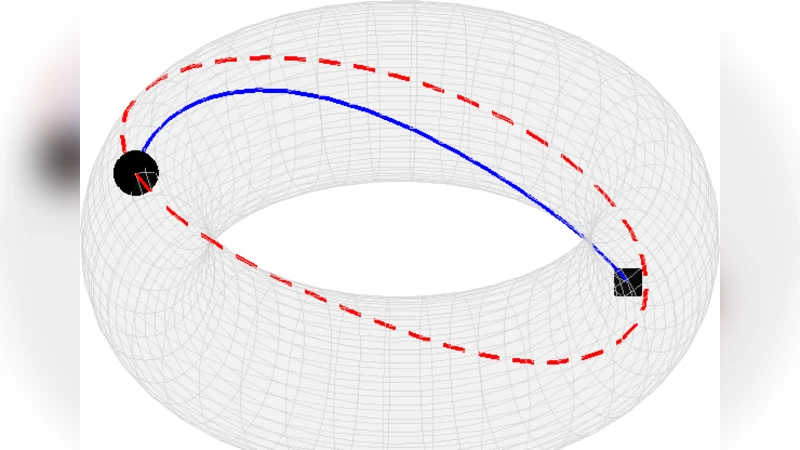
The Kuramoto model captures various synchronization phenomena in biological and man-made systems of coupled oscillators. It is well-known that there exists a critical coupling strength among the oscillators at which a phase transition from incoherency to synchronization occurs. This paper features four contributions. First, we characterize and distinguish the different notions of synchronization used throughout the literature and formally introduce the concept of phase cohesiveness as an analysis tool and performance index for synchronization. Second, we review the vast literature providing necessary, sufficient, implicit, and explicit estimates of the critical coupling strength for finite and infinite-dimensional, and for first and second-order Kuramoto models. Third, we present the first explicit necessary and sufficient condition on the critical coupling to achieve synchronization in the finite-dimensional Kuramoto model for an arbitrary distribution of the natural frequencies. The multiplicative gap in the synchronization condition yields a practical stability result determining the admissible initial and the guaranteed ultimate phase cohesiveness as well as the guaranteed asymptotic magnitude of the order parameter. Fourth and finally, we extend our analysis to multi-rate Kuramoto models consisting of second-order Kuramoto oscillators with inertia and viscous damping together with first-order Kuramoto oscillators with multiple time constants. We prove that the multi-rate Kuramoto model is locally topologically conjugate to a first-order Kuramoto model with scaled natural frequencies, and we present necessary and sufficient conditions for almost global phase synchronization and local frequency synchronization. Interestingly, these conditions do not depend on the inertiae which contradicts prior observations on the role of inertiae in synchronization of second-order Kuramoto models.
💡 Research Summary
The paper provides a comprehensive treatment of the critical coupling strength that governs the transition from incoherence to synchronization in Kuramoto oscillator networks. It begins by clarifying the terminology used throughout the literature, distinguishing between phase synchronization, frequency synchronization, and the more nuanced notion of phase cohesiveness. Phase cohesiveness is introduced as a quantitative performance index that measures whether all oscillator phases remain within a prescribed angular interval, offering a more direct assessment of stability than the traditional order‑parameter magnitude.
A thorough literature review follows, summarizing necessary, sufficient, implicit, and explicit bounds on the critical coupling for both finite‑ and infinite‑dimensional systems, and for first‑order as well as second‑order (inertial) Kuramoto models. The authors highlight how existing results typically rely on spectral properties of the coupling graph (especially the second smallest Laplacian eigenvalue λ₂) and on statistical measures of the natural‑frequency distribution.
The central technical contribution is the derivation of the first explicit necessary‑and‑sufficient condition for synchronization in the finite‑dimensional Kuramoto model with an arbitrary set of natural frequencies. By relating the coupling strength K to the maximum frequency deviation Δω_max and the algebraic connectivity λ₂, they obtain the simple inequality
K > Δω_max / λ₂.
Beyond merely stating a threshold, the authors introduce a multiplicative gap that quantifies how far the actual coupling exceeds the critical value. This gap directly determines guaranteed bounds on phase cohesiveness, the ultimate lower bound on the order parameter, and the admissible size of the initial phase spread. Consequently, the result provides a practical stability criterion that can be used in design and analysis of real‑world networks where initial conditions may be unfavorable.
The paper then extends the analysis to multi‑rate Kuramoto models that combine second‑order oscillators (with inertia and viscous damping) and first‑order oscillators (with various time constants). By proving a local topological conjugacy between the multi‑rate system and a suitably scaled first‑order Kuramoto model, the authors show that the conditions for almost‑global phase synchronization and local frequency synchronization depend only on the scaled natural frequencies and the graph’s algebraic connectivity. Remarkably, the inertial parameters drop out of the synchronization conditions, contradicting earlier claims that inertia plays a decisive role in achieving synchrony in second‑order models.
Overall, the work unifies disparate strands of Kuramoto research, introduces phase cohesiveness as a robust analytical tool, and delivers explicit, verifiable criteria for synchronization that are independent of inertia. These contributions have immediate implications for the design of power‑grid frequency control, coordinated motion of robotic swarms, and synchronization phenomena in neuroscience, where both first‑ and second‑order dynamics coexist.
Comments & Academic Discussion
Loading comments...
Leave a Comment