The mechanics of rocking stones: equilibria on separated scales
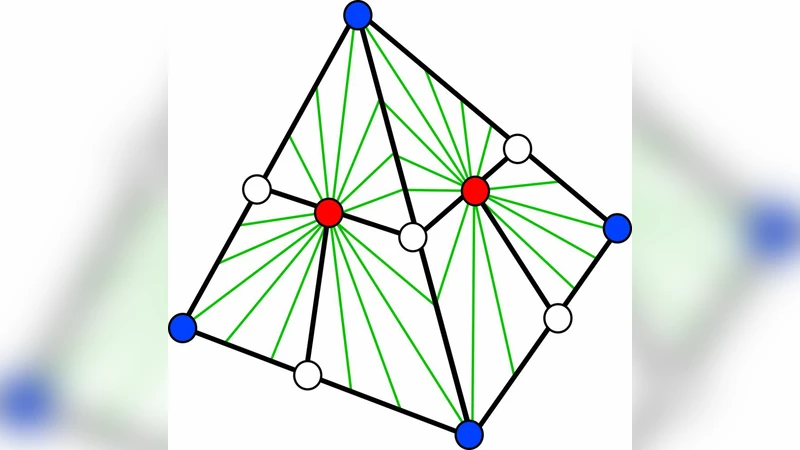
Rocking stones, balanced in counter-intuitive positions have always intrigued geologists. In our paper we explain this phenomenon based on high-precision scans of pebbles which exhibit similar behavior. We construct their convex hull and the heteroclinic graph carrying their equilibrium points. By systematic simplification of the arising Morse-Smale complex in a one-parameter process we show that equilibria occur typically in highly localized groups (flocks), the number of the latter can be reliably observed and determined by hand experiments. Both local and global (micro and macro) equilibria can be either stable or unstable. Most commonly, rocks and pebbles are balanced on stable local equilibria belonging to stable flocks. However, it is possible to balance a convex body on a stable local equilibrium belonging to an unstable flock and this is the intriguing mechanical scenario corresponding to rocking stones. Since outside observers can only reliably perceive flocks, the last described situation will appear counter-intuitive. Comparison of computer experiments to hand experiments reveals that the latter are consistent, i.e. the flocks can be reliably counted and the pebble classification system proposed in our previous work (Domokos et al 2010) is robustly applicable. We also find an interesting logarithmic relationship between the Zingg parameters and the average number of global equilibrium points, indicating a close relationship between the two systems.
💡 Research Summary
The paper investigates the seemingly paradoxical stability of “rocking stones” – large rocks that can be rocked with little effort despite their massive weight – by analysing the equilibrium properties of much smaller, convex objects (pebbles) whose geometry can be measured with high precision. Using a 0.1 mm resolution 3‑D laser scanner, the authors obtained dense point clouds for 100 pebbles, reconstructed each as a polyhedral convex hull, and defined a scalar field R(φ,θ) equal to the distance from the pebble’s centre of gravity to a point on the hull. Critical points of this field (local minima, maxima, and saddles) correspond respectively to stable, unstable, and saddle equilibrium positions. By tracing the gradient flow of R, they built a Morse‑Smale complex: a graph whose vertices are the critical points and whose edges are the integral lines connecting saddles to minima and maxima.
The key methodological innovation is a systematic simplification of this graph, which merges clusters of nearby micro‑equilibria into single macro‑equilibria, termed “flocks”. Two flock types emerge: stable flocks (clusters of many stable micro‑equilibria) and unstable flocks (clusters of many unstable micro‑equilibria). The depth of simplification is quantified by a parameter ν, which measures how coarse the reduction is and serves as an indicator of experimental reliability.
Through both computer analysis of the scanned data and hand‑experiments in which researchers manually rocked the pebbles and counted flocks, the authors demonstrate that the number of flocks and the value of ν are reproducible and consistent across methods. Most pebbles exhibit a small number (typically two to four) of flocks, each containing a predictable number of micro‑equilibria that depends logarithmically on the pebble’s aspect ratio (the Zingg parameters). Importantly, a rock can be balanced on a stable micro‑equilibrium that belongs to an unstable flock; to an external observer this appears as a “rocking stone” because the surrounding unstable flock makes the overall configuration appear precarious despite the local stability.
The study also uncovers a logarithmic relationship between the Zingg flatness/elongation indices and the average number of global equilibrium points, linking classical shape classification to the newly proposed equilibrium‑based taxonomy. This relationship confirms that more elongated pebbles possess more equilibrium points, while near‑spherical ones have few.
In conclusion, the authors provide a robust, mathematically grounded framework that separates equilibrium phenomena into two distinct scales—micro (individual critical points) and macro (flocks). The Morse‑Smale simplification and the ν parameter enable reliable, low‑technology hand measurements that align with high‑precision computational results. The findings not only explain the counter‑intuitive rocking behaviour of large stones but also suggest practical applications in geomorphology, seismology (e.g., using rocking stones as proxies for past seismic activity), and rapid field classification of rock shapes. Future work is proposed to extend the analysis to non‑convex bodies, incorporate friction and material elasticity, and apply the methodology to large‑scale field surveys.
Comments & Academic Discussion
Loading comments...
Leave a Comment