Class two 1-planar graphs with maximum degree six or seven
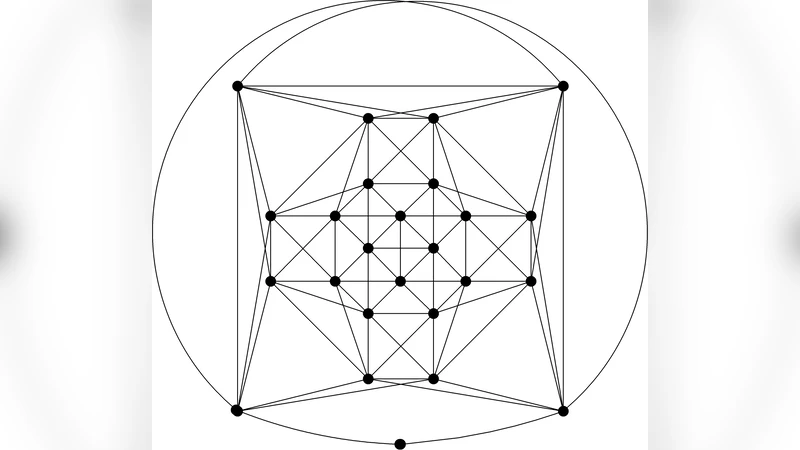
A graph is 1-planar if it can be drawn on the plane so that each edge is crossed by at most one other edge. In this note we give examples of class two 1-planar graphs with maximum degree six or seven.
💡 Research Summary
The paper addresses a gap in the theory of edge‑coloring for 1‑planar graphs, which are graphs that can be drawn in the plane such that each edge is crossed at most once. Vizing’s theorem tells us that any graph’s edge‑chromatic number χ′ is either equal to its maximum degree Δ or to Δ + 1, thereby dividing all graphs into Class I (χ′ = Δ) and Class II (χ′ = Δ + 1). For 1‑planar graphs, several sufficient conditions for being Class I are already known: if Δ ≥ 10, or if Δ ≥ 8 together with the absence of adjacent triangles, or if Δ ≥ 7 together with being triangle‑free, then the graph must be Class I. Moreover, a conjecture in the literature claims that every 1‑planar graph with Δ ≥ 8 belongs to Class I. However, the situation for Δ ≤ 7 remained unclear, and no explicit Class II examples with maximum degree 6 or 7 had been published.
The authors fill this void by constructing two concrete 1‑planar graphs, denoted G₁ and G₂. Graph G₁ has 25 vertices and 73 edges; all vertices except one have degree 6, while the exceptional vertex has degree 2. Graph G₂ has 28 vertices and 85 edges; similarly, all vertices except one have degree 7, with a single 2‑vertex. Both graphs are drawn in Figure 1 of the paper, confirming their 1‑planarity.
To prove that these graphs are indeed Class II, the authors invoke a well‑known lemma (Lemma 1, originally from Chartrand and Zhang’s textbook): if a graph G of size m satisfies m > α₀(G)·Δ(G), where α₀(G) denotes the size of a maximum set of pairwise non‑adjacent edges (the edge‑independence number), then G must be Class II. A standard bound gives α₀(G) ≤ ⌊n/2⌋ for a graph with n vertices. Applying this bound, we obtain α₀(G₁) ≤ 12 (since n = 25) and α₀(G₂) ≤ 14 (since n = 28). Consequently, α₀(G₁)·Δ(G₁) ≤ 12·6 = 72, while the actual number of edges is 73 > 72, satisfying the lemma’s condition. For G₂, α₀(G₂)·Δ(G₂) ≤ 14·7 = 98, but the authors use a tighter estimate based on the exact bound α₀(G₂) ≤ |V(G₂)|/2 = 14, yielding α₀·Δ = 84; since |E(G₂)| = 85 > 84, the lemma again forces G₂ into Class II. Thus both graphs are proved to require Δ + 1 colors for a proper edge‑coloring.
An additional observation is that by removing the unique 2‑vertex from each graph and directly connecting its two neighbors, one obtains a 6‑regular and a 7‑regular 1‑planar graph, respectively. The 7‑regular example coincides with a construction previously presented by Fabrici and Madaras (Discrete Mathematics 307, 2007). This shows that even regular 1‑planar graphs of degree 6 or 7 can be Class II, extending the known landscape of edge‑coloring behavior.
The paper’s main contribution, therefore, is the explicit existence proof that for every maximum degree Δ ≤ 7 there exists a 1‑planar graph of Class II. This result complements earlier work showing that for Δ ≥ 8 (under various structural restrictions) all 1‑planar graphs are Class I, and it provides counterexamples to any naïve conjecture that high planarity constraints alone guarantee Class I status for low‑degree graphs. Moreover, the use of the simple size‑versus‑edge‑independence inequality (Lemma 1) demonstrates a powerful, elementary tool for establishing Class II status without resorting to intricate structural decompositions.
In conclusion, the authors have settled an open question about the edge‑coloring classification of low‑degree 1‑planar graphs, expanded the catalog of known Class II examples, and highlighted a straightforward method that may be applicable to further investigations of edge‑coloring in other near‑planar graph families.
Comments & Academic Discussion
Loading comments...
Leave a Comment