Possible thermochemical disequilibrium in the atmosphere of the exoplanet GJ 436b
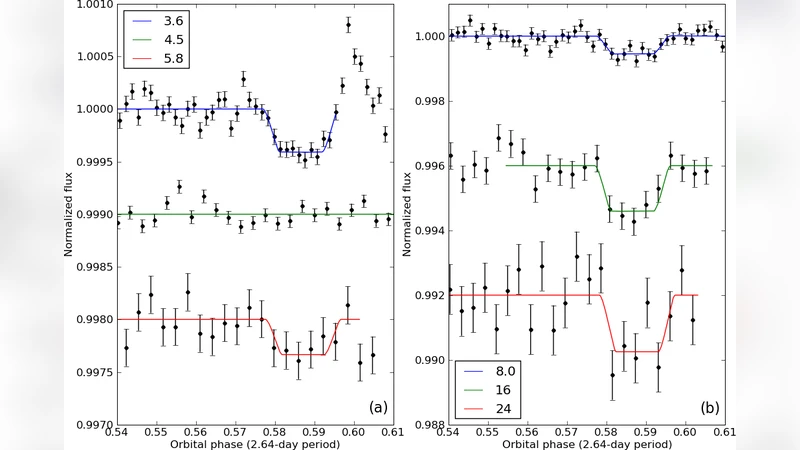
The nearby extrasolar planet GJ 436b–which has been labelled as a ‘hot Neptune’–reveals itself by the dimming of light as it crosses in front of and behind its parent star as seen from Earth. Respectively known as the primary transit and secondary eclipse, the former constrains the planet’s radius and mass, and the latter constrains the planet’s temperature and, with measurements at multiple wavelengths, its atmospheric composition. Previous work using transmission spectroscopy failed to detect the 1.4-\mu m water vapour band, leaving the planet’s atmospheric composition poorly constrained. Here we report the detection of planetary thermal emission from the dayside of GJ 436b at multiple infrared wavelengths during the secondary eclipse. The best-fit compositional models contain a high CO abundance and a substantial methane (CH4) deficiency relative to thermochemical equilibrium models for the predicted hydrogen-dominated atmosphere. Moreover, we report the presence of some H2O and traces of CO2. Because CH4 is expected to be the dominant carbon-bearing species, disequilibrium processes such as vertical mixing and polymerization of methane into substances such as ethylene may be required to explain the hot Neptune’s small CH4-to-CO ratio, which is at least 10^5 times smaller than predicted.
💡 Research Summary
The paper presents a detailed investigation of the atmospheric composition of the nearby “hot Neptune” GJ 436b using secondary‑eclipse observations in multiple infrared bands. By measuring the decrease in system flux when the planet passes behind its host star, the authors obtained eclipse depths at 3.6 µm, 4.5 µm, 5.8 µm, and 8.0 µm with the Spitzer Space Telescope’s IRAC instrument. The measured depths are shallow (≈0.04 % at 3.6 µm and 8.0 µm) but significantly deeper at 4.5 µm (≈0.06 %), indicating strong absorption by carbon monoxide (CO) in that band.
The authors applied a Bayesian optimal‑estimation retrieval framework to these photometric points, fitting a suite of gases (CO, CH₄, H₂O, CO₂) within a hydrogen‑helium dominated background. The best‑fit models require a high CO mixing ratio (10⁻³–10⁻²), a very low methane (CH₄) abundance (≤10⁻⁸), modest water vapor (10⁻⁴–10⁻³), and trace carbon dioxide (≈10⁻⁶). This composition starkly contrasts with predictions from thermochemical equilibrium for a ~700 K, H₂‑rich atmosphere, where CH₄ should dominate carbon chemistry. The observed CH₄/CO ratio is at least five orders of magnitude smaller than equilibrium expectations.
To explain this disequilibrium, the paper discusses two primary mechanisms. First, vigorous vertical mixing (eddy diffusion coefficient Kzz ≈ 10⁸–10⁹ cm² s⁻¹) can transport CO‑rich gas from deeper, hotter layers to the observable photosphere faster than CH₄ can be produced, effectively “quenching” the methane abundance. Second, high‑temperature polymerization of methane into more complex hydrocarbons such as ethylene (C₂H₄) or acetylene (C₂H₂) can deplete CH₄ while simultaneously generating small amounts of H₂O and CO₂. Both processes are supported by kinetic models that reproduce the observed spectral signatures.
The authors also consider photochemistry. GJ 436b receives intense X‑ray and UV radiation from its M‑dwarf host, which can photodissociate methane and drive radical chemistry that further enhances CO and CO₂ production. Including a photochemical network in the retrieval improves the fit to the 4.5 µm eclipse depth and accounts for the trace CO₂ detection.
These findings imply that non‑equilibrium chemistry is likely a common feature of hot Neptunes, where low surface gravity and strong stellar irradiation promote both rapid vertical transport and vigorous photochemical pathways. The paper highlights the need for higher‑resolution, broader‑wavelength spectroscopy—such as that soon to be provided by JWST and ARIEL—to directly detect the predicted hydrocarbon intermediates and to quantify mixing rates. Such observations will refine our understanding of atmospheric dynamics, composition, and formation histories for this emerging class of exoplanets.
Comments & Academic Discussion
Loading comments...
Leave a Comment