Two Dimensional Random Patterns
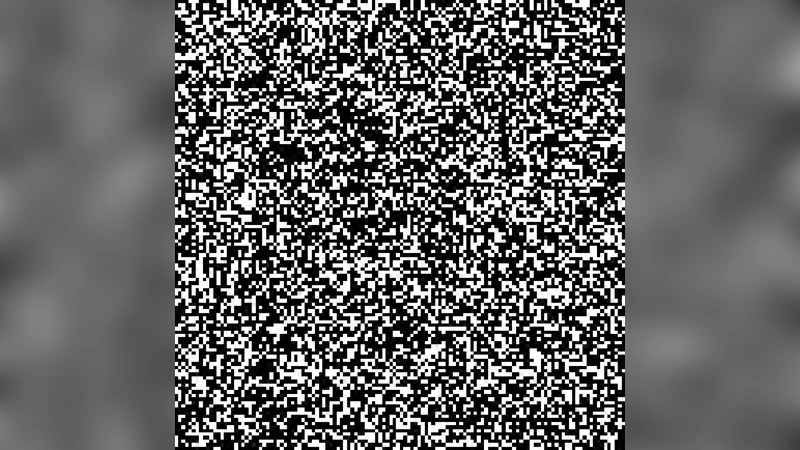
A new approach to the generation of random sequences and two dimensional random patterns is proposed in this paper in which random sequences are generated by making use of either Delaunay triangulation or Voronoi diagrams drawn from random points taken in a two dimensional plane. Both the random sequences and two dimensional random patterns generated in this manner are shown to be more random when compared to pseudo-random sequences and patterns.
💡 Research Summary
The paper introduces a novel method for generating binary random sequences and two‑dimensional random patterns by exploiting geometric structures—Delaunay triangulations and Voronoi diagrams—derived from a set of points placed at random in the plane. Traditional pseudo‑random sequences such as maximal‑length shift‑register (PN) sequences and decimal (d‑) sequences are deterministic, have fixed periods, and can be predicted if a sufficient number of bits are known. To overcome these limitations, the authors first generate N random (x, y) coordinates using any conventional RNG. From these points they construct either a Delaunay triangulation or a Voronoi diagram.
For the Delaunay case, the area of each triangle is computed; for the Voronoi case, infinite edges are clipped to a bounded working region and the area of each resulting polygon is computed. The mean area μ of all cells is then calculated. Each cell’s area is compared with μ: if the area exceeds μ a “1” is emitted, otherwise a “0”. The cells are processed in a deterministic order (e.g., the order returned by the triangulation algorithm), producing a binary string whose length is roughly 2N − k − 2 for Delaunay (k = number of points on the convex hull) or N for Voronoi. Because the mapping from point coordinates to cell areas is highly non‑linear, the resulting bitstream exhibits strong unpredictability even when the underlying coordinate generator is known.
Statistical validation is performed on the generated sequences. An autocorrelation test shows that for a 184‑bit sequence (derived from 100 points) the correlation values lie between –0.2 and +0.2, while a longer 1982‑bit sequence (1000 points) yields values confined to ±0.1, approaching the ideal delta‑function shape expected of a truly random binary sequence.
Diehard tests, implemented via the open‑source Java suite jrandtest‑0.4, are also applied. The authors compare three generators: Java’s built‑in Random, a SHA‑1 based generator, and their geometric method. Across several sub‑tests—Runs, Squeeze, Minimum‑distance, Count‑1’s, Birthday spacings, and Binary rank—the geometric generator produces p‑values comparable to or better than the other two, indicating no statistically significant deviation from randomness. Notably, the “Count‑1’s” test yields very high χ² values, which the authors attribute to the large sample size rather than a flaw in the generator.
To create two‑dimensional random patterns, the binary stream is reshaped into a matrix of desired dimensions (e.g., 128 × 64, 128 × 128, 256 × 256). Pixels corresponding to “1” are rendered black, “0” white. The authors demonstrate patterns generated from a single long sequence as well as composites formed by stitching together several shorter sequences. Two‑dimensional autocorrelation of these images again shows a peak of 1 at the origin and near‑zero values elsewhere (within ±0.1), confirming the lack of spatial regularities.
The paper’s contributions can be summarized as follows:
- Geometric Non‑Linear Mapping – By converting random point sets into cell‑area comparisons, the method injects a high‑dimensional, non‑linear transformation that dramatically increases the algorithmic complexity required to predict future bits.
- Scalable Bit‑Length – The number of output bits grows linearly with the number of input points, allowing flexible generation of sequences ranging from a few dozen bits to tens of thousands.
- Statistical Robustness – Both autocorrelation and a battery of Diehard tests confirm that the sequences meet standard randomness criteria, often matching or exceeding conventional RNGs.
- Versatile Pattern Synthesis – The same binary streams can be directly mapped to 2‑D images, enabling applications in visual cryptography, texture synthesis, and spread‑spectrum communications.
Limitations are acknowledged: the method fails if all points lie on a line or a circle (degenerate triangulations), though the probability of such a configuration is negligible when coordinates are drawn from a continuous RNG. Additionally, the current implementation relies on MATLAB and Java; real‑time or hardware‑accelerated versions (e.g., GPU‑based triangulation) are not explored.
In conclusion, the authors present a compelling alternative to traditional pseudo‑random generators by harnessing computational geometry. Their approach yields binary sequences and 2‑D patterns with demonstrably high randomness, offering a promising tool for cryptographic, simulation, and image‑processing domains. Future work could focus on rigorous cryptographic security analysis, performance optimization, and extension to three‑dimensional random structures.
Comments & Academic Discussion
Loading comments...
Leave a Comment