Space-time FLAVORS: finite difference, multisymlectic, and pseudospectral integrators for multiscale PDEs
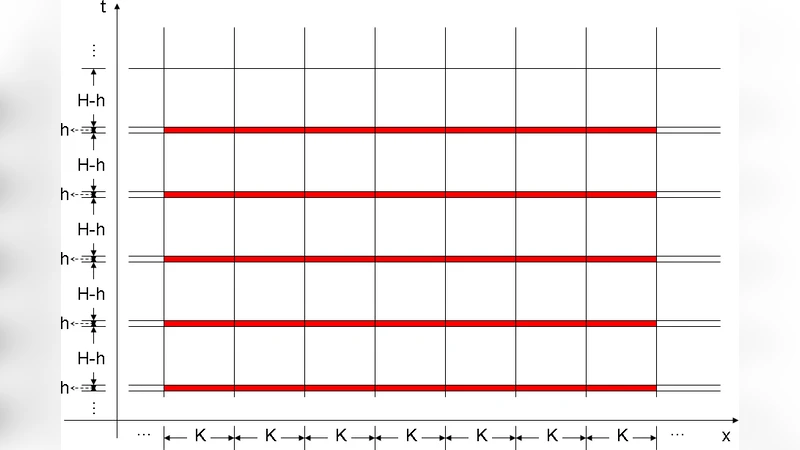
We present a new class of integrators for stiff PDEs. These integrators are generalizations of FLow AVeraging integratORS (FLAVORS) for stiff ODEs and SDEs introduced in [Tao, Owhadi and Marsden 2010] with the following properties: (i) Multiscale: they are based on flow averaging and have a computational cost determined by mesoscopic steps in space and time instead of microscopic steps in space and time; (ii) Versatile: the method is based on averaging the flows of the given PDEs (which may have hidden slow and fast processes). This bypasses the need for identifying explicitly (or numerically) the slow variables or reduced effective PDEs; (iii) Nonintrusive: A pre-existing numerical scheme resolving the microscopic time scale can be used as a black box and easily turned into one of the integrators in this paper by turning the large coefficients on over a microscopic timescale and off during a mesoscopic timescale; (iv) Convergent over two scales: strongly over slow processes and in the sense of measures over fast ones; (v) Structure-preserving: for stiff Hamiltonian PDEs (possibly on manifolds), they can be made to be multi-symplectic, symmetry-preserving (symmetries are group actions that leave the system invariant) in all variables and variational.
💡 Research Summary
This paper introduces a novel multiscale integration framework called “Space‑time FLAVORS” for stiff partial differential equations (PDEs) that contain a small parameter ε (ε → 0). The method extends the FLAVORS (Flow Averaging Integrators) originally devised for stiff ordinary differential equations (ODEs) and stochastic differential equations (SDEs) to the PDE setting by simultaneously coarsening both space and time while preserving the essential dynamics of the original fine‑scale solver.
Core idea.
A legacy numerical scheme (finite‑difference, multisymplectic variational, or pseudospectral) that resolves the stiff dynamics with a microscopic time step h proportional to ε and a microscopic spatial step k proportional to ε is used as a black box. The time axis is partitioned into alternating microscopic intervals of length h (where the stiff term ε⁻¹ is active) and mesoscopic intervals of length H − h (where the stiff term is switched off). Space is discretized on a uniform mesoscopic grid with step K that does not depend on ε. Thus, the algorithm alternates between “stiff‑on” micro‑steps and “stiff‑off” macro‑steps, effectively averaging the fast dynamics while directly integrating the slow dynamics.
Three concrete realizations.
-
Finite‑difference (Lax‑Friedrichs) example. The authors apply the FLAVORS strategy to a conservation law with a Ginzburg‑Landau source term. Microscopic steps are chosen as h = 0.1 ε, k = 0.2 ε; mesoscopic steps are H = 0.005, K = 0.01. Numerical experiments show that the error scales linearly with H and is essentially independent of ε, achieving a speed‑up factor of about 300 while accurately capturing the propagation speed of steep fronts.
-
Multisymplectic variational integrator. For Hamiltonian PDEs of the form M z_t + K z_x = ∇_z H(z), the authors discretize the action functional using quadrature, derive discrete Euler‑Lagrange equations, and then apply the same micro‑macro time‑step switching. Because the scheme originates from a variational principle, it automatically preserves the multisymplectic structure and any Noether symmetries, even after the FLAVORS modification.
-
Pseudospectral (FFT‑based) scheme. The method is also shown to work with spectral discretizations, where high‑frequency modes are rapidly damped by the stiff term. By turning the stiff term off during mesoscopic steps, the algorithm averages out the fast oscillations without introducing spectral aliasing, allowing large time steps while retaining spectral accuracy.
Theoretical convergence.
Under the assumptions that (i) hidden slow variables exist and (ii) the fast dynamics are locally ergodic, the authors prove a two‑scale convergence result: the numerical solution converges strongly to the true slow dynamics and converges weakly (in the sense of measures) to the fast dynamics. The error bound is non‑asymptotic and shows that, provided the parameters satisfy
c₁ ε ≤ h ≤ c₂ ε, c₃ H ≤ h/ε ≤ c₄ H,
the method is uniformly stable with respect to ε. This removes the need to explicitly identify slow variables, a major obstacle in many existing multiscale algorithms.
Structure preservation.
When applied to variational integrators, the FLAVORS procedure retains the multisymplectic form and any symmetry‑induced conservation laws (energy, momentum, etc.) because the underlying discrete action is unchanged apart from the timing of the stiff term. Consequently, the method is especially attractive for physics‑driven PDEs where geometric fidelity is crucial.
Practical impact and limitations.
The approach offers a black‑box acceleration: any existing fine‑scale solver can be “FLAVOR‑ized” by adding a simple switch for the stiff coefficient and alternating step sizes. Numerical tests demonstrate order‑of‑magnitude speed‑ups without sacrificing accuracy in the slow dynamics. However, the current analysis focuses on one‑dimensional problems with simple boundary conditions; extensions to complex geometries, adaptive meshes, and higher dimensions remain open research directions. Automated selection of h, H, K based on error estimators is also a future task.
Conclusion.
Space‑time FLAVORS provides a unified, non‑intrusive framework that simultaneously achieves (1) computational acceleration by using mesoscopic space‑time steps, (2) rigorous two‑scale convergence (strong for slow variables, weak for fast ones), and (3) preservation of geometric structures when built on variational integrators. This makes it a powerful tool for simulating stiff multiscale PDEs across a wide range of applications, from wave propagation to fluid‑structure interaction.
Comments & Academic Discussion
Loading comments...
Leave a Comment