Cosmic Ray transport through gyroresonance instability in compressible turbulence
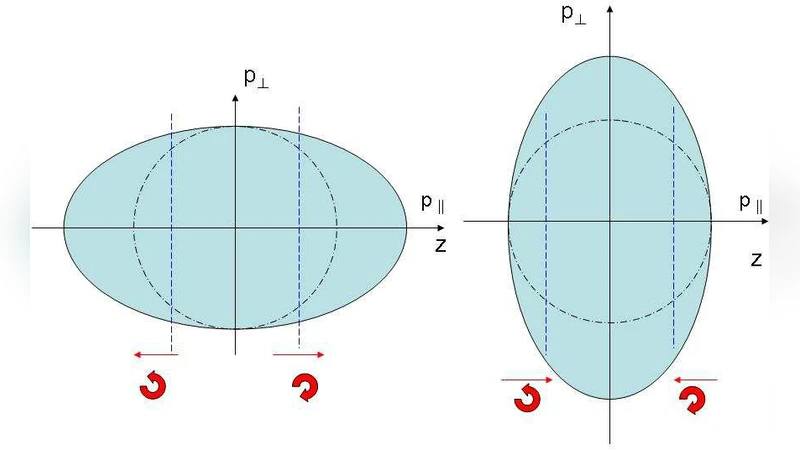
We study the nonlinear growth of kinetic gyroresonance instability of cosmic rays (CRs) induced by large scale compressible turbulence. This feedback of cosmic rays on turbulence was shown to induce an important scattering mechanism in addition to direct interaction with the compressible turbulence. The linear growth is bound to saturate due to the wave-particle interactions. By balancing increase of CR anisotropy via the large scale compression and its decrease via the wave-particle scattering, we find the steady state solutions. The nonlinear suppression due to the wave-particle scattering limit the energy range of CRs that can excite the instabilities and be scattered by the induced slab waves. The direct interaction with large scale compressible modes still appears to be the dominant mechanism for isotropization of high energy cosmic rays (> 100 GeV).
💡 Research Summary
The paper investigates how large‑scale compressible magnetohydrodynamic (MHD) turbulence in the interstellar medium drives a kinetic gyro‑resonance instability of cosmic rays (CRs) and how the resulting wave‑particle interactions regulate CR transport. The authors begin by noting that compressive motions in a turbulent plasma produce fluctuations in density and magnetic field strength, which in turn generate an anisotropic pressure distribution among CRs (characterized by the parameter A = (p⊥ − p∥)/p∥). This anisotropy satisfies the resonance condition ω − k∥v∥ = ±Ω for slab‑type Alfvénic fluctuations (k∥ ≫ k⊥), allowing a gyro‑resonance instability to grow.
In the linear regime, the growth rate γ_lin is proportional to the CR anisotropy, the CR momentum density, and the spectral density of the slab waves. The authors derive an explicit expression for γ_lin that incorporates the plasma β, the Alfvén speed, and the turbulent compression rate (∇·V). They then introduce a pitch‑angle diffusion coefficient Dμμ that quantifies how the emerging slab waves scatter CRs. Dμμ is obtained from quasi‑linear theory and is directly proportional to the wave energy density W(k) at the resonant wavenumber.
The central contribution of the work is a self‑consistent nonlinear model that couples the evolution of the CR anisotropy A with the wave energy density W. Two competing processes are identified: (1) compressive motions continuously increase A at a rate (∂A/∂t)_comp ≈ (∇·V) A, and (2) wave‑particle scattering reduces A at a rate (∂A/∂t)_scatt ≈ −ν_scatt A, where ν_scatt is proportional to Dμμ. Simultaneously, the slab waves grow due to the instability (2γ_lin W) but are damped by nonlinear wave‑wave interactions and by the back‑reaction of the scattered CRs (2ν_damp W). By solving the coupled equations in a steady‑state limit (∂A/∂t = 0, ∂W/∂t = 0), the authors obtain analytic expressions for the equilibrium anisotropy and wave amplitude.
A key outcome is that the nonlinear saturation imposes a strict upper limit on the CR energies that can sustain the instability. The resonance condition ties the resonant wavenumber k_res to the CR gyroradius r_g = pc/(ZeB). For typical interstellar magnetic fields (B ≈ 5 µG) and slab‑wave wavelengths λ ≈ 10⁻⁶–10⁻⁴ pc, only CRs with energies of order 1–10 GeV satisfy the resonance while maintaining sufficient anisotropy to overcome damping. Higher‑energy CRs (> 100 GeV) have gyroradii far larger than the available λ, so the instability cannot be driven; their anisotropy is instead reduced primarily by direct interactions with the large‑scale compressive modes. Consequently, the slab‑wave scattering channel is efficient only for low‑energy CRs, whereas for high‑energy particles the traditional compressive‑turbulence scattering remains dominant.
The authors validate their analytic framework with numerical integrations of the coupled kinetic‑MHD system, confirming that the predicted saturation levels and energy cut‑offs agree with the simulations. They also discuss astrophysical implications: the enhanced scattering of GeV‑scale CRs can modify the diffusion coefficient used in Galactic propagation models, potentially affecting interpretations of secondary‑to‑primary ratios (e.g., B/C) and gamma‑ray emissivity. Moreover, the study highlights that neglecting the nonlinear back‑reaction of CRs on turbulence may lead to overestimates of CR mean free paths at low energies.
In summary, the paper provides a comprehensive treatment of the gyro‑resonance instability driven by compressive turbulence, demonstrates how wave‑particle interactions self‑limit the instability, and delineates the energy regime where this mechanism contributes significantly to CR isotropisation. The work bridges a gap between linear instability theory and realistic Galactic CR transport, offering a refined picture of how turbulence and CRs co‑evolve in the interstellar medium.