Electronically Excited States of Vitamin B12: Benchmark Calculations Including Time-Dependent Density Functional Theory and Correlated Ab Initio Methods
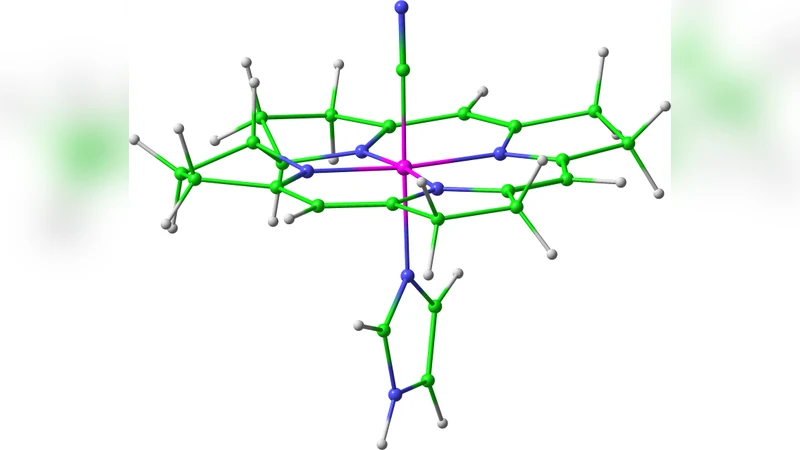
Time-dependent density functional theory (TD-DFT) and correlated ab initio methods have been applied to the electronically excited states of vitamin B12 (cyanocobalamin or CNCbl). Different experimental techniques have been used to probe the excited states of CNCbl, revealing many issues that remain poorly understood from an electronic structure point of view. Due to its efficient scaling with size, TD-DFT emerges as one of the most practical tools that can be used to predict the electronic properties of these fairly complex molecules. However, the description of excited states is strongly dependent on the type of functional used in the calculations. In the present contribution, the choice of a proper functional for vitamin B12 was evaluated in terms of its agreement with both experimental results and correlated ab initio calculations. Three different functionals, i.e. B3LYP, BP86, and LC-BLYP, were tested. In addition, the effect of relative contributions of DFT and HF to the exchange-correlation functional was investigated as a function of the range-separation parameter, {\mu}. The issues related to the underestimation of charge transfer (CT) excitation energies by TD-DFT was validated by Tozer’s L diagnostic, which measures the spatial overlap between occupied and virtual orbitals involved in the particular excitation. The nature of low-lying excited states was also analyzed based on a comparison of TD-DFT and ab initio results. Based on an extensive comparision against experimental results and ab initio benchmark calculations, the BP86 functional was found to be the most appropriate in describing the electronic properties of CNCbl. Finally, an analysis of electronic transitions and a new re-assignment of some excitations are discussed.
💡 Research Summary
This study provides a comprehensive benchmark of the electronically excited states of cyanocobalamin (vitamin B12) using time‑dependent density functional theory (TD‑DFT) and high‑level wave‑function methods. The authors first construct simplified molecular models of the corrin macrocycle by truncating peripheral side chains and replacing them with hydrogen atoms, thereby reducing computational cost while preserving the essential electronic features of the cobalt centre. Two axial lower‑ligand variants are considered – imidazole (Im) and dimethylbenzimidazole (DBI) – to mimic the diversity of protein environments. Ground‑state geometries are optimized at the BP86/6‑31G(d) level, a choice justified by previous work showing that GGA functionals accurately reproduce the structural parameters of cobalamins.
TD‑DFT calculations are performed with three exchange‑correlation functionals: the hybrid B3LYP, the pure GGA BP86, and the long‑range corrected LC‑BLYP. For LC‑BLYP the range‑separation parameter μ is systematically varied from 0.00 to 0.90 in steps of 0.05, allowing the authors to probe how the balance between DFT exchange and exact Hartree‑Fock exchange influences vertical excitation energies and oscillator strengths. Thirty‑five low‑lying singlet excitations are computed for each functional, both in the gas phase and in a polarizable continuum model (PCM) of water. To assess the potential for charge‑transfer (CT) errors, Tozer’s Λ diagnostic is evaluated for every state; values above 0.4 indicate sufficient orbital overlap and thus a low likelihood of severe underestimation of CT excitation energies. The analysis shows that virtually all states of cyanocobalamin have Λ > 0.4, confirming that the notorious CT problem of TD‑DFT is not a dominant factor for this system.
For the wave‑function benchmark, the authors employ second‑order approximate coupled‑cluster (CC2) and multiconfigurational CASSCF followed by quasi‑degenerate second‑order perturbation theory (MC‑XQDPT2). The CASSCF active space comprises 12 electrons in 12 orbitals (12e,12o), and state‑averaged calculations over 20 roots are performed to ensure that the four lowest excited states are correctly described after perturbative correction. The CC2 calculations use the same 6‑31G(d) basis set as the TD‑DFT work, while the CASSCF/MC‑XQDPT2 calculations are also carried out with this double‑ζ basis, acknowledging that larger basis sets would be computationally prohibitive for such a large transition‑metal complex.
Comparison of simulated absorption spectra with experimental UV‑Vis data reveals distinct functional‑dependent performance. Both BP86 and LC‑BLYP (with low μ values) reproduce the positions and relative intensities of the α/β bands (≈350–450 nm) and the higher‑energy γ band (≈500–550 nm) more faithfully than B3LYP. In particular, BP86 predicts two closely spaced intense transitions within the γ region, matching the experimental shoulder structure, whereas B3LYP yields a single overly intense transition. Solvent effects modeled with PCM improve the intensity pattern for all functionals, but BP86 remains the most consistent across both gas‑phase and solvated spectra. Scaling of excitation energies (E_scaled = ξ E_TD‑DFT + E_shift) is applied to each functional to achieve quantitative agreement with experiment; the optimal scaling parameters differ among the functionals, underscoring the need for functional‑specific calibration.
The μ‑dependence study shows that increasing the exact‑exchange fraction in LC‑BLYP systematically blue‑shifts the spectra and reduces oscillator strengths, indicating that excessive long‑range Hartree‑Fock exchange overestimates the HOMO‑LUMO gap for the π→π* transitions that dominate the corrin chromophore. Consequently, the best agreement for LC‑BLYP is obtained at μ ≈ 0.0–0.2, essentially reverting the functional toward a pure GGA description.
Overall, the benchmark demonstrates that for a transition‑metal‑containing bioinorganic system such as cyanocobalamin, a conventional GGA functional (BP86) provides the most reliable description of low‑lying excited states when compared both to high‑level ab‑initio results and to experimental spectra. The study also highlights the importance of diagnostic tools like Λ to rule out CT‑related failures, and it cautions against the indiscriminate use of range‑separated hybrids, which can degrade performance for localized π‑system excitations. The authors conclude by proposing a reassignment of several transitions in the γ band based on the combined TD‑DFT/ab‑initio analysis, thereby offering a refined electronic‑structure picture that can aid future spectroscopic and mechanistic investigations of vitamin B12 and related corrinoids.
Comments & Academic Discussion
Loading comments...
Leave a Comment