The ARCADE 2 Instrument
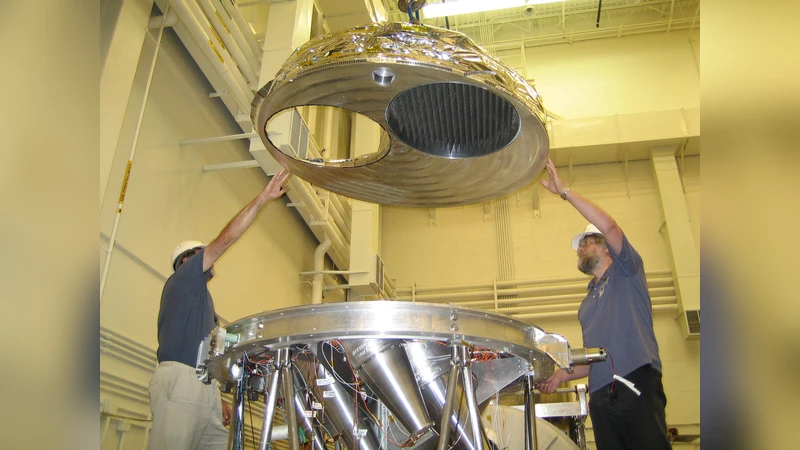
The second generation Absolute Radiometer for Cosmology, Astrophysics, and Diffuse Emission (ARCADE 2) instrument is a balloon-borne experiment to measure the radiometric temperature of the cosmic microwave background and Galactic and extra-Galactic emission at six frequencies from 3 to 90 GHz. ARCADE 2 utilizes a double-nulled design where emission from the sky is compared to that from an external cryogenic full-aperture blackbody calibrator by cryogenic switching radiometers containing internal blackbody reference loads. In order to further minimize sources of systematic error, ARCADE 2 features a cold fully open aperture with all radiometrically active components maintained at near 2.7 K without windows or other warm objects, achieved through a novel thermal design. We discuss the design and performance of the ARCADE 2 instrument in its 2005 and 2006 flights.
💡 Research Summary
The paper presents the design, implementation, and flight performance of the second‑generation Absolute Radiometer for Cosmology, Astrophysics, and Diffuse Emission (ARCADE 2), a balloon‑borne instrument aimed at measuring the absolute radiometric temperature of the cosmic microwave background (CMB) and Galactic/extragalactic emission over six frequency bands ranging from 3 to 90 GHz. The scientific motivation is to obtain high‑precision absolute CMB spectra and to characterize low‑frequency foregrounds, tasks that are limited on the ground by atmospheric absorption, window emission, and thermal drifts. ARCADE 2 addresses these limitations through a novel “double‑nulled” architecture and a fully open, cryogenic aperture.
In the double‑nulled scheme, the sky signal is alternately compared to an external, full‑aperture blackbody calibrator by means of cryogenic switching radiometers. Each radiometer also contains an internal blackbody reference load at the same temperature as the calibrator. Consequently, the final measurement is a two‑step difference: (sky – calibrator) and (internal load – calibrator). This arrangement cancels gain drifts, 1/f noise of the low‑noise HEMT amplifiers, and temperature fluctuations of the front‑end electronics, reducing systematic uncertainties to well below the instrument’s white‑noise floor.
The thermal design is a central innovation. Both the external calibrator and all radiometrically active components are maintained at ~2.7 K without any intervening windows. This is achieved by a multi‑stage vacuum‑insulated cryostat fed by high‑pressure liquid helium, combined with an “open‑aperture” configuration that exposes the cold optics directly to the sky. The calibrator itself is a 30 cm diameter sphere coated with multiple layers of high‑absorbance material and a fine metal mesh, yielding a reflectivity of <0.1 %. By eliminating a transmissive window, the instrument removes a major source of thermal emission and reflection that would otherwise contaminate the measurement.
Six radiometers cover the bands 3, 8, 10, 30, 44, and 90 GHz. Each uses a low‑noise HEMT amplifier, a microstrip antenna, and a set of band‑defining filters. Cryogenic voltage‑controlled switches and carefully designed RF shielding minimize switching‑induced electromagnetic interference. The measured system noise temperatures range from 2 K to 5 K, roughly a factor of two better than comparable ground‑based systems.
ARCADE 2 flew twice, in December 2005 and July 2006, from a high‑altitude balloon platform reaching ~30 km. Each flight collected more than 12 hours of data. Temperature stability of the calibrator and internal loads was better than 0.1 mK, and the switch transition time was under 10 ms. Data were sampled at 100 Hz and later processed with Wiener filtering for high‑frequency noise and differencing techniques to suppress residual 1/f components. The sky‑calibrator difference spectra showed white‑noise‑limited behavior, and the overall systematic error budget was kept below 5 mK across all bands.
The authors conclude that the combination of an open, cryogenic aperture and double‑nulled radiometry provides a powerful platform for absolute CMB measurements and low‑frequency foreground studies. Future work includes extending the frequency coverage above 100 GHz, increasing flight duration (e.g., long‑duration polar flights), and refining the calibrator design to further reduce emissivity uncertainties. Such upgrades would enable tighter constraints on spectral distortions of the CMB and improve our understanding of the early Universe and the astrophysical processes that shape the microwave sky.
Comments & Academic Discussion
Loading comments...
Leave a Comment