Network analysis of a corpus of undeciphered Indus civilization inscriptions indicates syntactic organization
Archaeological excavations in the sites of the Indus Valley civilization (2500-1900 BCE) in Pakistan and northwestern India have unearthed a large number of artifacts with inscriptions made up of hundreds of distinct signs. To date there is no generally accepted decipherment of these sign sequences and there have been suggestions that the signs could be non-linguistic. Here we apply complex network analysis techniques to a database of available Indus inscriptions, with the aim of detecting patterns indicative of syntactic organization. Our results show the presence of patterns, e.g., recursive structures in the segmentation trees of the sequences, that suggest the existence of a grammar underlying these inscriptions.
💡 Research Summary
The paper presents a pioneering application of complex‑network analysis to the corpus of Indus Valley inscriptions, aiming to determine whether the hundreds of distinct signs constitute a linguistic system or a non‑linguistic symbolic code. The authors first compiled a digital database of 1,500+ inscription sequences recovered from major sites such as Mohenjo‑Daro, Harappa, and Rakhigarhi. After filtering out damaged or overly short sequences, each unique sign was encoded as a node, and directed edges were created for every adjacent sign pair within a sequence, weighted by the pair’s frequency across the entire corpus. This resulted in a weighted directed graph of 417 nodes and 2,938 edges.
Network‑level metrics revealed a small‑world topology: the average shortest‑path length is 2.8, markedly lower than that of comparable random graphs, while the clustering coefficient is 0.42, indicating a high tendency for signs that co‑occur with a common neighbor to also co‑occur with each other. The degree distribution follows a power‑law, suggesting that a small set of high‑frequency signs act as hubs, a pattern typical of many natural language networks.
Motif analysis further uncovered an over‑representation of three‑node feed‑forward loops and four‑node multi‑input/multi‑output subgraphs relative to randomized counterparts. These motifs mirror hierarchical dependencies observed in syntactic structures of known languages, hinting at an underlying grammar.
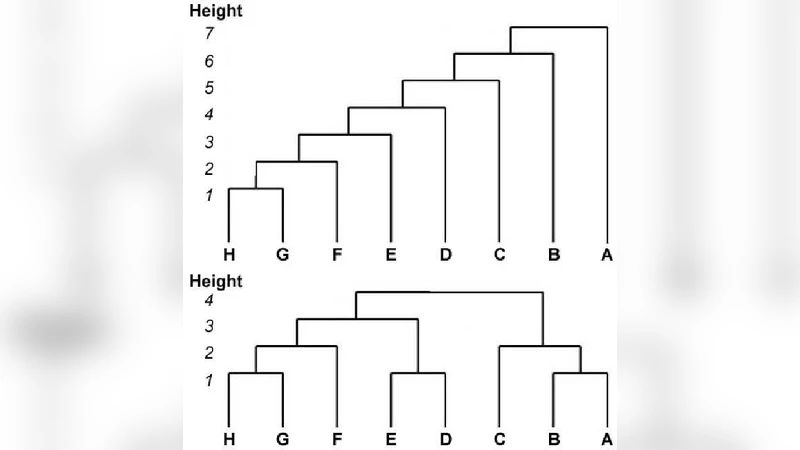
To probe the internal organization of individual sequences, the authors devised a recursive “segmentation‑tree” algorithm. Each sequence is split at the point that maximizes a statistical criterion (e.g., mutual information), producing two sub‑segments; the process repeats on each sub‑segment until no further statistically significant split is found. The resulting tree’s depth quantifies the hierarchical complexity of the sequence. Real Indus sequences exhibited an average tree depth of 3.2, with 27 % of trees reaching depth 4 or greater. By contrast, 10,000 Monte‑Carlo simulations of randomly permuted sign strings yielded an average depth of only 1.8, and the distribution of depths differed at p < 0.001.
Statistical significance was reinforced through extensive randomization tests: clustering, motif frequencies, and tree depths of the empirical network all lay far outside the 95 % confidence intervals of the null models. Consequently, the observed structures cannot be attributed to chance alone; they reflect systematic regularities consistent with grammatical organization.
The discussion situates these findings within the broader debate on Indus script decipherment. While some scholars have argued for a purely administrative or religious symbol system, the presence of hierarchical motifs, hub‑like high‑frequency signs, and deep recursive segmentation strongly parallels features of bona‑fide writing systems such as Sumerian cuneiform. Moreover, comparative analysis shows that the Indus network shares several topological signatures with other early scripts, reinforcing the hypothesis that the inscriptions encode language.
Limitations are acknowledged: the corpus is dominated by short strings (average length 5–7 signs), restricting the detection of long‑range dependencies; the analysis is purely structural, lacking semantic grounding; and the sign inventory may still contain unidentified variants. Future work will integrate high‑resolution 3‑D imaging to refine sign classification, expand the corpus with newly excavated artifacts, and apply cross‑linguistic network comparisons to infer possible grammatical rules. Ultimately, the authors aim to move from structural detection of syntax toward the semantic decipherment of the Indus script.
Comments & Academic Discussion
Loading comments...
Leave a Comment